
Extrusion Process Notes Procurement & Trade FAQs
5 Steps to Take If a Pet Food Machine Arrives Damaged
This guide addresses the critical steps to take when a damaged pet food machine arrives at your facility during unloading. You will learn how to document evidence and notify suppliers to secure freight claims and expedite replacements.
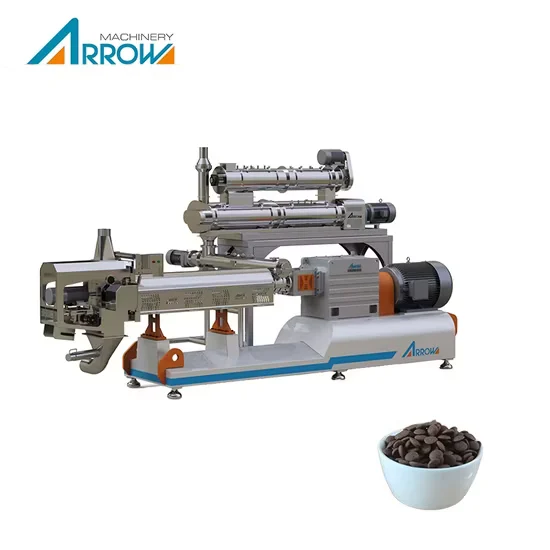
Discovering a dented housing on a multi-thousand-dollar pet food extruder during unloading triggers immediate panic. Do you refuse the delivery, or do you sign the paperwork and hope for the best? The wrong move at this critical juncture can leave your factory liable for repair costs that should have been covered by insurance or the supplier.
The single most effective action is to halt unloading immediately and document every detail before the carrier leaves. Preserving the scene with comprehensive photographic evidence and securing a signed exception on the proof of delivery creates the only viable path for a swift freight claim and expedited replacement from the manufacturer.
Stop the Unloading Process and Secure Visual Evidence
When a damaged pet food machine arrives, the instinct is often to clear the dock to avoid demurrage charges or to inspect the interior components quickly. Resist this urge. Once the cargo leaves the container or the truck bed, the chain of custody becomes ambiguous, and the carrier may argue that the damage occurred during your internal handling.
Start by photographing the exterior of the shipping container or truck before opening it. Capture the seal number, any visible dents on the container walls, and the overall positioning of the crate inside. If the waterproof covering is torn or the wooden base is cracked, these are primary indicators of mishandling during ocean or rail transit. Take wide-angle shots that include the license plate or container ID to establish context.
Next, focus on the specific areas of impact. For complex systems like a Twin-Screw Extruder, even minor external dents can signal misalignment in the barrel sections or damage to the gearbox mounting points. Photograph the control panel enclosure closely; water ingress from a compromised cover can destroy PLCs and drives, leading to weeks of downtime. Ensure your photos are high-resolution and timestamped. These images serve as the foundational evidence for any dispute regarding a damaged pet food machine.
Notify the Supplier Within the Contractual Window
Time is a critical factor in international logistics claims. Most supply contracts and insurance policies stipulate a strict notification period, often within 48 to 72 hours of arrival. Failing to send a formal notice within this window can void your right to claim compensation for a damaged pet food machine.
Draft a concise email to your supplier’s project manager and sales contact. Attach the photographic evidence, a copy of the bill of lading, and the packing list. Clearly describe the visible damage without speculating on internal mechanical failures yet. State that the goods were received with visible external damage and that a detailed inspection is pending. This initial notification preserves your legal standing and alerts the engineering team to prepare for potential component replacements.
It is also vital to involve the freight forwarder or carrier at this stage. Request them to issue a damage report or note the exception on the proof of delivery (POD). If the driver or port agent refuses to sign, note their refusal in writing and take a photo of the unsigned document. This administrative step is often the difference between a approved claim and a prolonged legal battle.
Collaborate with Engineers to Assess Structural Integrity
Once the immediate documentation is complete, the focus shifts to technical assessment. A dented exterior does not always mean the machine is scrapped, but it requires rigorous verification. For instance, a dent on the casing of a Cross-Flow Circulation Dryer might only affect aesthetics, whereas similar damage to an extruder barrel could compromise the thermal profile and screw alignment.
Work with the supplier’s engineering team to determine the scope of the damage. They may request video calls to inspect specific connection points or ask for measurements of the deformed areas. In cases involving high-precision equipment like a Vacuum Coating Machine, even slight frame distortion can affect the rotation balance of the drum, leading to uneven seasoning distribution later in production.
| Damage Indicator | Potential Internal Risk | Recommended Action |
|---|---|---|
| Dented Extruder Barrel | Screw misalignment, wear on flight edges | Borescope inspection, run-out check |
| Torn Control Panel Cover | Water damage to PLC, short circuits | Full electrical diagnostic, component replacement |
| Crated Base Fracture | Misaligned motor mounts, vibration issues | Laser alignment check, mount replacement |
This collaborative assessment helps distinguish between cosmetic issues and functional failures. It ensures that the remedy—whether it is a local repair, a part replacement, or a full unit swap—is appropriate for the severity of the incident.
Initiate Freight Claims and Coordinate Replacement Logistics
With the damage assessed, the next step is to activate the insurance or freight claim process. The responsibility for filing the claim depends on the Incoterms agreed upon in your contract. Under CIF terms, the supplier typically handles the insurance claim, while under FOB terms, the buyer often bears the responsibility of claiming from their own insurer. Clarify this early to avoid duplication of effort or gaps in coverage.
Simultaneously, discuss the replacement strategy with the supplier. For critical path items like the main extruder drive or a specialized die head, air freight may be necessary to minimize production delays. For larger structural components, sea freight might be the only viable option, requiring a revision of your installation schedule. The supplier should provide a clear timeline for manufacturing or sourcing the replacement parts.
Ensure that the replacement components match the original specifications exactly. If the damaged unit was configured for a specific high-meat formulation, the new screws and barrels must maintain the same shear and compression ratios. Any deviation could alter the product texture and density, requiring extensive re-validation of the process parameters.
Prepare the Site for Rescheduled Commissioning
While waiting for replacements, secure the undamaged portions of the production line. Store motors, gearboxes, and control cabinets in a dry, climate-controlled area to prevent corrosion or moisture damage. If the damaged pet food machine was part of a larger turnkey project, you may be able to proceed with installing upstream units like mixers and grinders, provided they are unaffected.
Use this downtime to review the layout and utility connections. Verify that power supplies, water lines, and steam connections match the requirements of the incoming replacement equipment. This proactive approach ensures that once the new components arrive, the installation team can integrate them quickly without encountering unforeseen site constraints.
Finally, update your commissioning plan. Coordinate with the supplier’s service engineers to align their travel dates with the arrival of the replacement parts. Having the technical team on-site ready to install and calibrate the new components immediately upon arrival can recover lost time and get your facility back on track for its target launch date.
Frequently Asked Questions
Q: Who is responsible for the damage if the machine was shipped FOB or CIF?
A: Under CIF terms, the supplier usually holds the insurance policy and leads the claim process, though the buyer must provide evidence. Under FOB terms, risk transfers to the buyer once the goods are on board the vessel, meaning the buyer typically files the claim with their own insurer. Always check your specific contract terms to confirm liability and required notification periods for a damaged pet food machine.
Q: What specific photos and documents do I need to provide to support a freight claim?
A: You need clear, high-resolution photos of the external packaging, container seals, and the specific damage points, including close-ups and wide shots showing context. Essential documents include the bill of lading, commercial invoice, packing list, and the proof of delivery (POD) with the carrier’s noted exception. These items establish the condition of the goods at the time of transfer and are critical for validating any claim.
Q: Can I start installing the undamaged parts of the production line while waiting for the replacement?
A: Yes, you can often proceed with installing upstream equipment such as grinders, mixers, and conveyors if they are undamaged. This helps maintain project momentum. However, ensure that the installation sequence allows for easy integration of the replacement unit later. Coordinate with your supplier to confirm that early installation will not void warranties or complicate the final commissioning of the core processing units.
Q: How does the supplier ensure the replacement extruder matches the original screw configuration?
A: Reputable manufacturers keep detailed records of each order’s technical specifications, including screw profiles, barrel lengths, and die designs. When a replacement is issued, they reference the original serial number and configuration sheet to replicate the exact geometry. This ensures that the thermal and mechanical shear history remains consistent, which is vital for maintaining product quality in sensitive applications like high-meat kibble production.
If you are planning a new facility or upgrading an existing line, proper packaging and logistics planning are just as critical as the machinery itself. Share your raw material formula and target capacity with our engineering team to receive a comprehensive layout and technical specification package. We can also discuss trial options to validate your process before finalizing equipment configurations, ensuring your investment is protected from day one.
Target Industries Covered in This Article
Equipment in This Process
Machines mentioned in this article
Each machine is built at the Shandong Arrow Machinery factory and supplied as a standalone unit or as part of a complete extrusion line.
01 Dry Pet Food Production Line
Twin Screw Extruder Pet Food Freeze Dry Plant Equipment
View machine details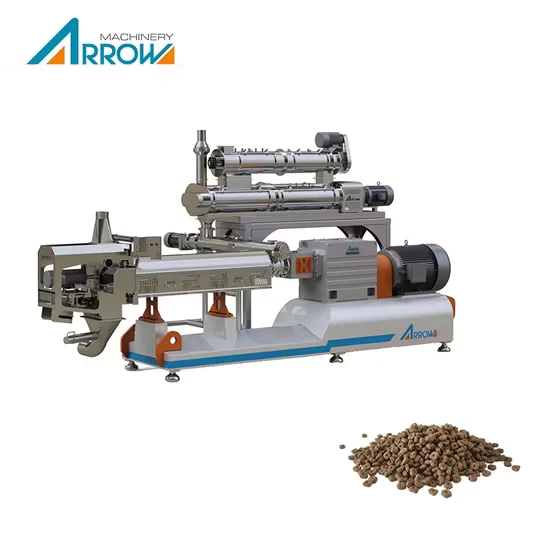 02
Dry Pet Food Production Line
Twin-Screw Extruder Equipment for Dry Kibble Pet Food Plant
View machine details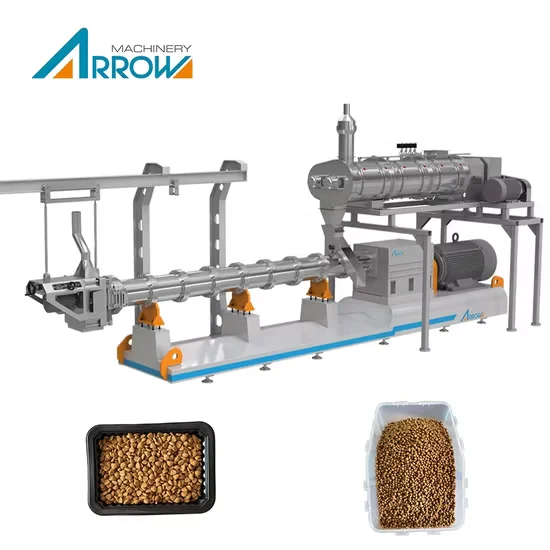 03
Dry Pet Food Production Line
Automatic Twin-Screw Extruder Pet Food Production Line
View machine details 04
Dry Pet Food Production Line
Twin-Screw Extruder for Dry Pet Food Production Plant
View machine detailsFurther Reading
Related extrusion process notes

· Procurement & Trade FAQs· 7
Buying a Pet Food Line From China: A Guide for Global Buyers
Read the article
· Procurement & Trade FAQs· 7
How to Import Pet Food Equipment to South Africa or Egypt
Read the article
· Procurement & Trade FAQs· 7
3 Ways Pet Food Machine Suppliers Handle Steel Price Changes
Read the article
Configured Quotation
Send your formula and capacity for a configured line proposal
Shandong Arrow Machinery engineers review your raw materials, product shape and kg/h or t/h target, then propose a single machine or complete pet food, aquafeed or specialty feed line.
- Emailinfo@arrowextrusion.com
- WhatsApp+86 137 9316 7756
- FactoryNo. 47 Chengbohu Road, Jibei Subdistrict, Jiyang District, Jinan, Shandong, China
Request a Quote
Payment by T/T, L/C or Alibaba Trade Assurance. Scope, delivery time and commissioning support are stated in the formal quotation.