Many investors assume that installing a high-torque extruder is sufficient to produce perfect texturized wet pet food, yet they often overlook the decisive impact of raw material mixing uniformity and downstream drying curves on final product quality. Without precise coordination between ingredient preparation, thermal processing, and moisture removal, even the most advanced forming equipment will fail to deliver consistent results.
Configuring a successful texturized wet food processing line requires more than selecting a single machine. It demands a holistic approach where screw configuration, shear profiles, and drying parameters are precisely matched to the specific rheology of high-meat formulations. Only by balancing these upstream and downstream variables can manufacturers achieve stable meat-like textures and reliable production capacity.
Raw Material Preparation: The Foundation of Texture Consistency
The journey to a high-quality texturized product begins long before the mixture enters the barrel. For formulations with significant fresh meat content, particle size reduction and homogenous blending are critical. If the meat fibers or auxiliary ingredients are not uniformly distributed, the resulting extrudate will exhibit uneven density and poor structural integrity.
Hammer mills and pulverizers play a vital role in reducing raw materials to the required granularity. However, grinding alone is insufficient. The mixing stage must ensure that fats, liquids, and dry powders are fully integrated. Single-shaft or twin-shaft paddle mixers are often employed here to handle the viscous nature of high-moisture recipes. Inadequate mixing leads to slippage in the extruder feed throat and inconsistent cooking, which directly compromises the final texture.
When dealing with fresh meat ratios that exceed standard kibble formulations, the physical behavior of the dough changes dramatically. The mixture becomes less free-flowing and more prone to bridging or clogging if not handled correctly. This is why the selection of feeding systems and mixer discharge mechanisms must account for the specific viscosity of the recipe. A well-designed pre-conditioning and mixing setup ensures that the material entering the extruder is homogeneous, allowing the screw elements to work efficiently without surging.
Core Extrusion Dynamics: Shear, Temperature, and Forming
I still remember the mess we made during a wet food trial for a client in Brazil. Their recipe had a massive fresh meat ratio, and the texturized chunks just turned into a sloppy paste that clogged the forming die within minutes. We had to scrap the whole batch and rework the shear profile on the test rig. That exact headache is why I obsess over matching the screw configuration and thermal zones to the actual meat content. Getting the texture right isn’t just about the recipe; it’s about how the equipment handles the physical reality of those ingredients on the platform.
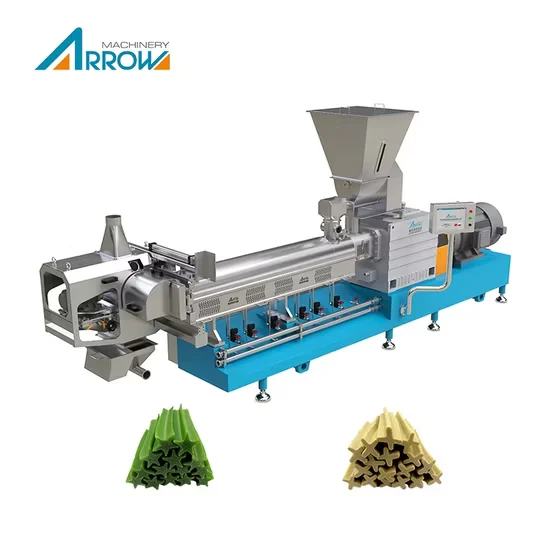
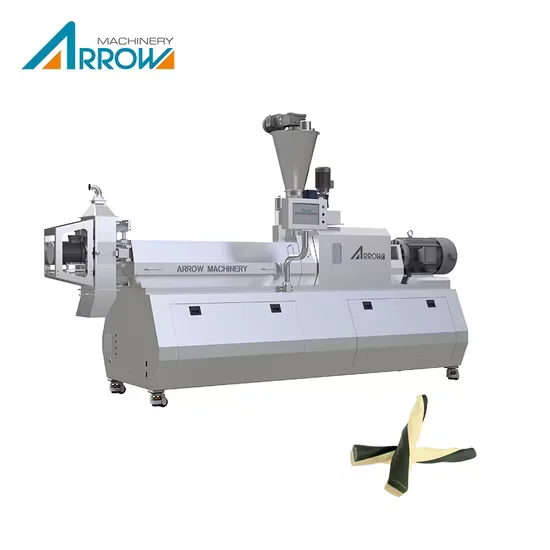
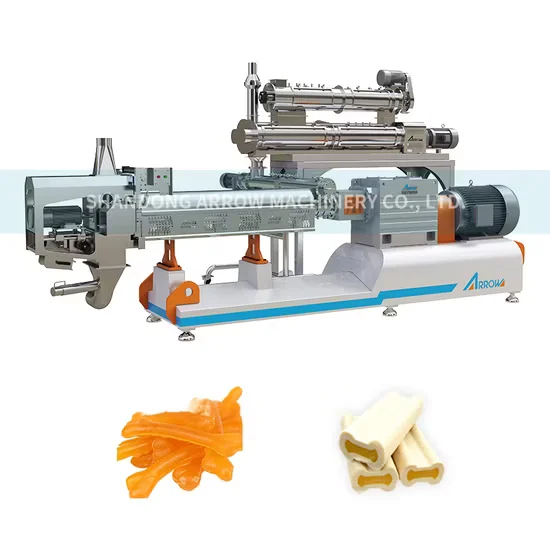
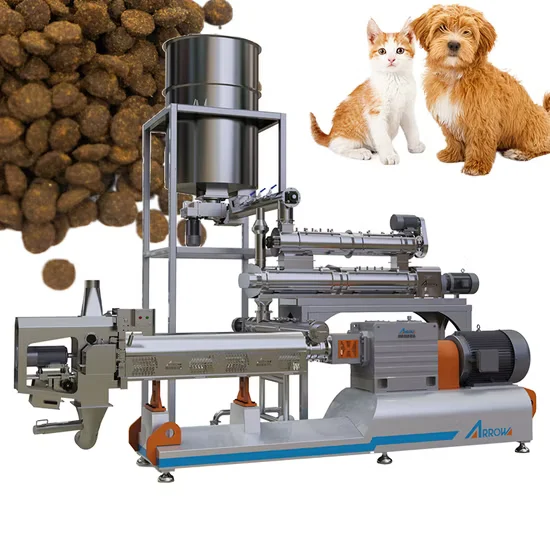
In a texturized wet food processing line, the twin-screw extruder serves as the heart of the operation. Unlike single-screw machines, twin-screw systems offer superior control over shear force and residence time. This is essential for creating the fibrous, meat-like structure desired in wet food chunks. By adjusting the screw elements—combining conveying, kneading, and shearing sections—operators can manipulate the protein alignment within the product.
Temperature control across multiple zones is equally important. Too much heat can degrade sensitive proteins and destroy the desired texture, while too little heat may result in under-cooked products with poor shelf stability. The goal is to achieve sufficient starch gelatinization and protein denaturation to bind the structure, without over-processing the meat fibers.
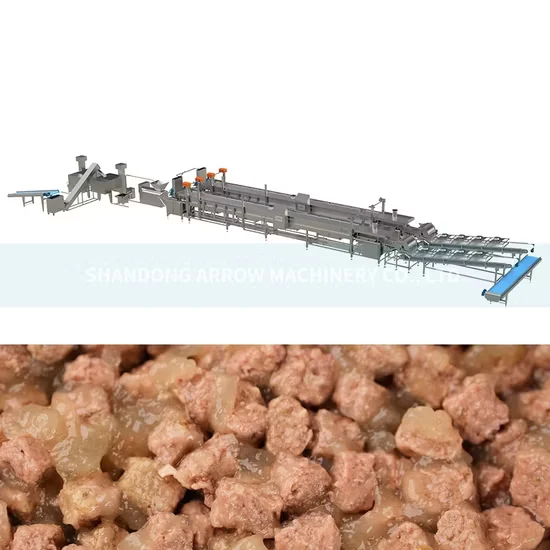
The forming and cutting system must then precisely shape this cooked mass. For wet food applications, the cutter speed and blade geometry determine the final chunk size and surface smoothness. Irregular cuts can lead to uneven drying and poor appearance. Therefore, the integration of the cutter with the extruder output is critical to maintain consistency. A Texturized Wet Food Processing Line must be configured so that the extruder output matches the capacity of the downstream drying and coating stages, preventing bottlenecks.
Drying and Coating: Preserving Moisture and Enhancing Palatability
Once the chunks are formed, the drying process becomes the next critical control point. Unlike dry kibble, which requires extensive moisture removal, texturized wet food needs a gentle approach to retain internal moisture while stabilizing the surface. Aggressive drying can cause case hardening, where the exterior forms a tough shell while the interior remains too wet, leading to microbial instability and texture defects.
Cross-flow circulation dryers or external air circulation dryers are often preferred for these applications. They provide uniform airflow and controlled temperature profiles that allow for gradual moisture migration. This gentle drying helps preserve the tender, meat-like bite that consumers expect from premium wet food products. The choice of dryer depends on the target final moisture content and the specific thermal sensitivity of the ingredients.
After drying, coating systems add the final layer of value. Vacuum coating machines are ideal for applying high-fat slurries or liquid palatability enhancers deep into the porous structure of the chunks. This method ensures even distribution and prevents surface greasiness. Alternatively, double-drum flavoring machines can be used for surface seasoning if the goal is to add visible particulates or specific aromatic profiles. The key is to match the coating technology to the desired sensory outcome and the physical properties of the dried chunk.
Line Integration and Plant Layout Considerations
Designing a complete wet pet food production line involves more than connecting individual machines. It requires a strategic layout that optimizes material flow, utility usage, and operator access. Factory dimensions, power availability, and steam sources all influence the configuration. A poorly planned layout can lead to inefficient maintenance routines and increased downtime.
Engineers must balance the duty points of each section. If the mixer outputs 2 tons per hour but the dryer can only handle 1.5 tons, the entire line is constrained by the bottleneck. Modular designs allow for staged expansion, enabling manufacturers to start with a core configuration and add capacity as demand grows. This flexibility is crucial for new factories or those upgrading existing facilities.
Furthermore, automation levels should be defined based on labor costs and precision requirements. Automated controls for temperature, pressure, and feed rates improve repeatability and reduce human error. When planning a new facility, it is essential to consider future maintenance access around the extruder, dryer, and conveying systems. A well-integrated line not only produces better product but also operates more efficiently and safely.
Frequently Asked Questions
Q: What makes texturized wet food extrusion different from standard dry kibble production?
A: Texturized wet food extrusion focuses on creating a fibrous, meat-like structure using high-moisture formulations, often with significant fresh meat content. Unlike dry kibble, which relies on high expansion and low final moisture, wet food processing requires precise shear control to align proteins without excessive puffing. The drying phase is also gentler to retain internal moisture, ensuring a tender texture rather than a crunchy one.
Q: How do we ensure consistent meat chunk texture and size in the final product?
A: Consistency starts with uniform raw material preparation and precise mixing. In the extruder, screw configuration and thermal profiles must be optimized for the specific recipe to achieve proper protein texturization. Downstream, the cutting system must be synchronized with the extruder output speed. Regular monitoring of ingredient ratios and machine parameters helps maintain steady production quality and prevents variations in chunk size or density.
Q: Which drying system is best for preserving the moisture and texture of wet pet food?
A: Cross-flow circulation dryers or external air circulation dryers are typically recommended for texturized wet food. These systems provide controlled, uniform airflow that prevents case hardening and allows for gentle moisture removal. This approach preserves the internal tenderness of the chunks while ensuring surface stability. The specific choice depends on the target final moisture content and the thermal sensitivity of the ingredients used in the formulation.
Q: Can the texturized wet food line be customized for high fresh-meat formulations?
A: Yes, lines can be specifically configured to handle high fresh-meat ratios. This involves selecting appropriate mixing equipment to handle viscous doughs and adjusting extruder screw profiles to manage shear and cooking without clogging. Trial runs are often conducted to fine-tune these parameters for your specific recipe. Engineering support helps match the equipment capabilities to your raw material characteristics and desired product specifications.
Send your product formula and target capacity to receive a customized technical proposal and plant layout. Discuss your specific raw material challenges with our engineering team to determine if trial runs are needed before finalizing your equipment configuration. Request detailed technical specifications to ensure every component of your texturized wet food processing line meets your production goals.