
Extrusion Process Notes Procurement & Trade FAQs
Importing a Pet Food Line Into Kenya: Costs, Power and Setup
This guide reveals hidden costs in a pet food line Kenya import project beyond factory gate prices. Learn to align equipment specs with local power rules and select partners for turnkey installation.

Many East African investors focus heavily on the factory gate price of a pet food line Kenya import project, often overlooking the hidden costs that determine actual profitability. Sea freight, Mombasa port clearance, local voltage adaptation, and overseas installation are not afterthoughts; they are critical path items that can stall a launch for months if mismanaged.
Importing a complete production system is a systems-engineering project, not just a equipment purchase. Success depends on selecting a supplier with turnkey engineering experience who can lock down utility specs, provide detailed Incoterms-based cost estimates, and define clear commissioning support terms before any container leaves the factory. This approach minimizes the risk of mismatched capacities and ensures the plant operates reliably from day one.
Calculating the Real Landed Cost Beyond the Factory Gate
The initial quotation for machinery is only one component of the total investment. When planning a pet food line Kenya import, buyers must account for ocean freight, insurance, and port handling charges at Mombasa. These logistics costs fluctuate based on vessel availability and fuel surcharges, making it essential to request a preliminary shipping estimate during the technical review phase.
Kenyan customs duties and taxes represent another significant variable. The final landed cost includes import duty, value-added tax, and potentially other levies depending on the specific classification of the equipment. A professional supplier will provide a detailed packing list and commercial invoice that aligns with Kenyan regulatory requirements, helping to avoid delays or unexpected fines at the port. Clarifying the Incoterm, such as FOB or CIF, early in the negotiation ensures both parties understand who bears the risk and cost at each stage of transit.
Beyond shipping and taxes, consider the cost of local infrastructure preparation. If the existing factory floor requires reinforcement to support heavy extruders or dryers, or if new power transformers are needed, these expenses must be budgeted. A supplier who offers layout-based equipment configuration can help identify these needs early, preventing costly retrofits after the machines have already arrived.
Aligning Equipment Specs with Kenyan Power and Customs Rules
Electrical compatibility is a frequent source of operational failure in imported plants. Kenya typically uses 230V/400V at 50Hz, but industrial facilities may have specific variations. I have seen projects where motors tripped repeatedly because the supplier assumed a standard 60Hz configuration. To prevent this, specify the exact voltage, frequency, and phase requirements of your facility in the inquiry. The engineering team should then configure the main drives, heaters, and control panels to match these local utilities before manufacturing begins.
Customs clearance for complex machinery requires precise documentation. Kenyan authorities may request technical specifications, manuals, and certificates of origin. Ensure your supplier provides these documents in English and verifies that the model numbers on the paperwork match the physical nameplates on the machines. Discrepancies here can lead to prolonged inspections and storage fees at the port.
For a pet food line Kenya import, it is also wise to discuss spare parts inclusion. Shipping a few critical spares, such as extra cutter blades or heater bands, with the main consignment can save weeks of downtime if a component fails during the initial run. This proactive step is far more efficient than arranging emergency air freight for individual parts later.
Choosing a Partner for Turnkey Installation and Training
The difference between a box-moving vendor and a true engineering partner lies in post-delivery support. Some suppliers simply load containers and wish you luck. Others offer overseas installation and commissioning services, sending engineers to your site to assemble, test, and optimize the line. For a first-time factory owner in Kenya, having experienced technicians on the ground is invaluable. They can troubleshoot integration issues between the grinder, mixer, extruder, and dryer that might not be apparent in a factory acceptance test back in China.
Operator training is equally critical. Your local team needs to understand not just how to start the machine, but how to adjust parameters for different recipes. A comprehensive service plan should include hands-on training for maintenance staff on routine cleaning, lubrication, and wear-part replacement. This knowledge transfer ensures the plant maintains consistent product quality and minimizes unplanned stoppages.
When evaluating suppliers, ask specifically about their track record in East Africa. Do they have references from similar projects? Are the travel costs, duration, and scope of the installation team clearly defined in the contract? Ambiguity here often leads to disputes later. A clear agreement protects both parties and sets realistic expectations for the commissioning timeline.
Optimizing Plant Layout for Local Ingredients and Climate
Kenya’s ambient temperature and humidity levels influence drying efficiency. A cross-flow circulation dryer must be sized correctly to handle the moisture removal load, especially if the local climate is humid during certain seasons. Undersizing the drying section is a common bottleneck that limits the overall capacity of the entire pet food line Kenya import project. The supplier should calculate the thermal balance based on your target output and local environmental conditions, not just standard laboratory data.
Raw material availability also dictates equipment selection. If your formulation includes high levels of fresh meat or local grains, a twin-screw extruder offers better mixing and shear control than a single-screw unit. It handles varied ingredient textures more effectively, ensuring uniform pellet density and shape. For high-fat treats or kibble, integrating a vacuum coating machine after drying allows for higher oil inclusion without surface greasiness, improving palatability and shelf stability.
Layout planning should prioritize workflow efficiency and maintenance access. Arrange the grinding, mixing, extrusion, drying, and coating stages in a logical sequence that minimizes material handling and cross-contamination risks. Leave adequate space around key machines for routine servicing. A supplier who provides a detailed 3D layout or CAD drawing helps visualize these constraints before civil works begin, reducing the risk of costly structural changes later.
Frequently Asked Questions
Q: What documents do I need to clear a pet food production line through Kenyan customs?
A: You typically need a commercial invoice, packing list, bill of lading, certificate of origin, and technical specification sheets. Ensure all documents accurately describe the machinery models and serial numbers. Some items may require pre-export verification of conformity. Consult with a local clearing agent to confirm any updated regulatory requirements from the Kenya Bureau of Standards before shipment.
Q: Can the extruder and dryer motors be configured for Kenya’s local power supply?
A: Yes, reputable manufacturers can customize motor specifications, including voltage, frequency, and insulation class, to match Kenya’s 50Hz grid. Provide your exact factory utility details during the engineering phase. This prevents issues like overheating or tripping breakers. Confirm these electrical specs in the proforma invoice and verify them on the motor nameplates upon delivery.
Q: Do you provide overseas installation and operator training in East Africa?
A: Many suppliers offer overseas commissioning services, but the scope varies. Some include engineer travel and labor in the quote, while others charge separately. Clarify whether the service covers full installation, debugging, and staff training. Define the duration and responsibilities in the contract to avoid unexpected costs. Having experts on-site ensures the line runs smoothly from the start.
Q: How do you handle spare parts supply after the pet food line is commissioned?
A: Establish a spare parts list during the initial purchase. Include critical wear items like screw elements, cutter blades, and heater bands in the first shipment. For long-term supply, agree on a channel for ordering replacements, whether through direct shipping or a local distributor. Quick access to spares minimizes downtime and keeps production running efficiently.
Send your product formula, target capacity, and factory dimensions to receive a customized production line layout and detailed quotation. Discuss raw material trials to validate equipment configuration before finalizing your order. Request technical specifications and a comprehensive project scope to ensure every detail aligns with your operational goals.
Target Industries Covered in This Article
Equipment in This Process
Machines mentioned in this article
Each machine is built at the Shandong Arrow Machinery factory and supplied as a standalone unit or as part of a complete extrusion line.
01 Kibble Pet Food Production Line
Automatic Fresh Meat Dry Pet Food Line for Dog Cat
View machine details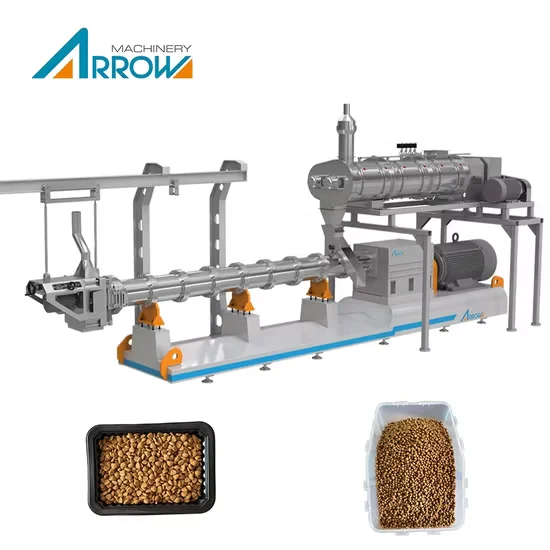 02
Dry Pet Food Production Line
Automatic Twin-Screw Extruder Pet Food Production Line
View machine details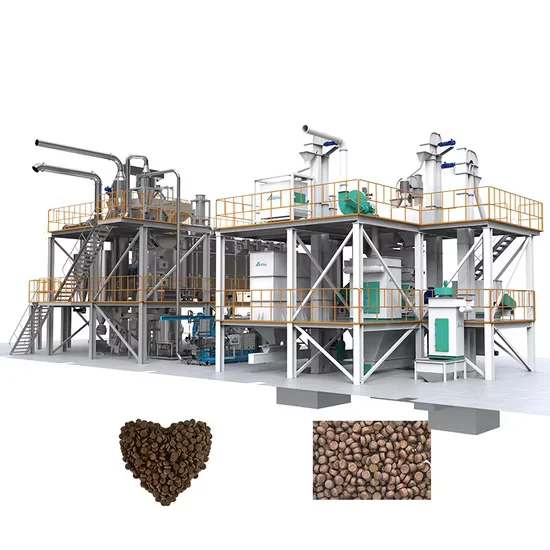 03
Dry Pet Food Production Line
Pet Food Processing Production Line Equipment for Pet Food
View machine details 04
Dry Pet Food Production Line
Dry Dog Food Extruder for Pet Food Production Line
View machine detailsFurther Reading
Related extrusion process notes
· Procurement & Trade FAQs· 7
Buying a Pet Food Line From China: A Guide for Global Buyers
Read the article
· Procurement & Trade FAQs· 7
How to Import Pet Food Equipment to South Africa or Egypt
Read the article
· Procurement & Trade FAQs· 7
3 Ways Pet Food Machine Suppliers Handle Steel Price Changes
Read the article
Configured Quotation
Send your formula and capacity for a configured line proposal
Shandong Arrow Machinery engineers review your raw materials, product shape and kg/h or t/h target, then propose a single machine or complete pet food, aquafeed or specialty feed line.
- Emailinfo@arrowextrusion.com
- WhatsApp+86 137 9316 7756
- FactoryNo. 47 Chengbohu Road, Jibei Subdistrict, Jiyang District, Jinan, Shandong, China
Request a Quote
Payment by T/T, L/C or Alibaba Trade Assurance. Scope, delivery time and commissioning support are stated in the formal quotation.