
Extrusion Process Notes Buying Guide
Meat Strip Slicing and Forming Setup for Jerky Treats: Buyer Guide
This guide addresses production stalls caused by uneven slice thickness in jerky treat lines by identifying mismatches between forming precision and downstream capacity. Learn to align extrusion pressure with cutting mechanics for uniform drying and structural integrity using a well-configured meat strip slicing and forming setup.

Many pet treat contract manufacturers upgrading their jerky lines focus heavily on extruder throughput, only to face production stalls due to uneven slice thickness. This inconsistency leads to irregular drying rates and high breakage in the final product. The root cause is rarely just the recipe; it is a mismatch between the forming precision and the downstream capacity.
Achieving consistent quality in meat strip production requires treating the slicing and forming stage as a critical control point, not an afterthought. You must align the extrusion pressure, cutting mechanics, and drying airflow to your specific fresh meat inclusion levels. A well-configured meat strip slicing and forming setup ensures uniform moisture evaporation and structural integrity throughout the batch.
Core Modules in a Jerky Treat Slicing and Forming Line
The heart of any jerky treats production equipment lies in how it transitions raw material from a viscous mass to a defined shape. In high-meat formulations, the dough behavior changes significantly compared to standard starch-based kibble. The extrusion system must provide steady pressure without excessive shear heat that could denature proteins prematurely. For these applications, a twin-screw extruder offers better control over feeding and mixing, ensuring the meat paste remains homogeneous before it reaches the die.
Once the material exits the die, the slicing mechanism determines the final product geometry. Precision here is non-negotiable. If the cutting speed does not synchronize perfectly with the extrusion output, you get variable lengths and thicknesses. These variations create hot spots and cold spots during drying. Thinner slices over-dry and become brittle, while thicker ones retain too much moisture, risking microbial growth. The forming module must allow for quick adjustments to blade spacing and angle, enabling operators to switch between different jerky styles without hours of downtime.
The surface texture of the strip is also defined at this stage. A smooth cut may look appealing but can limit the adhesion of flavor coatings later in the process. Some forming systems introduce slight texturing or scoring during the cut, which enhances the binding of seasoning powders or liquid sprays. This integration of form and function means the slicing unit is not just a cutter; it is the first step in flavor delivery and shelf-life stability.
Critical Selection Factors for Slicing and Forming Equipment
Selecting the right pet meat strip forming machine starts with a honest assessment of your raw materials. High fresh meat content increases viscosity and stickiness, which can clog standard dies or cause smearing on cutting blades. You need equipment constructed from food-grade stainless steel with polished surfaces to prevent material buildup. More importantly, the design should facilitate rapid disassembly for cleaning. In facilities running multiple recipes, the ability to swap out cutting heads and wash down the chamber quickly is essential for maintaining hygiene standards and preventing cross-contamination.
Capacity matching is another frequent oversight. A pet treat slicing machine might be rated for a certain throughput under ideal conditions, but real-world performance depends on the density of the mix. If your formulation includes heavy protein loads or fibrous ingredients, the effective capacity drops. Always evaluate the motor power and torque specifications relative to your target output. Underpowered motors will struggle with dense mixes, leading to inconsistent cuts and increased wear on mechanical parts.
Consider the flexibility of the forming system. Can it handle both soft chews and hard jerky? Some lines require distinct configurations for each. Look for modular designs where the cutting assembly can be upgraded or replaced without changing the entire extrusion base. This modularity protects your investment as market trends shift from traditional dried strips to softer, semi-moist treats. The mechanical robustness of the blade drive system also matters; vibration from an unbalanced cutter can degrade cut quality over time, so check for solid mounting and damping features.
Integrating Slicing Setup with Drying and Coating Systems
The slicing unit does not operate in isolation. Its output directly feeds the drying stage, which is often the bottleneck in any meat jerky processing line. If the slicer produces strips with varying thicknesses, the dryer cannot apply a uniform heat profile. Cross-flow circulation dryers rely on consistent air penetration through the product bed. Irregular slices create channeling, where air bypasses dense clusters, leaving some pieces under-dried while others burn. Therefore, the precision of your meat strip slicing and forming setup dictates the efficiency of your entire thermal process.
Downstream coating operations also depend on the physical consistency of the strips. Vacuum coating machines work best when the product has a uniform surface area and volume. If the slices vary wildly in size, the vacuum cycle may not distribute the flavoring evenly, leading to batch rejection. By ensuring tight tolerances at the forming stage, you maximize the effectiveness of subsequent seasoning steps. This holistic view of the line prevents the common issue where one section runs at full speed while another struggles to keep up due to poor input quality.
Integration also involves physical layout and material handling. The transfer from the slicer to the dryer belt must be gentle to avoid deforming the soft, warm strips. Conveyor speeds and transition points need to be synchronized to prevent stacking or stretching. When evaluating suppliers, ask how they balance these interface points. A supplier who understands the rheology of your specific mixture can recommend the optimal gap between cutting and drying, reducing manual handling and potential contamination risks.
Evaluating Suppliers for Turnkey Pet Treat Projects
Choosing a partner for your production line goes beyond checking spec sheets. You need a supplier who engages in process consultation before quoting hardware. Do they ask about your specific ingredient ratios, especially fresh meat percentages? Do they inquire about your factory’s utility limits and footprint constraints? A reputable manufacturer will offer raw-material trials to test how your formula behaves in their equipment. This step is crucial because lab-scale results rarely translate directly to industrial production without adjustment.
Look for providers who can deliver a complete line layout rather than just individual machines. A turnkey approach ensures that the extruder, slicer, dryer, and coater are engineered to work together. Ask for detailed drawings that show maintenance access points and workflow logic. Can they support overseas installation and training? Having technicians on-site during commissioning helps your team learn the nuances of the equipment, from blade sharpening schedules to dryer temperature profiling. This support reduces the learning curve and minimizes early production errors.
Finally, verify their documentation and after-sales support structure. Clear manuals, spare parts lists, and warranty terms should be part of the initial discussion. Avoid suppliers who promise fixed outcomes without understanding your local conditions. Instead, choose those who define the scope of testing and acceptance clearly in the contract. This transparency builds trust and ensures that the meat strip slicing and forming setup you install meets your operational realities, not just theoretical ideals.
Frequently Asked Questions
Q: What raw material characteristics affect the slicing quality of meat strips?
A: Viscosity, fiber length, and fat content significantly influence cutting precision. High fresh meat ratios create sticky doughs that can smear if blades are not sharp or properly cooled. Fibrous ingredients may cause tearing rather than clean cuts. Understanding these traits helps in selecting the right screw configuration and cutting speed to maintain shape integrity during the forming process.
Q: How do I match the slicing machine capacity with my existing dryer?
A: Calculate the maximum throughput of your dryer based on moisture removal rates, not just belt speed. The slicer should feed at a rate that allows sufficient residence time in the dryer for uniform dehydration. If the slicer outpaces the dryer, you risk bottlenecks and inconsistent drying. Balance the nominal capacity of both units, accounting for the specific moisture target of your final jerky product.
Q: Can the forming setup handle high percentages of fresh meat in the recipe?
A: Yes, but it requires specific equipment design. High fresh meat content demands stronger torque and specialized die geometries to prevent clogging. Twin-screw systems are often preferred for their mixing efficiency and pressure control. Ensure the forming machine has easy-clean features and robust drives to handle the denser, stickier consistency of high-meat formulations without compromising slice uniformity.
Q: What maintenance is required to keep the slicing blades sharp and hygienic?
A: Regular inspection and sharpening of blades are essential to prevent smearing and ensure clean cuts. Establish a schedule based on operating hours and material abrasiveness. Use food-safe lubricants and follow strict sanitation protocols during disassembly. Replace worn seals and gaskets promptly to prevent leaks. Proper maintenance extends equipment life and maintains the high hygiene standards required for pet food production.
Send your specific meat strip formula and target capacity to receive a customized configuration plan. Our engineering team can review your raw material profile and propose a matched slicing and forming solution. Request a technical specification sheet and preliminary layout to visualize how the equipment integrates with your existing facility.
Target Industries Covered in This Article
Equipment in This Process
Machines mentioned in this article
Each machine is built at the Shandong Arrow Machinery factory and supplied as a standalone unit or as part of a complete extrusion line.
01 Pet Treats Production Line
Dog Food Meat Strip Extruding Line for Dog Snacks Equipment
View machine details 02
Pet Treats Production Line
Fully Automatic Pet Dog Meat Strip Treat Production Line
View machine details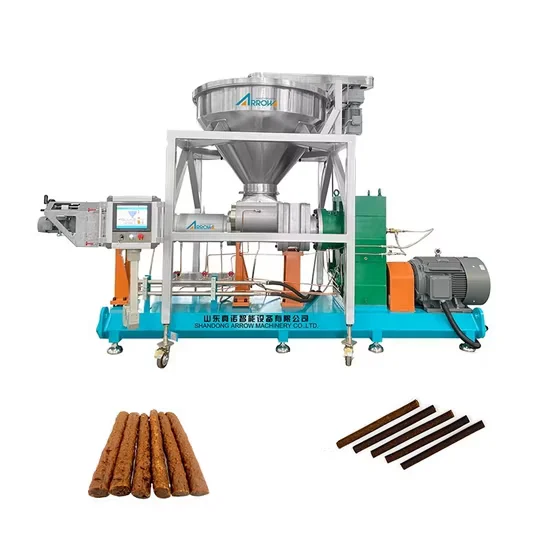 03
Pet Treats Production Line
Dog Food Meat Strip Extruder and Cutting Equipment for Pet Snacks
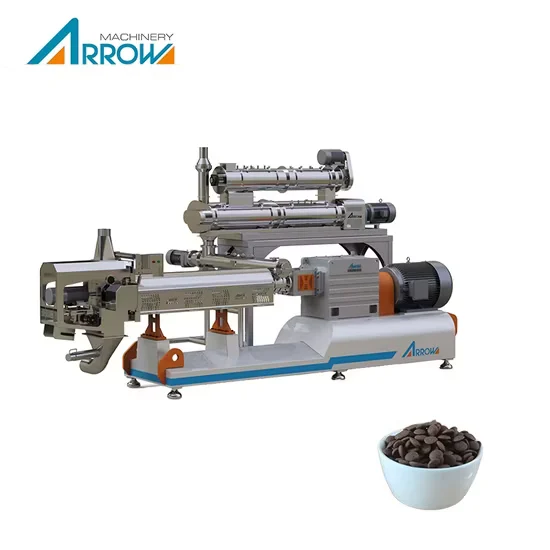
View machine details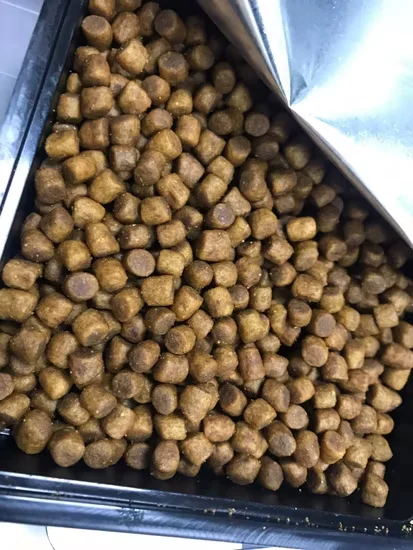 04
Low-Temperature Cold Extruder
Dog Food Meat Strip Extruder for Dog Snacks Equipment
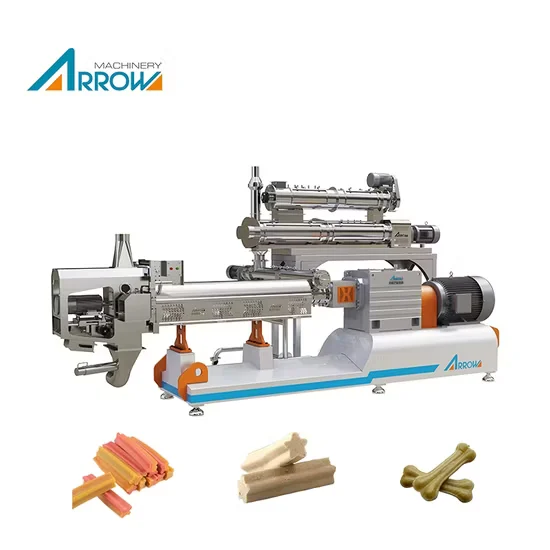
View machine detailsFurther Reading
Related extrusion process notes


Configured Quotation
Send your formula and capacity for a configured line proposal
Shandong Arrow Machinery engineers review your raw materials, product shape and kg/h or t/h target, then propose a single machine or complete pet food, aquafeed or specialty feed line.
- Emailinfo@arrowextrusion.com
- WhatsApp+86 137 9316 7756
- FactoryNo. 47 Chengbohu Road, Jibei Subdistrict, Jiyang District, Jinan, Shandong, China
Request a Quote
Payment by T/T, L/C or Alibaba Trade Assurance. Scope, delivery time and commissioning support are stated in the formal quotation.