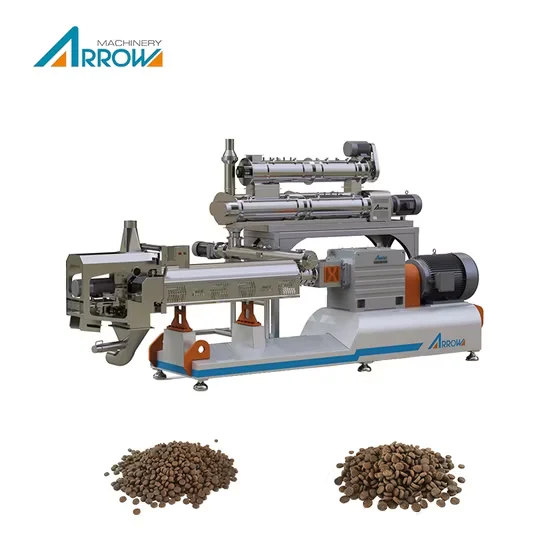
When a high-value pet food production line arrives at the destination port, missing a single critical document can cause equipment to sit in customs for weeks. This delay triggers massive demurrage charges and pushes back the entire factory commissioning schedule. I once saw a kibble line stuck in South Asia because the packing list did not match the commercial invoice specifications, leaving the client with uninstalled extruders and no clear path forward.
The complete set of pet food line export documents serves as more than just a customs clearance pass; it is the legal and technical foundation for equipment acceptance, overseas installation, and future maintenance. Buyers must define this documentation checklist clearly in the purchase contract to ensure smooth delivery and operational readiness.
Commercial and Shipping Papers for Machinery Delivery
The commercial invoice and packing list are the primary references for customs valuation and physical verification. For complex systems like a Dry Pet Food Production Line, these documents must detail every component, from the twin-screw extruder main unit to auxiliary motors and control panels. Discrepancies between the declared value, weight, or item description on these papers and the actual cargo often lead to inspections that delay release. Ensure that the model numbers and serial ranges listed match the proforma invoice exactly.
The Bill of Lading acts as the title of goods and is essential for claiming ownership upon arrival. For large-scale projects involving multiple containers, the bill must accurately reflect the number of packages and gross weight. If you are importing a Pet Treats Production Line, which may include long drying tunnels or large mixers split across several shipments, verify that the bill of lading allows for partial releases if necessary. This prevents situations where one container is held up due to paperwork issues while others remain inaccessible.
Certificates of Origin are crucial for reducing import duties in countries with trade agreements. Depending on your location, a general certificate or a specific preferential form may be required. These documents prove the manufacturing source and must be issued by the relevant chamber of commerce or authority in the exporting country. Failing to secure the correct format can mean paying higher tariffs, directly impacting the project budget.
Technical Documentation for Installation and Commissioning
Technical manuals and drawings are vital for the local engineering team to assemble and connect the machinery correctly. Each machine, such as a Twin-Screw Extruder, should come with detailed operation and maintenance manuals, electrical diagrams, and pneumatic schematics. These documents must be in a language understood by the onsite technicians. If the local team operates in Spanish or Arabic, request translated versions during the negotiation phase to avoid misinterpretation during wiring or pipe fitting.
Factory Acceptance Test (FAT) reports provide evidence that the equipment met performance criteria before shipment. These records include data on motor insulation resistance, pressure tests for hydraulic systems, and trial run parameters. For processes involving food contact, material certificates for stainless steel parts confirm compliance with safety standards. Without these proofs, verifying the quality of internal components after installation becomes difficult, potentially voiding warranty claims if issues arise later.
Customized lines require additional engineering files, such as Piping and Instrumentation Diagrams (P&ID) and foundation layout drawings. These guides help civil engineers prepare the floor and utility connections before the machines arrive. Misalignment in power supply frequency or voltage can damage sensitive drives, so technical declarations specifying electrical requirements are mandatory.
Compliance and Certification Records for Destination Customs
Regulatory compliance documents verify that the equipment meets safety and environmental standards of the destination country. CE marking indicates conformity with European health, safety, and environmental protection standards, which many other regions also recognize as a benchmark. However, some countries require additional local certifications or a Certificate of Conformity (CoC) issued by accredited bodies. Check with your local clearing agent early to determine if specific pre-shipment inspections are needed.
Electrical safety certifications and test reports are particularly important for high-power devices like dryers and extruders. Customs officials may request proof that the control panels and heating elements comply with local electrical codes. Providing these documents upfront speeds up the inspection process. If the equipment includes pressure vessels or boilers, additional regulatory approvals may be necessary depending on national laws.
ISO 9001 certification of the manufacturer demonstrates a commitment to quality management but does not replace product-specific compliance. While it builds trust, it is not a substitute for machine-level safety certificates. Ensure that the scope of any provided certification covers the specific models being purchased. Some buyers mistakenly assume that a company-wide ISO certificate applies to all products, which is not always the case for specialized machinery.
Aligning Document Requirements in the Purchase Contract
The best time to define documentation needs is during the inquiry and quotation stage. Specify your country’s customs requirements and any internal corporate standards for technical archives. Ask the supplier to list all included documents in the proforma invoice or contract appendix. This clarity prevents last-minute surprises where a missing manual or incorrect certificate halts the shipment.
Define the format and language of technical documents explicitly. If digital copies are acceptable for preliminary review, specify the file types and delivery timeline. For original hard copies, confirm whether they will be shipped with the first container or sent via courier. In multi-container shipments, placing key manuals in the first arriving crate ensures that installation can begin immediately while other parts are still in transit.
Include clauses that address responsibilities for document errors. If a mistake in the packing list causes customs delays, the contract should outline who bears the resulting costs. This accountability encourages thorough checks by the supplier’s export team. Experienced manufacturers understand that accurate paperwork is part of the service, ensuring that the line runs when it arrives rather than sitting idle due to administrative oversights.
Frequently Asked Questions
Q: What happens if the packing list does not match the actual machinery loaded?
A: Discrepancies between the packing list and physical cargo often trigger customs inspections, leading to delays and potential fines. Customs officers may suspect undeclared items or misvaluation. To resolve this, the supplier must issue corrected documents, which can take days or weeks depending on local regulations. Always verify the load against the list before sealing containers to avoid these costly administrative hurdles.
Q: Do you provide operation manuals in languages other than English?
A: Yes, technical manuals can be provided in multiple languages such as Spanish, Arabic, Portuguese, Russian, and French. Request these translations during the order confirmation phase to ensure accuracy. Having manuals in the local operators’ native language reduces training time and minimizes operational errors. It also helps maintenance teams follow safety protocols correctly, extending the equipment’s lifespan and ensuring worker safety.
Q: Are CE certificates mandatory for importing a pet food extrusion line to all countries?
A: CE certification is mandatory for the European Economic Area but is widely recognized globally as a safety benchmark. Other countries may have their own specific standards or accept CE as proof of compliance. However, some regions require additional local certifications or pre-shipment inspections. Always check with your local customs broker to determine the exact regulatory requirements for your destination to prevent clearance issues.
Q: How are original technical documents delivered if the machines are shipped in multiple containers?
A: Original hard copies of key documents are typically placed in the first arriving container to facilitate immediate installation. Digital copies are often sent via email or cloud storage for preliminary review. For complex projects, a complete set of manuals and drawings may be shipped separately via courier to ensure they arrive before or with the first batch of equipment. Confirm this arrangement in the contract to avoid delays.
Send your raw material formula and target capacity to receive a preliminary equipment configuration and layout. Use this initial proposal to verify that all necessary export documents and compliance certificates are included for your specific destination. This step ensures that your project moves smoothly from quotation to installation without unexpected administrative barriers.