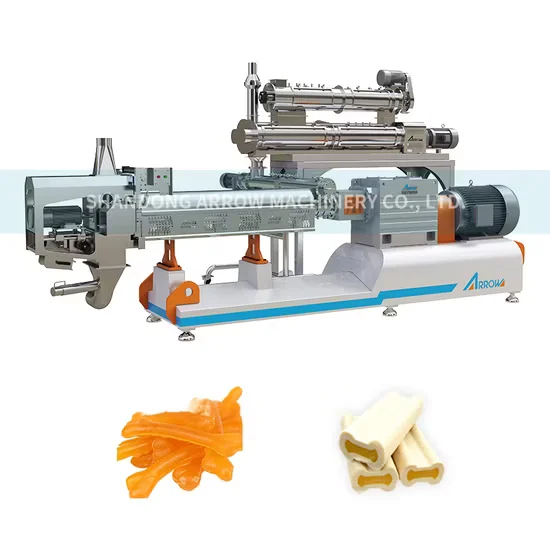
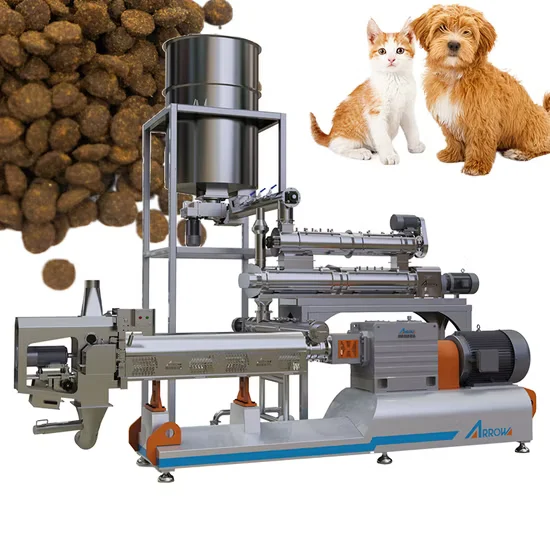
Many pet food plants face a frustrating reality during pilot runs of stuffed snacks: the outer shell cracks, the filling leaks out, or the final moisture content remains uneven. This is rarely a failure of the recipe itself. More often, it stems from a mismatch between the extrusion parameters and the drying curve, especially in regions with high ambient humidity that disrupts thermal balance.
Solving these issues requires precise control over shear and temperature in the twin-screw extruder to ensure proper starch gelatinization and shape retention. Equally critical is matching this with a drying system that removes moisture uniformly without creating a hard, brittle crust too early. A balanced thermal profile across the entire line is the key to consistent quality.
Why Pillow Treats Fail During Extrusion and Drying
The structural integrity of a pillow treat depends on the interaction between the outer dough and the inner filling. When the exterior dries too rapidly while the interior remains wet, internal steam pressure builds up. If the shell has already set into a rigid state, this pressure causes splitting or leakage. This phenomenon is common when operators apply standard kibble drying settings to delicate, stuffed products.
Temperature fluctuations in the extruder barrel also play a significant role. Inconsistent heat leads to variable viscosity in the dough. If the material is too fluid, it cannot hold the shape after cutting. If it is too viscous, excessive back-pressure may cause irregular flow through the die, resulting in misshapen pillows that do not seal correctly around the core.
Another frequent issue is poor adhesion between the two layers. This often occurs if the outer layer is under-cooked or if the filling has a significantly different moisture content than the dough. The result is a product that separates during handling or packaging. Addressing these failures requires looking beyond the mixer and examining the entire thermal and mechanical history of the product as it moves through the line.
Optimizing Twin-Screw Extrusion for Pillow Treats
A Twin-Screw Extruder offers the flexibility needed for complex formulations involving fresh meat, high fat, or sensitive ingredients. Unlike single-screw machines, twin-screw systems allow for independent control of feeding, shear, and temperature. This is vital for pillow treats, where the outer shell must be sufficiently gelatinized to form a strong seal around the liquid or semi-solid core.
Screw configuration is the primary tool for managing shear. For stuffed products, moderate shear is usually preferred to avoid breaking down the structure too aggressively, which can lead to density issues. Engineers can adjust the pitch and angle of the screw elements to balance mixing intensity with conveying efficiency. This ensures a homogeneous dough that flows smoothly to the co-extrusion die without surging.
Multi-zone temperature control allows for a gradual cooking profile. Starting with lower temperatures in the feed section prevents premature melting, while higher temperatures in the metering zone ensure complete starch gelatinization. Proper gelatinization is essential for water binding and texture. Without it, the product may remain too soft to hold its shape or become too hard after drying.
The co-extrusion die itself requires careful maintenance and alignment. Any wear on the die lips can cause uneven distribution of the outer layer, leading to thin spots that rupture during drying. Regular inspection and precise adjustment of the core injection pressure are necessary to maintain a consistent ratio between shell and filling. This precision ensures that every pillow has the same structural strength.
Matching the Right Drying System for Even Moisture Removal
Drying is often the bottleneck in a pet pillow treats line. The goal is to remove water evenly from the center to the surface. If the surface dries too fast, it forms a barrier that traps moisture inside, leading to spoilage or texture defects. Cross-flow circulation dryers are particularly effective for this application because they provide uniform air distribution across the conveyor belt.
In a cross-flow system, hot air passes through the product bed from multiple directions. This reduces the risk of case hardening, where the exterior becomes impermeable. For pillow treats, which have a larger surface area and delicate structure compared to standard kibble, gentle yet consistent airflow is crucial. The ability to adjust air velocity and temperature at different zones allows operators to fine-tune the drying curve.
| Feature | Cross-Flow Circulation Dryer | External Air Circulation Dryer |
|---|---|---|
| Airflow Pattern | Multi-directional through product bed | Recirculated around the chamber |
| Uniformity | High, reduces case hardening | Good, but may have hot spots |
| Suitability for Pillows | Excellent for delicate shapes | Suitable for robust, dense products |
| Energy Efficiency | High with heat recovery options | Moderate, depends on insulation |
An External Air Circulation Dryer can also be used, particularly for products that require longer drying times at lower temperatures. However, for high-capacity lines producing stuffed snacks, the precision of a cross-flow design often yields better consistency. The choice depends on the specific moisture target and the physical tolerance of the product.
It is also important to consider the cooling phase after drying. Rapid cooling can cause thermal shock, leading to micro-cracks in the shell. A controlled cooling section helps stabilize the product before it moves to coating or packaging. This step is often overlooked but is essential for maintaining the visual appeal and structural integrity of the final treat.
Integrating Extrusion and Drying for Consistent Throughput
A production line is only as strong as its weakest link. If the extruder produces product faster than the dryer can handle, bottlenecks occur. This leads to uneven residence times in the dryer, causing some batches to be over-dried while others remain wet. Balancing the capacity of each module is critical for stable operation.
Process engineers must calculate the required drying time based on the initial moisture content from the extruder and the final target moisture. This determines the necessary belt speed and dryer length. If the line is designed for flexibility, such as switching between different treat shapes, the drying parameters must be easily adjustable. Automated controls can help maintain these settings consistently.
Shandong Arrow Machinery supports this integration by offering process consultation and equipment configuration based on the customer’s specific raw materials and capacity goals. By evaluating the entire flow from ingredient preparation to finished product, potential mismatches can be identified before installation. This holistic approach minimizes trial-and-error during commissioning.
Regular monitoring of energy usage and product quality helps identify drifts in performance. Small adjustments in screw speed or dryer temperature can compensate for changes in raw material properties, such as seasonal variations in flour moisture. Keeping detailed records of these adjustments builds a knowledge base that improves long-term operational efficiency.
Frequently Asked Questions
Q: How do we prevent the filling from leaking during the extrusion of pillow treats?
A: Leakage often results from poor sealing between the outer dough and the core. Ensure the outer layer is sufficiently gelatinized by optimizing barrel temperatures and screw configuration. Maintain consistent pressure in the core injector and check the die for wear. A well-balanced moisture content in both layers also improves adhesion and structural integrity during the forming process.
Q: What is the ideal moisture content for pet pillow treats after drying to ensure shelf stability?
A: The target moisture content typically ranges between 10% and 12%, depending on the formulation and packaging requirements. Lower moisture levels inhibit microbial growth but may affect texture. It is essential to validate the specific target through shelf-life testing. Uniform drying is more critical than the absolute value, as wet spots can lead to localized spoilage even if the average moisture is within range.
Q: Can we use the same cross-flow dryer for pillow treats and regular dry kibble?
A: Yes, but the operating parameters must be adjusted. Pillow treats are more delicate and prone to case hardening. Use lower air velocities and gentler temperature gradients compared to dense kibble. The dryer should allow for precise zone control to accommodate these differences. Cleaning between product runs is also necessary to prevent cross-contamination and ensure consistent airflow distribution for each product type.
Q: How does ambient humidity affect the drying process in tropical climates?
A: High ambient humidity reduces the drying efficiency of air-based systems because the air holds less additional moisture. This may require longer drying times or higher inlet temperatures, which risks damaging the product. Using dehumidified air or adjusting the dryer’s exhaust rate can help maintain performance. Process trials under local conditions are recommended to determine the optimal settings for your specific facility.
Send your product formula and expected capacity to receive a customized technical proposal and equipment layout. We can discuss raw material trials to validate the process parameters before you commit to a purchase. Request technical specifications to see how our systems integrate extrusion and drying for consistent, high-quality output.