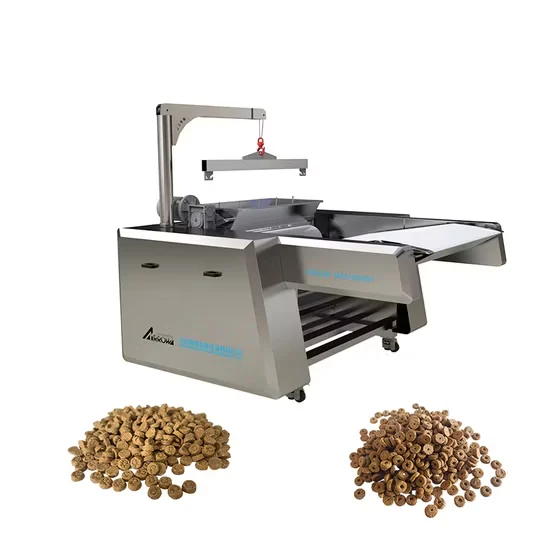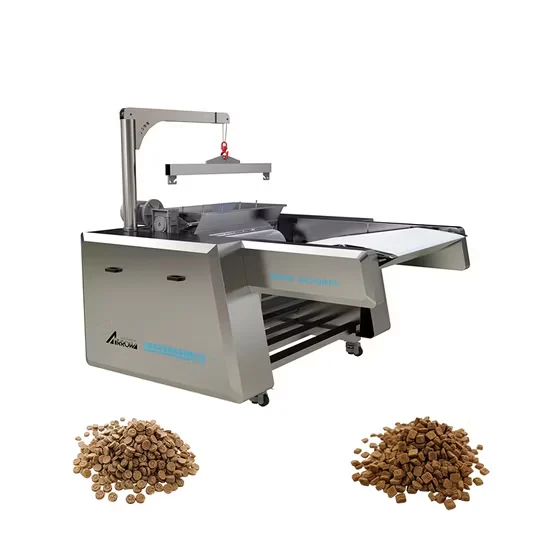


How the Automatic Baked Pet Food Forming Machine for Pet Food Works in Your Line
Match formulation to trial results — Validate shape retention and texture with your specific ingredient ratios before finalizing the screw configuration.
Technical Specifications
| Parameter | Value |
|---|---|
| Product | LYE400/LYE1000 Baked Pet Food Forming Machine (500-6000kg/h) |
| Brand | Arrow |
| Model | LYE400, LYE1000 |
| Capacity | 500-6000kg/H |
| Main Equipment | Double-Screw Extruder |
| Process | Thermal Processing |
| Automatic Grade | Automatic |
| Application | Dog, Cat |
| Feed Type | Meat and Bone Meal |
| Raw Material | Fish Powder, Born Meal, Corn, Soyabeen |
| Voltage | 220/380/Customized |
| Power Source | Electric |
| Heating Tempeature | Adjustable |
| Feeding Speed | Adjustable |
| Feeder | Loss Weight Type/ Volumetric Feeder |
| Material | 304 Stainless Steel |
| Weight | 1350 KG |
| Dimensions | customizable |
Application Suitability
| Product / Industry | Typical Use |
|---|---|
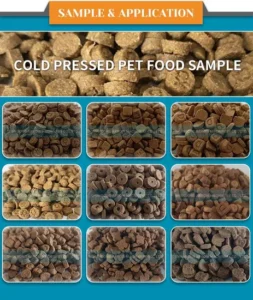
| Dry Pet Food Manufacturers | Producing baked kibble for dogs and cats with specific shape requirements. |
| Private-Label Contract Processors | Handling varying batch sizes and ingredient formulations for premium pet food brands. |
| Pet Treat Manufacturers | Creating thermally processed shapes that retain structure during subsequent baking or drying. |
Why Kibble Shape Drifts After Two Hours of Running
Consistent forming requires matching thermal profiles to raw material behavior.
Many facilities face issues where laboratory success does not translate to production stability. Pellets may emerge with tails, crack during baking, or vary in density as the run progresses. This often stems from a mismatch between the screw setup and the specific viscosity of high-meat or complex grain recipes. Without precise control over heating and feeding, moisture inconsistency leads to product damage after extrusion. Coordinating these parameters is critical for maintaining line efficiency and product quality.
Position in Your Production Line
This forming machine serves as the core thermal processing unit in a dry pet food line. It receives blended raw materials from upstream mixing systems and shapes them via double-screw extrusion. The formed products then move to downstream drying and coating stages. Proper integration ensures that the output capacity of this unit aligns with the drying system’s throughput, preventing bottlenecks or idle time in continuous operation.
Production Challenges in Baked Food Forming
Raw material variability, such as changes in fresh meat content or fiber levels, directly affects extrusion pressure. High-fat formulations can cause slippage in the barrel if not managed correctly. Maintaining uniform particle dimensions requires stable feeding speeds and consistent thermal input. Switching between different kibble shapes demands careful adjustment of die plates and cutting mechanisms. Continuous running stability depends on the durability of internal components under sustained thermal stress.
Core Specification Insights
The double-screw extruder design ensures uniform mixing and shearing of complex ingredients like fish powder and corn. Adjustable heating temperature allows operators to fine-tune the degree of cook and starch gelatinization for optimal texture. Variable feeding speed, supported by loss weight or volumetric feeders, provides precise control over input rates, stabilizing output capacity. Constructed from 304 stainless steel, the contact parts meet hygiene standards for food-grade processing. These features collectively enable the production of consistent, high-quality baked pet food shapes.
Hidden Costs of Poor Equipment Selection
Choosing a machine without validating it against your specific recipe can lead to significant operational losses. Inconsistent product shape may result in whole batches being rejected or reworked. Frequent jams due to incompatible screw configurations cause unplanned downtime and increase maintenance costs. If the capacity does not match upstream or downstream units, the entire line suffers from inefficiency. Upgrading later often requires replacing major components rather than simple adjustments, increasing long-term investment.
Why Source This Equipment from Arrow
We provide manufacturer-oriented supply of complete extrusion lines and individual processing machines, ensuring compatibility across all stages. Our application-based selection process uses your specific ingredients and product specifications to configure the LYE400 or LYE1000 model appropriately. Raw-material trials and testing support help validate performance before purchase, reducing technical risk. Custom line layouts and engineering support accommodate both new factories and retrofits within existing footprints. Export project coordination includes factory acceptance testing and options for overseas commissioning, defined contractually. Ongoing process consultation and spare-parts support ensure long-term operational reliability.
Documentation & Delivery
- Detailed technical specifications and layout drawings for site planning.
- Operation and maintenance manuals specific to LYE400/LYE1000 models.
- Factory acceptance test records verifying performance before shipment.
- Commercial invoices and packing lists prepared per agreed Incoterms.
- Export packaging with corrosion prevention for ocean or rail transport.
- Certificate files provided as per contractual agreement and local regulations.
Installation, Operation & Maintenance
- Ensure foundation and floor space match the customizable dimensions provided.
- Connect power supply according to specified 220/380V voltage requirements.
- Conduct initial trial runs with actual raw materials to calibrate feeding speed.
- Clean barrel and die plates regularly to prevent residue buildup and contamination.
- Replace worn screw elements and bearings based on scheduled maintenance checks.
- Adjust heating zones and cutter speed when switching between different product recipes.
Request a Technical Configuration
To receive an accurate quotation and layout proposal, specify the pet food type, raw material formulation, and required capacity in kg/h. Include details on desired product shape, size, and moisture targets. Provide information on available site dimensions, power voltage, and heat sources. Indicate the destination country and any specific certification needs. Our engineering team will review these parameters to propose a suitable configuration, arrange potential trials, and define the scope for installation and training.
Frequently Asked Questions
Q: What distinguishes the LYE400 from the LYE1000 model?
A: The primary difference lies in their output capacity ranges and physical footprint. The LYE400 suits smaller production volumes, while the LYE1000 handles higher throughput up to 6000kg/h. Specific dimensions and power requirements vary by model and should be confirmed based on your facility’s utility constraints and production goals.
Q: Can this machine process formulations with high fresh meat content?
A: Yes, the double-screw extruder is designed to handle complex ingredients, including high-meat recipes. However, successful forming depends on matching the screw configuration and thermal profile to the specific viscosity. We recommend conducting raw-material trials to validate shape retention and texture before finalizing the equipment setup.
Q: Are heating temperature and feeding speed adjustable?
A: Both parameters are fully adjustable to accommodate different product recipes. Variable heating allows control over starch gelatinization and product density. Adjustable feeding speed, supported by precise feeder types, ensures stable input rates. This flexibility enables the production of various kibble shapes and textures using the same machine.
Q: What are the voltage and power requirements for installation?
A: The standard voltage options are 220V or 380V, but customized configurations are available. Confirm the specific power source requirements with our engineering team based on your local utility availability. Ensuring compatible electrical infrastructure before delivery prevents delays during installation and commissioning at your facility.
Q: Do you provide installation and training services for overseas buyers?
A: Yes, overseas engineering and commissioning options are available. The precise team composition, schedule, travel costs, and scope of work are defined contractually. This service includes equipment installation, operator training, and technical support to ensure smooth startup and efficient operation of the forming machine.