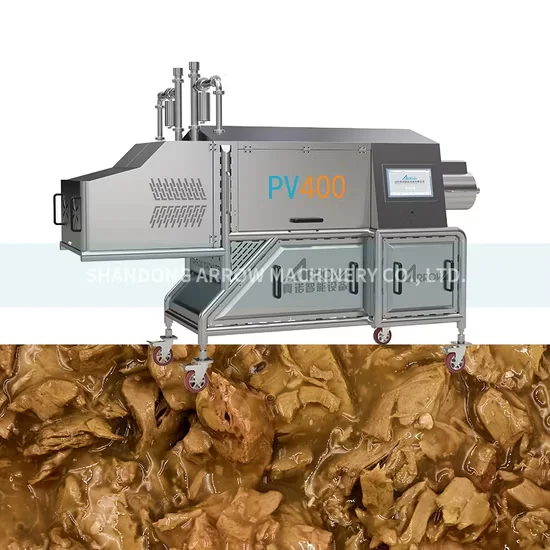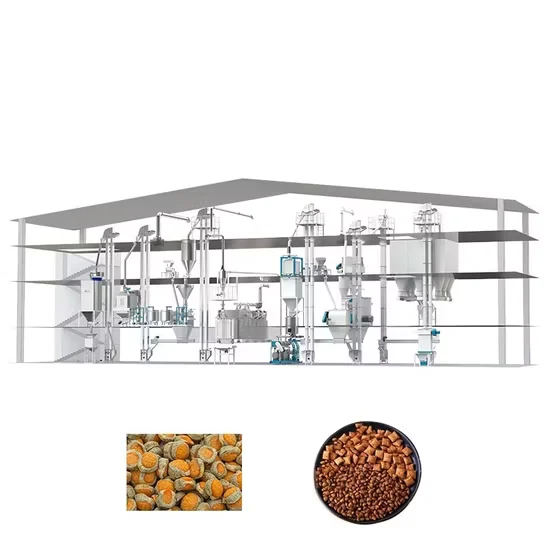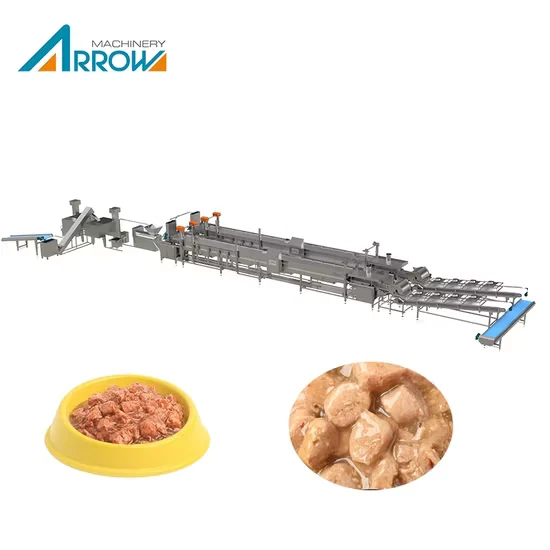

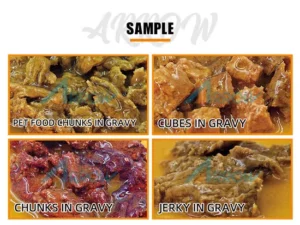
How the Wet Food Meat Chunks PV Pet Equipment Customized Works in Your Line
Match formulation to trial — PV series configuration depends on your meat content and thermal utility availability.
Technical Specifications
| Parameter | Value |
|---|---|
| Product | PV Series Wet Food Meat Chunks Processing Line |
| Model | PV100; PV200 |
| Power Source | Steam/Gas/Electric |
| Process | Thermal Processing |
| Automatic Grade | Automatic |
| Application | Dog, Cat |
| Feed Type | Meat and Bone Meal |
| Final Product | Wet Pet Food |
| Advantage | Low Consumption High Efficiency |
| Processing Types | Full-Automatic |
| Transport Package | Support Sea Freight |
| Specification | 1350 KG, dimension(LWH): customizable |
| Origin | Shandong, China |
| HS Code | 84388000 |
| Production Capacity | Customized |
Application Suitability
| Product / Industry | Typical Use |
|---|---|
| Wet Pet Food Manufacturers | Producing canned or pouch-packed meat chunks for dogs and cats |
| Private-Label Contract Processors | Customized runs requiring specific chunk textures and high meat ratios |
| Specialty Feed Producers | Creating premium wet food products with precise thermal control needs |
Why Consistent Chunk Texture Fails in Mass Production
Thermal processing parameters must align with raw material viscosity.
Many factories struggle when laboratory success does not translate to the production floor. A recipe that forms perfect chunks in a small mixer often tears or leaves ragged tails when scaled up. This happens because upstream forming cannot maintain a steady rhythm with downstream sterilization if the thermal profile is mismatched. Without proper equipment configuration, moisture inconsistency damages product structure after extrusion. Coordinating multiple suppliers for drying, forming, and coating modules frequently leads to interface gaps.
Where This Line Fits in Your Workflow
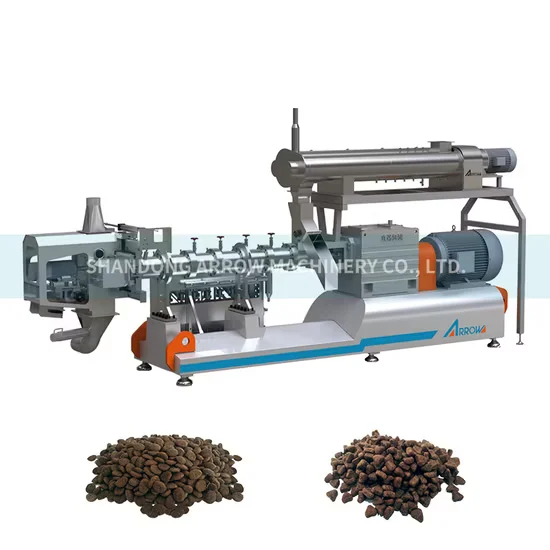
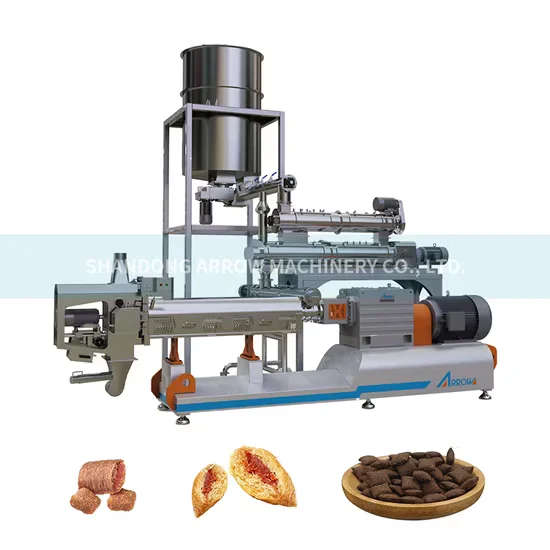
The PV Series integrates into the thermal processing stage of wet food manufacturing. It receives prepared meat and bone meal mixtures from upstream grinding and mixing systems. The machine forms and processes these ingredients into structured chunks before they move to packaging or sterilization. This central role ensures that the Wet Food Meat Chunks Processing Machine PV Series maintains product integrity throughout the critical heating phase.
Production Challenges with High-Meat Formulations
Raw material variability poses significant risks to output consistency. High fresh meat content increases paste viscosity, which can cause blockages if the forming mechanism lacks sufficient power. Fat levels fluctuate between batches, affecting how chunks hold their shape during thermal treatment. Maintaining uniform particle dimensions requires precise control over cutting and forming speeds. Continuous operation demands equipment that handles these fluctuations without frequent stoppages for cleaning or adjustment.
Understanding Core Configuration Options
The PV100 and PV200 models offer flexible power sources including steam, gas, or electric options. This adaptability allows integration with existing plant utilities rather than forcing costly infrastructure upgrades. Full-automatic operation reduces manual intervention, ensuring repeatable thermal processing results across shifts. Customizable dimensions mean the line can fit into constrained factory footprints or expand within available space. The system processes meat and bone meal efficiently, supporting low consumption while maintaining high throughput for dog and cat food production.
Hidden Costs of Poor Equipment Selection
Choosing a machine without verifying utility compatibility leads to expensive retrofits later. Inadequate capacity forces producers to run extra shifts, increasing labor and energy costs unnecessarily. Mismatched forming and drying stages cause batch rejections due to poor texture or moisture levels. Expanding production later may require replacing the entire line if the initial unit lacks modular scalability. These qualitative losses outweigh any initial savings from selecting underspecified equipment.
Why Source This Line from Arrow
We provide manufacturer-oriented supply for complete wet food lines and individual processing machines. Our team assesses your specific ingredient ratios and target product characteristics before specifying the PV series. We support custom line layouts to match your factory dimensions and utility constraints. Export project coordination includes factory acceptance testing to verify performance before shipment. Ongoing process consultation helps optimize your thermal profiles for different meat formulations. Spare-parts support ensures long-term operational stability for your investment.
Documentation & Delivery
- Detailed technical specifications for PV100 and PV200 models
- Customized layout diagrams based on your factory dimensions
- Comprehensive operation manuals for full-automatic thermal processing
- Factory acceptance test records confirming equipment performance
- Export documentation including commercial invoices and packing lists
- Protective export packaging suitable for sea freight transport
Installation, Operation & Maintenance
- Verify foundation requirements match the customizable LWH dimensions
- Connect chosen power source: steam, gas, or electric as specified
- Conduct initial trial runs with your specific meat and bone meal formula
- Perform daily cleaning of forming components to prevent residue buildup
- Replace wear parts according to maintenance schedule for consistent output
- Adjust thermal parameters when switching between different chunk recipes
Request Your Configuration Plan
Provide your target product type, raw material formulation, and required output capacity. Share your factory dimensions, available power frequency, and heat source details. Specify the destination country and any required certifications for your region. You will receive a preliminary configuration, layout proposal, and formal quotation. We can also arrange material trials to validate the process before finalizing the order.
Frequently Asked Questions
Q: What power sources are available for the PV series wet food machines?
A: The PV series supports steam, gas, or electric power sources. This flexibility allows you to choose the option that best matches your existing plant utilities and local energy availability without requiring major infrastructure changes.
Q: Can the machine handle high fresh meat content formulations?
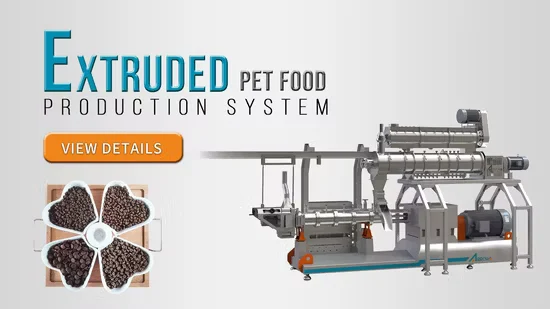
A: Yes, the system is designed to process meat and bone meal effectively. However, we recommend testing your specific formulation on our twin-screw wet food extruders to ensure the thermal processing profile matches your recipe requirements.
Q: How is the production capacity customized for different factory sizes?
A: Production capacity is tailored to your needs. We adjust the machine configuration and dimensions based on your required output in kg/h or t/h, ensuring the line meets your specific throughput goals and operating schedule.
Q: What are the dimensions and space requirements for the PV100 and PV200 models?
A: Dimensions are customizable to fit your factory layout. While the specification lists a reference weight of 1350 KG, the exact length, width, and height are determined during the engineering phase to optimize your available floor space.