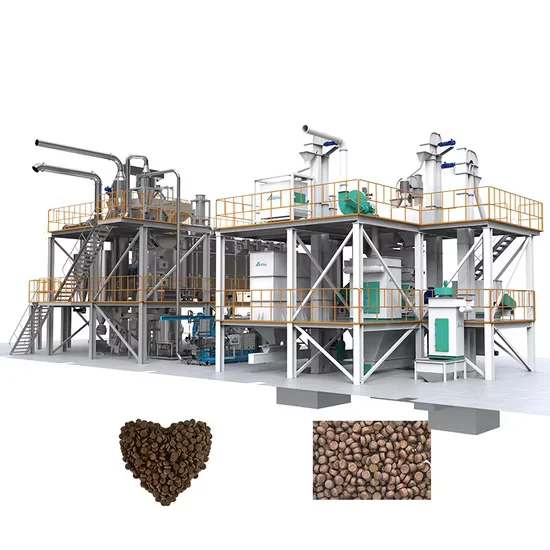
Many buyers sign contracts for a complete pet food production line focusing entirely on nominal throughput, only to realize later that a single worn screw element can halt operations for weeks. Waiting for a custom component to ship from China while your factory sits idle is not just an inconvenience; it is a direct hit to revenue and market share. I have seen this scenario play out in facilities across the Middle East, where high-meat formulas accelerated wear on cutting blades that local suppliers could not match.
The most effective strategy to mitigate this risk is a hybrid approach: stock standard consumable wear parts locally for immediate replacement, while maintaining a direct supply channel with the original equipment manufacturer for core custom components. This balance ensures minimal downtime for routine maintenance while guaranteeing precise engineering matches for critical process adjustments. Understanding how to categorize pet food line spare parts and manage their logistics is as vital as selecting the right extruder.
Categorizing Spare Parts: Core Components vs. Consumable Wear Parts
Not all spare parts are created equal, and treating them as a single inventory category leads to either overstocking expensive items or facing critical shortages. The first step in building a resilient supply chain is distinguishing between core custom components and standard consumable wear parts. Core components include twin-screw extruder barrel liners, specialized screw elements, and forming dies. These parts are engineered to specific tolerances based on your raw material formulation and desired product shape. For instance, a high-starch dry kibble recipe requires different shear profiles than a high-meat wet food chunk, necessitating unique screw configurations.
Standard consumables, on the other hand, include items like hammer mill screens, mixer paddle tips, dryer seals, and conveyor belts. These parts experience uniform wear and are often compatible with general industrial standards. While it might be tempting to source these locally to save on shipping, compatibility issues can arise. A sieve with slightly incorrect aperture dimensions in a pulverizer can lead to inconsistent particle size, affecting mixing efficiency and final product texture. Therefore, even for standard items, initial procurement should come from the original supplier to establish a baseline for quality and fit.
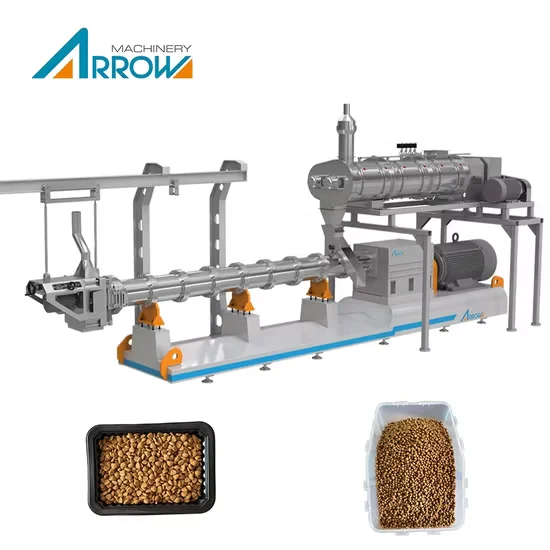
When dealing with complex systems like a Twin-Screw Extruder, the precision of the screw and barrel interface is critical for maintaining pressure and temperature profiles. Any deviation in these core components can result in poor expansion, uneven cooking, or excessive energy consumption. By clearly defining which parts are “critical” and which are “consumable,” you can allocate your budget more effectively and reduce the cognitive load on your maintenance team during emergency repairs.
Direct from China: When and How to Order Original Parts
Ordering China extruder spare parts directly from the manufacturer offers the highest assurance of technical compatibility. Arrow Machinery, for example, designs its equipment based on specific process parameters, meaning that a replacement screw element is not just a piece of metal but a calibrated tool for your specific recipe. When you request a quote for core components, the engineering team can verify that the new part matches the original design specifications, including material grade and heat treatment processes. This level of detail is crucial for maintaining the integrity of your production line.
The process typically begins with a detailed inquiry specifying the machine model, serial number, and the specific part required. For custom items like extruder screws or dies, the manufacturer may need to reference original CAD drawings to ensure exact replication. This is where the value of a long-term relationship with your equipment provider becomes evident. Unlike generic suppliers, the original manufacturer understands the interplay between different sections of the line. For example, if you are upgrading a die to change product shape, they can advise on whether adjustments to the downstream Cross-Flow Circulation Dryer settings are needed to handle the new density or surface area.
Logistics and packaging are also key considerations. Machinery parts, especially those made from polished stainless steel or hardened alloys, require protective wrapping and corrosion prevention to survive ocean freight. Reputable suppliers will use export-grade packing with moisture barriers and secure fixing to prevent movement during transit. While air freight is faster, it is prohibitively expensive for heavy items like barrel sections. Planning ahead and ordering core spares during scheduled maintenance windows allows you to use sea freight, significantly reducing costs without compromising availability.
Local Stock vs. Direct Import: Building a Hybrid Strategy
Relying solely on direct imports leaves you vulnerable to shipping delays, customs clearance issues, and unexpected logistical bottlenecks. Conversely, stocking every possible spare part locally ties up capital and requires significant storage space. The solution lies in a hybrid strategy that leverages the strengths of both approaches. For standard wear parts such as grinder hammers, mixer ribbons, and vacuum coating machine nozzles, establishing a local safety stock is advisable. These items have predictable lifespans and are critical for daily operations.
For core components, however, direct import remains the safer option. Third-party manufacturers may offer cheaper alternatives, but they often lack the precise metallurgical data and machining tolerances of the original parts. Using a non-OEM screw element in a Twin-Screw Extruder can lead to premature wear of the barrel, voiding warranties and causing costly secondary damage. Instead of stocking these expensive items, negotiate a priority production agreement with your supplier. This ensures that when you do need a custom part, it moves to the front of the manufacturing queue.
It is also worth considering regional distributors who may hold stock for common models. While this adds a layer of cost, it can drastically reduce lead times for urgent repairs. Evaluate your local market’s capability to fabricate simple mechanical parts like shafts or brackets, but remain cautious about sourcing complex thermal or wear-resistant components locally unless you have verified their quality standards. The goal is to minimize downtime, not just initial purchase price.
Quality Assurance and Documentation for Replacement Parts
When importing pet food machinery spare parts supply from overseas, documentation is your primary tool for quality assurance. Every shipment should include material certificates, especially for parts in contact with food, to confirm compliance with food safety standards. For wear parts like screws and barrels, hardness test reports and dimensional inspection records provide evidence that the parts meet the required specifications. These documents are essential for internal audits and for maintaining certifications such as ISO 9001.
Additionally, request updated technical drawings and installation guides with each major spare part order. Over time, minor design improvements may be made to enhance durability or performance. Having the latest documentation ensures that your maintenance team installs the parts correctly, avoiding issues like improper torque settings or misalignment. If you are unsure about the installation process, many suppliers offer remote technical support or video guidance to assist your engineers. This level of support transforms a simple transaction into a continued partnership, ensuring your line operates at peak efficiency.
Frequently Asked Questions
Q: What is the typical lead time for custom spare parts like extruder screws from China?
A: Lead times vary based on complexity and current production schedules, but custom screw elements typically take several weeks to manufacture and inspect. Standard wear parts may be available for quicker shipment. It is best to confirm specific timelines with the supplier during the quotation process and plan orders around scheduled maintenance windows to avoid production interruptions.
Q: Can I use third-party wear parts for the mixer and dryer without voiding the warranty?
A: Using non-OEM parts for critical components like extruder screws usually voids the warranty due to precision requirements. For standard mechanical parts like mixer paddles or dryer fans, it may be permissible if they meet identical material and dimensional specs. However, any damage caused by incompatible third-party parts is generally not covered. Always consult your service agreement before substituting components.
Q: How does Arrow Machinery pack and ship spare parts to prevent damage during ocean freight?
A: Parts are packed with corrosion-preventive materials, secure wooden crating, and moisture barriers suitable for long-distance sea transport. Heavy items are fixed to prevent movement, and sensitive surfaces are protected with additional wrapping. The packaging method is adjusted based on the part’s size, weight, and destination to ensure it arrives in perfect condition, ready for immediate installation.
Q: Should I order a full set of spare parts when commissioning a new pet food production line?
A: It is advisable to purchase a recommended initial spare parts kit during commissioning. This kit typically includes high-wear items like seals, gaskets, and cutter blades that may need early replacement. Having these on site ensures you can address minor issues immediately without waiting for international shipping. Your supplier can provide a customized list based on your specific line configuration and expected usage intensity.
To optimize your spare parts strategy and ensure uninterrupted production, contact the Arrow technical team. Share your raw material formula and capacity requirements to receive a detailed recommendation for both core and consumable spare parts, along with relevant technical specifications and layout considerations.