
Extrusion Process Notes Buying Guide
Cooking vs Mixing in Pet Sauce Production Line Buying Guide
This guide addresses product separation and uneven flavor in pet sauce manufacturing by explaining the critical coupling of cooking and mixing stages. Readers learn to match equipment to formulation viscosity and balance capacity to eliminate bottlenecks in their pet sauce production line.
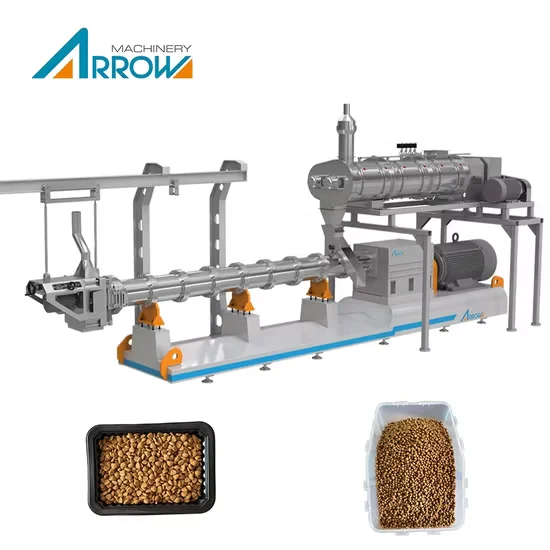
Many new pet sauce factories face product separation or uneven flavor after commissioning. The root cause often lies in purchasing cooking and mixing equipment as isolated units, ignoring their thermodynamic and fluid dynamic coupling. Cooking determines the base texture and sterilization, while mixing ensures uniform distribution of fats, meats, and micronutrients. These two stages must be designed in sync regarding heat transfer and shear forces, not procured separately.
Defining the Roles: Thermal Processing vs Homogenization
In a pet sauce production line, cooking and mixing serve distinct but interdependent functions. Cooking, typically performed in jacketed kettles or continuous cooking systems, is responsible for protein denaturation, starch gelatinization, and microbial reduction. This stage establishes the fundamental viscosity and safety profile of the slurry. Without precise thermal control during this phase, the structural integrity of the sauce cannot be guaranteed, leading to potential spoilage or textural defects downstream.
Mixing, on the other hand, focuses on homogeneity. Whether using a single-shaft or twin-shaft paddle mixer, the goal is to distribute meat chunks, oils, water, and functional additives evenly throughout the base. While cooking alters the chemical state of ingredients, mixing manages the physical distribution. If the shear rate in the mixer does not align with the viscosity established during cooking, the emulsion may break, causing oil to separate from the aqueous phase. This mismatch is a common failure point in poorly integrated lines.
The interaction between these stages defines the final product quality. A well-cooked base that is subsequently mixed with excessive shear can degrade particle size, turning distinct meat chunks into an unappealing paste. Conversely, insufficient mixing time after cooking leads to hot spots and inconsistent flavor profiles. Understanding this dichotomy is essential for investors and production directors who must specify equipment that respects both thermal history and mechanical handling limits.
Equipment Selection: Matching Machinery to Formulation
Selecting the right hardware requires a deep understanding of the specific sauce formulation. For high-meat-content sauces or those containing visible particulates, the choice of mixing technology is critical. Single-shaft paddle mixers are suitable for simpler, lower-viscosity fluids where gentle agitation suffices. However, for complex formulations with high fat content or dense solid inclusions, a twin-shaft paddle mixer offers superior blending efficiency. The counter-rotating shafts create a complex flow pattern that ensures thorough integration without excessive heat generation from friction.
For pure fluid sauces or those requiring intense emulsification, ribbon mixers or specialized high-shear units may be considered, though they must be evaluated against the risk of overheating. In cases where the sauce serves as a coating for dry kibble or treats, the viscosity must be tightly controlled to ensure proper adhesion. Here, the Pet Sauce Production Line configuration often includes a vacuum coating machine downstream. This equipment applies the sauce under negative pressure, forcing the liquid into the pores of the dry substrate, which enhances flavor retention and reduces surface greasiness.
The material of construction also plays a vital role. Stainless steel contact parts must be polished to sanitary standards to prevent bacterial harborage. Additionally, the design of the mixing chamber should facilitate complete discharge to minimize waste between batches. When dealing with sticky or highly viscous sauces, non-stick coatings or specific blade geometries can prevent buildup on the vessel walls, ensuring consistent batch-to-batch quality and reducing cleaning downtime.
Capacity Balancing: Eliminating Bottlenecks in Process Flow
One of the most frequent errors in plant design is mismatching the batch time of cooking vessels with the continuous or semi-continuous rate of mixing and packaging. Cooking is often a batch process due to the time required for heat penetration and holding for sterilization. Mixing and filling, however, can often operate at a faster pace. If the cooking capacity is insufficient, the mixer sits idle, wasting energy and labor. If the mixer is too small, cooked sauce must wait, leading to temperature drops that affect viscosity and potentially compromise food safety.
To avoid these bottlenecks, engineers calculate the total cycle time for each stage. This includes heating, holding, cooling, and discharge times for the cooker, and blending and discharge times for the mixer. A buffer tank may be introduced between the cooking and mixing stages to decouple these operations, allowing the cooker to operate independently of the mixer’s schedule. This flexibility is crucial for maintaining steady throughput in a pet sauce production line, especially when running multiple SKUs with different processing requirements.
Scaling up from pilot trials to full production requires careful attention to these dynamics. A recipe that works in a 50-liter lab kettle may behave differently in a 2000-liter industrial vessel due to changes in surface-area-to-volume ratios and heat transfer rates. Therefore, equipment selection should not be based solely on nominal capacity but on the actual process kinetics. Arrow supports this by offering raw-material trials and testing support, allowing customers to validate their process parameters before finalizing the equipment configuration.
Thermal Control and Hygiene in Sauce Processing
Temperature control is not just about cooking; it extends through mixing and holding. Many sauces are temperature-sensitive, and excessive heat during mixing can cause protein coagulation or fat separation. Therefore, mixers used in hot-fill applications often feature jacketed vessels for temperature maintenance or cooling. Precise control of the thermal profile ensures that the sauce remains within the optimal viscosity range for pumping and packaging, preventing blockages in downstream pipes and nozzles.
Hygiene design is equally critical in wet food processing. The warm, moist environment of a sauce line is ideal for microbial growth if not properly managed. Equipment must be designed for easy cleaning, with minimal dead spaces where product can accumulate. CIP (Clean-in-Place) systems are standard for modern pet sauce production line installations, allowing for automated cleaning cycles that reduce labor and improve consistency. The integration of sanitary valves, polished welds, and accessible inspection points ensures that the facility meets rigorous food safety standards.
Furthermore, the transition from cooking to mixing must be handled with care to prevent contamination. Closed-transfer systems using sanitary pumps and pipelines are preferred over open pouring methods. This not only protects the product from environmental contaminants but also improves operator safety by reducing exposure to hot liquids. By prioritizing these engineering details, manufacturers can ensure a reliable, safe, and efficient production process that delivers consistent quality to the market.
Frequently Asked Questions
Q: What is the ideal sequence for cooking and mixing in a pet sauce production line?
A: The typical sequence involves cooking the base ingredients to achieve sterilization and desired viscosity, followed by cooling to a specific temperature if necessary, and then mixing in heat-sensitive additives or meat chunks. This order ensures that the structural base is set before adding delicate components. Some lines integrate continuous cooking and mixing, but batch cooking followed by controlled mixing is common for complex formulations.
Q: How do I choose between a single-shaft and twin-shaft paddle mixer for wet pet sauces?
A: Choose a single-shaft mixer for lower-viscosity, homogeneous sauces where gentle blending is sufficient. Opt for a twin-shaft paddle mixer for high-viscosity sauces, those with large meat chunks, or formulations requiring intense homogenization. The twin-shaft design provides better coverage and mixing efficiency for difficult-to-blend ingredients, ensuring uniform distribution without excessive shear that could damage product texture.
Q: Can the cooking and mixing capacity be scaled independently for future expansion?
A: Yes, modular design allows for independent scaling. You can add more cooking kettles to increase batch volume or install larger mixers to handle higher throughput. However, the interface between these stages, such as buffer tanks and transfer pumps, must be sized to accommodate the maximum potential flow. Planning for this flexibility during the initial layout phase simplifies future upgrades and minimizes disruption to ongoing production.
Q: What temperature controls are critical during the sauce mixing phase to prevent separation?
A: Maintaining a stable temperature during mixing is vital to preserve emulsion stability. If the sauce cools too much, viscosity may increase, causing pumping issues; if it gets too hot, fats may separate. Jacketed mixers with precise temperature control systems help maintain the optimal range. Monitoring the temperature closely ensures that the physical properties of the sauce remain consistent throughout the mixing and holding periods.
Send your sauce formula, meat content ratio, and target capacity (kg/h) to receive a customized cooking and mixing process layout. Discuss your specific raw material characteristics with our engineering team to determine if pilot trials are needed before finalizing your equipment selection. Request technical specifications and a preliminary plant layout to visualize how each module integrates into your facility.
Target Industries Covered in This Article
Equipment in This Process
Machines mentioned in this article
Each machine is built at the Shandong Arrow Machinery factory and supplied as a standalone unit or as part of a complete extrusion line.
01 Dry Pet Food Production Line
Automatic Twin-Screw Extruder Pet Food Production Line
View machine details 02
Dry Pet Food Production Line
Twin Screw Extruder for Dry Kibble Dog Food Production Line
View machine details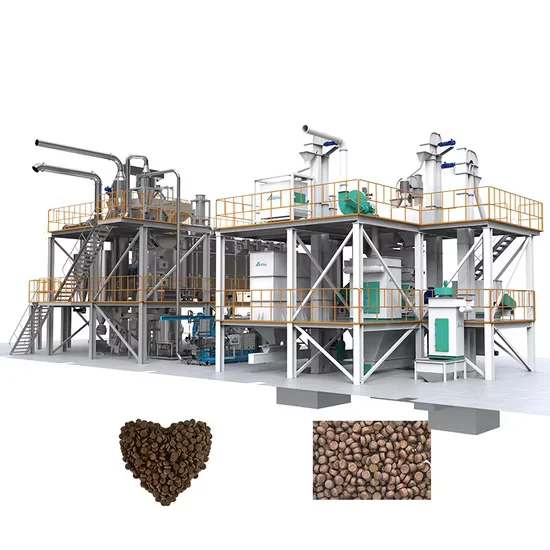 03
Dry Pet Food Production Line
Pet Food Processing Production Line Equipment for Pet Food
View machine details 04
Dry Pet Food Production Line
Dry Dog Food Extruder for Pet Food Production Line
View machine detailsFurther Reading
Related extrusion process notes


Configured Quotation
Send your formula and capacity for a configured line proposal
Shandong Arrow Machinery engineers review your raw materials, product shape and kg/h or t/h target, then propose a single machine or complete pet food, aquafeed or specialty feed line.
- Emailinfo@arrowextrusion.com
- WhatsApp+86 137 9316 7756
- FactoryNo. 47 Chengbohu Road, Jibei Subdistrict, Jiyang District, Jinan, Shandong, China
Request a Quote
Payment by T/T, L/C or Alibaba Trade Assurance. Scope, delivery time and commissioning support are stated in the formal quotation.