
Extrusion Process Notes Buying Guide
Extruder Cutters for Consistent Kibble Length: A Buying Guide
Inconsistent pellet dimensions cause packaging errors and excessive fines, often stemming from poor cutter system synchronization rather than the extrusion formula. Learn to match blade types, optimize stand-off distance, and synchronize speeds for consistent extruder cutters kibble length.

When kibble length varies unpredictably, causing packaging weight errors or excessive fines, the bottleneck is rarely the extrusion formula. It is almost always the cutter system’s selection and synchronization. Achieving consistent extruder cutters kibble length requires more than just swapping blades; it demands precise dynamic matching of cutter speed, blade count, and extruder discharge pressure.
Why Kibble Length Consistency Matters in Pet Food Production
Inconsistent pellet dimensions create cascading problems downstream. If pieces are too long or irregular, they may bridge in the dryer inlet or tumble unevenly in a cross-flow circulation dryer. This leads to moisture pockets where some pieces remain soft while others become brittle. In vacuum coating systems, uneven shapes result in inconsistent flavor uptake, compromising product quality and shelf stability.
Beyond processing efficiency, dimensional accuracy directly impacts commercial viability. Packaging lines rely on consistent volume-to-weight ratios. High variation forces manufacturers to overfill bags to meet minimum weight labels, eroding margins. Furthermore, excessive fines generated by poor cutting increase waste and can cause dust explosion hazards in handling systems. A stable pet food extruder cutter setup minimizes these losses by ensuring every piece meets the target specification before it enters the drying phase.
Matching Cutter Types to Die Faces and Product Shapes
Selecting the right cutting mechanism starts with the die face configuration. For standard round kibbles, a rotary cutter with multiple blades is typical. The number of blades determines the potential cut frequency, but the effective cut depends on the rotational speed relative to the extrudate velocity. For complex shapes like bones, triangles, or stars, the cutter must align precisely with the die holes to prevent deformation.
| Feature | Rotary Cutter | Face Cutter (Stationary) |
|---|---|---|
| Best For | High-volume, standard shapes | Low-volume, delicate textures |
| Speed Control | Variable frequency drive essential | Fixed or manual adjustment |
| Maintenance | Regular blade sharpening/replacement | Less frequent, but harder to access |
| Consistency | High, if synchronized properly | Moderate, prone to drag marks |
The overhang distance (stand-off distance) between the cutter blades and the die face is critical. Too close, and friction generates heat, potentially melting the product surface. Too far, and the extrudate may sag or stretch before being cut, leading to tails. When configuring a Twin-Screw Extruder, engineers must account for the specific rheology of the dough. High-meat formulations behave differently than starch-heavy mixes, requiring adjusted stand-off distances to maintain shape integrity without sticking.
Material Selection for High-Abrasiveness Recipes
Blade material dictates longevity and maintenance intervals. Standard food-grade stainless steel works well for basic cereal-based kibbles. However, modern premium recipes often include high levels of fresh meat, minerals, or fibrous ingredients. These components are abrasive and can dull standard blades rapidly, leading to ragged cuts and increased fines.
For such applications, hardened alloy steels or carbide-tipped blades offer superior wear resistance. The key is balancing hardness with toughness. A blade that is too hard may chip under impact from dense, low-moisture doughs, while one that is too soft will deform. Manufacturers should evaluate blade life based on total running hours per ton of output rather than just initial cost. Regular inspection schedules help detect micro-chipping before it affects consistent kibble size.
Synchronizing Cutter Speed with Extruder Throughput
The most common cause of inconsistent length is a mismatch between cutter speed and extruder output. As throughput increases, the extrudate exits the die faster. If the cutter speed remains static, pellets become longer. Conversely, if the cutter spins too fast for the output rate, it may crush or deform the soft dough.
Modern systems use variable frequency drives (VFDs) to link cutter speed to the main extruder motor or feed rate. This synchronization ensures that as the screw speed adjusts to maintain pressure, the cutter adapts instantly. Operators should establish a baseline ratio of cutter RPM to extruder RPM for each recipe. When scaling up production or changing formulas, this ratio serves as the starting point for fine-tuning.
An extruder cutting system must also handle transient states. During startup and shutdown, flow rates fluctuate. Automated controls can ramp cutter speed up or down in sync with the extruder to minimize waste during these phases. For facilities using a Twin-Screw Extruder, the positive displacement nature of the screws provides a more steady flow than single-screw units, making synchronization easier but still critical for precision.
Frequently Asked Questions
Q: How often should extruder cutter blades be replaced in a pet food plant?
A: Replacement frequency depends on recipe abrasiveness and operating hours. For standard dry kibble, inspect blades weekly and replace when edge radius exceeds manufacturer specs. High-mineral or high-fiber recipes may require replacement every 500–1,000 hours. Monitor fines generation as an early indicator of dullness.
Q: Can I use the same cutter for both high-meat and high-starch kibble recipes?
A: While the same hardware can often process both, optimal settings differ. High-meat doughs are stickier and softer, requiring sharper blades and potentially different stand-off distances. High-starch mixes are more abrasive and rigid. It is best to validate settings via trial runs for each formulation to ensure extruder cutters kibble length remains within tolerance.
Q: How does cutter speed affect the moisture and density of the final kibble?
A: Cutter speed primarily influences shape and length, not internal moisture or density directly. However, inconsistent lengths lead to uneven drying. Shorter pieces dry faster, while longer ones retain moisture. This variability affects overall batch uniformity. Proper synchronization ensures uniform geometry, allowing the dryer to perform consistently across all particles.
Q: What maintenance steps prevent product contamination from cutter wear?
A: Implement a preventive maintenance schedule that includes visual inspection for chipping, regular sharpening or replacement, and lubrication of moving parts with food-grade lubricants. Use magnetic traps or metal detectors downstream to catch any accidental metal fragments. Keep detailed logs of blade usage to predict failure points before they occur.
Send your kibble formula, target capacity, and current extruder model to receive a customized cutter system configuration and trial recommendations from our technical team. We can help you balance speed, gap, and pressure to achieve precise cuts and reduce waste.
Target Industries Covered in This Article
Equipment in This Process
Machines mentioned in this article
Each machine is built at the Shandong Arrow Machinery factory and supplied as a standalone unit or as part of a complete extrusion line.
01 Cross-Flow Circulation Dryer
Arrow Cross Circulation Dryer Equipment for Pet Feed
View machine details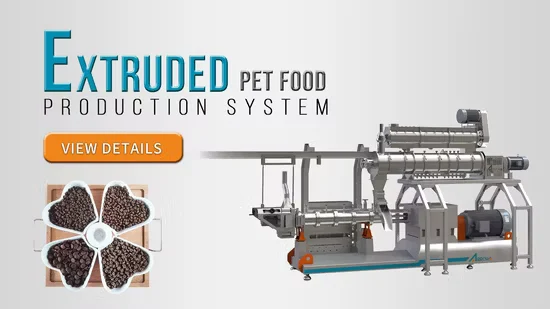 02
Twin-Screw Extruder
Twin-Screw Extruder for Dry Kibble Pet Food Manufacturing Equipment
View machine details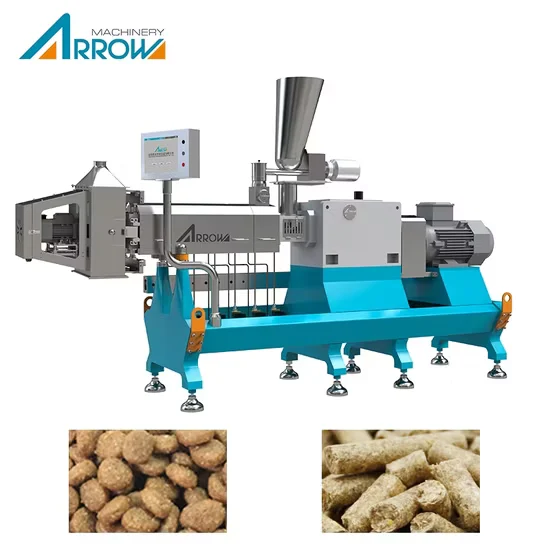 03
Twin-Screw Extruder
Small Twin-Screw Extruder Machine for Pet Food Plant
View machine details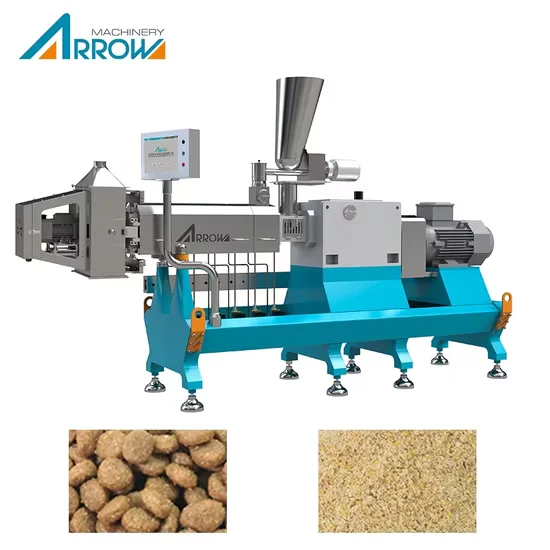 04
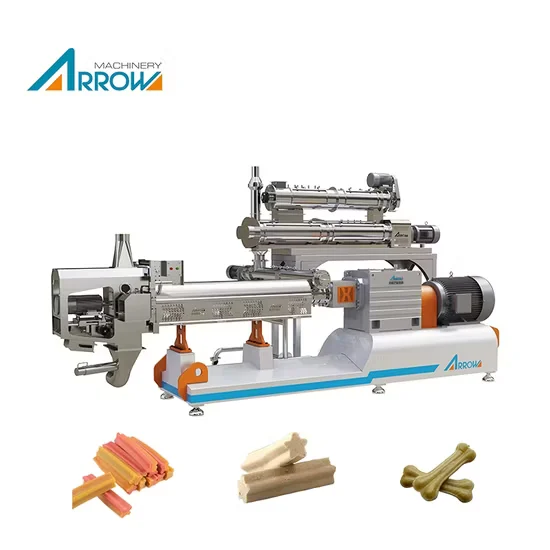
Twin-Screw Extruder
Twin Screw Pet Food Extruder Machine for Laboratory Use
View machine detailsFurther Reading
Related extrusion process notes



Configured Quotation
Send your formula and capacity for a configured line proposal
Shandong Arrow Machinery engineers review your raw materials, product shape and kg/h or t/h target, then propose a single machine or complete pet food, aquafeed or specialty feed line.
- Emailinfo@arrowextrusion.com
- WhatsApp+86 137 9316 7756
- FactoryNo. 47 Chengbohu Road, Jibei Subdistrict, Jiyang District, Jinan, Shandong, China
Request a Quote
Payment by T/T, L/C or Alibaba Trade Assurance. Scope, delivery time and commissioning support are stated in the formal quotation.