
Extrusion Process Notes Buying Guide
Fresh Meat Pet Food Lines vs Dry Kibble Extruders: A Buying Guide
This guide explains why standard dry kibble extruders fail when processing high fresh meat inclusion due to inadequate shear force and moisture issues. Readers learn to evaluate dedicated twin-screw systems, specialized mixing, and drying upgrades for stable production and better ROI.

Ramping fresh meat inclusion above 30 percent while relying on a standard dry kibble extruder is the most common cause of failed forming, excessive moisture retention, and frequent machine blockages. Many plant managers assume that simply increasing motor power will solve the issue, but the root cause often lies in inadequate shear force and poor pre-conditioning setup.
Handling high proportions of fresh meat requires more than just a stronger motor. It demands a dedicated process approach involving specialized twin-screw extrusion systems, precise fresh meat pre-mixing, and matched drying capacities to ensure product stability and quality. Without these adjustments, the viscosity and thermal properties of fresh ingredients overwhelm conventional dry meal configurations.
Why Traditional Dry Kibble Extruders Struggle with High Fresh Meat
Standard dry kibble lines are engineered for low-moisture raw materials such as meat meals, corn, and wheat flour. These ingredients flow predictably and require minimal mechanical energy to hydrate during extrusion. When you introduce fresh chicken, beef, or fish at levels exceeding 30 percent, the physical behavior of the mash changes drastically. The high water content reduces friction inside the barrel, causing the material to slip rather than convey forward. This slippage leads to inconsistent pressure buildup, which is critical for proper starch gelatinization and protein denaturation.
In my recent visits to European contract manufacturers, I observed that many facilities attempted to push forty percent fresh chicken into existing single-screw or basic twin-screw setups. The result was almost always the same: the feeder choked within minutes, or the final pellets emerged soggy and misshapen. The issue is not merely about volume; it is about rheology. Fresh meat acts as a lubricant, reducing the shear heat generated by friction. Without sufficient mechanical shear from the screw configuration, the core temperature fails to reach the levels needed for food safety and structural integrity.
Furthermore, traditional dryers associated with standard kibble lines are often sized for lower initial moisture inputs. When the extrudate exits the die with significantly higher water content due to fresh meat addition, the drying section becomes a bottleneck. Attempting to compensate by slowing down the entire line reduces overall throughput and increases energy costs per ton, negating the economic benefits of using cheaper fresh raw materials.
Core Equipment Upgrades for Fresh Meat Pet Food Lines
To successfully process high fresh meat inclusion pet food, the equipment suite must be upgraded to handle viscous, high-moisture slurries. The first critical component is the mixing system. A Twin-Shaft Paddle Mixer is essential for blending fresh meat, bone paste, and dry ingredients into a homogeneous mass before it enters the extruder. Unlike ribbon mixers, twin-shaft designs provide intense agitation that breaks down fibrous tissues and ensures even distribution of fats and liquids, preventing segregation during feeding.
The heart of the line is the extruder itself. For fresh meat applications, a high-torque Twin-Screw Extruder is non-negotiable. These machines allow for modular screw configurations, enabling engineers to insert specific kneading blocks and reverse elements that generate the necessary shear heat without relying solely on friction against the barrel wall. This mechanical energy input ensures that proteins denature uniformly and starches gelatinize properly, even when the natural friction of the mix is low due to high moisture.
Additionally, post-extrusion coating requires precision. High fresh meat recipes often leave less room for surface fat application if the internal fat content is already high, yet palatability remains key. A Vacuum Coating Machine allows for the infusion of oils and heat-sensitive nutrients into the porous structure of the kibble after drying. This method prevents the greasy surface feel associated with drum coating and ensures better shelf stability, which is crucial for premium products targeting health-conscious pet owners.
Drying and Coating Adjustments for High-Moisture Extrudates
Drying is frequently the underestimated constraint in fresh meat production. The extrudate coming out of a high-meat formulation contains significantly more free water than standard kibble. If this moisture is not removed efficiently, the product is susceptible to mold growth and texture degradation during storage. A Cross-Flow Circulation Dryer offers superior control in these scenarios by ensuring uniform air distribution across the product bed. This design minimizes case hardening, where the outer layer of the pellet dries too quickly and traps moisture inside, leading to soft centers.
Comparing drying technologies reveals why standard external air circulation may fall short for high-capacity fresh meat lines. While external circulation dryers are effective for lower moisture loads, they may struggle to maintain consistent differential pressure when dealing with the dense, sticky nature of high-meat pellets. The cross-flow design allows for better heat transfer efficiency and faster moisture migration from the core to the surface. Operators must carefully balance temperature and airflow velocity to avoid cracking the pellets while achieving the target moisture level, typically below 10 percent for dry kibble.
Coating also requires adjustment. Since fresh meat recipes often have higher internal fat levels, the surface oil absorption capacity changes. Using a double-drum flavoring machine might lead to uneven coverage if the pellets are too moist or too oily. Integrating vacuum coating technology ensures that flavors and preservatives penetrate the kibble matrix, enhancing palatability without compromising the structural integrity of the pellet. This step is vital for maintaining the premium quality expected by consumers buying high-meat inclusion products.
Evaluating ROI: Dedicated Fresh Meat Line vs. Dry Kibble Retrofit
For contract manufacturers and brand owners, the decision between retrofitting an existing line and investing in a dedicated fresh meat pet food line comes down to flexibility versus efficiency. Retrofitting involves changing screw elements, upgrading the mixer, and potentially expanding drying capacity. This approach has a lower upfront capital cost but may limit throughput due to the inherent constraints of the original dryer and cooler design. It is suitable for facilities that only occasionally produce high-meat formulas and can afford longer changeover times.
A dedicated fresh meat line, however, is engineered from the ground up to handle the specific rheological challenges of fresh ingredients. Every component, from the pre-conditioner to the final packaging interface, is balanced for higher moisture loads. This results in higher overall equipment effectiveness (OEE) and reduced waste during startup and shutdown. While the initial investment is higher, the ability to run continuously at optimal speeds for high-value products often yields a better return on investment for facilities focused on premium segments.
Shandong Arrow Machinery supports both approaches by offering modular machinery purchases and integrated line projects. Customers can request standalone machines like a new extruder or mixer to complement existing infrastructure, or opt for a complete turnkey solution. The key is to match the equipment duty points across the line to avoid bottlenecks. Engineering support helps evaluate whether a retrofit is feasible based on current utility limits and footprint, or if a new line is necessary to meet capacity goals.
Frequently Asked Questions
Q: Can a standard dry kibble extruder handle 30% or more fresh meat?
A: Generally, no. Standard extruders lack the torque and screw configuration needed to generate sufficient shear heat when high moisture reduces friction. Attempting this often leads to slippage, unstable pressure, and poor pellet formation. Specialized twin-screw setups with modular kneading blocks are required to process such formulations effectively.
Q: What screw configuration is required for high fresh meat inclusion?
A: High fresh meat recipes need screws with intensive mixing and kneading elements to create mechanical shear heat. Reverse elements help build pressure, while conveying elements must be designed to prevent slippage. The exact configuration depends on the specific ingredient viscosity and desired product density, requiring technical consultation.
Q: How does the drying time change when switching from dry meal to fresh meat recipes?
A: Drying time typically increases because the extrudate has higher initial moisture content. If the dryer is not upgraded or adjusted, it becomes a bottleneck. Operators may need to reduce line speed or increase drying temperature carefully to avoid case hardening, ensuring the core moisture reaches safe levels without damaging the pellet structure.
Q: Do I need a completely new production line to add fresh meat pet food to my portfolio?
A: Not necessarily. You can retrofit existing lines by upgrading the mixer to a twin-shaft paddle model, installing a high-torque twin-screw extruder, and verifying dryer capacity. However, for high-volume production, a dedicated line optimized for fresh meat handling offers better efficiency and consistency. A technical assessment of your current setup is recommended.
Send your fresh meat formula ratios, target capacity, and existing factory layout to receive a customized equipment configuration plan. We can discuss raw material trials to validate the process before finalizing your technical specifications and layout design.
Target Industries Covered in This Article
Equipment in This Process
Machines mentioned in this article
Each machine is built at the Shandong Arrow Machinery factory and supplied as a standalone unit or as part of a complete extrusion line.
01 Uncategorized
Cold Press Fresh Meat Baked Pet Food Equipment for Dog Cat
View machine details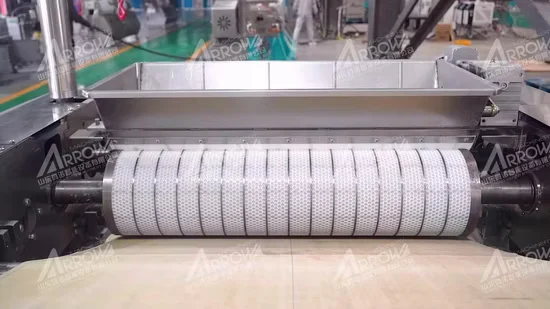 02
Uncategorized
Baked Pet Food Production Line Equipment for Fresh Meat Dog Cat Food
View machine details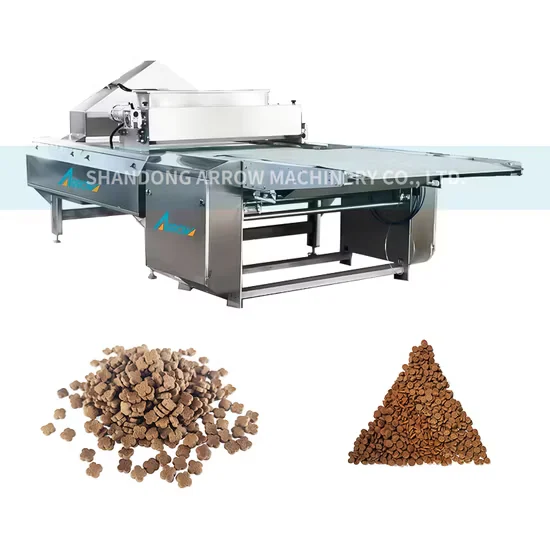 03
Uncategorized
Cold Press Forming Equipment for High Fresh Meat Baked Pet Food
View machine details 04
Kibble Pet Food Production Line
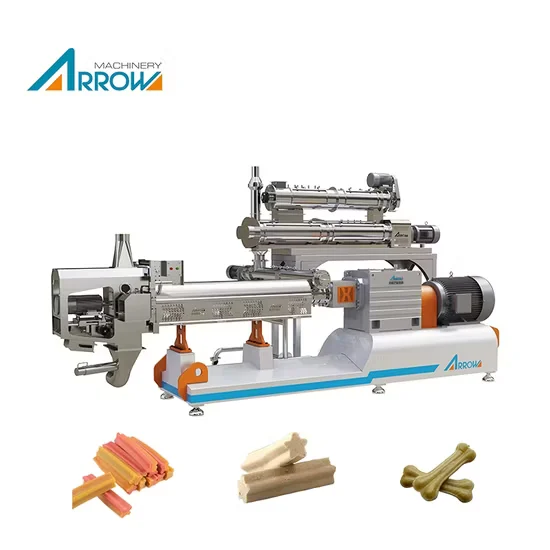
Automatic Fresh Meat Dry Pet Food Line for Dog Cat
View machine detailsFurther Reading
Related extrusion process notes



Configured Quotation
Send your formula and capacity for a configured line proposal
Shandong Arrow Machinery engineers review your raw materials, product shape and kg/h or t/h target, then propose a single machine or complete pet food, aquafeed or specialty feed line.
- Emailinfo@arrowextrusion.com
- WhatsApp+86 137 9316 7756
- FactoryNo. 47 Chengbohu Road, Jibei Subdistrict, Jiyang District, Jinan, Shandong, China
Request a Quote
Payment by T/T, L/C or Alibaba Trade Assurance. Scope, delivery time and commissioning support are stated in the formal quotation.