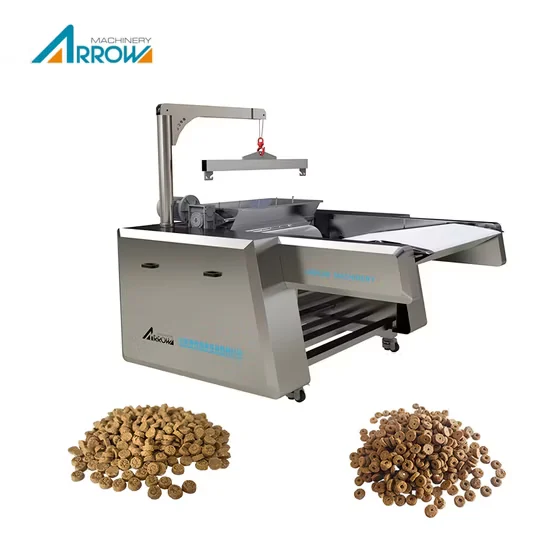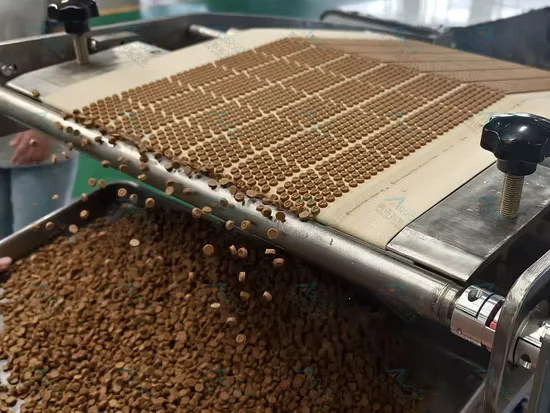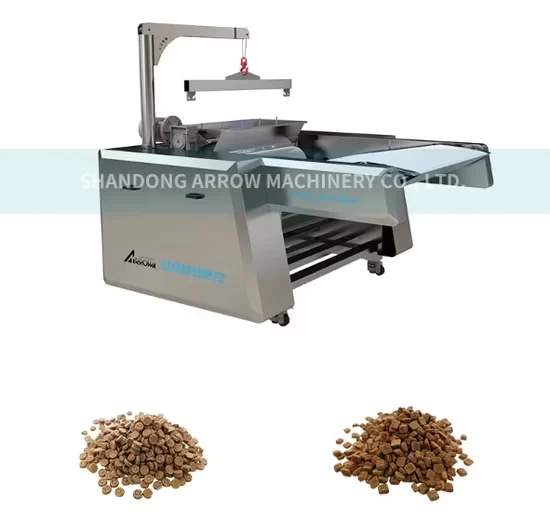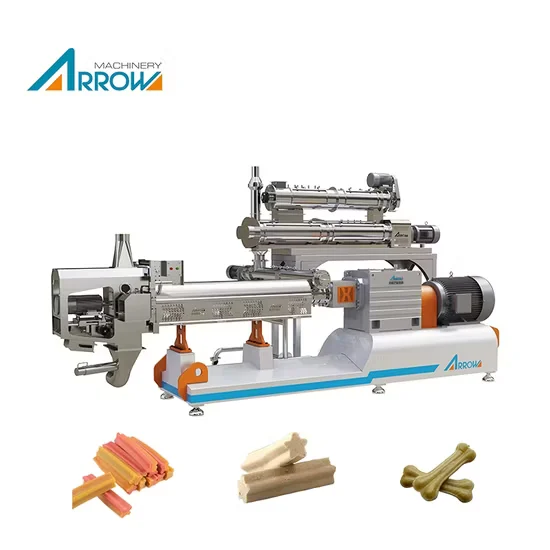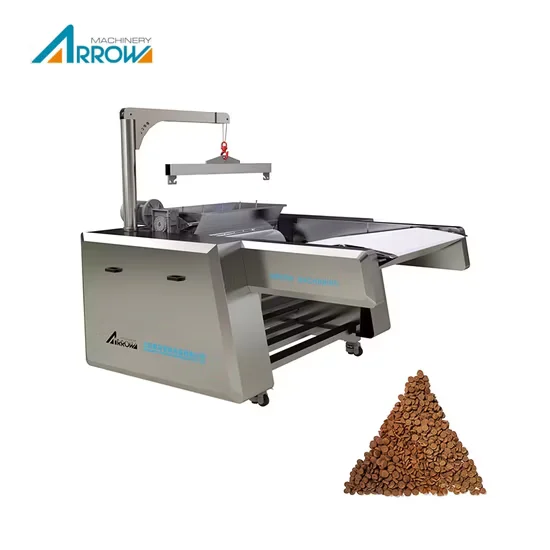
Many pet food contract manufacturers upgrading their baked snack lines discover a harsh truth: even with a perfect laboratory recipe, production batches often fail. If the forming machine’s cutting precision does not match the dough characteristics, biscuits suffer from cracked edges or inconsistent dimensions, directly lowering yield and increasing waste.
To ensure high consistency and smooth line operation, you must evaluate more than just mold quantity. The core solution lies in assessing how the equipment handles specific dough rheology, controls cutting accuracy, and synchronizes with downstream drying parameters. A well-configured baked pet food forming machine integrates these factors to maintain product integrity from the die to the final package.
Evaluating Dough Compatibility and Cutting Precision
Different baked dough formulations behave uniquely under mechanical stress. High-meat-content mixes exhibit different flow properties compared to high-starch blends, requiring precise adjustments in screw configuration and feeding speed. If the equipment cannot maintain stable pressure at the forming die, the dough may expand unevenly or tear as it exits the mold. This instability is often the root cause of misshapen products that crumble during handling.
Cutting precision is equally critical for maintaining uniform weight and shape. The synchronization between the extrusion output and the cutter mechanism determines whether each biscuit retains its intended geometry. Irregular cutting speeds or dull blades can compress soft dough, leading to distorted edges that become more pronounced after baking. When selecting a baked pet food forming machine, verify that the control system allows fine-tuning of cutter speed relative to the extruder output. This ensures that every piece is separated cleanly without dragging or deforming the soft matrix.
Furthermore, the temperature profile at the die head influences dough viscosity. If the temperature is too high, the dough may become too fluid to hold its shape; if too low, excessive back-pressure can damage the motor or cause irregular flow. Equipment suppliers should provide guidance on optimal thermal settings for your specific formulation. This level of process control prevents common issues like surface cracking or internal voids, which compromise the structural integrity of the final baked treat.
Matching Forming Capacity with Downstream Drying Systems
A frequent bottleneck in pet treat production is the mismatch between forming output and drying capacity. The baked pet food forming machine may produce wet biscuits at a rate that overwhelms the subsequent dryer, causing material buildup and inconsistent moisture removal. Conversely, if the forming rate is too low, the dryer operates inefficiently, wasting energy and potentially over-drying the product. Balancing these duty points is essential for a stable continuous process.
The moisture distribution of the wet billets exiting the former directly impacts drying uniformity. If the forming process creates biscuits with varying densities or thicknesses, the dryer will remove moisture at different rates across the batch. This leads to some pieces being under-dried while others become brittle. Integrating a Cross-Flow Circulation Dryer with precise airflow control can help mitigate these variations, but the input consistency from the former remains the primary factor.
When designing your line, consider the total water removal requirement. The forming stage sets the initial moisture content and physical structure, which dictates the residence time needed in the dryer. Suppliers should calculate the thermal load based on your target capacity and product specifications. This holistic approach ensures that the baked pet food forming machine and drying system work in harmony, preventing bottlenecks that disrupt production schedules.
Assessing Mold Flexibility and Changeover Efficiency
Contract processors often need to switch between various biscuit shapes, such as bones, fish, or circles, to meet diverse client demands. The versatility of your pet biscuit shaping equipment depends on the supplier’s mold library and custom tooling capabilities. A broad selection of standard molds reduces initial investment, while the ability to commission custom dies allows you to create unique products that stand out in the market.
However, mold variety is useless if changeovers are time-consuming. Frequent stops for cleaning and mold replacement erode overall equipment effectiveness. Look for designs that facilitate quick release and easy access to the die head. Modular components that can be cleaned offline allow the main unit to remain operational or reduce downtime significantly. This efficiency is crucial for facilities running multiple SKUs on a single line.
Additionally, consider the wear resistance of the molds. Abrasive ingredients in certain formulations can degrade standard steel tools over time, leading to loss of definition in the biscuit details. High-quality alloys or specialized coatings can extend mold life and maintain sharp edges for longer periods. Discuss material options with your supplier based on your typical ingredient mix to ensure long-term reliability and consistent product appearance.
Verifying Manufacturer Engineering and Support Capabilities
Selecting a machine is not just about hardware; it is about securing a partner who understands your process challenges. Reliable suppliers offer raw-material trials to validate how your specific formula behaves in their equipment. These tests reveal potential issues with texture, expansion, or cutting before you commit to a purchase. Requesting such trials ensures that the proposed configuration matches your actual production needs rather than theoretical estimates.
Engineering support extends to plant layout and integration. A well-designed layout minimizes material handling distances and ensures safe access for maintenance. Suppliers should provide detailed drawings that account for your facility’s dimensions, utility connections, and workflow requirements. This proactive planning prevents costly modifications during installation and helps optimize operator efficiency.
Finally, clarify the scope of after-sales support. Overseas commissioning, operator training, and spare parts availability should be defined in the contract. Knowing that technical experts can assist with startup and troubleshooting provides peace of mind, especially for complex lines involving multiple interconnected systems. This comprehensive support structure minimizes downtime and accelerates the path to full production capacity.
Frequently Asked Questions
Q: Can the forming machine handle high-meat-content dough for baked pet biscuits?
A: Yes, but it requires specific screw configurations and precise temperature control to manage the sticky nature of high-meat doughs. The equipment must maintain stable pressure to prevent deformation during cutting. Suppliers should conduct trials with your specific formula to determine the optimal settings for consistent shape retention and texture.
Q: How do I ensure the cut biscuit shapes remain intact after the drying process?
A: Consistency starts at the forming stage. Ensure the dough has uniform moisture and density before cutting. Synchronize the cutter speed with the extrusion rate to avoid dragging. Additionally, match the forming capacity with the dryer’s throughput to prevent uneven drying, which can cause warping or cracking in the final baked product.
Q: What is the typical lead time for custom mold manufacturing?
A: Lead times vary based on complexity and current production schedules. Standard molds are often available off-the-shelf, while custom designs require engineering and machining time. Discuss your specific shape requirements early in the quotation process to align mold delivery with your equipment installation timeline and avoid project delays.
Q: Can the forming machine be integrated into my existing baking and drying line?
A: Integration is possible if the interface points match. The supplier must review your current dryer’s capacity, conveyor width, and control systems. They will assess whether the new former can synchronize with existing upstream and downstream equipment. A technical evaluation of your current layout is necessary to confirm compatibility and identify any required modifications.
Send your baked biscuit formula, target shapes, and expected capacity to receive a customized forming solution. Our engineering team can review your requirements, suggest appropriate configurations, and provide technical specifications along with preliminary layout options for your facility.