Many investors sign turnkey contracts assuming equipment arrival marks the finish line, only to realize that true capacity release depends on the integration of machinery with factory infrastructure. The gap between delivery and stable production often stems from overlooked utility constraints or mismatched process modules rather than mechanical failures.
The kibble line installation timeline is not a fixed duration but a variable outcome driven by site readiness, equipment complexity, and coordination efficiency. Accelerating this phase requires aligning civil works, utility connections, and operator training with the manufacturing schedule, ensuring that the physical plant can support the technical demands of extrusion and drying systems from day one.
Key Variables Influencing Commissioning Duration
The speed at which a pet food plant reaches target output relies heavily on pre-installation preparation. Factory infrastructure, including power supply stability, steam availability, and compressed air capacity, must match the specifications of high-load equipment. If electrical panels are not upgraded to handle the startup current of a large twin-screw extruder, or if boiler capacity falls short during peak drying demand, commissioning halts until these utilities are rectified.
Production scale and automation levels also dictate the schedule. A modular setup with standalone machines allows for phased testing, whereas a fully integrated line with automated conveying and central control systems requires synchronized debugging of every node. Complex lines demand more time for logic verification and sensor calibration, as a fault in one section can cascade through the entire process.
Local construction conditions and team coordination play an equally critical role. In regions where skilled electrical or mechanical labor is scarce, or where communication barriers exist between local contractors and equipment suppliers, simple tasks like pipe alignment or cable termination can consume disproportionate time. Efficient project management requires clear delineation of responsibilities, ensuring that civil works, such as foundation curing and drainage installation, are completed before heavy machinery arrives.
Phases of Installation and Process Validation
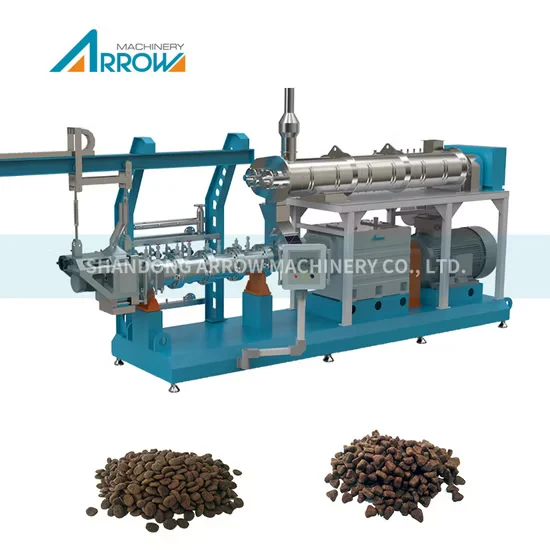
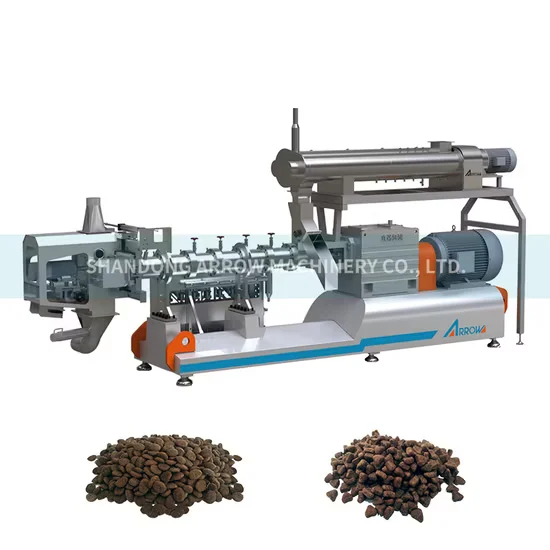
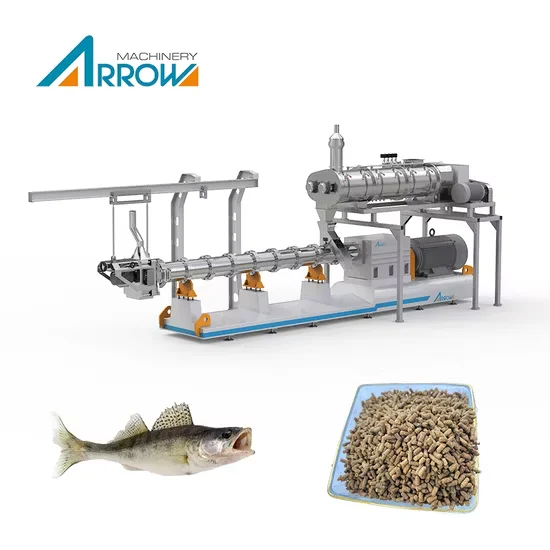
Arrow’s approach to installation follows a structured sequence designed to isolate mechanical issues before introducing raw materials. The initial phase involves mechanical positioning, where machines like the Twin-Screw Extruder and Cross-Flow Circulation Dryer are leveled and anchored. This stage includes connecting process piping for steam and water, as well as electrical wiring for motors and control panels. Proper alignment at this stage prevents vibration and wear during high-speed operation.
Once mechanical assembly is complete, the team conducts no-load tests to verify motor rotation direction, sensor functionality, and safety interlocks. This is followed by linked commissioning, where the entire line runs empty to check material flow and communication between PLCs. For instance, ensuring that the feeder responds correctly to signals from the extruder barrel temperature controllers is vital for maintaining consistent product density.
The final phase involves trial runs with actual ingredients. Here, process parameters such as screw speed, barrel temperature profiles, and cutter frequency are adjusted to achieve the desired kibble shape and texture. Moisture content is closely monitored as the product moves through the drying system, requiring fine-tuning of airflow and temperature zones. This stage validates not just the machine, but the interaction between the recipe and the hardware, ensuring that the final product meets quality standards before full-scale production begins.
Strategies to Expedite Site Setup
Buyers can significantly reduce downtime by synchronizing civil construction with equipment manufacturing. While the machinery is being built and tested at the factory, the site team should finalize floor coatings, install utility bridges, and prepare logistics paths for unloading. Ensuring that power transformers and steam boilers are operational before the equipment arrives eliminates common bottlenecks that delay electrical and thermal commissioning.
Training local operators and maintenance*ating in factory acceptance tests or online training sessions allows the site team to understand the equipment’s logic and maintenance requirements before it lands. Familiarity with the control interface and routine cleaning procedures reduces the learning curve during on-site trials, enabling faster troubleshooting and parameter adjustment.
Clear contractual definitions of service scope also prevent delays. Specifying whether the supplier provides only supervision or full hands-on installation, along with visa support and spare parts availability, ensures that resources are allocated correctly. Having critical spares on site from day one avoids waiting for shipments when minor components fail during initial run-ins, keeping the project on track.
Aligning Expectations for Turnkey Projects
It is essential to distinguish between mechanical installation time and process validation time. While bolting down machines and connecting wires may take a few weeks, achieving stable product quality with a new formula can take longer. Factors such as ingredient variability, moisture absorption rates, and desired pellet buoyancy require iterative adjustments. Buyers should plan for a buffer period to accommodate these process tweaks without pressuring the team to rush critical quality checks.
Contingency planning for local variables is crucial. Voltage fluctuations, fuel quality inconsistencies, or unexpected regulatory inspections can disrupt the schedule. A resilient project plan includes backup power solutions, alternative fuel sources, and flexible staffing arrangements. By anticipating these risks, teams can pivot quickly rather than halting progress entirely.
Transitioning from factory acceptance testing to site acceptance testing should be smooth if documentation is thorough. Detailed records of factory trials provide a baseline for on-site comparisons, helping engineers identify whether deviations are due to machine performance or local utility differences. This data-driven approach minimizes guesswork and speeds up the final sign-off process.
Frequently Asked Questions
Q: What is the average mechanical installation time for a standard kibble production line?
A: Mechanical installation typically takes two to four weeks, depending on line complexity and site readiness. This period covers positioning, leveling, and utility connections for key units like the extruder and dryer. However, this estimate assumes that civil works and power supplies are fully prepared before equipment arrival. Delays in infrastructure can extend this phase significantly.
Q: How much time should we allocate for process tuning and trial runs with our own formula?
A: Process tuning usually requires one to three weeks, varying with recipe complexity and product specifications. Adjusting parameters for texture, moisture, and shape involves iterative testing with actual ingredients. High-meat formulations or unique shapes may need more time to stabilize. Adequate raw material stockpiles are necessary to support these trials without interrupting the schedule.
Q: Does Arrow provide overseas engineers for on-site commissioning, and what are the prerequisites?
A: Yes, overseas engineering services are available, with scope defined contractually. Prerequisites include completed civil works, ready utilities, and local labor support for heavy lifting. Visa arrangements and travel logistics must be coordinated in advance. Clear communication regarding installation boundaries ensures that both parties understand their responsibilities during the commissioning phase.
Q: What factory utilities must be ready before the extruder and dryer arrive at the site?
A: Stable power supply, steam generation, compressed air, and water treatment systems must be operational. Electrical panels should match voltage and frequency requirements, while steam boilers need sufficient capacity for drying and preconditioning. Proper drainage and ventilation are also essential for safe and efficient operation. Verifying these utilities early prevents costly retrofits later.
Send your factory dimensions, capacity requirements, and raw material formulation to receive a customized layout plan with estimated installation timelines. Discuss specific utility constraints with our engineering team to ensure your infrastructure supports the technical demands of your chosen production line. Request detailed technical specifications and process flow diagrams to validate your project schedule before finalizing equipment orders.