
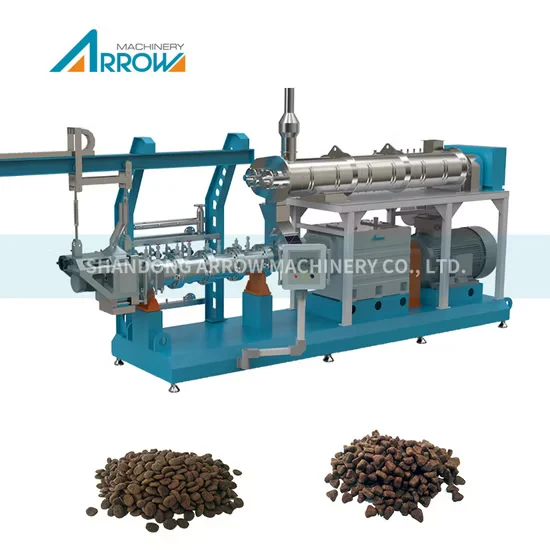
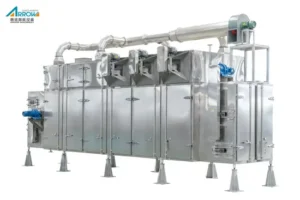
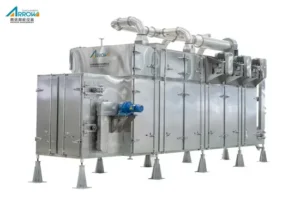
Process & Design
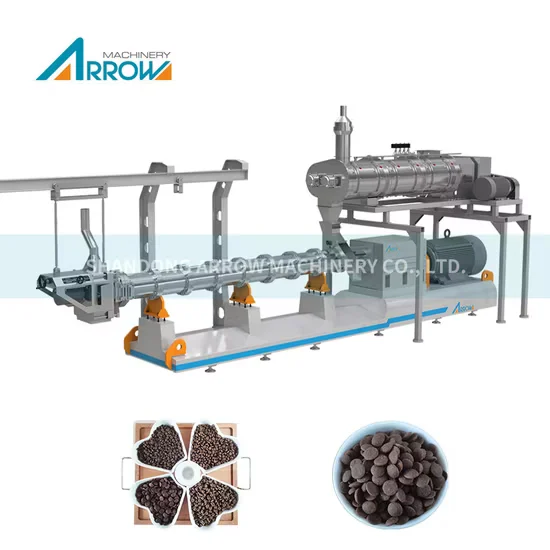
How Automatic Dry Kibble Dog Food Stainless Processing Line works in your plant
Matched capacity balance — Integrated drying and cooling prevent moisture inconsistency in high-volume kibble production.
Technical Specifications
| Parameter | Value |
|---|---|
| Product | Automatic Dry Kibble Dog Food Processing Line (150kg-10t/h) |
| Brand | Arrow |
| Capacity | 150kg-10t/H |
| Power Source | Electric |
| Automatic Grade | Fully Automatic |
| Process | Thermal Processing (Extrusion-Drying-Cooling) |
| Contact Material | Food Grade Use (304 Stainless Steel) |
| Control System | Siemens Touch Screen, Rexroth Inverter, Siemens Motor |
| Feeder | Loss Weight Type / Volumetric Feeder |
| Screw & Barrel | Modular Design, Easy Replacement |
| Heating Temperature | Adjustable |
| Feeding Speed | Adjustable |
| Dimensions | 1200015002600MM |
| Warranty | 1 Year |
| After-sales Service | Provide |
Application Suitability
| Product / Industry | Typical Use |
|---|---|
| Dry Pet Food Manufacturers | Production of standard kibble for dogs and cats with consistent density. |
| Private-Label Contract Processors | Flexible lines handling varying formulations for multiple client brands. |
| Aquafeed Producers | Manufacturing of sinking or floating feed pellets for fish and shrimp. |
Why Kibble Size Drifts After Two Hours of Running
Stable extrusion requires balancing screw configuration, thermal control, and downstream drying.
Many factories face a common issue: the initial batch looks perfect, but after hours of continuous running, particle dimensions shift and moisture levels become inconsistent. This often stems from mismatched equipment rather than poor recipes. When the dryer cannot keep up with the extruder output, heat and humidity build up, damaging product integrity. Coordinating these stages in a single integrated automatic line prevents such bottlenecks.
Where This Line Fits in Your Workflow
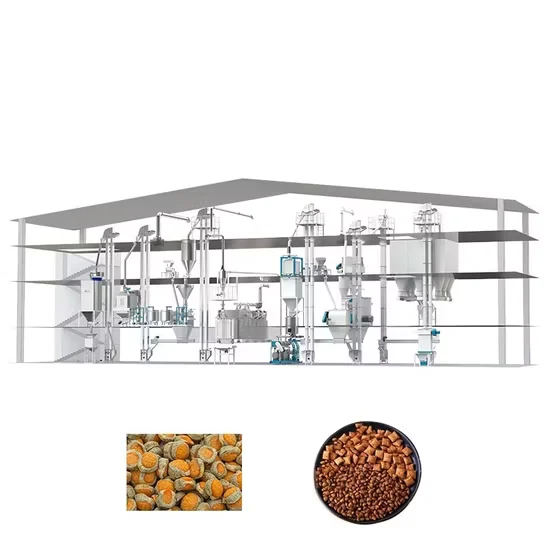
This Automatic Dry Kibble Pet Food Production Line bridges the gap between raw material preparation and final packaging. It begins with grinding and mixing to ensure uniform ingredient distribution, then moves to extrusion where thermal processing forms the kibble. The subsequent drying and cooling stages stabilize the product, ensuring it meets moisture targets before storage. This sequence is critical for maintaining shape and preventing spoilage in dry pet food manufacturing.
Production Challenges in High-Volume Kibble Making
Raw material variability, such as changes in protein source or fresh meat content, can alter flow properties and extrusion pressure. High-fat formulations may cause slippage in the barrel if the feeder is not precise enough. Maintaining consistent particle shape and density requires tight control over cutting speed and die pressure. Furthermore, uneven drying can lead to case hardening, where the exterior dries too fast while the interior remains moist. Continuous operation demands systems that can handle these fluctuations without frequent stoppages for cleaning or adjustment.
Understanding Core Components
The modular screw and barrel design allows for quick configuration changes to suit different kibble shapes and sizes. This flexibility is vital for contract processors who switch between product lines frequently. The Siemens touch screen and Rexroth inverter provide precise control over feeding speed and heating temperature, ensuring stable extrusion conditions. Food-grade 304 stainless steel contact parts meet hygiene standards and resist corrosion from salty or acidic ingredients. The integrated process reduces manual handling, lowering the risk of contamination and improving overall efficiency.
Hidden Costs of Poor Equipment Selection
Choosing an extruder without considering downstream capacity can lead to significant production losses. If the dryer is undersized, you may need to reduce extruder speed, wasting potential output. Inconsistent moisture levels can result in entire batches being rejected due to mold risk or texture issues. Frequent breakdowns from inadequate component quality increase maintenance costs and downtime. Upgrading later often requires reconfiguring the entire layout, which is far more expensive than getting the balance right initially.
Why Source This Line from Arrow
We offer manufacturer-oriented supply of complete extrusion lines, ensuring all components work together harmoniously. Our engineering team assesses your specific ingredients and target product characteristics to configure the optimal screw profile. We support raw-material trials to verify performance before finalizing the machine specification. Custom line layouts are designed to fit your existing factory dimensions or new plant plans. Export project coordination includes factory acceptance testing and options for overseas commissioning. Ongoing process consultation and spare-parts support help maintain long-term operational stability.
Documentation & Delivery
- Detailed technical specifications and electrical diagrams for each machine unit.
- Customized layout drawings based on your factory floor dimensions.
- Comprehensive operation and maintenance manuals in English.
- Factory acceptance test records verifying performance before shipment.
- Export packing suitable for ocean freight with corrosion prevention.
- Commercial invoices and packing lists prepared per contract terms.
Installation, Operation & Maintenance
- Ensure adequate floor space for the 1200015002600MM footprint and maintenance access.
- Connect to stable electric power supply matching the Siemens motor requirements.
- Conduct initial trial runs with actual raw materials to calibrate feeding speeds.
- Clean the screw and barrel thoroughly after each production batch to prevent residue buildup.
- Replace modular screw elements easily when wear affects product consistency.
- Adjust heating zones and cutter speed during changeovers for different kibble sizes.
Requesting a Configuration Quote
To receive an accurate proposal, specify the type of pet food, raw material formulation, and required capacity in kg/h. Include details on desired kibble shape, size, and target moisture content. Provide your factory dimensions, available power voltage, and heat source preferences. Mention if you need layout design, installation support, or operator training. Our engineering team will review these details to recommend the appropriate feeder type and screw configuration. You will receive a formal quotation with model specifications and commercial terms.
Frequently Asked Questions
Q: How does the modular screw design benefit production flexibility?
A: The modular design allows engineers to swap screw elements quickly to adjust shear and compression levels. This enables the same line to produce different kibble shapes and densities without replacing the entire barrel. It supports diverse recipes, from high-starch dry foods to high-meat formulations, enhancing versatility for contract manufacturers.
Q: What is the difference between loss weight and volumetric feeders?
A: Volumetric feeders measure ingredients by volume, suitable for stable, free-flowing powders. Loss weight feeders measure by mass, offering higher precision for ingredients with variable density or sticky properties. The choice depends on your raw material characteristics and the required accuracy for consistent extrusion pressure and final product quality.
Q: Can the line be customized for specific capacities between 150kg/h and 10t/h?
A: Yes, the system is scalable. We select specific extruder models, dryer sizes, and motor powers to match your exact throughput target. Whether you need a small pilot line or a large industrial plant, the configuration is adjusted to ensure balanced capacity across all processing stages without bottlenecks.
Q: What are the power and utility requirements for this system?
A: The line uses electric power for motors, heaters, and controls. Specific voltage and frequency depend on your local grid and the selected Siemens motor configurations. We require details on your available power supply to ensure compatibility. Additional utilities like compressed air may be needed for pneumatic components, specified in the final layout.
Q: Does the quotation include installation and operator training?
A: Installation and training services are available and defined in the contract scope. We can provide overseas engineers for commissioning and hands-on training for your operators. The extent of support, including travel costs and duration, is agreed upon during the technical review phase to match your project needs and budget constraints.
Shipping
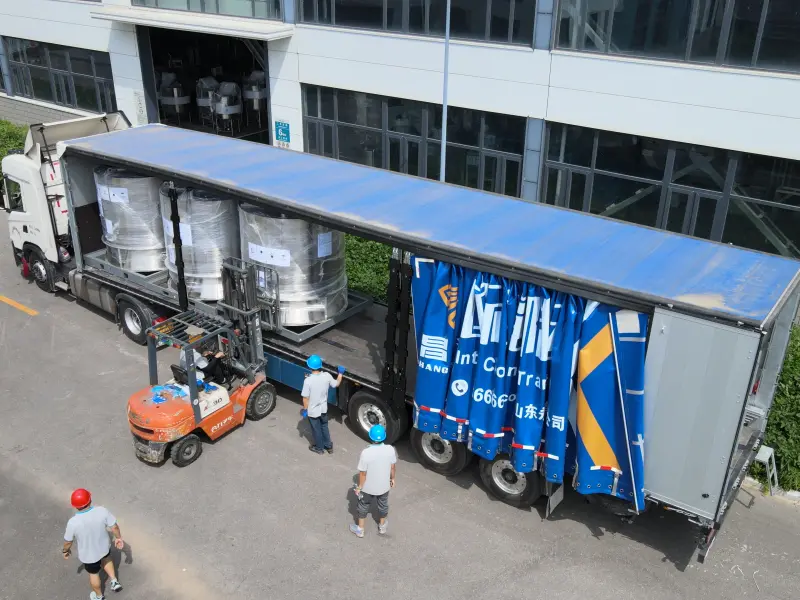
Container sea freight or rail · spare parts by air
Delivery & Support
From factory acceptance to stable production
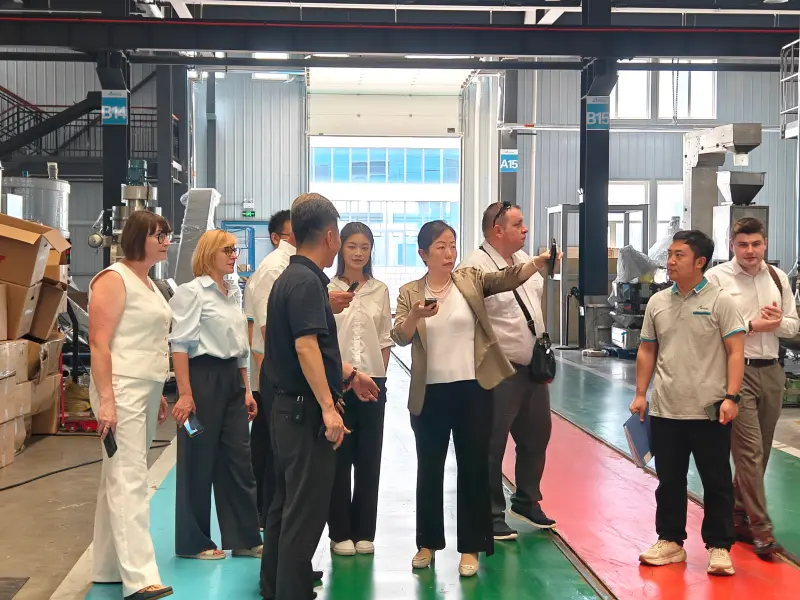
Every Shandong Arrow Machinery machine ships with full documentation, on-site commissioning support and a spare-parts channel tied to its serial number, so your line keeps running after start-up.
-
Shipping documents
Equipment specification, configuration list, drawings where applicable, operation manual, packing list, commercial invoice and export documents.
-
Testing & inspection
Factory test records, videos, inspection reports and material declarations, by product type and contract.
-
Installation & training
Installation, commissioning, operator training and maintenance guidance, with the scope set in your contract.
-
Spare parts
Screws, extrusion dies, gearboxes and wear parts, supplied against your machine's serial number or model.
Same Category
Related pet food machines
These machines and lines sit in the same process family, so you can build a complete line or add a single stage with them.

Lab Twin Screw Food Extruder Equipment for Pet Snack Manufacturing
View details
High Meat Content Pet Food Making Equipment Plant
View details
Small Laboratory Extruder for Cat and Dog Food Testing Equipment
View details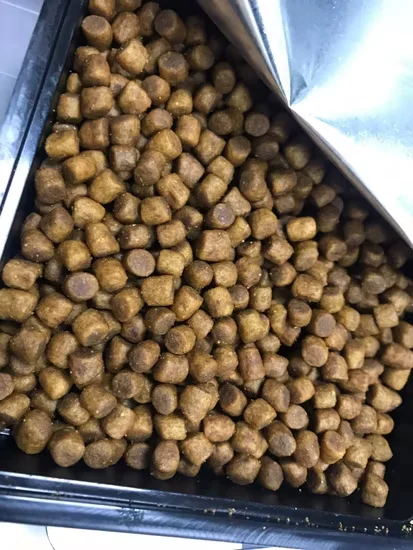
Dog Food Meat Strip Extruder for Dog Snacks Equipment
View details
Not sure this configuration fits your formula?
Tell us your target product, raw materials and output in kg/h. Our engineers confirm the process first, then recommend the extrusion and drying setup.
Applications
Pet products this machine is built for
This equipment is configured for the pet product types below. Open an application to see the full process route and matching machines.

Engineering Notes
Selection guides & technical articles
Read how process engineers choose extrusion, drying and coating setups for pet food before they commit to a configuration.
3 Key Differences in Equipment for Steam-Baked vs Extruded Kibble
Read article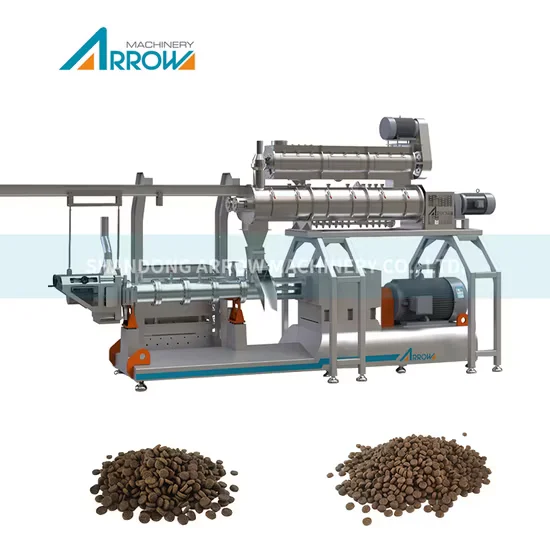
Baked vs Extruded Dog Biscuit Processing Guide for Brands
Read article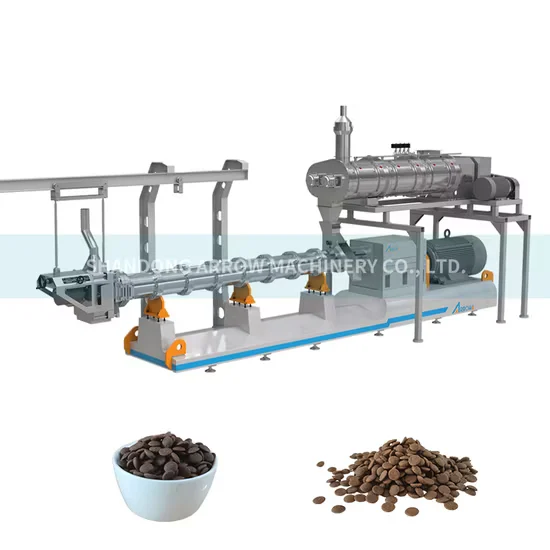
Extruded vs Baked Kibble Lines and How to Choose the Right One
Read articleFAQ
Questions buyers ask about this machine
Short answers on trials, lead time, documents and spare parts from Shandong Arrow Machinery, a pet food machinery manufacturer in Jinan, China.
Can I test my formula before I order?
Yes. Where conditions allow, we arrange formula and process trials on our process test platform, and you can send your own raw material for testing. Agreed raw-material tests are completed before production or shipment.
What is the lead time?
The lead time is stated in your formal quotation, based on the confirmed model, configuration and scope of supply. Machines ship by container sea freight or rail, and spare parts can go by air.
Which documents come with the machine?
You receive the final equipment specification, configuration list, equipment drawings where applicable, operation manual, packing list, commercial invoice and export or shipping documents. Factory test records, videos, inspection reports and material declarations are provided according to product type and contract.
How do I get spare parts after commissioning?
Send us your machine's serial number or model and we match the right parts. We supply screws, extrusion dies, gearboxes and wear parts, along with process consultation and service.
More answers on our pet food machinery FAQ page.
Request a quote for Automatic Dry Kibble Dog Food Stainless Processing Line
Share your target product and output. You receive a technical proposal with model, scope of supply and options.
- WhatsApp +86 137 9316 7756
- Email info@arrowextrusion.com
- No. 47 Chengbohu Road, Jibei Subdistrict, Jiyang District, Jinan, Shandong, China