
Extrusion Process Notes Brands & Alternatives
Baked vs Extruded Dog Biscuit Processing Guide for Brands
This guide addresses how forming and drying methods dictate the texture and nutrient profile of baked vs extruded dog biscuits for brands. Readers learn to align process choices with brand strategy by evaluating mechanical shear, thermal drying impacts, and recipe feasibility.
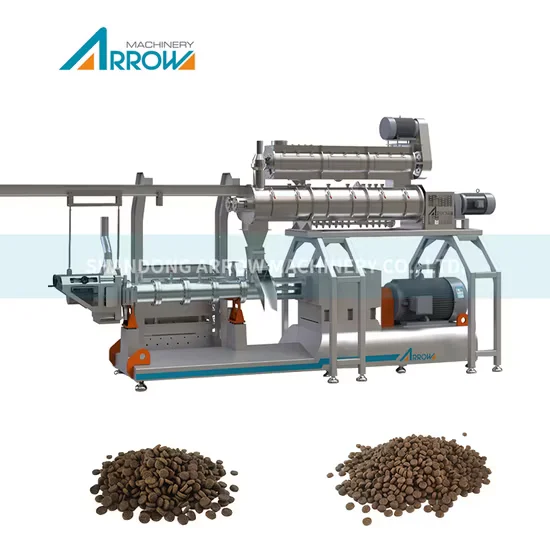
Many pet food brands underestimate how forming and drying methods dictate the final texture and nutrient profile of their snacks. This oversight often leads to homogeneous products that struggle to stand out in a crowded market. Understanding the mechanical and thermal differences between processing methods is critical for defining your brand’s identity.
Extrusion suits high-density, high-volume standard snack production, while baking excels at creating crisp textures, preserving heat-sensitive nutrients, and enabling premium differentiation. Your choice should depend on product positioning, recipe characteristics, and desired mouthfeel rather than equipment cost alone.
Mechanical Shear vs. Thermal Drying: Core Process Differences
The fundamental distinction in baked vs extruded dog biscuits lies in how the dough is formed and stabilized. Extrusion relies on mechanical shear and pressure within a barrel. A twin-screw extruder mixes, cooks, and shapes the material simultaneously. The high temperature and pressure cause starch gelatinization, which expands the product as it exits the die. This process is highly efficient for creating uniform shapes and densities at scale.
Baking, by contrast, uses a forming machine to shape the dough before it enters a drying or baking chamber. This method typically involves lower temperatures over a longer period. The lack of intense mechanical shear means the structural integrity of the ingredients remains more intact. It allows for the inclusion of higher levels of fresh meat or delicate fibers that might break down under extrusion pressure. The process is slower but offers greater control over surface texture and internal crumb structure.
Energy consumption and footprint also vary significantly. Extrusion lines are compact and energy-intensive during the cooking phase but fast. Baking lines require more floor space for ovens or drying rooms and often have longer residence times. For factories with limited space, an extrusion line might offer better throughput per square meter. However, if your goal is a specific artisanal texture, the spatial trade-off for baking equipment is often justified by the product quality.
Texture, Nutrition, and Shelf Life Impacts
The processing method directly influences the sensory experience and nutritional value of the final treat. Extruded biscuits tend to be denser and harder. This makes them ideal for dental health claims or long-lasting chews. The high heat can degrade some heat-sensitive vitamins, though preconditioning and precise temperature control can mitigate this loss. The porous structure created by expansion allows for effective coating application later in the line.
Baked biscuits offer a lighter, crispier bite that many owners associate with human-grade cookies. Because the cooking temperature is generally lower and more gradual, natural flavors and aromas are better preserved. This is crucial for brands marketing “natural” or “grain-free” recipes where ingredient integrity is a key selling point. The Maillard reaction during baking enhances flavor without the need for excessive artificial enhancers.
Moisture control is vital for shelf stability in both processes. After extrusion, products often require significant drying to reduce water activity. A cross-flow circulation dryer ensures even moisture removal, preventing warping or cracking. In baking, the drying phase is integrated into the cooking process, but final moisture levels must still be monitored closely. Uneven drying can lead to mold growth or texture inconsistencies. Selecting the right drying system, such as an external air circulation dryer, depends on the initial moisture content and the target shelf life.
Aligning Process Choice with Brand Strategy
Your brand positioning should drive the selection between baked vs extruded dog biscuits. If you are targeting the mass market with functional treats like dental chews or high-energy training rewards, extrusion is the logical choice. It handles high volumes efficiently and allows for consistent shape and size. The ability to adjust screw configuration and die plates means you can produce various shapes without changing the entire line setup.
For premium brands focusing on palatability and clean labels, baking offers a distinct advantage. Consumers often perceive baked treats as healthier due to the less aggressive processing. This method supports recipes with high fresh meat inclusion, which is difficult to achieve in standard extrusion without specialized low-temperature cold extruders. If your marketing emphasizes “oven-baked” or “slow-cooked,” the equipment must reflect that narrative.
Recipe composition also dictates feasibility. High-fat or high-fiber formulations may not extrude well without significant modification. Baking is more forgiving of diverse ingredient profiles. However, if your recipe relies on starch expansion for texture, extrusion is necessary. Evaluate your raw materials carefully. A trial run can reveal whether your formula behaves better under shear or thermal stress.
Integrating Equipment for Efficient Production
A complete production line requires seamless integration of all stages, from grinding to coating. For extrusion, the process starts with precise mixing and conditioning. The twin-screw extruder then forms the product, which moves to drying and coating. For baking, the mixer feeds a forming machine, which places the dough onto trays or belts for the oven. Both paths converge at the packaging stage, but the intermediate steps differ greatly.
Flexibility is key for contract manufacturers. A facility might use a twin-screw extruder for standard kibble and a separate baking line for specialty treats. Alternatively, modular designs allow for switching between processes if the layout permits. Consider the upstream and downstream equipment. A vacuum coating machine is essential for adding high-fat palatants to extruded treats, while a single-drum flavoring machine might suffice for baked goods with surface seasoning.
Maintenance and cleaning protocols also influence line design. Extruders require regular screw and barrel inspection. Baking ovens need thorough cleaning to prevent carbon buildup. Choosing equipment with accessible components reduces downtime. When planning a new factory or upgrading an existing one, ensure that utility requirements like steam, electricity, and air compression match the chosen technology. A well-balanced line avoids bottlenecks, ensuring that the dryer does not limit the output of the former.
Frequently Asked Questions
Q: Can a single production line switch between extruded and baked dog biscuits?
A: No, these are distinct processes requiring different core machinery. Extrusion uses a screw-based system for cooking and forming, while baking uses a forming machine and an oven or dryer. You cannot convert an extruder into a baker. However, a facility can house both lines and share upstream preparation equipment like grinders and mixers, allowing for diversified product portfolios without duplicating every asset.
Q: How does the moisture content after baking affect the shelf life of dog biscuits?
A: Lower moisture content reduces water activity, which inhibits microbial growth and extends shelf life. Baked biscuits must be dried to a specific threshold, often below 10-12%, depending on the recipe. Inconsistent drying can create pockets of higher moisture, leading to spoilage. Using a reliable drying system, such as a cross-flow circulation dryer, ensures uniform moisture removal and consistent product stability throughout the batch.
Q: What is the typical lead time and installation scope for a complete baked pet treat line?
A: Lead times vary based on customization, capacity, and current production schedules. A formal quotation will specify the exact timeline. Installation scope typically includes equipment placement, electrical and utility connections, and commissioning. Training for operators and maintenance staff is also part of the service package. Detailed project planning and contract agreements define the specific responsibilities for shipping, installation, and start-up support.
Q: Which drying system is more energy-efficient for high-moisture baked dog snacks?
A: Energy efficiency depends on the initial moisture load and target final moisture. Cross-flow circulation dryers are often efficient for continuous operations with consistent product flow. External air circulation dryers may suit different batch sizes or product types. The best choice requires analyzing your specific recipe and throughput needs. Engineering teams can evaluate your utility constraints and recommend a drying solution that balances energy use with drying performance.
Send your product formula, target capacity, and factory dimensions to receive a customized technical proposal. Whether you need a standalone machine or a full turnkey line, our engineering team can help you select the right process. Request a quotation to discuss raw material trials and view detailed layout options for your facility.
Equipment in This Process
Machines mentioned in this article
Each machine is built at the Shandong Arrow Machinery factory and supplied as a standalone unit or as part of a complete extrusion line.
01 Dry Pet Food Production Line
Automatic Extruded Dog Pet Food Product Line Equipment
View machine details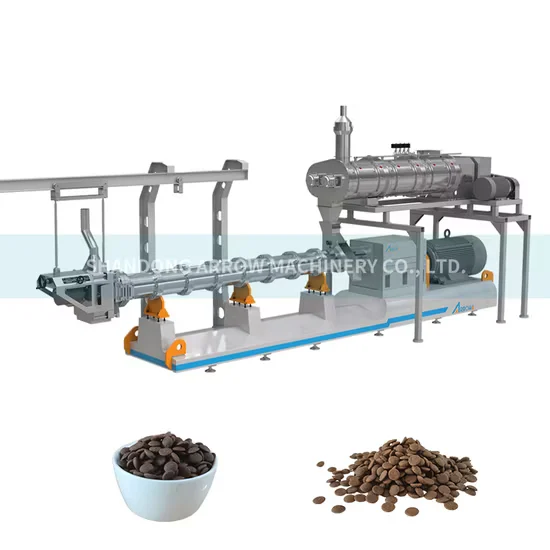 02
Dry Pet Food Production Line
Twin Screw Pet Dog Cat Feed Extruded Processing Line
View machine details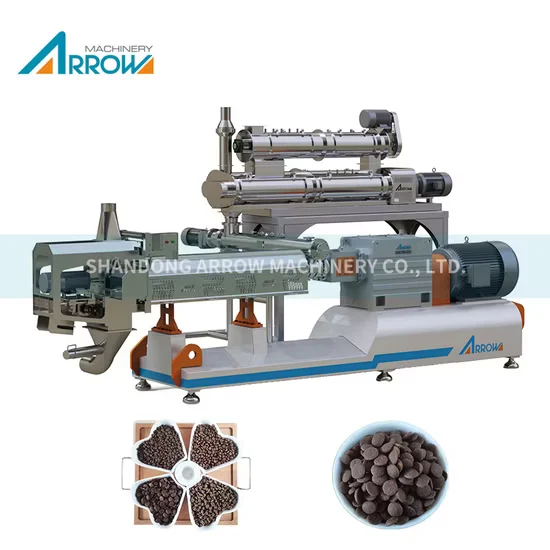 03
Dry Pet Food Production Line
Dry Extruded Pet Food Production Line Equipment for Dog
View machine details 04
Pet Treats Production Line
Cold Extruded Soft Dog Snacks Forming Equipment for Lecithin
View machine detailsFurther Reading
Related extrusion process notes

· Brands & Alternatives· 7
Pet Food Extruder Choices: Arrow vs Alternative Brands
Read the article · Brands & Alternatives· 7
Enzymatic Hydrolysis Palatants Make or Buy Guide for Pet Food
Read the article
· Brands & Alternatives· 7
How to Switch from Bentonite to Starch-Based Cat Litter Production
Read the article
Configured Quotation
Send your formula and capacity for a configured line proposal
Shandong Arrow Machinery engineers review your raw materials, product shape and kg/h or t/h target, then propose a single machine or complete pet food, aquafeed or specialty feed line.
- Emailinfo@arrowextrusion.com
- WhatsApp+86 137 9316 7756
- FactoryNo. 47 Chengbohu Road, Jibei Subdistrict, Jiyang District, Jinan, Shandong, China
Request a Quote
Payment by T/T, L/C or Alibaba Trade Assurance. Scope, delivery time and commissioning support are stated in the formal quotation.