Many pet snack brands perfect a meat strip recipe in the lab, only to face uneven drying or inconsistent texture during mass production. The root cause often lies not in the formula itself, but in selecting equipment that fails to address the specific thermal and mechanical demands of high-meat formulations.
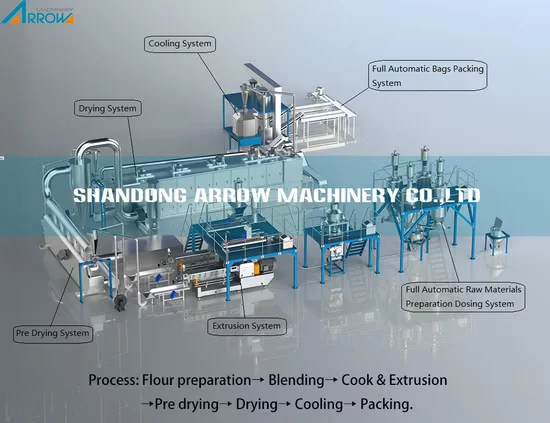
A successful Meat Jerky Line for Dog Treats depends on precise coordination between extrusion, drying, and coating systems. Rather than focusing solely on the extruder’s shaping capability, manufacturers must balance the entire process to ensure batch stability in moisture, texture, and flavor. This approach prevents bottlenecks and ensures the final product meets quality standards consistently.
From Mixing to Shaping: Managing High-Meat Formulas
The first stage of any Meat Jerky Line for Dog Treats involves preparing raw materials for consistent feeding. When working with fresh meat or high-protein blends, uniform mixing is critical to prevent separation before the material reaches the extruder. Inconsistent feed can lead to fluctuating pressure inside the barrel, resulting in irregular strip dimensions and variable density.
For formulations with significant fresh meat content, a twin-screw extruder offers superior control compared to single-screw alternatives. The intermeshing screws provide positive displacement, ensuring that sticky or high-viscosity dough moves steadily through the barrel without slipping. This mechanical action allows for precise temperature management, which is vital when dealing with heat-sensitive proteins that may denature or lose nutritional value if overheated.
During my time on the testing platform, I observed how a slight imbalance in feeder speed could cause surging in the die head. By adjusting the screw configuration and using a forced feeder, we stabilized the output. This experience highlights why equipment selection must account for ingredient behavior, not just nominal capacity. A pet jerky extruder designed for dry kibble may struggle with the rheology of wet meat pastes, leading to frequent stoppages and wasted material.
Balancing Throughput: Extrusion and Drying Coordination
Once the strips are formed, the drying phase becomes the most critical determinant of shelf life and texture. A common mistake in planning a dog treat production line is sizing the extruder for maximum output while underestimating the time required for gentle drying. If the dryer cannot remove moisture at the same rate the extruder produces strips, the entire line must slow down, creating a bottleneck.
Cross-flow circulation dryers are often preferred for meat jerky because they provide uniform air distribution across multiple trays or conveyor belts. Unlike direct high-heat methods, cross-flow systems allow for lower temperature drying over a longer period. This gentle approach preserves the chewy texture desired in dog chews while reducing the risk of surface hardening or case formation, which can trap moisture inside the strip.
Matching the capacity of the Meat Strips / Jerky Processing Line requires calculating the total water removal load. For example, if the extrudate enters the dryer at 30% moisture and must exit at 15%, the dryer’s fan capacity and heating elements must be sized to handle this specific evaporation rate. Overloading the dryer leads to uneven moisture content, where some strips remain too soft while others become brittle. This inconsistency complicates packaging and increases the risk of microbial growth during storage.
Enhancing Palatability: Precision Coating Solutions
After drying, many manufacturers apply coatings to enhance flavor and appeal. The choice of coating equipment depends on the nature of the additive. For oil-based flavors or heat-sensitive nutrients, vacuum coating machines offer a distinct advantage by forcing the liquid into the porous structure of the dried strip. This method ensures deep penetration rather than just surface coverage, improving palatability without making the product greasy to the touch.
For simpler surface seasoning, drum flavoring machines provide an efficient solution. These systems tumble the dried jerky while spraying a fine mist of flavoring agent, ensuring even distribution. However, care must be taken to avoid over-wetting, which can rehydrate the product and compromise its shelf stability. The integration of a cooling stage before coating helps stabilize the strip temperature, allowing for better adhesion of powders or liquids.
Selecting the right meat strips processing equipment for coating also involves considering cleanup and changeover times. Facilities producing multiple flavors need systems that are easy to sanitize to prevent cross-contamination. Modular designs that allow for quick disassembly of drums or spray nozzles can significantly reduce downtime between batches. This operational efficiency is as important as the technical performance of the machine itself.
Optimizing Layout for Efficiency and Expansion
Planning the physical layout of a dog chew manufacturing plant requires more than just placing machines in a row. Utilities such as power, steam, and compressed air must be accessible at each stage, and maintenance access points should not be obstructed. A well-designed layout minimizes the distance materials travel between processes, reducing the need for complex conveying systems that can damage fragile jerky strips.
For new facilities, it is advisable to design the foundation and utility connections with future expansion in mind. Modular configurations allow manufacturers to add capacity or additional processing steps, such as secondary drying or specialized packaging, without disrupting existing operations. Evaluating ceiling height, floor load capacity, and ventilation requirements early in the design phase prevents costly modifications later.
Shandong Arrow Machinery supports this planning process by offering custom line layouts based on specific factory dimensions and utility constraints. By reviewing the site plan before equipment fabrication, engineers can identify potential conflicts and optimize the flow of materials. This proactive approach ensures that the installed Meat Jerky Line for Dog Treats operates smoothly from day one, with clear access for operators and maintenance staff.
Frequently Asked Questions
Q: What is the ideal moisture target for dog meat jerky after drying?
A: The target moisture content typically ranges between 15% and 20%, depending on the specific recipe and desired texture. Lower moisture levels extend shelf life but may result in a harder chew, while higher levels maintain softness but require careful packaging to prevent spoilage. Consistent drying is essential to achieve uniform water activity throughout the batch.
Q: Can a twin-screw extruder handle high fresh meat ratios for pet treats?
A: Yes, twin-screw extruders are well-suited for high-meat formulations due to their positive displacement and mixing capabilities. They can process sticky, high-viscosity doughs more effectively than single-screw machines. However, the specific screw configuration and feeder type must be selected to match the rheology of the fresh meat blend to ensure stable output.
Q: How do I ensure uniform flavor coating on irregularly shaped meat strips?
A: Uniformity depends on both the coating method and the consistency of the dried product. Vacuum coating forces flavorings into the product structure, ensuring deep penetration, while drum flavorers provide even surface coverage through tumbling. Ensuring the strips are fully cooled and have consistent surface texture before coating also improves adhesion and distribution.
Q: What utilities and footprint are required for a 500 kg/h meat jerky line?
A: Requirements vary based on the specific equipment configuration and local conditions. Generally, you will need three-phase power for motors, a heat source for drying (steam, gas, or electric), and compressed air for pneumatic controls. Footprint depends on the layout, including space for material handling and maintenance access. A detailed quotation provides exact specifications.
Send your formula details and required capacity to receive a custom line layout and technical specification. Our engineering team can review your raw material profile to recommend the optimal configuration for your Meat Jerky Line for Dog Treats, ensuring a balanced and efficient production process.