
Extrusion Process Notes Buying Guide
Pet Food Extruder Guide: 5 Things to Check Before Buying
Buying a pet food extruder requires more than comparing host unit quotes to avoid production bottlenecks. Base your decision on raw material formulation and factory utilities to ensure the entire system matches without process issues.

Many buyers importing a pet food extruder focus heavily on the host machine price while overlooking how screw configuration matches raw material characteristics. This oversight often leads to soaring defect rates during mass production when the equipment cannot handle specific ingredient behaviors.
Procuring a pet food extruder requires more than comparing host unit quotes. You must base your decision on raw material formulation, target product morphology, and factory utilities to ensure system matching. This approach guarantees that standalone machines and the entire production line connect without process bottlenecks.
Align Screw Design with Ingredient Behavior
The core of any extrusion process lies in the interaction between the mechanical shear provided by the screws and the thermal energy applied to the ingredients. A generic screw setup rarely succeeds across diverse pet food recipes because starch gelatinization and protein denaturation require precise conditions.
When your formula includes high levels of fresh meat or fats, the material behaves differently than standard grain-based mixes. High moisture and lipid content reduce friction inside the barrel, which can cause slippage and unstable output if the screw elements do not provide adequate conveying and mixing force. Conversely, high-starch recipes demand higher shear to achieve proper expansion and texture.
A one-size-fits-all approach fails here. If you plan to produce both high-meat kibble and standard dry food, you need a twin-screw pet food extruder with configurable screw elements. This flexibility allows you to adjust compression ratios and shear intensity without replacing the entire machine. Ignoring this match means your extruder might run smoothly during trials with simple corn-soy blends but struggle significantly when you introduce animal proteins or fibrous ingredients.
Validate Actual Throughput and Shape Consistency
Theoretical capacity figures on a brochure rarely reflect real-world output. Actual throughput depends heavily on product density, moisture targets, and the efficiency of downstream handling. A machine rated for 1000 kg/h may only deliver 700 kg/h if the recipe requires low-density floating pellets or if the cutting system cannot keep pace with the extrudate speed.
Product consistency is equally critical. The dimensions of your kibble or treats are determined by the die plate, cutter speed, and the stability of the extrusion pressure. Uneven particle sizes often stem from fluctuations in feed rate or inconsistent moisture content entering the barrel. To mitigate this, verify that the feeding system provides uniform material flow and that the cutter assembly is robust enough for continuous operation.
When evaluating a pet food extrusion machine, ask specifically about the cutting mechanism and die changeover process. Quick-change dies minimize downtime during product switches, which is vital for contract manufacturers running multiple SKUs. Furthermore, consider how the forming process affects the final product structure. For instance, cold extrusion equipment focuses on shaping without significant expansion, suitable for certain treats, while high-temperature extrusion creates porous structures for dry kibble. Ensuring the machine can maintain stable pressure and temperature profiles is key to achieving repeatable quality.
Check Downstream Integration and Utility Limits
An extruder is never an island. It is the heart of a larger system that includes drying, cooling, and coating. A common failure point in new plants is mismatched capacity between the extruder and the dryer. If you increase fresh meat inclusion to boost palatability, the extruder output may spike, but the downstream dryer might not handle the increased moisture load. This bottleneck leaves kibble unevenly dried, leading to spoilage risks and poor shelf life.
Evaluate how the extruder interfaces with units like a Cross-Flow Circulation Dryer or a Vacuum Coating Machine. The transition from extrusion to drying must be smooth to prevent product deformation or sticking. For high-fat products, vacuum coating is essential to add lipids and flavors without making the surface greasy or causing rapid rancidity. Ensure the control systems of these machines can communicate or at least operate in a synchronized manner to maintain line balance.
Factory utilities also dictate equipment selection. Before finalizing the footprint, assess your available power frequency, voltage stability, and steam supply. Some extrusion processes rely heavily on steam injection for preconditioning, which improves cook degree and reduces wear on the extruder screws. If your facility lacks sufficient steam capacity, you may need to adjust the process parameters or invest in additional boiler infrastructure. Space constraints should also guide your layout choices, ensuring there is adequate room for maintenance access around the extruder and downstream modules.
Verify Testing Protocols and Engineering Support
Buying a pet food extruder from China involves significant logistical and technical risk. The most effective way to mitigate this is through rigorous testing before purchase. Confirm whether the manufacturer offers raw-material trials using your specific formulation. This step validates not just the machine’s capability, but also the suitability of the proposed screw configuration and die design.
Do not settle for generic test reports. Request a trial where you can observe the machine running with your actual ingredients, or at least close substitutes. Pay attention to how the team adjusts parameters during the test. A competent engineering team will discuss throughput expectations, raw material behavior, and available utilities in a structured way, rather than promising fixed outcomes without data.
Support does not end at shipment. Review the scope of overseas installation, commissioning, and operator training. Clear documentation and hands-on training ensure your local team can operate and maintain the line effectively. When these services are defined contractually, you gain visibility into the total cost of ownership and reduce the likelihood of prolonged startup delays. Choosing a supplier who integrates engineering support into the commercial scope helps consolidate responsibilities, making it easier to resolve issues that arise during the critical early phases of production.
Frequently Asked Questions
Q: Can I use the same twin-screw extruder for both dry kibble and wet food meat chunks?
A: While twin-screw technology is versatile, dry kibble and wet food chunks require different processing conditions. Dry kibble needs high expansion and low moisture, whereas wet chunks require minimal expansion and higher moisture retention. You may need different screw configurations, die plates, and downstream drying setups. It is best to consult with engineers to determine if one machine can handle both via reconfiguration or if separate lines are more efficient.
Q: How do you determine the right screw configuration for high-meat pet food recipes?
A: High-meat recipes have lower friction and higher lubricity, which can cause slippage in the extruder barrel. To counter this, screw elements with higher conveying efficiency and specific mixing zones are required to build adequate pressure and heat. The configuration must balance shear to cook the starches without overheating the proteins. Trials with your specific formula are essential to finalize the screw profile and ensure stable output.
Q: What factory utilities and space should I prepare before installing a pet food extrusion line?
A: You need to confirm power voltage and frequency, steam availability for preconditioning, and water supply for cooling. Space planning must account for the extruder, dryer, coater, and conveyors, plus maintenance access aisles. Ceiling height is critical for vertical dryers and elevators. Providing detailed factory dimensions and utility limits to the supplier ensures the proposed layout fits your existing building or new construction plans.
Q: Do you provide production trials with my own raw materials before I place an order?
A: Yes, raw-material trials are a critical part of the selection process. These trials allow you to validate the machine’s performance with your specific formulation and target product characteristics. The scope, cost, and duration of such trials should be agreed upon during the technical review phase. This step helps confirm the equipment configuration and reduces the risk of performance gaps after installation.
Send your product formula, target capacity, and factory dimensions to receive a customized equipment configuration and production line layout. Discuss raw material trials to validate the extrusion process before finalizing your investment.
Target Industries Covered in This Article
Equipment in This Process
Machines mentioned in this article
Each machine is built at the Shandong Arrow Machinery factory and supplied as a standalone unit or as part of a complete extrusion line.
01 Dry Pet Food Production Line
Dry Pet Food Extruder Equipment for Pellet Plant
View machine details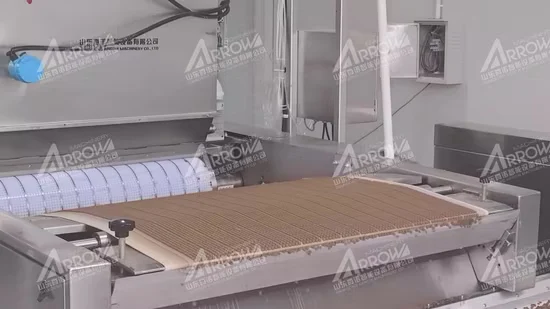 02
Uncategorized
Baked Pet Food Extruder for Dog Food Processing Plant
View machine details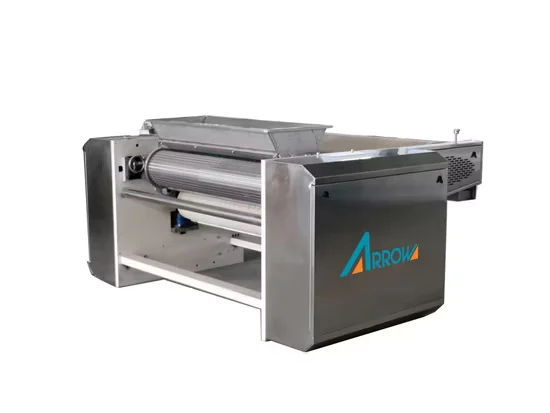 03
Uncategorized
Baked Kibble Plant 300kg/H PLC Cold Press Pet Food Extruder Equipment
View machine details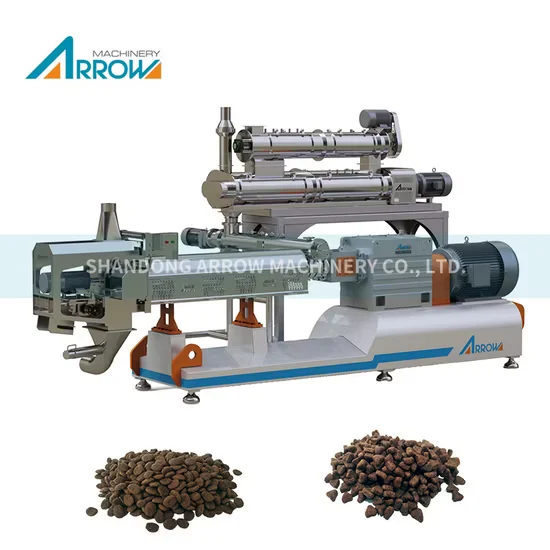 04
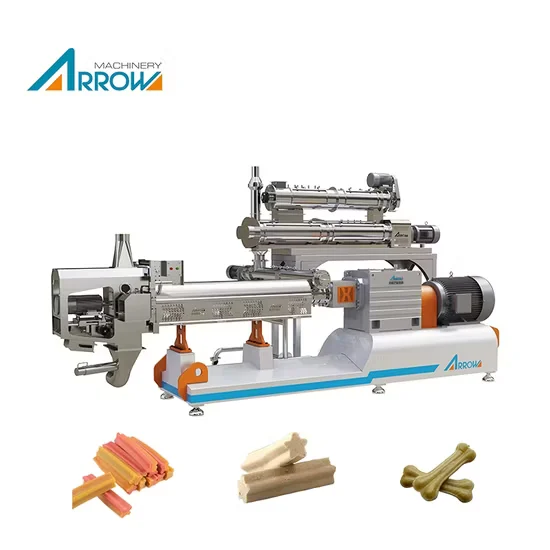
Dry Pet Food Production Line
Automatic Dry Pet Food Extruder for Dog and Cat Kibbles
View machine detailsFurther Reading
Related extrusion process notes



Configured Quotation
Send your formula and capacity for a configured line proposal
Shandong Arrow Machinery engineers review your raw materials, product shape and kg/h or t/h target, then propose a single machine or complete pet food, aquafeed or specialty feed line.
- Emailinfo@arrowextrusion.com
- WhatsApp+86 137 9316 7756
- FactoryNo. 47 Chengbohu Road, Jibei Subdistrict, Jiyang District, Jinan, Shandong, China
Request a Quote
Payment by T/T, L/C or Alibaba Trade Assurance. Scope, delivery time and commissioning support are stated in the formal quotation.