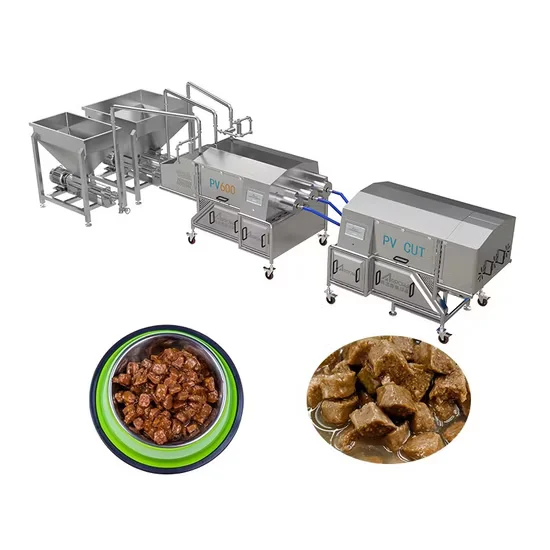
Many buyers assume a pet food production line quote is a fixed number, but the final price is actually highly flexible and depends on how well your process requirements align with the equipment configuration. A rigid quote often masks hidden engineering gaps that surface only during commissioning.
The answer to whether a pet food line price is negotiable lies in the scope definition. By clarifying process boundaries, selecting appropriate automation levels, and balancing standalone machines with integrated modules, investors can optimize capital expenditure without compromising product quality or throughput stability.
Understanding the Variables Behind Pet Food Production Line Cost
The base cost of any processing system is driven by technical specifications rather than arbitrary market rates. The primary determinant is nominal capacity, measured in kilograms or tons per hour. A line designed for 500 kg/h requires different motor powers, screw diameters, and dryer volumes compared to a 2-ton-per-hour system. Misaligning these capacities creates bottlenecks, particularly in the drying section, which often dictates the overall line speed.
Material formulation significantly influences hardware selection. High fresh-meat content or high-fat recipes demand specific shear and temperature controls. In such cases, a twin-screw extruder offers better mixing and stability than single-screw alternatives. The choice between a standard cross-flow circulation dryer and a more complex external air circulation system also shifts the budget, depending on the required moisture reduction and local climate conditions.
Automation level is another major cost driver. Basic lines may rely on manual valve adjustments and local control panels, while advanced setups integrate PLC systems for precise moisture and temperature monitoring. The latter reduces labor costs and improves repeatability but increases the initial pet food production line cost. Additionally, utility constraints such as available voltage, frequency, and steam sources must be matched to the equipment design to avoid expensive onsite modifications.
Identifying Flexibility in Equipment Quotations
Not all line items in a quotation are static. Standard hardware components, such as the main extruder barrel or grinder housing, have fixed manufacturing costs. However, commercial terms and service scopes offer room for adjustment. For instance, buyers can negotiate phased delivery schedules to manage cash flow, shipping certain modules earlier than others based on factory readiness.
Service elements like overseas installation and commissioning are often customizable. Instead of a full-time resident engineer team for the entire duration, a buyer might opt for remote guidance supplemented by short-term onsite visits for critical startup phases. This approach reduces travel and accommodation expenses while still ensuring proper machine calibration. Spare parts packages can also be scaled; a basic starter kit may suffice for experienced maintenance teams, whereas new operators might benefit from a comprehensive inventory.
It is crucial to distinguish between necessary engineering features and optional luxuries. A supplier should clarify which parameters are non-negotiable for product safety and quality. For example, skimping on the drying capacity for a high-moisture kibble formula risks spoilage, as seen in cases where lower-spec dryers failed to meet moisture targets in humid climates. Such compromises lead to higher long-term costs due to product loss and necessary upgrades.
Strategic Configuration for Budget Optimization
Buyers can actively influence the pet food extruder quotation by making informed trade-offs. One effective strategy is modular expansion. Instead of purchasing a fully automated turnkey plant immediately, investors can start with core units like the extruder and dryer, leaving interfaces for future automation or additional coating systems. This allows the business to generate revenue while deferring part of the capital outlay.
Equipment substitution within the same process function offers another avenue for savings. For simple mixing tasks, a single-shaft paddle mixer might replace a twin-shaft unit if the recipe does not require intense homogenization. Similarly, choosing a standard forming die over a custom-designed one can reduce initial tooling costs, provided the product shape remains within acceptable tolerances. The key is to match the machine capability to the actual product specification rather than over-engineering for hypothetical future needs.
For facilities with space constraints, customized layouts can minimize civil work costs. Arrow Machinery supports layout-based equipment configuration, ensuring that machines fit existing buildings without requiring extensive structural changes. This integration support helps avoid the hidden costs of retrofitting, which often exceed the savings from cheaper equipment.
Essential Data for Accurate Pricing
To receive a precise and binding quote, buyers must provide detailed operational data. Vague requests lead to conservative estimates that include large contingency buffers, inflating the turnkey pet food plant price. Specific information allows engineers to size equipment accurately and eliminate unnecessary overcapacity.
Key details include the raw material formulation, especially the percentage of fresh meat or fat, as this affects preconditioning and extrusion settings. The desired output capacity, operating hours per day, and target product characteristics such as density, buoyancy for fish feed, and final moisture content are critical.
Additionally, site-specific utilities must be declared. Power voltage and frequency, available fuel types for heating, and water quality determine the auxiliary equipment needed. Providing factory dimensions and layout sketches enables the supplier to propose a compact and efficient arrangement, reducing material handling costs and footprint requirements.
Frequently Asked Questions
Q: Is the initial quotation for a pet food line a final fixed price?
A: No, the initial quote is a preliminary estimate based on provided data. The final pet food line price is confirmed after technical review, where specific configurations, utility matches, and service scopes are defined. Changes in raw material specs or capacity requirements will adjust the final commercial offer.
Q: Can I buy individual machines like extruders or dryers instead of a complete line to save costs?
A: Yes, Arrow Machinery supplies standalone units such as twin-screw extruders, vacuum coating machines, and dryers. This allows buyers to replace specific bottlenecks or expand existing lines. Purchasing individual machines can lower upfront investment if the rest of the process infrastructure is already in place.
Q: How does the level of automation affect the total investment of a pet food plant?
A: Higher automation increases the initial pet food production line cost due to advanced sensors, PLCs, and software integration. However, it reduces long-term labor costs and improves product consistency. Buyers should balance their budget with their operational expertise and labor availability when selecting the automation level.
Q: Are installation and overseas commissioning costs included in the standard machine price?
A: Typically, standard prices cover FOB or EXW terms. Installation, commissioning, and training are separate line items that depend on the destination, duration, and team size. These services can be negotiated and scoped according to the buyer’s needs, with costs clearly outlined in the final contract.
Send your product formula, target capacity, and factory dimensions to receive a custom equipment configuration and precise quotation from our engineering team. Discuss your specific process challenges and request a technical layout to ensure your investment aligns with your production goals.