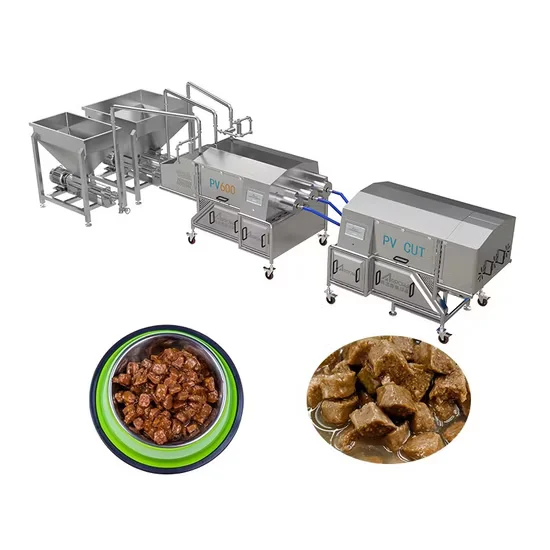
Many buyers initiate inquiries with a vague request for “one ton per hour” capacity, overlooking critical variables like raw material moisture and final product expansion ratios. This lack of detail often results in equipment configurations that fail to meet production expectations, leading to costly modifications after installation.
To avoid these pitfalls, you must provide a structured specification sheet covering raw material formulation, target product characteristics, site utilities, and automation requirements. Clear communication of these pet food machine specs ensures the manufacturer can design a system that matches your actual process conditions rather than relying on generic assumptions.
Define Raw Material Formulation and Behavior
The foundation of any extrusion line design is the raw material profile. Simply stating “chicken-based kibble” is insufficient for engineering a precise solution. You need to specify the exact inclusion rates of fresh meat, meat meal, grains, and fats. Fresh meat content significantly impacts the rheology of the mash inside the barrel. High moisture inputs require specific screw configurations and pre-conditioning strategies to manage steam injection and shear heat effectively.
During a recent project in Europe, a client requested a high fresh meat kibble line but omitted the exact moisture content and temperature of the fresh meat in the initial specification. The twin-screw extruder arrived with screws optimized for standard dry meat meal. When high-moisture fresh meat was introduced, it choked the die immediately. We had to redesign the screws and delay the launch. This experience highlights why defining ingredient behavior is non-negotiable.
Laboratory formulations often behave differently at industrial scales due to variations in mixing efficiency and heat transfer. If your recipe includes high levels of fat or fiber, these parameters must be disclosed upfront. A Twin-Screw Extruder offers greater flexibility in handling such complex matrices compared to single-screw systems, but only if the screw elements are configured correctly for the specific shear and compression needs of your formula.
Specify Product Characteristics and Target Output
Product definition goes beyond shape and size. You must define the target bulk density, moisture content after drying, and textural attributes. For aquatic feed, the distinction between floating and sinking pellets is not merely a matter of changing the die head. It requires a coordinated approach involving formulation density, extrusion pressure, and drying kinetics. Floating feeds typically require higher expansion and lower bulk density, while sinking feeds demand precise control over starch gelatinization and minimal air incorporation.
For dry pet food, the kibble’s porosity affects coating uptake. If you plan to use a Vacuum Coating Machine for high-fat inclusion, the internal structure of the kibble must be porous enough to absorb the lipid but strong enough to maintain integrity during handling. Specify the desired diameter, length, and any special shapes. Also, clarify whether you need uniform particle size distribution, as this influences the choice of cutting systems and downstream screening equipment.
Capacity definitions should reflect realistic operating schedules, not just theoretical peaks. State your required output in kilograms per hour based on a specific number of operating hours per day. This helps in sizing upstream grinding and mixing systems as well as downstream drying and cooling sections. Mismatched capacities between extrusion and drying are common bottlenecks; the dryer often dictates the true line capacity because moisture removal is a slower thermal process than mechanical extrusion.
Detail Site Constraints and Local Utilities
Equipment must fit your physical space and operate within your utility limits. Provide detailed factory dimensions, including ceiling height, column spacing, and door widths for equipment entry. A compact footprint may require vertical integration of certain components, such as stacking mixers or using pneumatic conveying instead of belt conveyors. Ignoring these constraints can lead to expensive civil works or impossible installation scenarios.
Utility availability is equally critical. List your local power supply frequency and voltage, as motors and control panels must match these standards. Specify available heat sources: steam, natural gas, biomass, or electric heating. Steam quality and pressure affect the performance of pre-conditioners and dryers. If you have limited water quality or cooling capacity, this must be noted, as it impacts condenser sizing and cleaning protocols.
For facilities in regions with strict environmental regulations, mention any requirements for dust collection, noise reduction, or wastewater treatment. Early disclosure allows the engineering team to integrate appropriate filtration and containment systems into the pet food machine specs from the start, avoiding retrofits later.
Clarify Automation, Cleaning and After-Sales Expectations
Modern production lines vary widely in automation levels. Define your expectations for PLC control, data logging, and recipe management. If you produce multiple SKUs, frequent product changeovers require easy-clean designs. Ask about quick-release mechanisms for dies and cutters, and CIP (Clean-in-Place) capabilities for mixers and coaters. A Dry Pet Food Production Line with automated cleaning cycles can significantly reduce downtime and labor costs, but this must be specified early to include the necessary valves, sensors, and control logic.
After-sales support is part of the technical scope. Clarify whether you need overseas installation, commissioning, and operator training. While many manufacturers offer these services, the scope, duration, and cost should be defined contractually. Request details on spare parts availability and recommended inventory lists. Knowing which wear parts are critical and how quickly they can be shipped helps plan maintenance schedules and minimize unplanned stoppages.
Standardize Your Inquiry Document for Makers
To ensure accurate quotations, compile your requirements into a structured document. Break it down into modules: Raw Materials, Product Specifications, Capacity, Site Utilities, and Commercial Terms. This format forces you to address each critical parameter and makes it easier for the engineering team to evaluate feasibility.
| Parameter Category | Key Details to Include |
|---|---|
| Raw Materials | Ingredient list, inclusion rates, moisture/fat content, particle size after grinding |
| Product Specs | Shape, dimensions, bulk density, final moisture, texture (hard/crunchy/soft) |
| Capacity | Target kg/h, operating hours/day, annual volume |
| Utilities | Voltage/frequency, steam pressure, fuel type, water quality, compressed air |
| Site | Floor plan, ceiling height, door dimensions, existing equipment interfaces |
By providing this level of detail, you enable the supplier to perform a meaningful technical review. They can assess whether a standard model suffices or if custom engineering is required. This transparency reduces the risk of miscommunication and ensures that the proposed pet food machine specs align with your operational reality. Arrow’s engineering team uses this data to configure lines that balance performance with practicality, offering process consultation to refine the setup before manufacturing begins.
Frequently Asked Questions
Q: What is the minimum information required to get an accurate quotation for a pet food extruder?
A: You must provide the raw material formulation with moisture and fat content, target product shape and size, desired hourly capacity, and available site utilities. Without these pet food machine specs, suppliers can only offer generic estimates that may not fit your process.
Q: How does fresh meat inclusion rate affect the twin-screw extruder configuration?
A: High fresh meat content increases moisture and reduces friction, requiring specific screw elements to build adequate pressure and temperature. It also demands precise steam injection in the preconditioner to ensure proper starch gelatinization without clogging the die.
Q: Can you customize the production line layout if my factory space is limited?
A: Yes, layouts can be adapted to fit restricted spaces by using vertical conveying, compact mixer designs, or modular dryer arrangements. Providing a detailed floor plan with height restrictions allows engineers to optimize the footprint while maintaining workflow efficiency.
Q: What utilities and site conditions should I prepare before requesting a turnkey plant proposal?
A: Prepare data on electrical voltage and frequency, available steam pressure and flow, fuel type for heating, and water quality. Also, note any environmental constraints like noise limits or dust control requirements to ensure the proposed system complies with local regulations.
Send your product formula, target capacity, and factory dimensions to receive a customized equipment configuration and preliminary layout. Discuss your specific raw material challenges to determine if trial runs are needed before finalizing the design.