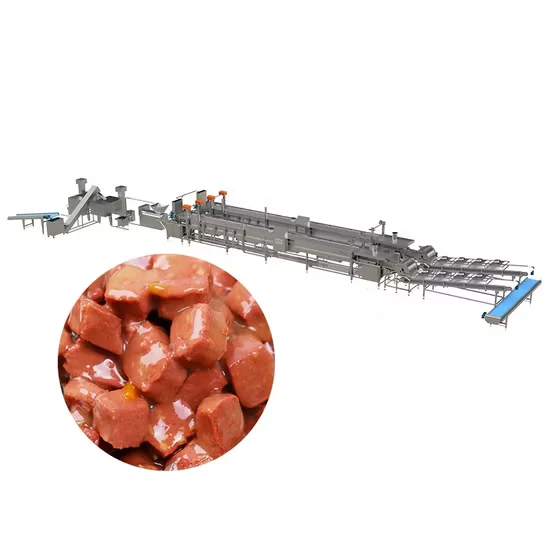
Many pet food manufacturers assume that expanding into wet food requires only a simple change of molding dies or packaging formats. This misconception often leads to costly bottlenecks when the upstream preparation fails to match the rheological demands of the final product. Choosing between a pet sauce line vs wet chunks line is not merely a marketing decision; it is a fundamental engineering choice that dictates your raw material handling, thermal processing, and downstream packaging interfaces.
The core difference lies in how the matrix behaves under heat and shear. Sauce production relies on high-emulsion stability and homogeneous viscosity, requiring precise grinding and heating before filling. In contrast, meat chunk processing depends on maintaining structural integrity through texturization or careful cutting, demanding distinct control over moisture migration and sterilization heat penetration. Your first wet food project should be selected based on your existing packaging capabilities and the physical behavior of your primary protein sources, rather than comparing standalone machine prices.
Texture and Formulation Demands: Emulsion Stability vs. Structural Integrity
The journey from raw ingredient to finished pouch begins with how you prepare the protein matrix. For pet sauce, the goal is a smooth, homogenous emulsion that remains stable during high-temperature sterilization. This requires intensive pre-grinding and mixing to break down muscle fibers completely. If the particle size is too large, the sauce may separate during retorting, leading to quality rejection. The equipment must handle high-viscosity fluids without creating air pockets, which can cause oxidation and spoilage.
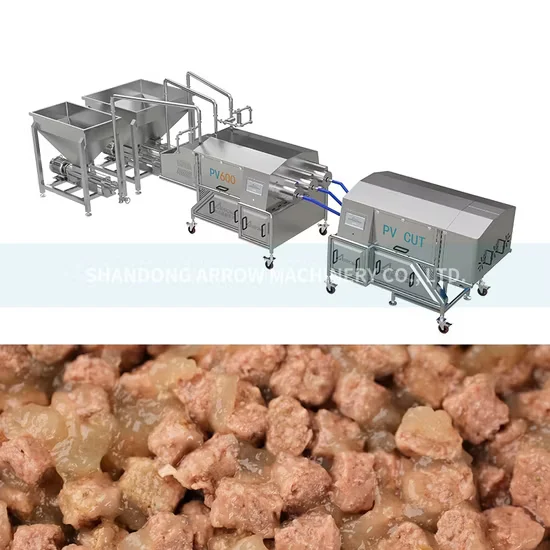
Conversely, a wet food meat chunks processing line focuses on preserving or creating discrete solid structures. Whether using texturized vegetable protein or real meat cuts, the challenge is to ensure the chunks do not disintegrate during pumping and sterilization. Running wet chunk trials on our test platform for a South Asian client, I watched high-fresh-meat recipes completely jam the twin-screw extruder because the feeding system could not handle the sticky texture. We had to rethink the pre-grinding and temperature control before the meat chunks could form properly. That messy afternoon taught me that choosing between a sauce line and a chunks line is not just about the final package. It comes down to how your raw materials behave under heat and shear, and whether your upstream prep matches the extruder’s limits.
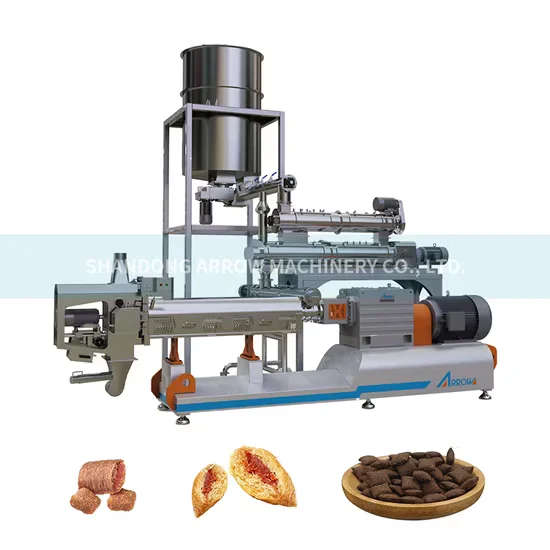
When evaluating a pet sauce line vs wet chunks line, consider your fresh meat inclusion rates. High fresh meat content increases stickiness and reduces flowability, requiring specialized screw configurations and barrel cooling to prevent blockages. A Texturized Wet Food Processing Line may be necessary if you aim to create fibrous structures from plant-based or mixed proteins, adding another layer of complexity to the formulation stage.
Thermal Processing and Sterilization Compatibility
Once the product is formed, it must undergo sterilization to ensure shelf stability. This step reveals the most critical divergence between the two product types. Sauces are high-viscosity fluids that transfer heat primarily through conduction. Because they do not convect well inside the can or pouch, the center of the container heats up much slower than the edges. This requires longer hold times or higher temperatures, which can degrade nutrients and affect flavor if not carefully managed.
Meat chunks, especially when suspended in gravy, allow for some convective heat transfer as the liquid moves around the solids. However, the solid pieces themselves still rely on conduction. The risk here is overcooking the exterior while the center remains under-processed, or conversely, turning the chunks into mush due to excessive thermal exposure. The density and size of the chunks directly impact the F0 value required for safety. A well-designed line balances the chunk size with the retort cycle to maintain texture while ensuring microbial safety.
Equipment selection must account for these thermal dynamics. A system designed for low-viscosity liquids will fail when tasked with pumping dense, chunk-laden slurries. The pumps and valves in a chunks line must be gentle enough to avoid breaking the pieces yet powerful enough to move the heavy mass. In contrast, sauce lines require de-aeration systems to remove trapped air before filling, preventing bubble formation that could compromise the seal or promote oxidation during storage.
Downstream Handling and Packaging Interfaces
The final stage of production often dictates the feasibility of the entire project. Many factories overlook the compatibility between their processing equipment and their packaging machines. A pet sauce line vs wet chunks line decision heavily influences the type of filler you need. Sauce production typically uses piston or pump fillers that can handle viscous fluids with high precision. These systems are relatively straightforward but require strict control over temperature to maintain consistent viscosity during filling.
For meat chunks, the filling process is more complex. The filler must distribute solids and liquid evenly to ensure each package meets the labeled weight and composition requirements. This often requires specialized auger or valve fillers capable of handling particulates without clogging. Additionally, the cooling phase after sterilization is critical. Chunks retain heat longer than sauces, requiring efficient cooling tunnels to prevent overcooking after the retort cycle ends. If the cooling is too slow, the texture suffers; if too fast, thermal shock may damage the packaging.
When planning your facility, map out the footprint required for these downstream components. A sauce line may have a smaller footprint for the filler but larger requirements for mixing and homogenization tanks. A chunks line may need more space for cooling conveyors and solid-handling equipment. Integrating these systems requires a holistic view of the factory layout to ensure smooth material flow and easy access for cleaning and maintenance.
3 Factors to Decide Your First Wet Food Line
To make an informed decision, evaluate these three key areas before requesting quotes. First, assess your target market’s preference. Are consumers in your region looking for premium, high-meat-content chunks, or do they prefer convenient, easy-to-eat sauces for senior pets? This demand drives the technical requirements of your line. Second, audit your existing infrastructure. Do you have retorts capable of handling high-viscosity products? Is your current packaging line compatible with particulate fillers? Upgrading packaging is often more expensive than adjusting the cooking process.
Third, analyze your raw material supply chain. Sourcing consistent, high-quality fresh meat requires robust cold chain logistics and rapid processing capabilities. If your supply is intermittent or varies in quality, a sauce line might offer more flexibility in blending and standardizing the final product. A chunks line demands higher consistency in raw material texture to ensure uniform appearance and cooking behavior.
Shandong Arrow Machinery supports this decision-making process by offering process consultation alongside equipment supply. By discussing your specific ingredients and capacity goals, we can help determine whether a Pet Sauce Production Line or a Wet Food Meat Chunks Processing Line aligns better with your operational realities. This integrated approach ensures that every component, from grinding to coating, works in harmony.
Frequently Asked Questions
Q: Can the same extruder produce both pet sauce and wet meat chunks?
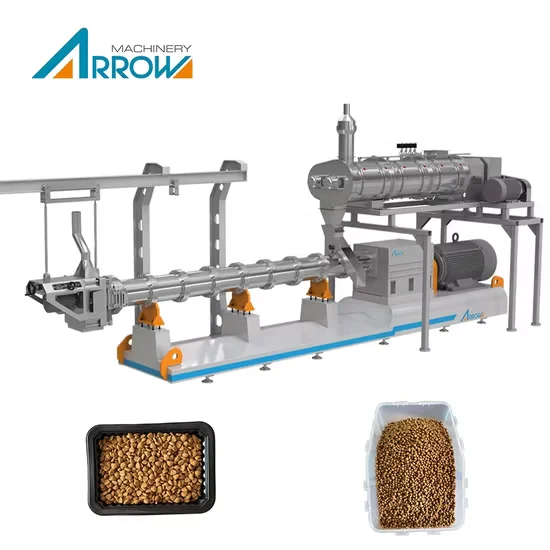
A: Generally, no. While twin-screw extruders are versatile, the screw configurations and barrel designs differ significantly. Sauce production often requires high-shear mixing and homogenization rather than the texturization or forming typical of chunk production. Using a single machine for both may compromise efficiency and product quality, necessitating dedicated lines for optimal performance.
Q: How does the sterilization process differ between high-viscosity sauces and solid meat chunks?
A: Sauces rely on conduction for heat transfer, requiring longer processing times to ensure the center reaches the target temperature. Chunks allow for some convection via the surrounding gravy, but the solid pieces still conduct heat slowly. The sterilization cycle must be adjusted to prevent overcooking the exterior of chunks while ensuring the core is safe, whereas sauces need uniform heating throughout the viscous mass.
Q: What upstream grinding and mixing equipment is critical for a stable wet food emulsion?
A: For sauces, high-shear mixers and fine grinders are essential to break down particles and create a stable emulsion. This prevents separation during sterilization. For chunks, gentle grinding and precise cutting tools are needed to maintain fiber structure. The choice of mixer and grinder directly impacts the final texture and stability of the product, making upstream equipment selection vital.
Q: Is it possible to upgrade a wet chunks line to produce pet sauce later?
A: It is challenging and often inefficient. The pumps, fillers, and thermal processing units designed for chunks are not optimized for high-viscosity sauces. While some modular components might be reusable, a significant portion of the line would likely need replacement. It is more cost-effective to design the initial line with future expansion in mind or to install a dedicated sauce module from the start.
Ready to define your wet food strategy? Send your product formula and target capacity to receive a customized technical proposal and workshop layout. Whether you need a complete turnkey solution or specific process modules, our engineering team can help you validate your recipe through trials and ensure your equipment matches your production goals.