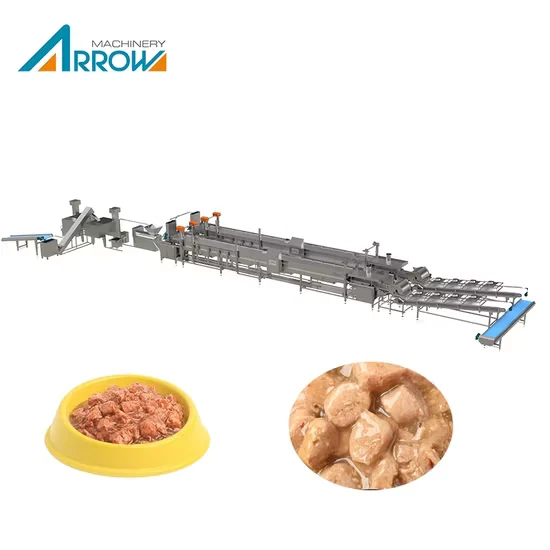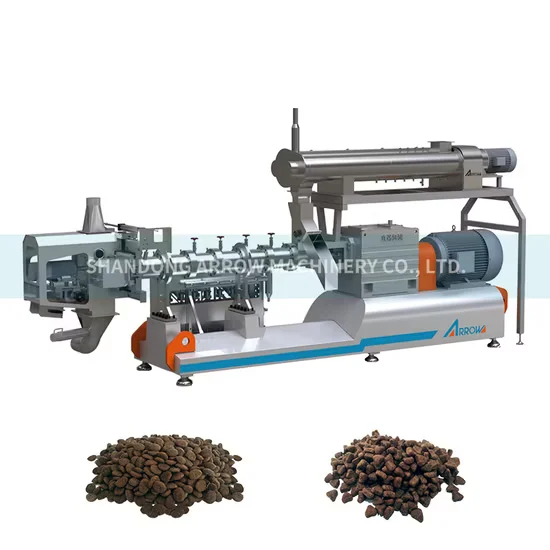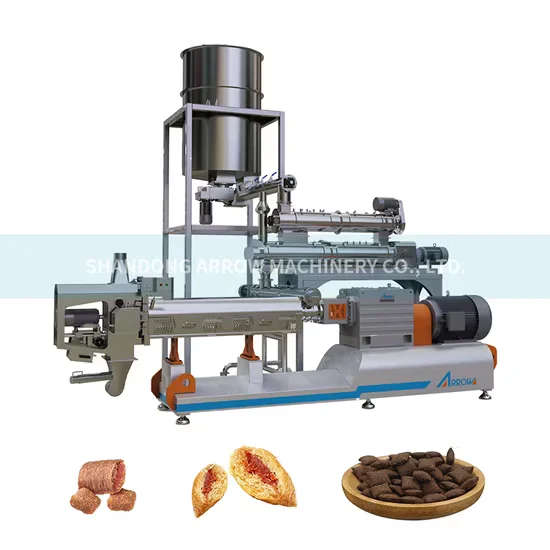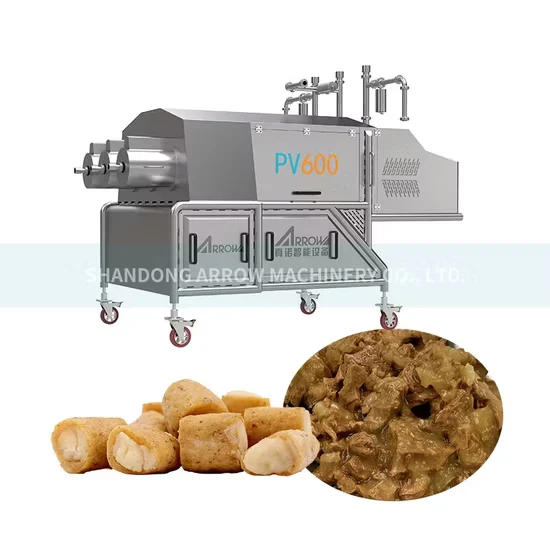


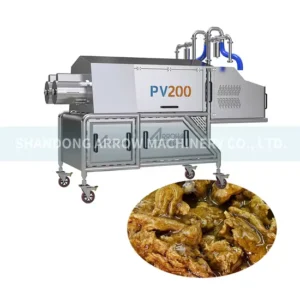

How the Automatic Extruded Wet Pet Food Production Equipment Works in Your Line
Process balance defines output — Consistent wet food texture requires synchronizing thermal processing with upstream mixing logic.
Technical Specifications
| Parameter | Value |
|---|---|
| Product | PV Automatic Wet Pet Food Production Machine |
| Model | PV |
| Capacity | 100-2000kg/H |
| Power Source | Electric |
| Process | Thermal Processing |
| Automatic Grade | Automatic |
| Application | Dog, Cat |
| Feed Type | Wet Pet Food |
| Material | Stainless Steel |
| Motor | Siemens |
| Specification | 20-4-4m, Adjust, Flexible |
| Origin | Shandong |
| After-sales Service | 1 Year |
| Warranty | 1 Year |
| Customization | Available |
Application Suitability
| Product / Industry | Typical Use |
|---|---|
| Wet Pet Food Manufacturers | Production of meat chunks and texturized wet food for dogs and cats |
| Private-Label Contract Processors | Automated thermal processing lines for consistent batch quality |
| Pet Food Plants | Upgrading existing capacity with flexible, high-throughput equipment |
Why Wet Food Texture Fails During Scale-Up
Thermal consistency determines structural integrity. Laboratory recipes often fail in full production because extrusion and thermal processing parameters drift when raw material viscosity changes. Operators face uneven particle dimensions, poor finished-product consistency, or moisture spikes that compromise shelf stability. Coordinating multiple suppliers for extrusion, drying, and coating modules frequently leads to mismatched duty points. Without integrated process engineering, factories struggle to maintain repeatability across shifts.
Integration Within the Wet Food Workflow
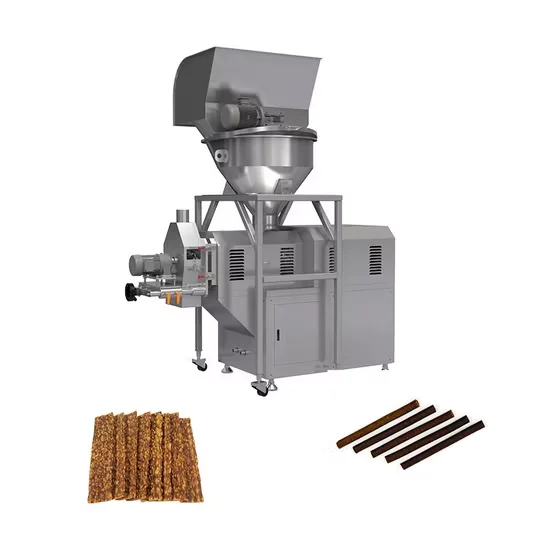
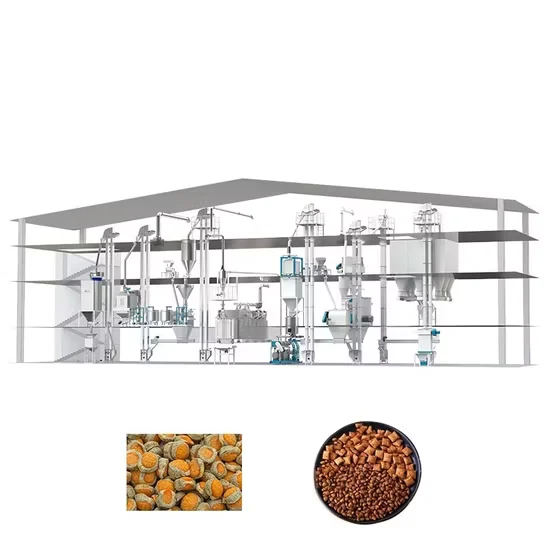
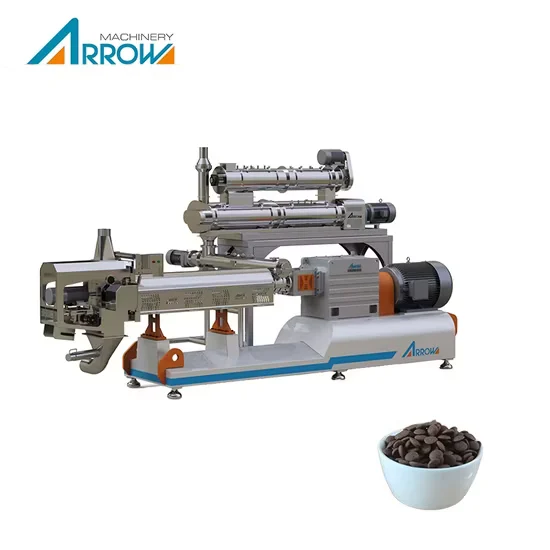
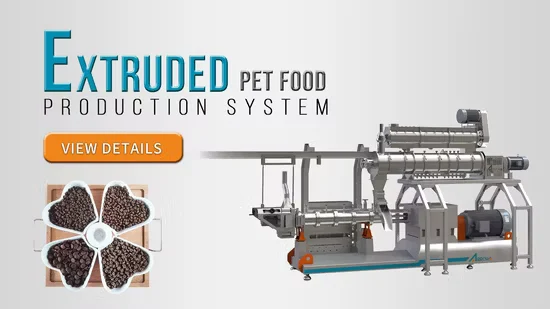
This automatic wet pet food production machine serves as the central thermal processing unit. It receives prepared raw materials from upstream grinding and mixing systems, where ingredient ratios are standardized. The system then forms and processes the mixture into texturized meat chunks or specialized wet food shapes. Downstream, the product moves to sterilization or packaging zones, requiring precise moisture control to prevent spoilage. Proper integration ensures that throughput matches the capacity of preceding and succeeding stages.
Operational Challenges in Wet Food Processing
Raw material variability, especially fresh meat content, alters flow behavior and heat transfer rates. High-fat formulations can cause slippage in standard feeders, leading to inconsistent density. Maintaining specific buoyancy or sinking characteristics for different pet food types demands exact temperature profiles. Frequent changeovers between recipes require thorough cleaning to prevent cross-contamination and bacterial growth. Continuous operation stability depends on motor reliability and precise automation controls to handle these fluctuations.
Decoding Core Specifications for Performance
The Siemens motor provides stable power transmission, essential for maintaining constant screw speed under varying load conditions. Stainless steel construction meets strict hygiene standards, resisting corrosion from high-moisture ingredients and facilitating cleaning. The flexible specification of 20-4-4m allows adjustment to factory layouts, ensuring efficient use of floor space. Automatic grade operation minimizes manual intervention, reducing human error and improving batch-to-batch repeatability. These features collectively support a capacity range of 100-2000kg/h, accommodating both pilot runs and mass production.
Hidden Costs of Poor Equipment Selection
Undersized motors may stall during peak viscosity, causing unplanned downtime and potential product loss. Inadequate thermal control leads to inconsistent cooking, resulting in entire batches being rejected for quality issues. Lack of customization options forces factories to adapt processes to machinery, rather than optimizing machinery for the recipe. Future expansion becomes costly if the initial layout does not allow for modular additions. Selecting equipment without considering utility constraints can lead to expensive infrastructure upgrades later.
Why Source This Line from Arrow
Manufacturer-oriented supply ensures direct access to engineering teams for custom line layouts and equipment configuration. Integrated process coverage from ingredient preparation to forming supports holistic troubleshooting rather than isolated machine fixes. Application-based selection uses your specific ingredients and target throughput to define the optimal screw profile and thermal settings. Raw-material trials help validate performance before commitment, reducing the risk of formula-behavior mismatches. Export project coordination includes factory acceptance testing and overseas commissioning options defined contractually.
Documentation & Delivery
- Detailed technical specifications outlining model PV capabilities and electrical requirements.
- Customized layout diagrams fitting the 20-4-4m flexible footprint to your facility.
- Comprehensive operation manuals for automatic grade controls and Siemens motor maintenance.
- Factory acceptance test records verifying performance against agreed capacity targets.
- Export documentation including commercial invoices and packing lists for international shipping.
- Protective export packing designed for ocean freight and corrosion prevention during transit.
Installation, Operation & Maintenance
- Verify foundation requirements align with the stainless steel structure weight and vibration limits.
- Connect electric power sources compatible with Siemens motor voltage and frequency specifications.
- Conduct initial trial runs with actual raw materials to calibrate thermal processing parameters.
- Implement daily cleaning protocols for stainless steel surfaces to maintain hygiene standards.
- Schedule regular inspection of wear parts in the extrusion and forming sections.
- Adjust automation settings for quick changeovers between different wet food recipes.
Requesting a Precision Configuration
Provide your target product type, such as meat chunks or texturized wet food, along with raw material formulations. Specify required output capacity within the 100-2000kg/h range and desired final moisture content. Share factory dimensions and utility details, including power voltage and available heat sources. Our engineering team will respond with a preliminary configuration, layout proposal, and formal quotation. We can also arrange raw-material trials to validate the process before finalizing the scope.
Frequently Asked Questions
Q: What capacity range is available for the PV wet food production machine?
A: The PV model supports capacities from 100 to 2000kg/h. This wide range allows flexibility for both small-batch specialty production and large-scale industrial manufacturing. The specific output depends on the raw material formulation and desired product characteristics.
Q: Can the system handle different wet food formulations for dogs and cats?
A: Yes, the automatic grade system adapts to various formulations. Whether producing meat chunks for cats or texturized products for dogs, the thermal processing parameters can be adjusted. Customization options ensure the line meets specific ingredient requirements.
Q: Is customization available for factory layout and process integration?
A: Customization is available to fit your specific facility. The flexible 20-4-4m specification allows adjustment to different floor plans. Our engineering team assists in configuring the line to integrate with existing upstream or downstream equipment.
Q: What are the warranty and after-sales service terms for this equipment?
A: The equipment comes with a one-year warranty and one year of after-sales service. This covers technical support and spare parts availability. Specific terms regarding overseas installation and training are defined in the final contract.
Q: How does the automatic grade improve production consistency for wet food?
A: Automatic operation reduces manual intervention, minimizing human error. It ensures consistent feeding, thermal processing, and forming throughout the run. This leads to uniform product quality and higher repeatability across different production batches.