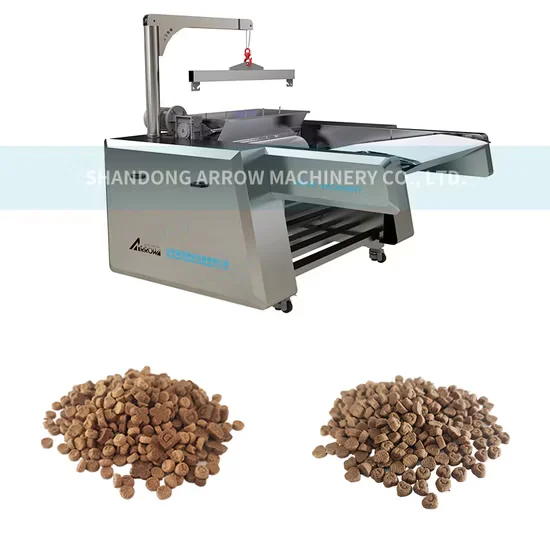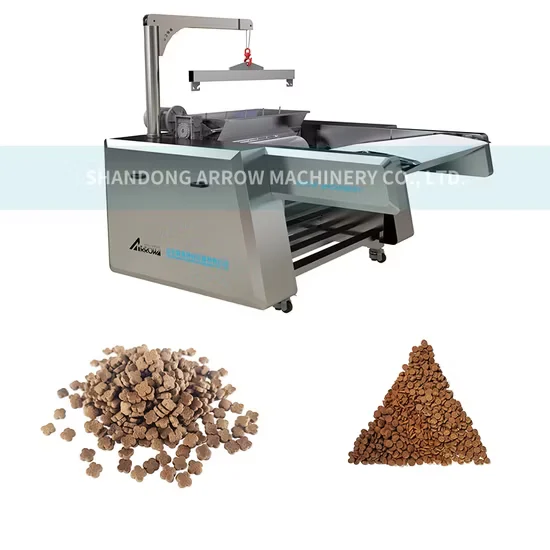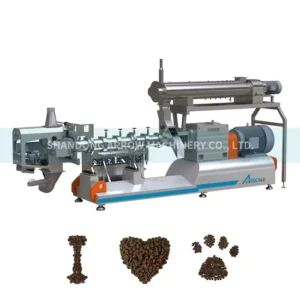


How the Automatic Pet Biscuit Making Equipment for Adult Dogs Works in Your Line
Recipe trials define output — Verify extrusion behavior with your specific fresh meat or bone meal formulation before finalizing the AYT configuration.
Technical Specifications
| Parameter | Value |
|---|---|
| Product | AYT Low-Temperature Cold Extruder for Pet Food |
| Model | AYT |
| Main Equipment | Double-Screw Extruder |
| Capacity | 500-6000kg/H (Note: Production Capacity field also lists 400kg--3500kg/H) |
| Power Source | Gas / Electric |
| Voltage | 220/380/Customized |
| Material | 304 Stainless Steel |
| Feeder | Loss Weight Type/ Volumetric Feeder |
| Automatic Grade | Automatic |
| Operation | Fully Automatic |
| Application | Dog, Cat |
| Feed Type | Meat and Bone Meal |
| Process | Frozen and Chilled |
| Specification | Low-temperature baking pet food |
Application Suitability
| Product / Industry | Typical Use |
|---|---|
| High-meat pet treats | Soft chewable snacks requiring nutrient retention via low-temperature processing |
| Private-label pet food plants | Flexible production of dog and cat food with adjustable capacity |
| Specialty snack manufacturers | Processing of fish powder and bone meal blends into consistent kibble |
Why Kibble Texture Fails When Heat Is Too High
Precise low-temperature control preserves nutrient integrity in high-meat formulations. Standard high-heat extrusion often degrades sensitive proteins and alters the texture of soft chews, leading to product rejection. Many manufacturers struggle when laboratory recipes fail to scale because thermal profiles are not adjusted for continuous production. Without accurate heating and feeding controls, moisture content varies, causing uneven drying downstream. This mismatch between formulation intent and mechanical reality results in inconsistent batch quality.
Where the AYT Fits in Your Production Flow
The AYT Low-Temperature Cold Extruder serves as the core forming unit in a complete pet food line. It receives pre-mixed raw materials from upstream grinding and mixing systems, where ingredients like corn, soybean, and meat meals are homogenized. The double-screw design then processes these blends under controlled thermal conditions. Downstream, the formed product moves directly to drying systems to achieve target moisture levels before coating or packaging. This integration ensures that the gentle thermal treatment applied during extrusion is maintained throughout the process.
Navigating Raw Material Variability
Processing high-moisture ingredients like fresh meat or bone meal introduces significant stability challenges. Variations in fat content can cause slippage in the barrel, while inconsistent particle size affects density. The AYT addresses these issues through adjustable feeding speeds and precise heating zones. However, operators must monitor the input consistency closely, as sudden changes in raw material composition can disrupt the extrusion pressure. Maintaining a steady feed rate is critical for achieving uniform pellet shape and preventing blockages in the die plate.
Understanding the Double-Screw Advantage
The double-screw extruder design provides superior mixing capability compared to single-screw models, especially for complex blends. This configuration ensures that fish powder and bone meal are evenly distributed within the starch matrix. Adjustable heating temperatures allow operators to fine-tune the cooking level without exceeding the threshold that damages heat-sensitive nutrients. The use of 304 stainless steel for all contact parts meets hygiene standards required for animal feed production. Additionally, the option for loss-weight type feeders enhances dosing accuracy, which is vital for maintaining consistent product quality across long production runs.
The Hidden Costs of Poor Equipment Selection
Choosing an extruder without validating its thermal capacity for your specific recipe leads to costly bottlenecks. If the machine cannot handle the moisture load of high-meat formulas, the downstream dryer becomes overloaded, forcing a reduction in line speed. This mismatch results in lower overall throughput and higher energy consumption per kilogram of product. Furthermore, inconsistent pellet density causes issues in packaging and increases the risk of breakage during transport. Retrofitting or replacing equipment after installation incurs significant downtime and engineering expenses.
Why Source This Extruder from Arrow
Arrow provides manufacturer-oriented supply of complete extrusion lines and individual processing machines, ensuring compatibility across all stages. Our engineering team supports application-based machine selection, analyzing your ingredients and target product characteristics to configure the AYT correctly. We offer raw-material trials and testing support to validate performance before you commit to purchase. Custom line layouts and equipment configuration services help integrate the extruder into new factories or retrofits seamlessly. Export project coordination includes factory acceptance testing and options for overseas commissioning, reducing implementation risks.
Documentation & Delivery
- Detailed technical specifications outlining model capabilities and operational limits.
- Plant layout diagrams assisting with spatial planning and utility connections.
- Comprehensive operation manuals for safe and efficient daily use.
- Factory acceptance test records verifying performance against agreed parameters.
- Export documentation including commercial invoices and packing lists per contract.
- Protective export packing suitable for ocean freight and long-distance transport.
Installation, Operation & Maintenance
- Ensure adequate floor space and foundation strength for the 304 stainless steel structure.
- Connect power supply matching the customized voltage requirement of 220V or 380V.
- Conduct initial trial runs with actual raw materials to calibrate feeding speed.
- Perform daily cleaning of the screw and barrel to prevent residue buildup.
- Replace wear parts such as die plates and cutter blades according to usage intensity.
- Adjust heating zones based on product feedback to maintain consistent texture.
How to Request a Precise Configuration
To receive an accurate quotation, specify the pet food type, such as dry kibble or soft treats. Provide details on raw material ratios, especially the percentage of fresh meat or bone meal. Indicate your required output capacity in kg/h and the desired final product shape. Share your factory dimensions, available voltage, and heat source preferences. Include the destination country for shipping calculations. Our team will then propose a tailored configuration, including layout options and trial arrangements.
Frequently Asked Questions
Q: What raw materials are suitable for this low-temperature cold extruder?
A: The AYT handles fish powder, bone meal, corn, and soybean effectively. It is particularly suited for formulations with high meat content that require gentle thermal processing to retain nutrients and achieve desired textures in dog and cat food products.
Q: How does the double-screw design improve product consistency?
A: The double-screw mechanism ensures thorough mixing of complex ingredient blends. This uniformity prevents separation of fats and proteins during extrusion, resulting in consistent pellet density and shape. It offers better control over shear and temperature compared to single-screw alternatives.
Q: Can the machine handle high-moisture ingredients like fresh meat?
A: Yes, the system is designed for frozen and chilled processes involving meat and bone meal. The adjustable feeding and heating controls allow operators to manage moisture levels effectively, ensuring stable extrusion even with high-moisture raw materials common in premium pet treats.
Q: What is the difference between the listed capacity ranges?
A: The capacity varies based on the final product specifications and raw material characteristics. While the general range is 500-6000kg/h, specific configurations may operate between 400-3500kg/h. Confirm the exact output for your formulation during the technical review and trial phase.
Q: Is installation support available for this equipment?
A: Overseas engineering and commissioning options are available. The precise scope, including team size, schedule, and travel costs, is defined contractually. We also provide online instruction and detailed manuals to support your local maintenance and operation teams.