
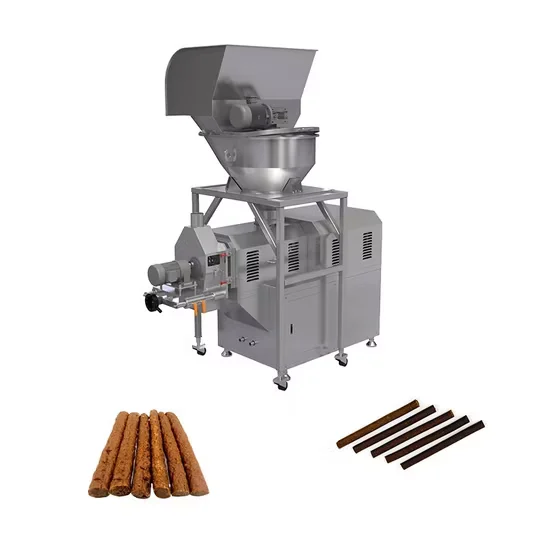
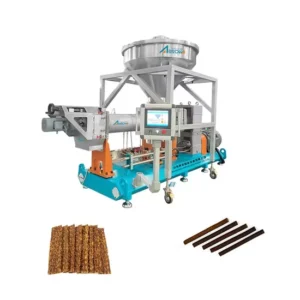
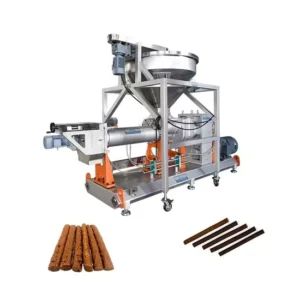
Process & Design
How Cold Extruded Jerky Dog Snack and Soft Food Processing Equipment works in your plant
Recipe trials define success — Verify texture with your specific fresh meat ratio before finalizing the screw configuration.
Technical Specifications
| Parameter | Value |
|---|---|
| Product | LTE Low-Temperature Cold Extruder for Dog Snacks |
| Model | LTE |
| Output | 400-600kg/H |
| Screw Material | Alloy Steel (38CrMoAl) |
| Voltage | 380V |
| Contact Material | 304 Stainless Steel |
| Automatic Grade | Full-Automatic |
| Packing | Wooden Case |
Application Suitability
| Product / Industry | Typical Use |
|---|---|
| Soft Chewable Food Processing | High-meat content snacks requiring minimal expansion and heat-sensitive formula preservation |
| Pet Treats Production | Jerky-style or soft dog treats with controlled texture for private-label processors |
| Dry Pet Food Plants | Core forming unit for soft chews in integrated dry treat production lines |
Why Traditional Extrusion Fails Heat-Sensitive Soft Treats
Low-temperature processing preserves ingredient integrity while ensuring consistent shape. Standard high-temperature extruders often cause excessive expansion or nutrient degradation in recipes rich in fresh meat or sensitive proteins. Manufacturers frequently encounter uneven textures, messy tails on jerky strips, and inconsistent moisture levels when pushing meat ratios beyond the limits of conventional single-screw systems. These issues lead to frequent line stoppages for cleaning and significant product waste. Achieving a uniform, palatable soft chew requires precise thermal control that avoids the pitfalls of aggressive heating.
Process Integration in Soft Treat Manufacturing
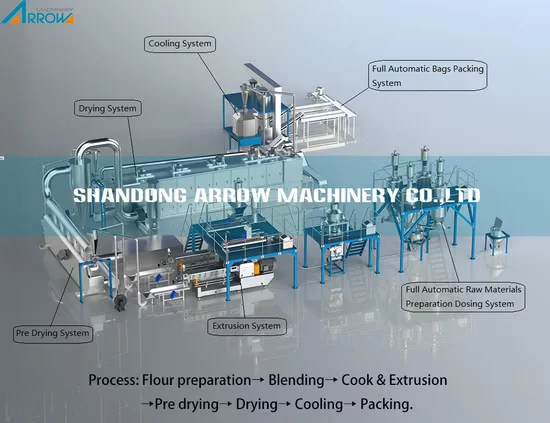
The LTE Low-Temperature Cold Extruder serves as the central forming unit in a soft treat production line. Upstream, it receives homogenized dough from mixing systems, where fresh meat and dry ingredients are blended. Downstream, the formed strands or shapes move directly to drying or cooling tunnels to set the texture. This integration ensures that the delicate structure created by the cold extrusion process is maintained before packaging. Proper synchronization with upstream mixers and downstream dryers is critical for maintaining the target 400-600kg/h throughput.
Production Challenges in High-Meat Formulations
Formulating with high fresh meat content introduces viscosity and stability challenges that standard equipment cannot handle. The dough may become too sticky, leading to blockages in the die plate or irregular cutting. Moisture distribution must be exact to prevent surface cracking or internal sogginess. Without precise screw configuration, the material may not cook evenly, resulting in variable texture across the batch. Continuous operation demands a system that can manage these rheological changes without constant manual intervention.
Core Specification Insights
The Alloy Steel (38CrMoAl) screws provide the necessary wear resistance for continuous operation with abrasive or sticky formulations. This material choice extends service life and maintains dimensional accuracy, which is vital for consistent product shape. 304 Stainless Steel contact parts ensure hygiene standards are met, preventing contamination in pet food processing. The full-automatic grade simplifies control, allowing operators to maintain stable parameters with reduced labor input. Precise temperature control mechanisms enable the formation of non-expanded or minimally expanded treats, preserving the dense, meaty texture desired in premium snacks.
Hidden Costs of Poor Equipment Selection
Choosing an extruder not designed for low-temperature applications leads to hidden operational costs. Inconsistent product quality results in batch rejections and wasted raw materials. Frequent downtime for cleaning jammed dies reduces overall plant efficiency and increases labor costs. If the machine cannot handle the desired capacity, bottlenecks form, limiting the entire line’s output. Retrofitting or replacing undersized equipment later disrupts production and incurs additional capital expenditure.
Why Source This Extruder from Arrow
Arrow provides manufacturer-oriented supply, ensuring the LTE model is built to match your specific process requirements. The company offers integrated process coverage, supporting the selection of compatible upstream and downstream machines for a balanced line. Application-based machine selection uses your specific ingredients and target product characteristics to configure the screw and die appropriately. Raw-material trials allow you to verify performance with your actual formulation before commitment. Custom line layouts and engineering support help optimize factory space and workflow for new or existing facilities.
Documentation & Delivery
- Detailed technical specifications sheet for the LTE model and auxiliary components.
- Factory layout drawings integrating the extruder with your existing or planned line.
- Comprehensive operation and maintenance manuals in English.
- Factory acceptance test records verifying performance against agreed parameters.
- Export-ready wooden case packing suitable for ocean freight transport.
- Commercial invoices and packing lists prepared per contract requirements.
Installation, Operation & Maintenance
- Ensure factory floor meets load requirements for the 380V electrical connection.
- Connect upstream mixer and downstream conveyor to align with extruder discharge height.
- Conduct initial trial runs with water or simple dough to calibrate screw speed.
- Clean 304 Stainless Steel contact parts daily to prevent residue buildup.
- Inspect Alloy Steel screws periodically for wear and replace as needed.
- Adjust die plate and cutter settings when changing product shape or size.
Requesting a Configuration Quote
Provide your target product type, such as soft chews or jerky, and the estimated fresh meat ratio. Specify the required output capacity of 400-600kg/h and your preferred operating schedule. Share factory dimensions and available utility details, including 380V power access. Indicate your destination country for shipping logistics. You will receive a preliminary configuration, layout proposal, and formal quotation based on these inputs.
Frequently Asked Questions
Q: What is the difference between low-temperature cold extrusion and standard twin-screw extrusion?
A: Low-temperature cold extrusion operates with minimal thermal input, preserving heat-sensitive nutrients and preventing excessive expansion. This method is ideal for dense, meat-rich treats. Standard twin-screw extrusion typically uses higher temperatures and pressure, causing significant puffing, which is unsuitable for soft, chewy textures.
Q: Can the LTE model handle high fresh meat inclusion rates?
A: Yes, the LTE model is designed for high-meat content snacks. The alloy steel screws and precise thermal control manage the sticky, viscous nature of fresh meat doughs. However, specific formulation trials are recommended to determine the maximum inclusion rate for your desired texture and shape retention.
Q: What are the power and space requirements for a 400-600kg/h cold extrusion setup?
A: The LTE model operates on 380V power. Space requirements depend on the integration with upstream mixers and downstream dryers. A detailed layout plan is provided during the quotation phase to ensure the equipment fits your existing factory dimensions or new facility design constraints.
Q: Is online installation guidance sufficient, or is on-site commissioning available?
A: Online guidance is available for basic setup. For complex integrations or first-time installations, on-site commissioning options can be arranged. The specific scope, team availability, and associated costs for overseas service are defined contractually based on your project needs.
Q: How does the screw configuration affect the final texture of soft dog treats?
A: Screw configuration determines shear force and residence time within the barrel. For soft treats, a lower shear profile is used to minimize cooking and expansion. This preserves the dense, chewy texture. Adjusting the screw elements allows fine-tuning of the product’s density and mouthfeel to match your brand’s quality standards.
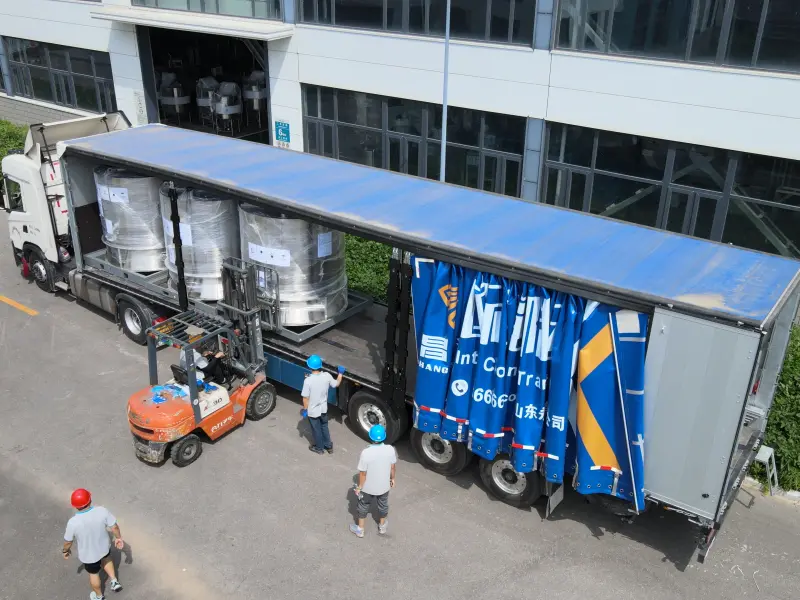
Shipping
Container sea freight or rail · spare parts by air
Delivery & Support
From factory acceptance to stable production
Every Shandong Arrow Machinery machine ships with full documentation, on-site commissioning support and a spare-parts channel tied to its serial number, so your line keeps running after start-up.
-
Shipping documents
Equipment specification, configuration list, drawings where applicable, operation manual, packing list, commercial invoice and export documents.
-
Testing & inspection
Factory test records, videos, inspection reports and material declarations, by product type and contract.
-
Installation & training
Installation, commissioning, operator training and maintenance guidance, with the scope set in your contract.
-
Spare parts
Screws, extrusion dies, gearboxes and wear parts, supplied against your machine's serial number or model.
Same Category
Related pet food machines
These machines and lines sit in the same process family, so you can build a complete line or add a single stage with them.

Cold Pressed Dog Food Making Equipment for Nutrient-Dense Pet Food
View details
Arrow Dog Food Production Line and Pet Food Equipment
View details
Cold Press Dog Treat Equipment for Pet Food Factory
View details
Cold Pressed Dog and Cat Food Biscuit Making Equipment
View details
Not sure this configuration fits your formula?
Tell us your target product, raw materials and output in kg/h. Our engineers confirm the process first, then recommend the extrusion and drying setup.
Applications
Pet products this machine is built for
This equipment is configured for the pet product types below. Open an application to see the full process route and matching machines.

Engineering Notes
Selection guides & technical articles
Read how process engineers choose extrusion, drying and coating setups for pet food before they commit to a configuration.
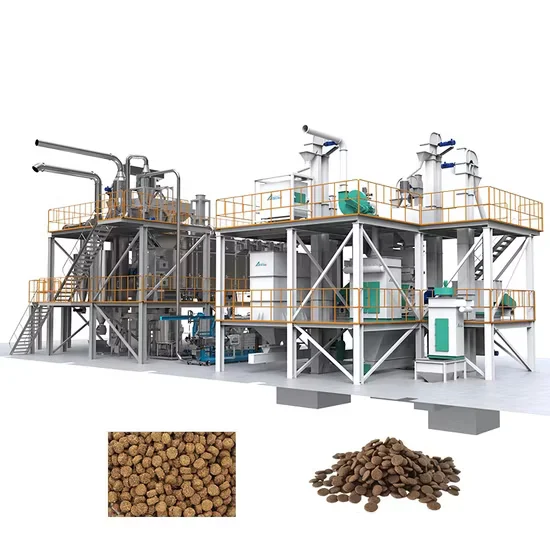
Pet Treats Plant Setup: Full Line vs Standalone Machines
Read article
5 Key Factors for Choosing a Custom Dental Dog Chews Production Line
Read article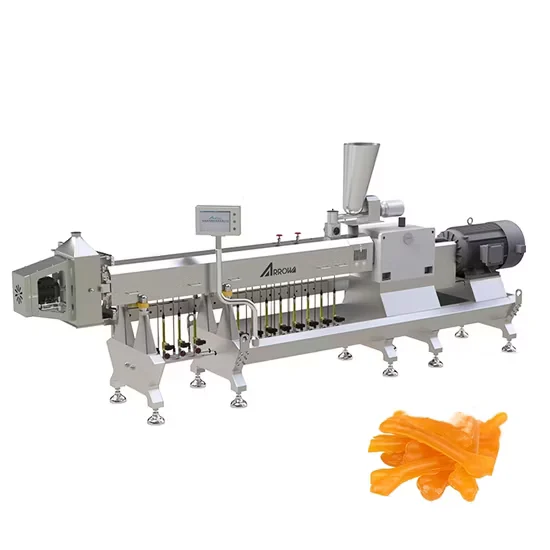
Dog Chews Production Line: 5 Key Factors to Compare Before Buying
Read articleFAQ
Questions buyers ask about this machine
Short answers on trials, lead time, documents and spare parts from Shandong Arrow Machinery, a pet food machinery manufacturer in Jinan, China.
Can I test my formula before I order?
Yes. Where conditions allow, we arrange formula and process trials on our process test platform, and you can send your own raw material for testing. Agreed raw-material tests are completed before production or shipment.
What is the lead time?
The lead time is stated in your formal quotation, based on the confirmed model, configuration and scope of supply. Machines ship by container sea freight or rail, and spare parts can go by air.
Which documents come with the machine?
You receive the final equipment specification, configuration list, equipment drawings where applicable, operation manual, packing list, commercial invoice and export or shipping documents. Factory test records, videos, inspection reports and material declarations are provided according to product type and contract.
How do I get spare parts after commissioning?
Send us your machine's serial number or model and we match the right parts. We supply screws, extrusion dies, gearboxes and wear parts, along with process consultation and service.
More answers on our pet food machinery FAQ page.
Request a quote for Cold Extruded Jerky Dog Snack and Soft Food Processing Equipment
Share your target product and output. You receive a technical proposal with model, scope of supply and options.
- WhatsApp +86 137 9316 7756
- Email info@arrowextrusion.com
- No. 47 Chengbohu Road, Jibei Subdistrict, Jiyang District, Jinan, Shandong, China