
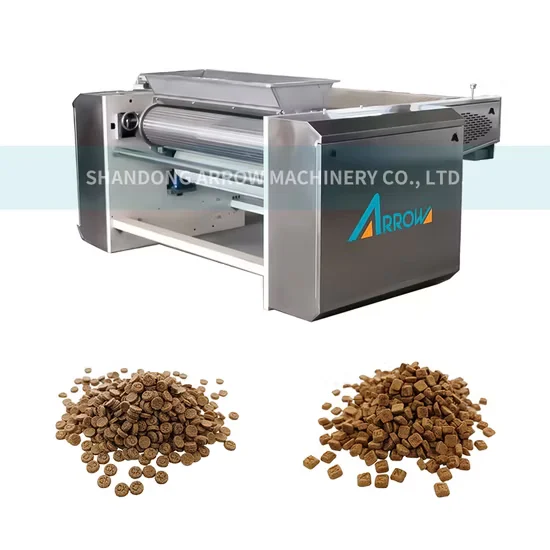



Process & Design
How Twin Screw Laboratory Extruder for Pet Food Research works in your plant
Recipe Validation Focus — Matches industrial thermomechanical conditions to prevent lab-to-production scaling failures.
Technical Specifications
| Parameter | Value |
|---|---|
| Product | Twin-Screw Laboratory Extruder (100-600kg/h) |
| Brand | Arrow |
| Capacity | 100-600kg/h |
| Control System | Siemens PLC, Rexroth Inverter |
| Motor | Siemens |
| Contact Material | Food Grade SS |
| Screw Design | Modular Design, Easy Replacement |
| Barrel Design | Modular Design, Easy Replacement |
| Cooling Die | Clam Shell, Opening Type |
| Feeder | Loss Weight Type/ Volumetric Feeder |
| Feeding Speed | Adjustable |
| Heating Temperature | Adjustable |
| Operation | Fully Automatic |
| Power Source | Electric |
| After-sales Service | Online Instruction |
| Warranty | 1 Year |
| Customization | Available |
Application Suitability
| Product / Industry | Typical Use |
|---|---|
| Dry Pet Food Manufacturers | Testing kibble formulations with varying meat meal ratios before full-scale runs |
| Aquafeed Producers | Validating buoyancy and pellet durability for floating or sinking fish feed prototypes |
| Pet Treat Contract Processors | Evaluating texture and shape consistency for private-label jerky or chew products |
| R&D Centers | Small-batch production trials for new ingredient combinations and process parameters |
Why Lab Recipes Fail on Industrial Lines
Precise thermomechanical matching prevents costly scale-up errors. Many formulators face a frustrating reality: a recipe that performs perfectly in a small benchtop unit fails completely when moved to a main production line. The kibble may not form correctly, or the texture becomes unacceptable because the shear and heat profiles do not match the larger twin-screw setup. This disconnect often leads to wasted raw materials and delayed product launches. Without a laboratory extruder that mimics industrial conditions, predicting these issues is nearly impossible.
Positioning in Your R&D Workflow
This Twin-Screw Laboratory Extruder serves as the critical bridge between conceptual formulation and industrial manufacturing. It sits upstream of your pilot drying and coating systems, allowing you to generate consistent samples for downstream testing. By using the same control logic and screw principles as our full-scale machines, it ensures that data collected during trials is directly applicable to future plant designs. This integration reduces uncertainty when specifying equipment for new facilities.
Navigating Production Challenges
Raw material variability poses significant risks during scale-up. Ingredients like fresh meat or high-oil meals behave differently under varying pressure and temperature conditions. If the extruder cannot adjust feeding speed and heating temperature precisely, the final product may suffer from inconsistent density or poor expansion. Additionally, frequent product changeovers in R&D environments require quick cleaning and easy access to internal components. Failure to address these factors can lead to cross-contamination or extended downtime during trials.
Understanding Core Specifications
The modular screw and barrel design allows engineers to configure the compression and mixing sections specifically for each formula. This flexibility is essential when testing diverse ingredients, from starch-based kibbles to high-protein treats. The Siemens PLC and Rexroth inverter provide precise control over feeding speed and heating temperature, ensuring repeatable results across multiple batches. Furthermore, the clam shell opening type cooling die facilitates rapid disassembly for cleaning and inspection. Food grade stainless steel contact parts maintain hygiene standards required for pet food and aquafeed applications.
Hidden Costs of Poor Equipment Selection
Choosing a laboratory extruder that does not replicate industrial mechanics can lead to significant hidden costs. Teams may spend months optimizing a formula that ultimately fails in production, requiring complete reformulation. Inconsistent sample quality makes it difficult to validate drying and coating parameters accurately. Additionally, non-modular designs often require specialized tools for maintenance, increasing labor time and complexity. These inefficiencies delay time-to-market and inflate R&D budgets without delivering actionable insights.
Why Source This Equipment from Arrow
We design this laboratory extruder to mirror the performance of our industrial twin-screw systems, ensuring reliable data transfer. Our engineering team supports configuration based on your specific ingredient profiles and target product characteristics. The modular design simplifies maintenance and allows for future adjustments as your research needs evolve. We provide online instruction to help your team operate the system effectively from day one. Customization options ensure the machine fits your existing laboratory infrastructure and utility constraints.
Documentation & Delivery
- Detailed technical specifications sheet outlining motor and control system parameters
- Operational manual covering safety procedures and routine maintenance tasks
- Factory acceptance test records verifying performance against agreed standards
- Export packaging designed to protect precision components during international shipping
- Compliance documents provided per contract requirements for customs clearance
Installation, Operation & Maintenance
- Ensure stable electric power source connection matching local voltage and frequency standards
- Verify adequate space for feeder access and die opening during daily operation cycles
- Conduct initial trial runs with standard ingredients to calibrate feeding and heating settings
- Clean food grade stainless steel contact parts thoroughly after each formulation change
- Replace modular screw elements as needed to maintain optimal shear and mixing performance
Start Your Formulation Trial
To receive a tailored configuration proposal, please share details about your target products, such as dry kibble or aquafeed. Include information on raw material composition, desired output capacity, and specific product shapes or sizes. Provide your laboratory dimensions, available power supply specifications, and destination country for shipping. Our team will review these details to suggest an appropriate setup and discuss potential trial arrangements.
Frequently Asked Questions
Q: What capacity range is suitable for laboratory versus pilot-scale production?
A: This model offers a capacity of 100-600kg/h, making it ideal for both small-batch laboratory trials and pilot-scale production runs. It provides enough volume to generate meaningful data for downstream processing tests while remaining manageable for R&D teams.
Q: Can the screw configuration be customized for high-meat or high-oil formulations?
A: Yes, the modular screw design allows for customization to handle challenging ingredients like high-meat or high-oil mixes. Engineers can adjust compression ratios and mixing elements to ensure proper cooking and forming without clogging or slippage.
Q: How does the modular design facilitate cleaning and product changeover?
A: The modular barrel and screw elements can be disassembled quickly, and the clam shell cooling die opens easily for access. This design minimizes downtime between trials and ensures thorough cleaning to prevent cross-contamination between different formulas.
Q: Is technical support available for integrating this extruder with existing systems?
A: We provide online instruction to assist with operation and basic troubleshooting. For complex integration with existing drying or coating lines, our engineering team can offer guidance on interface requirements and process coordination during the quotation phase.
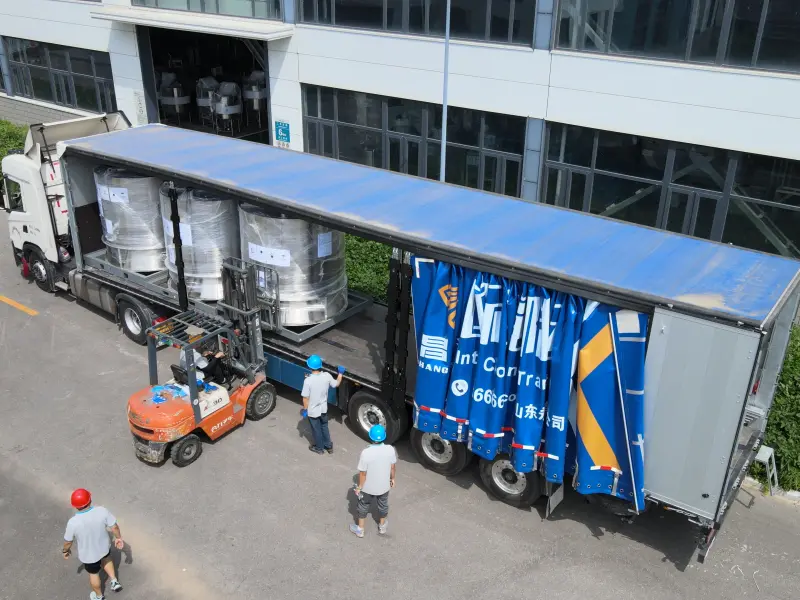
Shipping
Container sea freight or rail · spare parts by air
Delivery & Support
From factory acceptance to stable production
Every Shandong Arrow Machinery machine ships with full documentation, on-site commissioning support and a spare-parts channel tied to its serial number, so your line keeps running after start-up.
-
Shipping documents
Equipment specification, configuration list, drawings where applicable, operation manual, packing list, commercial invoice and export documents.
-
Testing & inspection
Factory test records, videos, inspection reports and material declarations, by product type and contract.
-
Installation & training
Installation, commissioning, operator training and maintenance guidance, with the scope set in your contract.
-
Spare parts
Screws, extrusion dies, gearboxes and wear parts, supplied against your machine's serial number or model.
Same Category
Related pet food machines
These machines and lines sit in the same process family, so you can build a complete line or add a single stage with them.
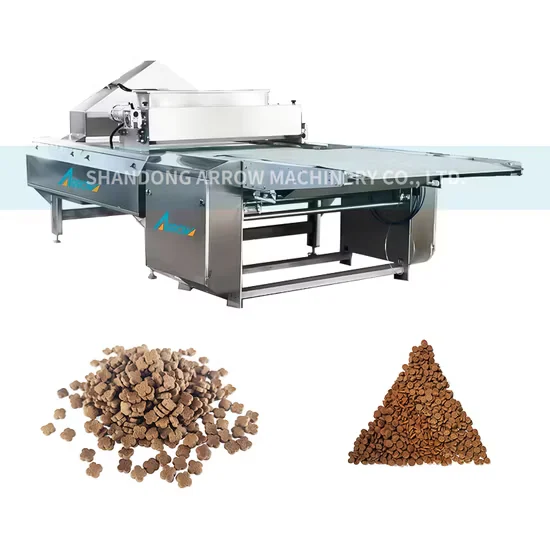
Cold Press Forming Equipment for High Fresh Meat Baked Pet Food
View details
Automatic Baked Pet Food Forming Machine for Pet Food
View details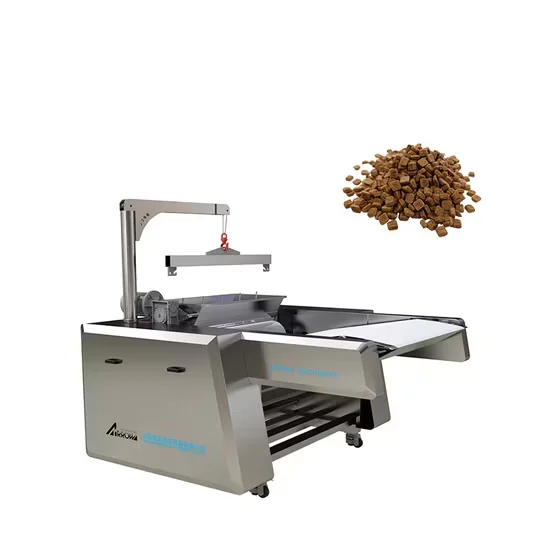
Pet Baked Food Processing Machine for Dry Pet Food
View details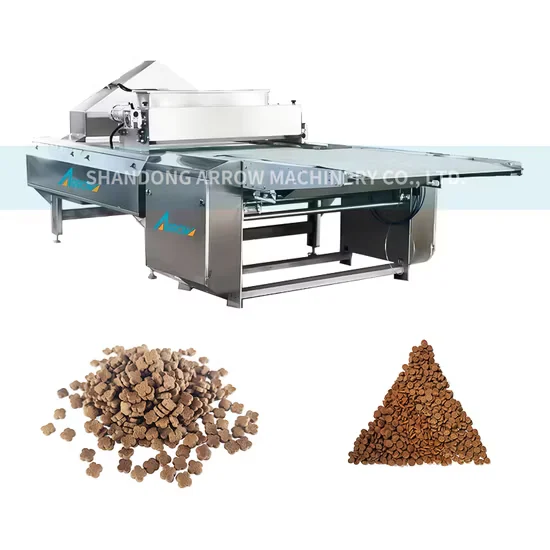
Cold Press Pet Food Forming Equipment for Baked Pet Food Plant
View details
Not sure this configuration fits your formula?
Tell us your target product, raw materials and output in kg/h. Our engineers confirm the process first, then recommend the extrusion and drying setup.
Applications
Pet products this machine is built for
This equipment is configured for the pet product types below. Open an application to see the full process route and matching machines.
Engineering Notes
Selection guides & technical articles
Read how process engineers choose extrusion, drying and coating setups for pet food before they commit to a configuration.
FAQ
Questions buyers ask about this machine
Short answers on trials, lead time, documents and spare parts from Shandong Arrow Machinery, a pet food machinery manufacturer in Jinan, China.
Can I test my formula before I order?
Yes. Where conditions allow, we arrange formula and process trials on our process test platform, and you can send your own raw material for testing. Agreed raw-material tests are completed before production or shipment.
What is the lead time?
The lead time is stated in your formal quotation, based on the confirmed model, configuration and scope of supply. Machines ship by container sea freight or rail, and spare parts can go by air.
Which documents come with the machine?
You receive the final equipment specification, configuration list, equipment drawings where applicable, operation manual, packing list, commercial invoice and export or shipping documents. Factory test records, videos, inspection reports and material declarations are provided according to product type and contract.
How do I get spare parts after commissioning?
Send us your machine's serial number or model and we match the right parts. We supply screws, extrusion dies, gearboxes and wear parts, along with process consultation and service.
More answers on our pet food machinery FAQ page.
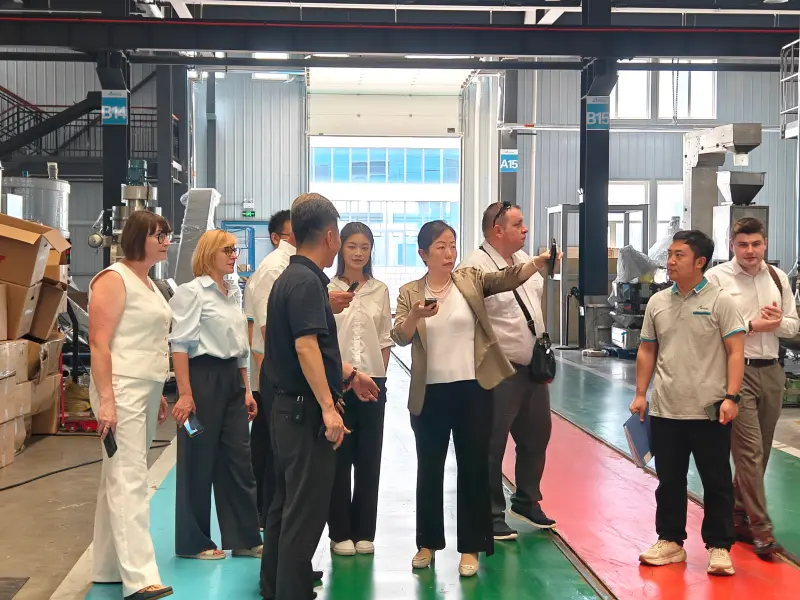
Request a quote for Twin Screw Laboratory Extruder for Pet Food Research
Share your target product and output. You receive a technical proposal with model, scope of supply and options.
- WhatsApp +86 137 9316 7756
- Email info@arrowextrusion.com
- No. 47 Chengbohu Road, Jibei Subdistrict, Jiyang District, Jinan, Shandong, China