

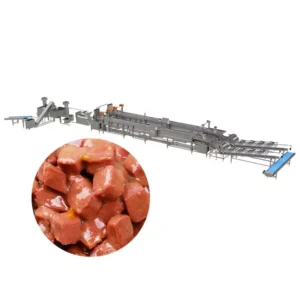
Process & Design
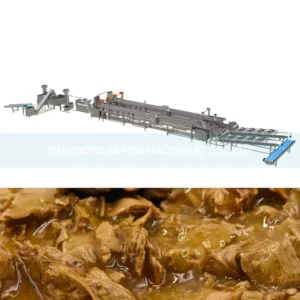
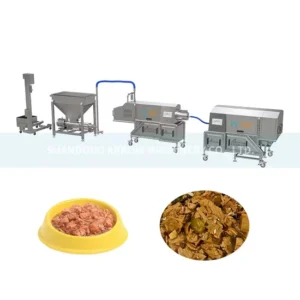
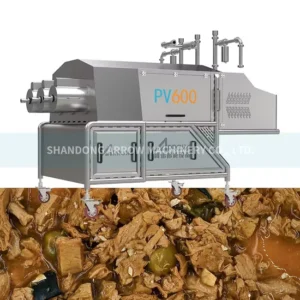
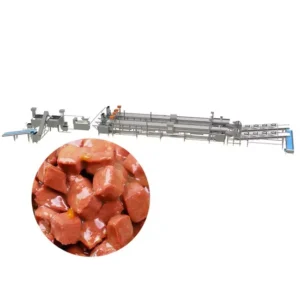
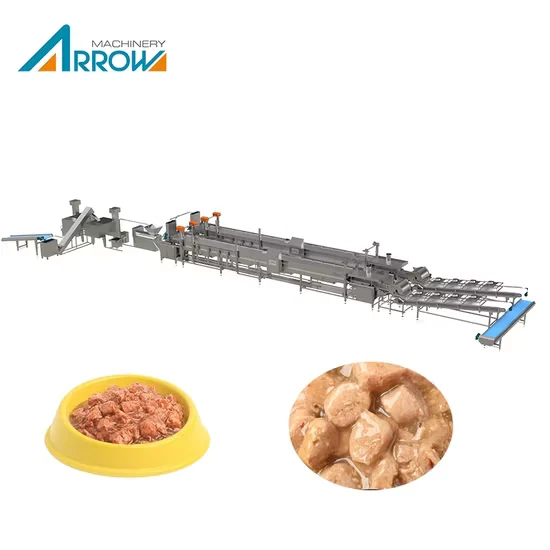
How Wet Pet Food Meat Chunks Plant for Pet Food Manufacturer works in your plant
Recipe-driven trials — Matching thermal control to high-moisture meat chunk formulations prevents structural collapse during processing.
Technical Specifications
| Parameter | Value |
|---|---|
| Product | LTE100 Wet Food Meat Chunks Processing Line (Dog, Cat) |
| Brand | Arrow |
| Power Source | Electric |
| Process | Thermal Processing |
| Automatic Grade | Automatic |
| Application | Dog, Cat |
| Feed Type | Meat and Bone Meal |
| Customized | Customized |
| Inverter | Rexroth |
| Touch Screen | Siemens |
| Motor | Siemens |
| Touch Food Part | Food Grade Use |
| Weight | 1350 KG |
| Dimensions | customizable |
Application Suitability
| Product / Industry | Typical Use |
|---|---|
| Wet Pet Food Manufacturers | Production of meat chunks for dog and cat food using thermal processing. |
| Private-Label Contract Processors | Automated thermal processing solutions for branded wet food lines. |
| Specialty Snack Manufacturers | Facilities upgrading from manual to automatic wet food production. |
Why Wet Food Meat Chunks Lose Shape During Thermal Processing
Precise thermal and forming control is critical for maintaining chunk integrity in high-moisture formulas.
Many producers face a frustrating disconnect between lab-scale success and full-line failure. A recipe that forms perfect chunks in a small test mixer often turns into mush during industrial retorting or thermal processing. This usually happens because the forming mechanics and heat transfer rates are not scaled correctly for the specific viscosity and protein behavior of the raw material mix. Without synchronized control over the extrusion or forming stage and the subsequent thermal treatment, the structural matrix of the meat chunk collapses.
Position in the Wet Food Production Workflow
The LTE100 line integrates directly after the raw material mixing and grinding stages. It receives the homogenized meat and bone meal mixture and performs the critical forming and thermal processing steps. Downstream, the processed chunks move to filling and sealing stations for canning or pouching. This central role ensures that the texture and density of the meat chunks are stabilized before final packaging, making it a pivotal component in any wet pet food manufacturing setup.
Common Production Challenges in Wet Food Manufacturing
Raw material variability poses a significant risk, especially when fresh meat content fluctuates. High moisture levels can weaken the structural integrity of chunks if the forming pressure is not adjusted dynamically. Additionally, maintaining consistent particle size and density across long production runs requires precise motor control. Cleaning and changeover between different recipes must be efficient to prevent cross-contamination and downtime. Continuous stability under thermal load is essential to avoid batch rejection due to texture defects.
Core Component Analysis
The LTE100 utilizes Siemens motors and touch screens to ensure stable automatic control throughout the process. This integration allows operators to monitor and adjust parameters in real time, reducing human error. The Rexroth inverter provides precise speed regulation, which is vital for matching the feed rate with the thermal processing capacity. Food-grade contact parts ensure that hygiene standards are met, preventing contamination during the handling of meat-based formulas. Customizable dimensions allow the line to fit into existing factory layouts without major structural changes.
Hidden Costs of Incorrect Equipment Selection
Choosing a line that cannot handle the specific rheology of your formula leads to high rejection rates. Inconsistent chunk quality forces rework or disposal, directly impacting profitability. Frequent breakdowns due to mismatched motor loads increase maintenance costs and spare part consumption. If the line cannot scale with future capacity needs, you may face costly retrofits or complete replacement. Poor integration with upstream mixers or downstream fillers creates bottlenecks that limit overall plant throughput.
Why Source This Line from Arrow
Arrow provides manufacturer-oriented supply, ensuring that the LTE100 is built to exact engineering specifications. The integrated process coverage means the thermal processing unit is designed to work seamlessly with your existing grinding and mixing systems. Application-based selection ensures that the Siemens and Rexroth components are configured for your specific ingredient behavior. Raw material trials help validate the line’s performance with your unique formula before full commitment. Custom layout support ensures the equipment fits your facility’s spatial and utility constraints effectively.
Documentation & Delivery
- Detailed technical specifications for Siemens and Rexroth components.
- Customized layout drawings based on your factory dimensions.
- Comprehensive operation manuals for automatic grade systems.
- Factory acceptance test records verifying thermal processing performance.
- Export documentation including commercial invoices and packing lists.
- Food-grade compliance certificates for all contact parts.
Installation, Operation & Maintenance
- Ensure foundation meets weight requirements for the 1350 KG unit.
- Connect electric power source compatible with Siemens motor specifications.
- Conduct initial trial runs with actual meat and bone meal formulation.
- Perform daily cleaning of food-grade contact parts to maintain hygiene.
- Replace wear parts as scheduled to ensure consistent chunk formation.
- Adjust Rexroth inverter settings for different recipe viscosities.
Request a Configuration Quote
To receive an accurate proposal, specify your target product type, such as dog or cat meat chunks. Provide raw material ratios, especially fresh meat content, and your required hourly capacity. Share your factory dimensions and available voltage frequency for proper motor configuration. Indicate your destination country for shipping logistics. You will receive a preliminary equipment configuration, layout options, and a formal quotation based on these details.
Frequently Asked Questions
Q: What is the capacity range for the LTE100 wet food line?
A: The capacity depends on the specific configuration and raw material characteristics. Since the line is customized, the output rate is determined during the engineering phase based on your required throughput and factory constraints. Contact our team with your target capacity for a tailored specification.
Q: Can the LTE100 process fresh meat or only meat meal?
A: The system is designed for meat and bone meal but can handle formulations with fresh meat content. The specific ratio affects the forming and thermal processing parameters. We recommend conducting trials with your exact formula to optimize the machine settings for best results.
Q: How does the Siemens control system improve product consistency?
A: The Siemens touch screen and motor integration allows for precise monitoring and adjustment of process variables. This automation reduces human error and ensures that thermal processing conditions remain stable, leading to uniform chunk texture and quality across production batches.
Q: Is the LTE100 suitable for small-scale or large-scale production?
A: The line is customizable to fit various production scales. Whether you are a small specialty processor or a large contract manufacturer, the dimensions and capacity can be adjusted. Provide your facility details and output goals for a suitable configuration recommendation.
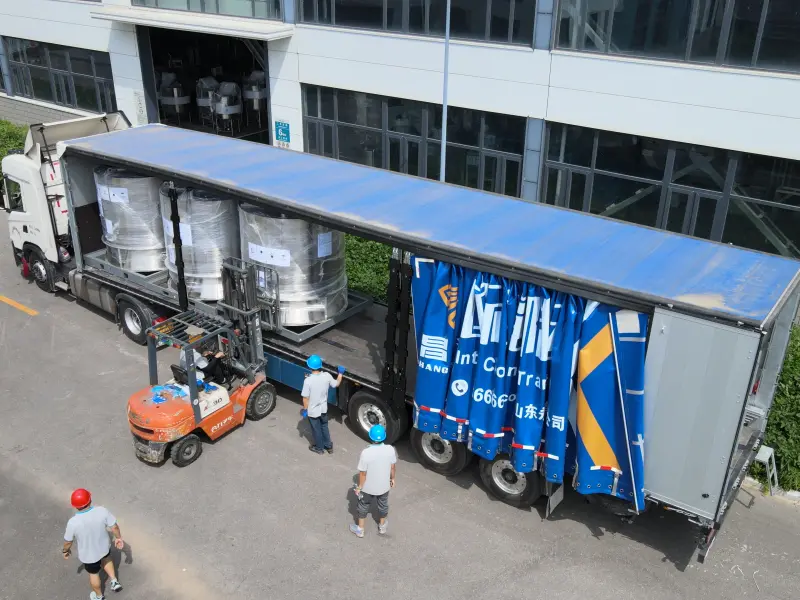
Shipping
Container sea freight or rail · spare parts by air
Delivery & Support
From factory acceptance to stable production
Every Shandong Arrow Machinery machine ships with full documentation, on-site commissioning support and a spare-parts channel tied to its serial number, so your line keeps running after start-up.
-
Shipping documents
Equipment specification, configuration list, drawings where applicable, operation manual, packing list, commercial invoice and export documents.
-
Testing & inspection
Factory test records, videos, inspection reports and material declarations, by product type and contract.
-
Installation & training
Installation, commissioning, operator training and maintenance guidance, with the scope set in your contract.
-
Spare parts
Screws, extrusion dies, gearboxes and wear parts, supplied against your machine's serial number or model.
Same Category
Related pet food machines
These machines and lines sit in the same process family, so you can build a complete line or add a single stage with them.

Commercial Cold Press Dog Kibble Manufacturing Plant
View details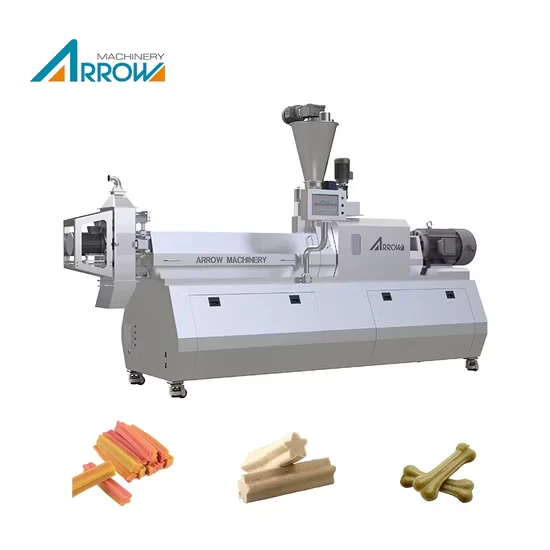
Arrow Dog Chews Food Extruder Machine Production Line
View details
Full Automatic Dry Cold Press Dog Food Extrusion Equipment
View details
Dry Pet Food Extruder Large Capacity Cat Dog Feed Equipment
View details
Not sure this configuration fits your formula?
Tell us your target product, raw materials and output in kg/h. Our engineers confirm the process first, then recommend the extrusion and drying setup.
Applications
Pet products this machine is built for
This equipment is configured for the pet product types below. Open an application to see the full process route and matching machines.

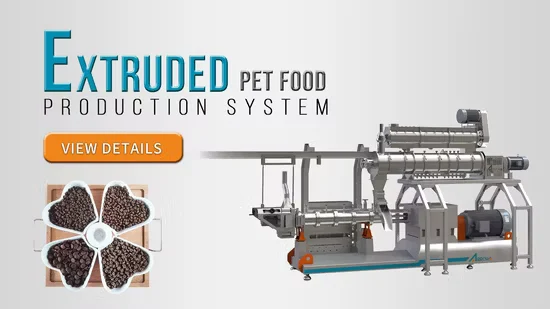
Engineering Notes
Selection guides & technical articles
Read how process engineers choose extrusion, drying and coating setups for pet food before they commit to a configuration.
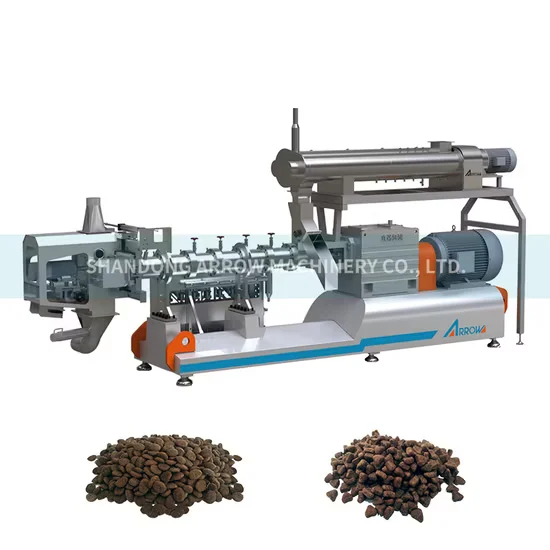
Kibble Line Brands and Alternatives: A Buyer Guide
Read article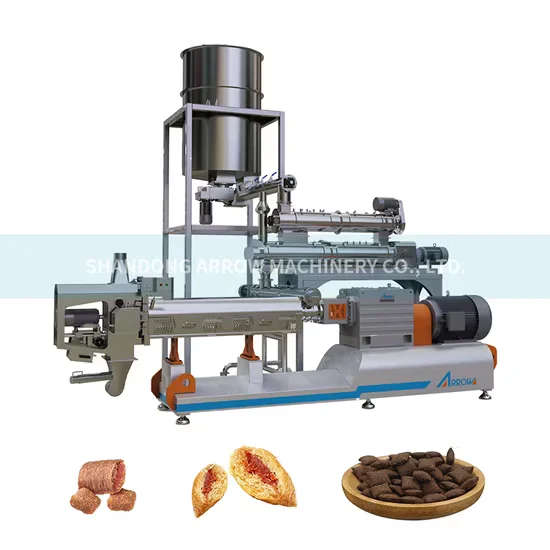
How to Find Budget-Friendly Kibble Dryer Alternatives
Read article
Pet Food Production Lines: Arrow vs Alternatives by Budget
Read articleFAQ
Questions buyers ask about this machine
Short answers on trials, lead time, documents and spare parts from Shandong Arrow Machinery, a pet food machinery manufacturer in Jinan, China.
Can I test my formula before I order?
Yes. Where conditions allow, we arrange formula and process trials on our process test platform, and you can send your own raw material for testing. Agreed raw-material tests are completed before production or shipment.
What is the lead time?
The lead time is stated in your formal quotation, based on the confirmed model, configuration and scope of supply. Machines ship by container sea freight or rail, and spare parts can go by air.
Which documents come with the machine?
You receive the final equipment specification, configuration list, equipment drawings where applicable, operation manual, packing list, commercial invoice and export or shipping documents. Factory test records, videos, inspection reports and material declarations are provided according to product type and contract.
How do I get spare parts after commissioning?
Send us your machine's serial number or model and we match the right parts. We supply screws, extrusion dies, gearboxes and wear parts, along with process consultation and service.
More answers on our pet food machinery FAQ page.
Request a quote for Wet Pet Food Meat Chunks Plant for Pet Food Manufacturer
Share your target product and output. You receive a technical proposal with model, scope of supply and options.
- WhatsApp +86 137 9316 7756
- Email info@arrowextrusion.com
- No. 47 Chengbohu Road, Jibei Subdistrict, Jiyang District, Jinan, Shandong, China