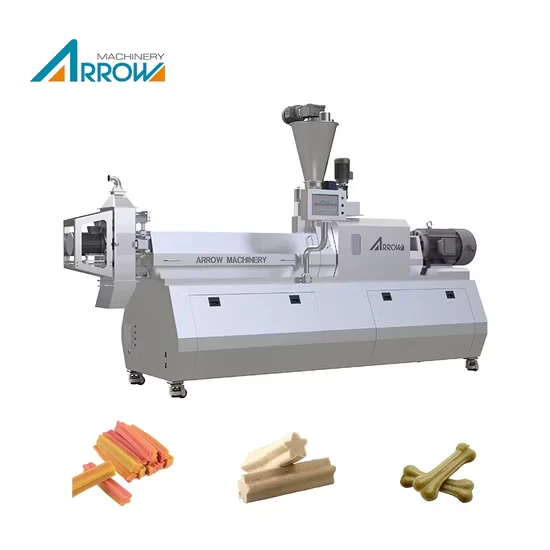



How the Arrow Dog Chews Food Extruder Machine Production Line Works in Your Line
Match screw profile to formulation — AYT series modular screws are configured based on specific meat and bone meal ratios to prevent rough textures and production stops.
Technical Specifications
| Parameter | Value |
|---|---|
| Product | AYT Series Dog Chews Processing Line Extruder |
| Model | AYT50; AYT78; AYT98; AYT105; AYT120; AYT135 |
| Production Capacity | 150kg/H (source value — verify with factory) |
| Power Source | Electric |
| Process | Thermal Processing |
| Automatic Grade | Automatic / Fully Automatic |
| Application | Dog |
| Feed Type | Meat and Bone Meal |
| Inverter | Rexroth |
| Touch Screen | Siemens |
| Motor | Siemens |
| Contact Material | Food Grade Use (304 Stainless Steel) |
| Heating Temperature | Adjustable |
| Feeding Speed | Adjustable |
| Feeder | Loss Weight Type/ Volumetric Feeder |
| Dimension | 20-4-4m,Adjust,Flexible (source value — verify with factory); 1200015002600MM (source value — verify with factory) |
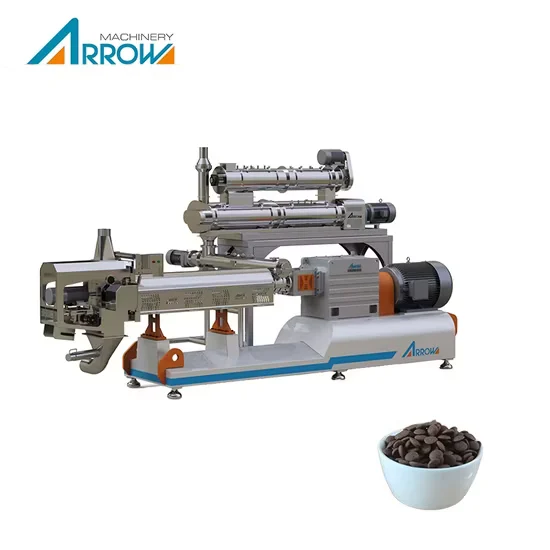
| Screw | Modular Design,Easy Replacement |
| Barrel | Modular Design,Easy Replacement |
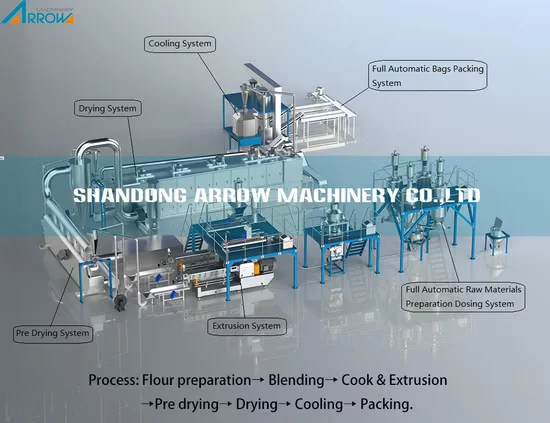
| Technology | Extrusion-Drying-Cooling |
| Specification | 1000kg (source value — verify with factory) |
| Origin | Shandong, China |
| HS Code | 84388000 |
Application Suitability
| Product / Industry | Typical Use |
|---|---|
| Dog Chew Manufacturing | Production of semi-moist chews from meat and bone meal formulations |
| Private-Label Treat Plants | Automated processing for consistent shape and texture in branded snacks |
| Pet Snack Processors | Thermal extrusion of various chew shapes requiring precise moisture control |
Why Consistent Chew Texture Fails in Mass Production
Mismatched screw configurations cause irregular shaping and frequent barrel blockages.
Many factories face issues where laboratory success does not translate to full-scale output. Operators often encounter rough surfaces, misshapen sticks, or ugly tails on dog chews when the extrusion parameters do not align with the raw material viscosity. High-starch or gelatin-heavy mixes require specific shear forces that generic setups cannot provide. Without proper adjustment, teams spend excessive time cleaning barrels instead of producing. This line addresses these inconsistencies by allowing precise thermal and mechanical tuning.
Integration in Your Processing Workflow
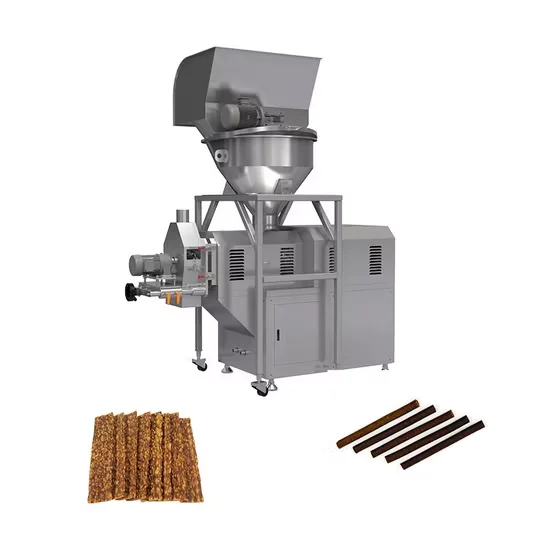
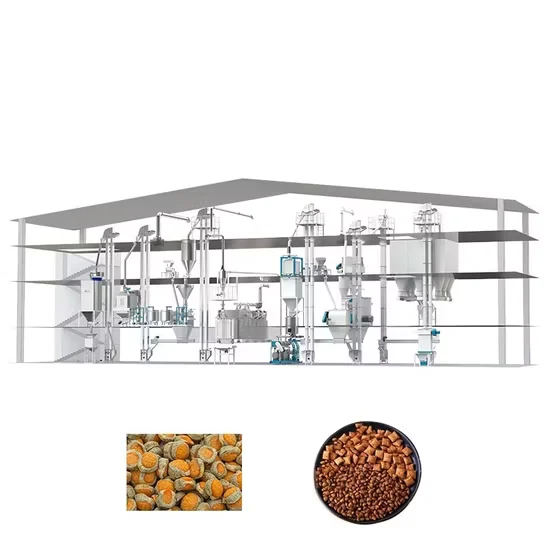
This Dog Chews Processing Line Extruder Machine serves as the central forming unit in your treat facility. It receives prepared meat and bone meal mixtures from upstream mixing systems. The extruded product then moves directly to integrated drying and cooling sections. This sequence ensures that moisture levels are stabilized before packaging. Proper alignment with upstream feeders and downstream dryers is critical for maintaining continuous throughput.
Common Production Challenges
Raw material variability poses a significant risk to product consistency. Formulations with high fresh meat content or varying fat levels behave differently under heat. Achieving uniform particle density and shape requires stable pressure inside the barrel. Moisture control after extrusion is equally vital to prevent spoilage or excessive hardness. Frequent product changeovers can lead to downtime if cleaning and adjustment are complex. Continuous stability depends on reliable motor performance and precise temperature regulation.
Understanding Core Components
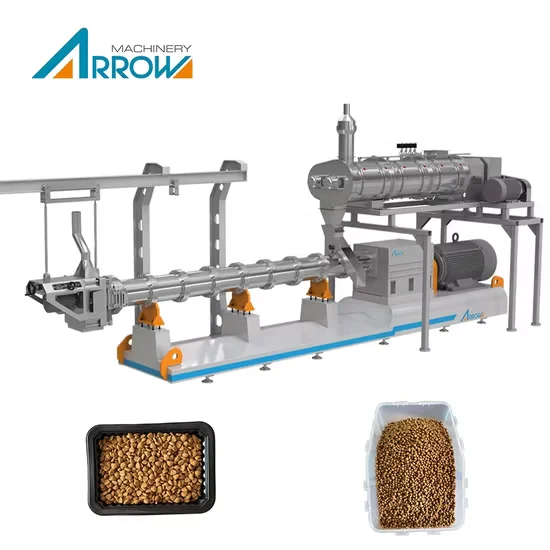
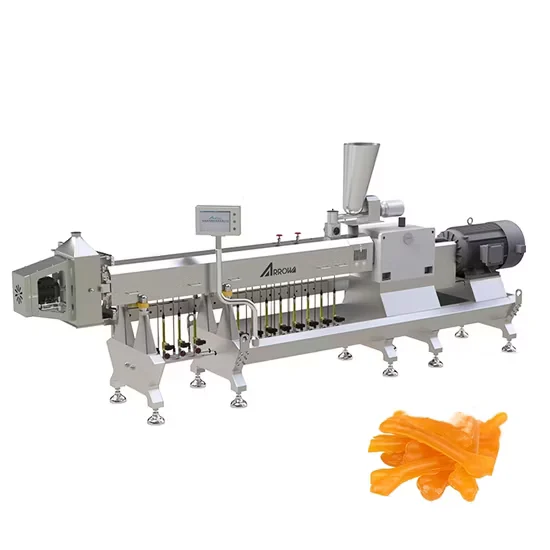
The AYT series utilizes a modular screw and barrel design. This feature allows engineers to replace or rearrange elements to match specific recipes. Adjusting the screw profile changes the shear and compression applied to the dough. Siemens motors and touch screens provide accurate control over feeding speed and heating temperature. The loss weight or volumetric feeder ensures a steady supply of raw materials into the extruder. Integrated drying and cooling technologies work in tandem to lock in product structure. This holistic approach prevents deformation during the final stages of processing.
Hidden Costs of Poor Equipment Selection
Choosing an inflexible machine leads to hidden operational expenses. Inability to handle recipe changes forces manufacturers to reject entire batches. Frequent breakdowns due to poor component quality increase maintenance costs. Lack of automation requires higher labor input for monitoring and adjustment. Expanding capacity later may require replacing the entire line rather than upgrading modules. These factors erode profit margins over time.
Why Choose Arrow for Your Treat Line
Arrow provides manufacturer-oriented supply for complete extrusion lines. Our engineering team assesses your specific ingredients and target product characteristics. We support raw-material trials to validate performance before purchase. Custom line layouts accommodate your existing factory dimensions and utilities. Export project coordination includes factory acceptance testing and commissioning options. Ongoing process consultation ensures long-term operational success.
Documentation & Delivery
- Detailed technical specifications for AYT series models
- Factory layout drawings for optimal space utilization
- Comprehensive operation and maintenance manuals
- Factory acceptance test records for quality verification
- Export documentation including commercial invoices and packing lists
- Certificate files provided according to contract agreements
Installation, Operation & Maintenance
- Ensure foundation meets dimensional requirements for flexible layout
- Connect power supply matching Siemens motor voltage and frequency
- Conduct initial trial runs with actual meat and bone meal mix
- Perform daily cleaning of contact parts made from 304 stainless steel
- Replace modular screw elements easily for wear or product change
- Adjust heating and feeding settings for different chew formulations
Request a Configuration Proposal
Provide your target product type, such as dog chews or jerky. Share raw material ratios, especially meat and bone meal content. Specify required output capacity and operating schedule. Include product shape, size, and moisture targets. Share factory dimensions and utility constraints like power and heat sources. Indicate your destination country and any certification needs. You will receive a preliminary configuration, layout proposal, and formal quotation. Trial arrangements can be discussed based on your formulation.
Frequently Asked Questions
Q: What models are available in the AYT series?
A: The AYT series includes models AYT50, AYT78, AYT98, AYT105, AYT120, and AYT135. Each model offers different capacity ranges to suit various production scales. Confirm specific output requirements with our engineering team for accurate selection.
Q: Can this line handle high fresh meat content?
A: The system is designed for meat and bone meal formulations. Performance with high fresh meat content depends on specific recipe viscosity. We recommend raw material trials to determine the optimal screw configuration and processing parameters for your specific mix.
Q: Is the production line fully automatic?
A: Yes, the line features automatic grade operation with Siemens controls. It includes automated feeding, extrusion, drying, and cooling processes. This reduces manual labor requirements and ensures consistent product quality through precise parameter monitoring and adjustment.
Q: How does modular screw design help maintenance?
A: Modular screws allow easy replacement of worn elements without changing the entire shaft. This design supports quick adjustments for different product shapes and textures. It minimizes downtime during maintenance and facilitates efficient product changeovers in multi-product facilities.
Q: What are the installation requirements?
A: Installation requires adequate floor space matching the flexible dimensions provided. Ensure proper electrical connections for Siemens motors and inverters. Access to appropriate heat sources and ventilation for drying sections is necessary. Our team provides guidance on layout and utility integration during the planning phase.