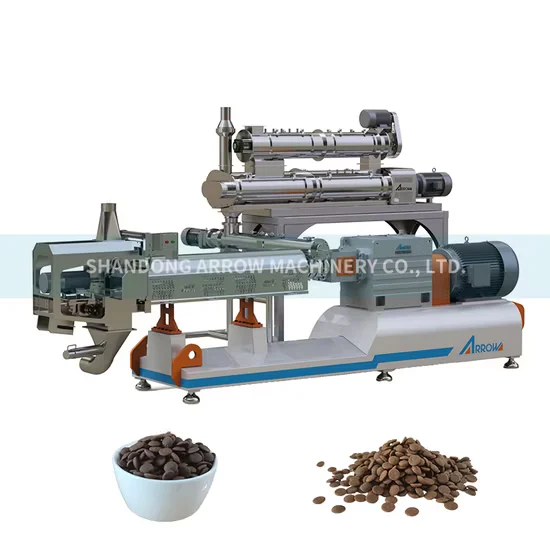
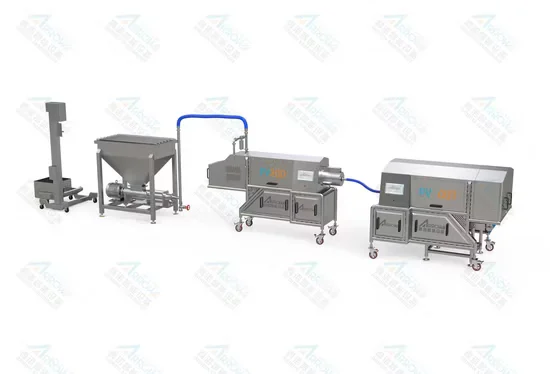
Even with perfect extrusion and drying parameters, a pet food batch that starts with uneven mixing will fail. Clumped liquid additives or segregated micro-ingredients lead to inconsistent pellet hardness, color variation, and nutritional imbalance in the final kibble or treat. The root cause often lies not in the extruder, but in the preparatory stage where raw materials are blended.
A Single-Shaft Paddle Mixer addresses these issues by utilizing optimized paddle angles and residence time controls to ensure uniform dispersion of powders, granules, and liquids before they reach the extrusion system. This design minimizes batch-to-batch residue, reduces cleaning downtime, and provides the consistent feed stock necessary for stable downstream processing. For factory managers and production directors, selecting the right mixing equipment is critical to maintaining product quality and operational efficiency.
Why Batch Mixing Uniformity Matters in Pet Food Production
In pet food manufacturing, the consistency of the final product is directly linked to the homogeneity of the pre-extrusion mix. Whether producing dry kibble, baked snacks, or meat-based treats, every particle must carry the correct ratio of proteins, fats, vitamins, and minerals. If a mixer fails to distribute liquid fats or fine premixes evenly, the extruder receives an irregular feed. This inconsistency can cause fluctuating motor loads, uneven expansion, and variable pellet density.
For private-label contract processors and brands managing multiple SKUs, the risk of cross-contamination is equally significant. Residual material from a previous batch can alter the flavor, color, or allergen profile of the next run. In the production of specialty diets or hypoallergenic formulas, even trace amounts of leftover ingredient can render a batch unsellable. Therefore, the mixing stage acts as the gatekeeper for quality control, ensuring that what enters the thermal processing zone meets strict formulation standards.
The impact of poor mixing extends beyond product quality to operational costs. Uneven mixes may require reprocessing or result in higher waste rates due to off-spec products. Furthermore, frequent stoppages for manual cleaning to prevent cross-contamination reduce overall plant throughput. A reliable mixing solution must therefore balance high uniformity with ease of discharge and cleanability, supporting both large-volume runs and frequent product changeovers.
Inside the Single-Shaft Paddle Mixer: Structure and Working Principle
The Single-Shaft Paddle Mixer features a U-shaped trough and a central rotor equipped with multiple layers of paddles. Unlike ribbon mixers that rely primarily on axial movement, the paddles in this design are arranged at specific angles to create a complex three-dimensional motion. As the shaft rotates, the paddles lift material from the bottom and sides, throwing it into the center of the trough where it intersects with opposing flows. This action generates intense convective mixing, breaking up agglomerates and distributing ingredients rapidly.
The geometry of the paddles is critical to performance. By adjusting the angle and spacing, engineers can control the residence time and shear force applied to the material. For pet food applications involving delicate ingredients or heat-sensitive vitamins, lower shear settings prevent degradation while still achieving homogeneity. For formulations requiring the integration of viscous liquids, such as fresh meat slurries or oils, the paddle design ensures that liquids are dispersed across the solid matrix rather than forming pockets.
Drive systems are typically mounted externally to keep bearings and seals away from direct contact with the product zone, reducing contamination risks. The simplicity of the single-shaft design also means fewer moving parts compared to dual-axis systems, which can simplify maintenance routines. However, the effectiveness of the mixer depends heavily on the precise calibration of paddle orientation relative to the trough curvature, ensuring no dead zones remain where material could stagnate.
Solving Common Batch Mixing Issues with Single-Shaft Design
One of the primary challenges in batch mixing is residual buildup, particularly at the discharge point. The Single-Shaft Paddle Mixer addresses this with a full-open discharge door mechanism. When opened, the door spans the entire width of the trough bottom, allowing gravity to evacuate nearly all material without manual intervention. This design significantly reduces the time required for cleaning between batches, minimizing the risk of cross-contamination and enabling faster turnaround for facilities producing multiple product lines.
Handling liquid additions is another common hurdle. In many pet food recipes, fats, enzymes, or flavorings are added during the mixing stage. The paddle action creates a fluidized bed within the trough, allowing spray nozzles to introduce liquids evenly across the moving mass. This prevents the formation of sludge or clumps that can clog downstream feeders. While high-fat formulations may eventually require vacuum coating post-extrusion, initial liquid integration in the mixer ensures that the base matrix is consistent before thermal processing.
| Feature | Single-Shaft Paddle Mixer | Twin-Shaft Paddle Mixer | Ribbon Mixer |
|---|---|---|---|
| Mixing Mechanism | Convective flow via angled paddles | Counter-rotating shafts for high intensity | Axial movement via helical ribbons |
| Discharge Cleanliness | High (full-open door) | High (full-open door) | Moderate (residue in corners) |
| Best For | General pet food, moderate capacity | High-speed, large volume, heavy liquids | Dry powders, low-cost applications |
| Footprint | Compact | Larger due to dual drives | Long and narrow |
Choosing between a Single-Shaft Paddle Mixer and other options depends on capacity and formulation complexity. For facilities with space constraints or moderate throughput requirements, the single-shaft design offers a balanced solution. It provides sufficient mixing intensity for most dry and semi-moist pet foods without the mechanical complexity of twin-shaft systems. However, for extremely high-capacity lines or formulations with very high liquid content, a twin-shaft option might be evaluated during the engineering phase.
Batch Uses: Integrating the Mixer into Pet Food Lines
In a complete pet food production line, the mixer serves as the bridge between size reduction and forming. Upstream, it receives ground ingredients from hammer mills or pulverizers. The uniformity of the grind affects mixing efficiency, so coordinating the particle size distribution with the mixer’s capabilities is essential. Downstream, the mixed batch is transferred to the extruder feeder. Any inconsistency here directly impacts the stability of the extrusion process, making the mixer a critical control point for overall line performance.
For dry kibble lines, including baked and steam-baked varieties, the mixer ensures that starch sources, protein meals, and binders are thoroughly combined before conditioning and extrusion. In treat production, such as meat strips or jerky, the mixer handles higher moisture contents and fibrous materials, requiring robust construction and efficient discharge to prevent sticking. The versatility of the Single-Shaft Paddle Mixer allows it to adapt to these varying demands through adjustments in mixing time and paddle configuration.
Automation plays a key role in maximizing the benefits of this equipment. Integrated control systems can manage batch sequencing, liquid injection timing, and discharge triggers, reducing operator error and ensuring repeatability. When configuring a new facility or upgrading an existing one, matching the mixer’s batch cycle time to the extruder’s continuous feed rate is vital. Buffer bins or surge hoppers are often used to decouple the batch mixing process from the continuous extrusion line, smoothing out flow variations.
Shandong Arrow Machinery supports customers in defining these integration points by reviewing raw material characteristics and target capacities. Equipment selection is based on actual process requirements rather than generic recommendations, ensuring that each component, from grinding to mixing, contributes to a balanced and efficient production system. Trial runs can help validate the mixing performance for specific formulations before finalizing the equipment list.
Frequently Asked Questions
Q: How long does a typical batch mixing cycle take in a single-shaft paddle mixer?
A: Mixing times vary based on formulation complexity and desired uniformity, but typical cycles range from 3 to 8 minutes. Factors such as ingredient density, particle size, and liquid addition rates influence the duration. Testing with specific raw materials helps determine the optimal time to achieve target homogeneity without over-processing the blend.
Q: Can a single-shaft paddle mixer handle liquid addition for pet food formulations?
A: Yes, these mixers are designed to accommodate liquid sprays for fats, oils, or flavors. The convective motion ensures even distribution across the solid matrix. For very high liquid loads, process engineers may recommend pre-mixing or adjusting paddle speeds to prevent agglomeration, ensuring the mixture remains free-flowing for downstream feeding.
Q: What is the best way to clean a single-shaft paddle mixer to prevent cross-contamination?
A: The full-open discharge door facilitates rapid emptying, leaving minimal residue. For thorough cleaning, access panels allow manual or automated washing of the trough and paddles. Establishing a standard operating procedure for purging between batches, especially when changing allergen-containing formulas, is critical for maintaining product integrity and meeting safety standards.
Q: How do I choose between a single-shaft and twin-shaft paddle mixer for my pet food plant?
A: Selection depends on capacity, footprint, and formulation needs. Single-shaft mixers are compact and effective for moderate throughputs and standard dry/semi-moist mixes. Twin-shaft models offer higher intensity and speed for large volumes or difficult-to-mix ingredients. Evaluating your daily tonnage, ingredient behavior, and available floor space will guide the right choice for your specific production goals.
Send your raw material formulation, required batch capacity, and factory layout dimensions to receive a customized mixing section configuration. Our engineering team can review your specific process needs, discuss potential trial options for your ingredients, and provide detailed technical specifications and layout proposals to support your project planning.