
Extrusion Process Notes Buying Guide
Solving Grain-Free Kibble Processing Issues with Proper Equipment
This article addresses common grain-free kibble processing issues like die plugging by matching equipment shear forces to factory realities. Learn how selecting configurable twin-screw extruders and vacuum coating technology ensures consistent quality from raw material intake to final packaging.

Many grain-free kibble formulas run perfectly in the lab yet plug die plates or produce uneven pellets during mass production. This discrepancy usually stems not from the recipe itself, but from a mismatch between equipment shear forces and drying curves. Successful scale-up requires matching the extrusion mechanics to actual factory realities rather than relying solely on theoretical specifications.
The core solution lies in selecting a twin-screw extruder with configurable screw profiles and precise temperature control, paired with a drying system that manages moisture migration without case-hardening the pellet. Uniform fat application then depends on vacuum coating technology to ensure surface integrity and shelf stability. Properly configured grain-free kibble processing equipment addresses these physical constraints directly, ensuring consistent quality from raw material intake to final packaging.
Why Grain-Free Formulas Challenge Standard Extruders
Grain-free diets typically replace traditional cereals like corn or wheat with alternative starch sources such as peas, potatoes, or lentils, often alongside high inclusions of fresh meat. These ingredients behave differently under heat and pressure. Legume-based starches generally require specific shear energy inputs to achieve adequate gelatinization, while high fresh-meat ratios introduce significant moisture and fat content early in the process.
Standard single-screw extruders or low-configuration twin-screw systems often struggle with these variables. They may fail to generate sufficient shear for proper cooking of dense plant proteins, leading to under-processed centers, or they may overheat sensitive ingredients, causing die blockage. The result is inconsistent pellet density, rough cut surfaces, and poor expansion ratios. Without precise control over the barrel temperature zones and screw speed, the material flow becomes unstable, making it difficult to maintain uniform shape and size across long production runs.
Furthermore, the lack of gluten in grain-free recipes removes the natural binding structure found in conventional kibbles. This places greater demand on the mechanical working of the dough within the extruder barrel. If the equipment cannot provide the necessary mixing and shearing action, the final product may lack structural integrity, leading to excessive fines and breakage during downstream handling. Understanding these rheological challenges is the first step in specifying the right machinery.
Selecting the Right Twin-Screw Extruder for Stable Kibble
A twin-screw extruder offers the flexibility needed to handle complex grain-free formulations. Unlike fixed-geometry systems, twin-screw designs allow for modular screw configurations. Engineers can adjust the ratio of conveying, kneading, and reverse elements to tailor the shear profile to the specific raw material blend. For high-fresh-meat recipes, this might mean increasing the length of the mixing zone to ensure homogeneous distribution before the metering section.
Temperature control is equally critical. Modern extruders feature multiple independent heating and cooling zones along the barrel. This allows operators to manage the thermal history of the product precisely, preventing local overheating that can degrade proteins or cause sticking. When processing grain-free kibble, the ability to fine-tune these zones helps balance the need for starch gelatinization with the preservation of nutrient integrity.
The Twin-Screw Extruder from Arrow is designed with this adaptability in mind. It supports various screw combinations and barrel arrangements, enabling processors to switch between different grain-free recipes with minimal downtime. By matching the screw configuration to the ingredient profile, manufacturers can achieve consistent pellet shape, density, and texture. This level of control is essential for maintaining product quality when dealing with variable raw material characteristics.
Matching Drying Systems to Prevent Moisture Traps
After extrusion, the kibble contains significant moisture that must be removed to ensure shelf stability. However, grain-free pellets often have different porous structures compared to grain-based counterparts, affecting how water migrates from the interior to the surface. If the drying curve is too aggressive, the outer layer can harden prematurely, trapping moisture inside. This case-hardening leads to mold growth during storage and inconsistent texture upon rehydration.
Selecting the appropriate drying technology is crucial to avoid these issues. Cross-flow circulation dryers provide uniform airflow across the product bed, ensuring even heat distribution. This design helps prevent hot spots that can scorch the kibble surface while allowing gentle, consistent moisture removal. In contrast, less efficient drying methods may result in uneven moisture content, where some pellets are overly dry and brittle while others remain damp.
The Cross-Flow Circulation Dryer is engineered to address these challenges. Its airflow design promotes consistent drying rates, reducing the risk of case-hardening and ensuring that the final moisture content meets target specifications uniformly. By integrating this drying system with the extrusion line, processors can maintain a balanced throughput, avoiding bottlenecks that often occur when drying capacity does not match extruder output. Proper drying is not just about removing water; it is about preserving the structural and nutritional quality of the grain-free kibble.
Achieving Uniform Fat Coating Without Oxidation
The final stage of kibble production involves adding fats and flavorings to enhance palatability. Grain-free diets often require higher fat levels to meet energy density requirements, which poses a challenge for standard coating methods. Drum flavorers can leave excess oil on the pellet surface, leading to rancidity, dust attraction, and packaging issues. Moreover, uneven coating results in inconsistent taste, causing pets to reject certain pieces.
Vacuum coating technology offers a superior solution for high-fat applications. By applying fat under negative pressure, the oil penetrates the porous structure of the kibble rather than sitting on the surface. This internal absorption reduces surface grease, minimizes oxidation risks, and improves the overall appearance of the product. The result is a cleaner, more stable kibble with enhanced flavor retention and longer shelf life.
The Vacuum Coating Machine facilitates this process by ensuring precise control over fat addition and distribution. It allows for the application of heat-sensitive flavors and oils without degradation, maintaining the integrity of the added nutrients. For manufacturers producing premium grain-free lines, this technology is essential for delivering a product that meets both aesthetic and functional quality standards. Integrating vacuum coating into the line ensures that the high value of the grain-free formulation is preserved until the bag is opened.
Frequently Asked Questions
Q: Can a standard extruder handle high fresh-meat ratios in grain-free recipes?
Standard single-screw extruders often struggle with high fresh-meat inclusions due to limited mixing capability and shear control. Twin-screw extruders are better suited for these formulations because they offer superior conveying and mixing actions. Their modular screw designs allow for customization to handle high-moisture inputs and ensure homogeneous cooking without blockages or inconsistent texture.
Q: How do I prevent moisture inconsistency in grain-free kibble after drying?
Moisture inconsistency often results from uneven airflow or aggressive drying curves that cause case-hardening. Using a cross-flow circulation dryer ensures uniform heat distribution and gentle moisture removal. It is also important to match the drying capacity to the extruder output and monitor the initial moisture content of the extruded pellets to adjust the drying parameters accordingly for consistent results.
Q: What is the advantage of vacuum coating over standard drum flavoring for grain-free diets?
Vacuum coating forces fat and flavors into the kibble’s porous structure rather than leaving them on the surface. This reduces surface grease, minimizing oxidation and rancidity risks while improving shelf life. It also ensures uniform flavor distribution, enhancing palatability and preventing picky eating behaviors. Standard drum flavorers often leave excess surface oil, which can attract dust and compromise package integrity.
Q: Why is screw configuration important for grain-free kibble production?
Screw configuration determines the shear energy and mixing intensity applied to the raw materials. Grain-free recipes with alternative starches and high protein levels require specific shear profiles to achieve proper gelatinization and texture. Modular twin-screw extruders allow operators to adjust screw elements to match the rheological properties of the formula, ensuring consistent pellet quality and preventing processing issues like die blockage.
To optimize your grain-free production line, share your specific formula details and target capacity. Our engineering team can provide a customized equipment configuration, including extrusion, drying, and coating solutions, along with a preliminary plant layout. Request technical specifications or discuss raw material trials to validate the process before investment.
Target Industries Covered in This Article
Equipment in This Process
Machines mentioned in this article
Each machine is built at the Shandong Arrow Machinery factory and supplied as a standalone unit or as part of a complete extrusion line.
01 Cross-Flow Circulation Dryer
Arrow Cross Circulation Dryer Equipment for Pet Feed
View machine details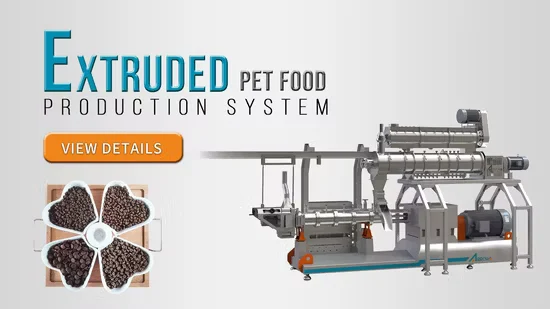 02
Twin-Screw Extruder
Twin-Screw Extruder for Dry Kibble Pet Food Manufacturing Equipment
View machine details 03
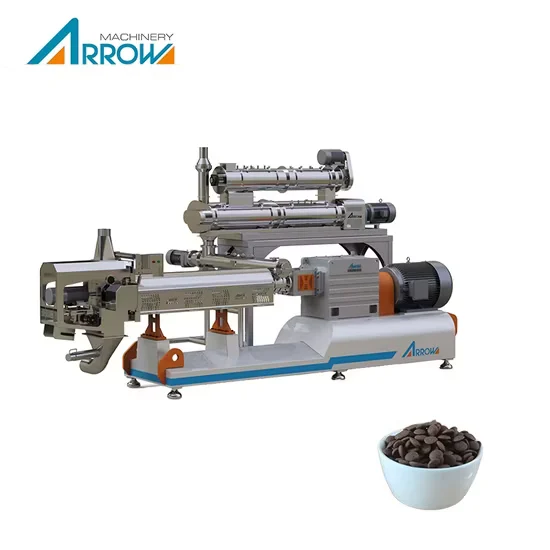
Drying System
Pet Food Production Dryer Equipment for Pet Food Plant
View machine details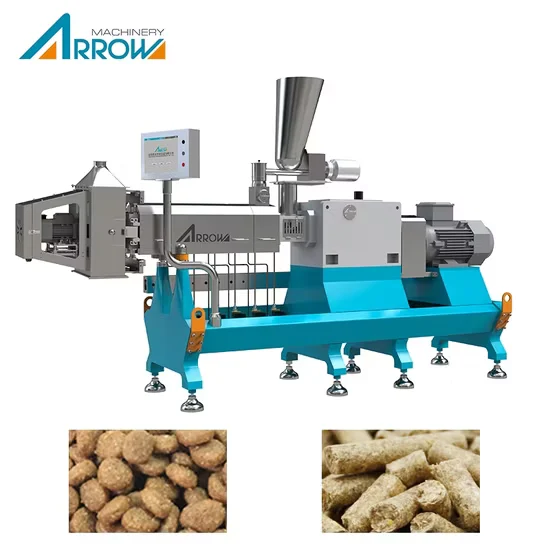 04
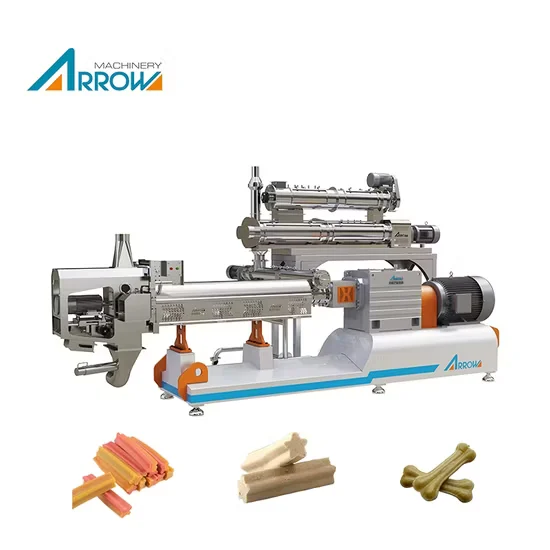
Twin-Screw Extruder
Small Twin-Screw Extruder Machine for Pet Food Plant
View machine detailsFurther Reading
Related extrusion process notes


Configured Quotation
Send your formula and capacity for a configured line proposal
Shandong Arrow Machinery engineers review your raw materials, product shape and kg/h or t/h target, then propose a single machine or complete pet food, aquafeed or specialty feed line.
- Emailinfo@arrowextrusion.com
- WhatsApp+86 137 9316 7756
- FactoryNo. 47 Chengbohu Road, Jibei Subdistrict, Jiyang District, Jinan, Shandong, China
Request a Quote
Payment by T/T, L/C or Alibaba Trade Assurance. Scope, delivery time and commissioning support are stated in the formal quotation.