
Extrusion Process Notes Buying Guide
Starch-Based Cat Litter Line Buying Guide for Plant Investors
This guide addresses common bottlenecks in starch-based cat litter production by emphasizing the integration of extrusion with downstream thermal processing. Investors learn to evaluate critical parameters like gelatinization and drying dynamics to ensure consistent clumping performance and structural integrity.

Many plant investors fixate on the extruder when planning a new facility, assuming that forming is the only critical step for starch-based products. This narrow focus often leads to costly bottlenecks where the drying system cannot handle the moisture load from the extruder, resulting in soft centers and mold risks. The success of a starch-based cat litter line depends less on a single machine and more on the precise integration of extrusion parameters with downstream thermal processing.
To avoid these pitfalls, you must evaluate the entire process chain, from raw material gelatinization to final moisture stabilization. A well-engineered solution balances shear heat, expansion ratios, and airflow dynamics to ensure consistent clumping performance and structural integrity. Without this holistic approach, even high-quality raw materials will fail to meet commercial standards for dust control and absorption.
Core Machinery for Consistent Starch Gelatinization and Drying
The heart of any starch-based cat litter line is the twin-screw extruder, which provides the necessary shear and temperature control to gelatinize starches effectively. Unlike single-screw units, twin-screw systems allow for precise adjustment of residence time and pressure, which is crucial when dealing with variable raw material batches. This flexibility ensures that the starch matrix expands uniformly, creating the porous structure required for high liquid absorption while maintaining enough density to prevent excessive breakage during handling.
However, extrusion is only half the battle. The Cross-Flow Circulation Dryer plays an equally vital role in determining final product quality. Starch-based litters often retain significant internal moisture after extrusion, and rapid surface drying can cause case-hardening, where the outer shell seals in wetness. A cross-flow design ensures even heat distribution across the product bed, allowing moisture to migrate from the center to the surface without cracking the pellets. This gentle yet efficient drying process is essential for achieving the low moisture targets needed for long shelf life and optimal clumping.
Downstream, coating and cooling systems finalize the product finish. While starch litters typically require less flavoring than pet food, anti-dust agents or scent additives may be applied using a vacuum coating machine or drum flavorer. These systems ensure uniform coverage without adding excess moisture that could compromise the drying gains. The integration of these modules into a cohesive starch-based cat litter line prevents material degradation and ensures that the final product meets strict quality specifications for dust content and bulk density.
Critical Process Parameters for Quality Control
Evaluating a supplier requires looking beyond hardware specs to understand their control over key process variables. In the extruder, the balance between screw configuration and barrel temperature dictates the degree of starch gelatinization. Insufficient shear leads to poor expansion and weak pellets, while excessive heat can degrade the starch structure, causing brittleness. Operators must monitor torque and amperage closely to maintain consistency, especially when switching between different starch sources such as corn, wheat, or pea fiber.
In the drying stage, airflow velocity and temperature zoning are critical. A single-zone dryer often struggles with the varying moisture content of freshly extruded pellets. Multi-zone controls allow for a gradual reduction in humidity, preventing thermal shock to the product. This precision is particularly important for starch-based litters, which are sensitive to rapid moisture loss. If the surface dries too quickly, the internal steam pressure can rupture the pellet structure, leading to high fines and poor customer satisfaction.
Moisture target consistency is the ultimate metric for process stability. For clumping litters, the residual moisture must be low enough to prevent microbial growth but high enough to maintain some flexibility in the starch matrix. Deviations in this range can lead to either mold issues in storage or excessive dust generation during use. Regular sampling and real-time moisture monitoring at the discharge of the dryer help maintain this delicate balance, ensuring that every batch meets the same performance standards.
Optimizing Plant Layout and Utility Integration
A common oversight in new factory planning is underestimating the space and utility requirements for the drying and cooling sections. The starch-based cat litter line often has a larger footprint for thermal processing than for extrusion itself. Adequate clearance around the dryer and cooler is necessary for maintenance access and airflow management. Poor layout planning can restrict air circulation, reducing drying efficiency and increasing energy consumption. Investors should request a 3D layout design that accounts for these spatial needs before finalizing the building structure.
Utility matching is another critical factor. The nominal capacity of the line must align with the available power, steam, and compressed air supplies. For instance, a high-capacity extruder may require significant electrical load for heaters and motors, while the dryer might depend on steam or thermal oil for heat generation. Mismatched utilities can force the line to operate below its designed capacity, negating the investment in larger equipment. A thorough audit of local utility limitations should precede equipment selection to avoid costly upgrades later.
Modular design offers flexibility for future expansion. As market demand grows, you may need to increase throughput or add new product variants. A modular starch-based cat litter line allows for the addition of parallel extruders or extended drying tunnels without disrupting the existing workflow. This scalability reduces the risk of obsolescence and supports long-term business growth. Suppliers who offer customizable configurations can help you plan for these future needs from the outset, ensuring that your initial investment remains viable as your operation evolves.
Engineering Support for Risk Mitigation
Selecting a partner who understands the nuances of starch processing is vital for project success. Raw material trials are an essential step before finalizing equipment specifications. By testing your specific formulation on a pilot scale, engineers can identify potential issues with gelatinization or drying behavior early in the process. This data-driven approach reduces the risk of scale-up failures and ensures that the chosen machinery can handle your unique ingredient profile.
Customized layout design based on your factory dimensions ensures optimal workflow and efficiency. A generic layout may not account for site-specific constraints such as column positions or ceiling height. Detailed engineering support helps you maximize space utilization while maintaining safe and accessible operating conditions. This level of attention to detail reflects a commitment to delivering a functional and efficient production environment.
Overseas installation and commissioning services provide additional peace of mind. Experienced technicians can ensure that all equipment is installed correctly and calibrated to perform at its best. Operator training is equally important, as skilled staff are essential for maintaining consistent product quality. Comprehensive support packages that include these services help minimize downtime and accelerate the path to full production capacity.
Frequently Asked Questions
Q: What raw materials are suitable for a starch-based cat litter line?
A: Common ingredients include corn starch, wheat flour, pea fiber, and cassava. The choice depends on local availability and desired product characteristics such as clumping speed and dust levels. Blends of these materials can optimize cost and performance. It is essential to test specific formulations to determine the best extrusion parameters for your chosen mix.
Q: How do you ensure low dust and good clumping in the final product?
A: Low dust is achieved through precise control of extrusion expansion and gentle drying to prevent pellet fracture. Good clumping relies on adequate starch gelatinization, which creates a sticky matrix when wet. Adjusting the screw configuration and drying temperature helps balance these properties. Regular quality checks on particle size distribution and moisture content are also necessary.
Q: Can the production line be customized for different pellet shapes?
A: Yes, changing the die plate on the extruder allows for various shapes and sizes. However, each shape may require adjustments in drying time and airflow to ensure uniform moisture removal. Consult with the engineering team to determine if your current dryer setup can accommodate new geometries without compromising throughput or quality.
Q: What is involved in the installation and commissioning process?
A: The process includes mechanical assembly, electrical connection, and parameter tuning. Technicians will calibrate the extruder screws, set dryer temperatures, and test the coating system. Operator training covers routine maintenance, troubleshooting, and safety procedures. This hands-on support ensures your team can run the line efficiently from day one.
Ready to validate your formulation? Send Your Formula & Capacity to discuss a turnkey project, request technical specifications, or arrange a raw material trial to see how a fully integrated starch-based cat litter line can meet your production goals.
Target Industries Covered in This Article
Equipment in This Process
Machines mentioned in this article
Each machine is built at the Shandong Arrow Machinery factory and supplied as a standalone unit or as part of a complete extrusion line.
01 Cross-Flow Circulation Dryer
Arrow Cross Circulation Dryer Equipment for Pet Feed
View machine details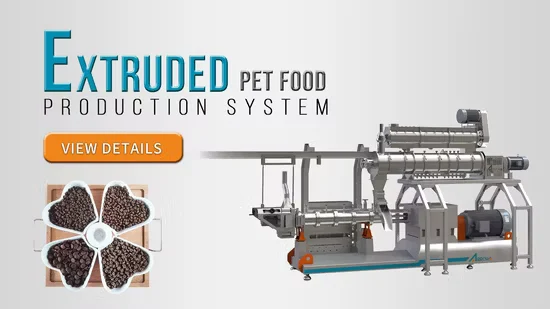 02
Twin-Screw Extruder
Twin-Screw Extruder for Dry Kibble Pet Food Manufacturing Equipment
View machine details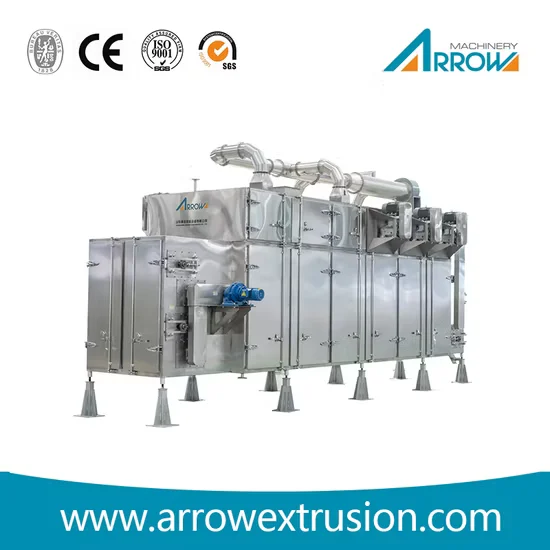 03
Drying System
Pet Food Production Dryer Equipment for Pet Food Plant
View machine details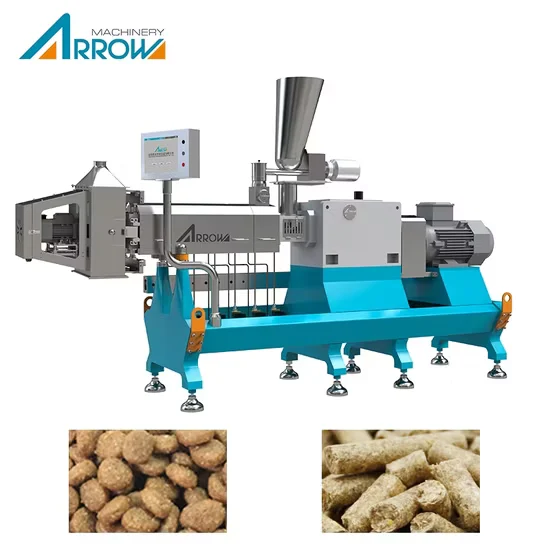 04
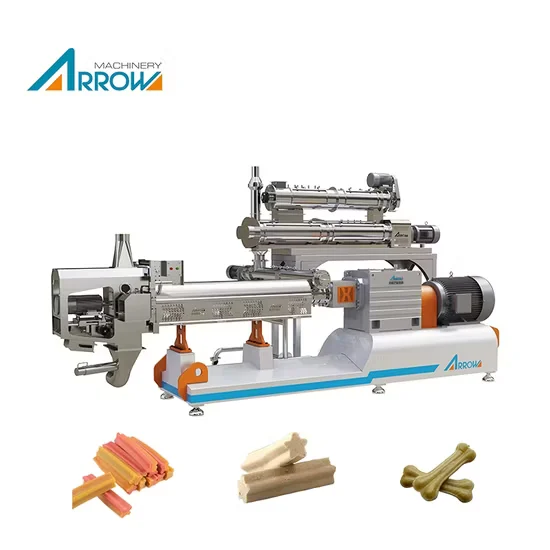
Twin-Screw Extruder
Small Twin-Screw Extruder Machine for Pet Food Plant
View machine detailsFurther Reading
Related extrusion process notes



Configured Quotation
Send your formula and capacity for a configured line proposal
Shandong Arrow Machinery engineers review your raw materials, product shape and kg/h or t/h target, then propose a single machine or complete pet food, aquafeed or specialty feed line.
- Emailinfo@arrowextrusion.com
- WhatsApp+86 137 9316 7756
- FactoryNo. 47 Chengbohu Road, Jibei Subdistrict, Jiyang District, Jinan, Shandong, China
Request a Quote
Payment by T/T, L/C or Alibaba Trade Assurance. Scope, delivery time and commissioning support are stated in the formal quotation.