Many investors mistakenly believe that producing baked kibble is simply a matter of lowering the extrusion temperature on a traditional line. This oversight ignores the critical thermodynamic matching required between forming, dehydration, and baking stages, often resulting in product cracking, poor palatability, or uncontrollable energy costs. Designing a complete Baked Pet Food Line is not just about selecting a powerful extruder; it requires balancing the capacity of every unit so that material flows smoothly without bottlenecks.
The core solution lies in treating the production process as an integrated thermal system rather than a series of isolated machines. By synchronizing low-temperature forming with precision drying and controlled coating, manufacturers can preserve heat-sensitive nutrients while achieving the desired crunchy texture. This approach ensures that the final product meets strict quality standards for moisture content and structural integrity, avoiding the common pitfalls of uneven drying or surface burning.
Raw Material Preparation and Mixing for Baked Kibble
The foundation of high-quality baked pet food starts long before the material enters the forming machine. Baked kibble recipes often include higher proportions of fresh meat or specific functional ingredients that require thorough homogenization to ensure consistent texture and nutritional value. Inadequate mixing can lead to segregation during processing, causing variations in pellet density and appearance that are difficult to correct downstream.
To address this, selecting the right mixing equipment is crucial. Single-shaft or twin-shaft paddle mixers are commonly used to achieve uniform distribution of dry and wet ingredients. The choice between these systems depends on the viscosity of the mixture and the required batch cycle time. For formulations with high liquid inclusion, such as fresh meat slurries, a twin-shaft design may offer better agitation and reduced clumping.
Consistency at this stage directly influences the performance of the extrusion and drying sections. If the raw material blend is not uniform, the subsequent low-temperature forming process may suffer from irregular pressure builds, leading to shape distortion or blockages. Therefore, investing in reliable mixing technology is not merely a preliminary step but a critical control point for the entire Baked Pet Food Line.
Low-Temperature Forming and Shaping Process
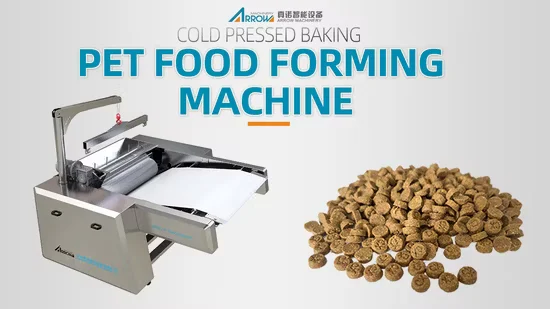
Unlike traditional high-temperature extrusion, which relies on intense shear and heat to puff starch, baked kibble production uses a low-temperature cold extruder primarily for shaping. This method minimizes starch gelatinization, preserving the natural structure of ingredients and retaining heat-sensitive nutrients such as vitamins and enzymes. The result is a denser, more nutrient-dense pellet that appeals to health-conscious pet owners.
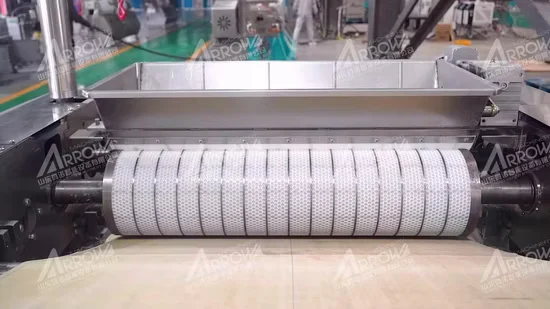
The Baked Pet Food Forming Machine operates under lower pressure and temperature conditions, requiring precise control over screw configuration and feed rate. This equipment is particularly suitable for creating complex shapes, such as bones or fish, which maintain their definition after baking. However, because the material is not fully cooked or expanded during this stage, the mechanical strength of the green pellet is lower, making it more susceptible to deformation if handled roughly.
Operators must carefully monitor the moisture content and particle size of the input material to ensure smooth operation. High fresh meat inclusion rates can increase the risk of clogging if the forming die is not designed correctly or if the pre-conditioning is insufficient. Technical support during the setup phase can help optimize screw elements and die plates for specific formulations, ensuring stable output and consistent shape.
Precision Drying and Baking Stages
Drying is often the most critical and challenging phase in a Baked Pet Food Line. Since the pellets exiting the forming machine have high moisture content and limited structural rigidity, they require gentle yet efficient dehydration to achieve the target moisture level without cracking or shrinking excessively. Traditional high-temperature dryers can cause surface hardening while leaving the interior moist, leading to mold growth during storage.
Cross-flow circulation dryers or external air circulation dryers are typically employed to provide uniform heat distribution and controlled airflow. These systems allow for precise temperature zoning, enabling a gradual reduction in moisture that preserves the internal structure of the kibble. The design of the air ducts and the circulation pattern plays a vital role in preventing hot spots and ensuring that every pellet receives consistent thermal treatment.
Energy efficiency is another key consideration, as drying accounts for a significant portion of the total operational cost. Optimizing the insulation of the drying chamber and recovering waste heat can reduce energy consumption. Additionally, the capacity of the dryer must be matched to the output of the forming machine to avoid bottlenecks. A mismatch here can force the entire line to run below its potential, affecting overall productivity and profitability.
Coating and Flavoring for Palatability
Baked kibble tends to have a drier and less porous surface compared to traditionally extruded puffed kibble, which can make it challenging to apply fats and flavorings evenly. Poor coating adherence not only affects palatability but can also lead to oil separation and rancidity during storage. To overcome this, advanced coating technologies are essential for enhancing the appeal of the final product.
Vacuum coating machines are highly effective for applying high levels of fat or liquid additives. By reducing the pressure inside the coating drum, the vacuum helps draw the flavoring into the microscopic pores of the kibble, ensuring deep penetration and uniform distribution. This method is particularly useful for high-energy diets where significant fat inclusion is required. For surface-level seasoning, double-drum or single-drum flavoring machines provide a gentler alternative that minimizes breakage.
The choice of coating system depends on the specific formulation and the desired sensory attributes of the product. Integrating the coating stage seamlessly with the drying and cooling sections ensures that the kibble is at the optimal temperature for absorption. Properly executed coating not only improves taste but also enhances the visual appeal of the kibble, making it more attractive to both pets and their owners.
Frequently Asked Questions
Q: What is the main difference between a baked pet food line and a traditional extruded kibble line?
A: The primary difference lies in the thermal processing method. Traditional lines use high-temperature, high-shear extrusion to puff and cook the material simultaneously, while a Baked Pet Food Line uses low-temperature forming followed by a separate baking or drying stage. This results in a denser product with higher nutrient retention but requires more precise control over drying to prevent cracking.
Q: Can the baking process handle high fresh meat inclusion rates without clogging the forming machine?
A: Yes, but it requires careful formulation and equipment selection. High fresh meat content increases moisture and stickiness, which can challenge standard forming dies. Using a low-temperature cold extruder with appropriate screw configurations and pre-conditioning can manage these materials effectively. Trial runs are recommended to optimize the process for specific high-meat recipes.
Q: How does the drying system ensure uniform moisture content in baked kibbles to prevent mold?
A: Precision dryers, such as cross-flow circulation models, use controlled airflow and temperature zoning to remove moisture gradually and evenly. This prevents the formation of a hard outer shell that traps moisture inside. Consistent air distribution and adequate residence time are critical to achieving the target moisture level throughout the pellet, ensuring stability and shelf life.
Q: Is it possible to upgrade an existing traditional extrusion line to produce baked pet food?
A: Upgrading is complex and often not straightforward. While some components like mixers may be reusable, the forming and drying sections usually require replacement or significant modification. Baked kibble needs low-temperature forming and gentle drying, which differ fundamentally from high-temperature puffing. A full technical assessment is necessary to determine feasibility and cost-effectiveness.
Send your product formula, target capacity, and factory dimensions to receive a customized technical proposal and equipment layout for your Baked Pet Food Line. Our engineering team can also discuss raw material trials and specific machine specifications to ensure the system meets your production goals.