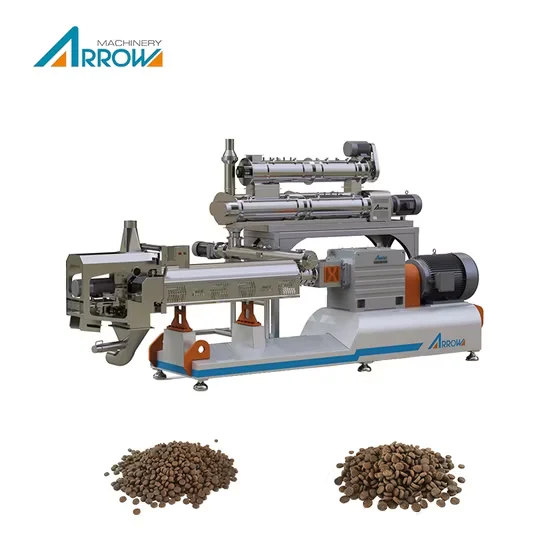
Many new factories invest heavily in a twin-screw extruder only to discover that the final kibble quality—color, texture, and shelf life—is dictated by upstream grinding consistency and downstream drying precision. A mismatched line leads to uneven moisture, poor coating adhesion, and inconsistent pellet density.
Successful dry pet food production relies on balancing every duty point from raw material handling to final packaging. It is not just about selecting a powerful extruder; it requires matching the capacity and performance of grinders, mixers, dryers, and coaters to ensure process continuity and product uniformity. Understanding the full kibble pet food process flow helps investors and plant managers avoid bottlenecks that compromise efficiency and product quality.
Raw Material Preparation: Grinding and Mixing for Uniform Dough
The foundation of consistent extrusion lies in particle size reduction and homogeneous mixing. If the raw materials are not ground to the correct specification, the starch gelatinization during extrusion will be uneven, leading to weak pellets or excessive fines. Hammer mills and pulverizers are typically used to achieve the required fineness, but the screen size must be selected based on the target kibble diameter and ingredient hardness.
Mixing is equally critical, especially when incorporating fresh meat slurries or high-fat ingredients. A single-shaft paddle mixer may suffice for simple dry blends, but a twin-shaft paddle mixer offers superior homogeneity for complex formulations involving liquids and powders. The goal is to create a uniform dough that feeds smoothly into the extruder without segregation. Inconsistent mixing results in variable moisture content entering the barrel, which causes pressure fluctuations and unstable extrusion.
When designing the kibble pet food process flow, engineers must ensure the mixer’s discharge rate matches the extruder’s feed requirement. A buffer bin is often installed between these two stages to dampen flow variations. This attention to detail prevents the extruder from running starved or flooded, both of which degrade product quality.
Core Extrusion and Forming: Shaping the Kibble
Extrusion is the heart of the line, where heat, shear, and pressure transform the mixed dough into structured kibble. Twin-screw extruders are preferred for their flexibility in handling diverse recipes, including those with high fresh meat inclusion. The screw configuration determines the shear profile, which affects starch gelatinization and protein denaturation. Proper conditioning before extrusion ensures that the material reaches the optimal temperature and moisture level for expansion.
The die plate and cutter assembly define the kibble’s shape, size, and density. For floating fish feed or light kibble, higher expansion is required, while dense sinking pellets need minimal expansion and precise cutting. The cutter speed must be synchronized with the extruder output to maintain uniform length. Any deviation here leads to irregular shapes that affect drying efficiency and consumer appeal.
Selecting the right extrusion system involves analyzing the specific rheological properties of the formulation. Engineers evaluate the required throughput, motor power, and barrel length to ensure sufficient cooking time. This stage sets the structural integrity of the kibble, making it crucial to validate parameters through trials before full-scale production.
Moisture Control: Drying Strategies for Shelf Stability
After extrusion, kibble contains high moisture levels that must be reduced to prevent microbial growth and ensure shelf stability. Drying is often the bottleneck in the kibble pet food process flow because it requires significant energy and time. Cross-flow circulation dryers are widely used for their ability to provide uniform airflow across multiple trays or belts, ensuring consistent moisture removal without case hardening.
External air circulation dryers offer an alternative design, focusing on efficient heat exchange and lower energy consumption. The choice between these systems depends on factory footprint, utility availability, and target capacity. A well-designed drying curve gradually reduces moisture from the surface inward, preventing cracks that can occur if the exterior dries too quickly.
Inadequate drying leaves residual moisture that compromises coating adhesion and promotes spoilage. Conversely, over-drying wastes energy and makes the kibble brittle. Integrating a dryer that matches the extruder’s output capacity is essential. Process engineers calculate the required air volume, temperature zones, and retention time to achieve the target moisture content, typically below 10% for dry kibble.
Flavor and Nutrition Lock: Vacuum vs. Drum Coating
The final step in the kibble pet food process flow is adding fats, flavors, and heat-sensitive nutrients. Drum flavoring machines use rotation to tumble kibble with liquid sprays, suitable for surface-level seasoning. However, for high-fat diets or sensitive additives like probiotics and vitamins, vacuum coating machines are superior. By creating a low-pressure environment, vacuum coating forces liquids into the porous structure of the kibble, allowing for higher fat inclusion without surface greasiness.
| Feature | Drum Flavoring Machine | Vacuum Coating Machine |
|---|---|---|
| Fat Inclusion Level | Low to Medium | High |
| Nutrient Protection | Limited (heat exposure) | High (low temperature) |
| Coating Uniformity | Surface only | Internal and surface |
| Best For | Standard dry kibble | Premium, high-fat, functional feeds |
Choosing the right coating system depends on the recipe’s fat content and the value of added nutrients. Vacuum coating minimizes oxidation and preserves nutrient potency, which is critical for premium pet food brands. The equipment must be integrated seamlessly with the dryer’s output to maintain continuous flow.
Shandong Arrow Machinery supports customers in configuring these systems based on specific formulation needs. Whether upgrading an existing line or building a new facility, the focus remains on matching each machine’s capability to the overall process requirements. This holistic approach ensures that the final product meets quality standards consistently.
Frequently Asked Questions
Q: How does raw material grinding size affect the final extrusion quality?
A: Particle size influences water absorption and starch gelatinization during extrusion. Too coarse, and the kibble may lack structural integrity; too fine, and it can cause feeding issues or excessive expansion. Consistent grinding ensures uniform cooking and stable pellet formation throughout the kibble pet food process flow.
Q: What is the difference between cross-flow and external air circulation dryers for pet kibble?
A: Cross-flow dryers force air horizontally through the product bed, offering uniform drying for large volumes. External air circulation systems recirculate heated air for energy efficiency. The choice depends on capacity needs, available space, and energy costs. Both aim to reduce moisture evenly without damaging the kibble structure.
Q: Why is vacuum coating preferred over drum flavoring for high-fat pet food recipes?
A: Vacuum coating allows higher fat inclusion by drawing liquids into the kibble’s pores under low pressure. This prevents surface oiliness and improves palatability. It also protects heat-sensitive nutrients from degradation, making it ideal for premium formulations where nutritional integrity and texture are paramount.
Q: Can I upgrade my existing extrusion line with a new drying or coating module?
A: Yes, modular upgrades are common. However, compatibility with current upstream and downstream equipment must be verified. Engineers assess capacity matching, interface connections, and control systems to ensure smooth integration. A technical review helps identify necessary adjustments to maintain line balance and efficiency.
Send your formula details and required capacity to receive a custom process flow diagram and layout plan. Our team can discuss raw material trials and equipment configuration to ensure your production line meets specific quality and throughput goals. Request technical specifications to start the evaluation.