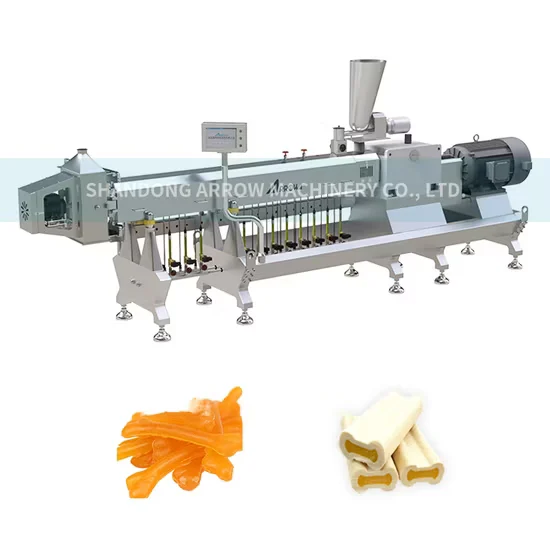
Many pet treat contract manufacturers face a recurring headache when switching between different shapes of glazed dog biscuits: uneven coating distribution or unacceptable breakage rates. This is rarely a failure of the glaze formula itself. More often, it stems from a mismatch between the physical characteristics of the biscuit and the mechanical action of the coating equipment.
To achieve uniform shine while minimizing product loss, the drum type, rotational speed, and internal structure of your Coating Pan Flavor Machine must be precisely matched to the biscuit’s fragility and shape. A one-size-fits-all approach to tumbling equipment will inevitably lead to pooled fat on fragile stars or dry spots on dense bones.
How Biscuit Shape Dictates Mechanical Stress in the Drum
Not all dog biscuits behave the same way when tumbled. The geometry of the product determines how it interacts with the drum walls, other pieces, and the applied liquid or powder. Understanding these dynamics is the first step in selecting the right hardware.
Bone-shaped kibble tends to interlock during rotation. If the drum speed is too high, these interlocked clusters can create excessive pressure points, leading to chipped edges. Round, thick biscuits roll more predictably but require sufficient lift to ensure the bottom surface receives adequate coverage. Irregular shapes, such as stars or hearts, present the greatest challenge due to their varied center of gravity and thin protrusions that are prone to snapping under impact.
Thin, crispy shards or flat wafers are perhaps the most delicate. They do not tumble; they slide and stack. In a standard aggressive tumbling environment, these pieces suffer from high fracture rates. The key is to identify the “blind spots” where glaze accumulates due to poor circulation and the “impact zones” where breakage occurs. By mapping these risks, you can choose a machine configuration that mitigates them rather than exacerbating them.
Selecting the Right Drum Configuration for Product Fragility
The mechanical design of the flavoring system plays a decisive role in product integrity. Shandong Arrow Machinery offers three primary configurations: the Single-Drum Flavoring Machine, the Double-Drum Flavoring Machine, and the Multi-Head Coating Pan Flavor Machine. Each serves a distinct purpose based on the product’s structural strength and the desired coating method.
For robust, dense biscuits like traditional baked kibble or hard chews, a Single-Drum Flavoring Machine provides efficient, continuous tumbling. The simple design allows for high throughput and effective distribution of dry powders or low-viscosity liquids. However, for more delicate items, this aggressive action may be too harsh.
When dealing with fragile shapes or requiring a higher degree of coating precision, the Double-Drum Flavoring Machine offers a gentler alternative. The dual-drum setup can be configured to reduce the drop height of the product, minimizing impact force. This is particularly useful for irregular shapes that need careful handling to maintain their aesthetic appeal.
For the most sensitive products, such as thin glazed wafers or complex 3D shapes that require multiple layers of coating without clumping, the Multi-Head Coating Pan Flavor Machine is the optimal choice. Its design allows for controlled, low-impact movement, ensuring that each piece is exposed to the coating agent uniformly without the violent tumbling associated with larger single drums. This system is ideal when the goal is a perfect, uniform shine rather than just surface coverage.
Critical Parameters for Uniform Glaze Application
Even with the correct machine type, operational parameters must be fine-tuned. I recall a trial run in Jakarta where our glazed dog biscuits came out looking like a mess. The lab formula was perfect, but on the test platform, the coating pan kept pooling the fat at the bottom, leaving half the treats dry and the other half greasy. We had to tweak the drum speed and spray angle while watching the glaze build up layer by layer. That sticky, uneven batch taught me that scaling up a biscuit coating process is never just about dumping ingredients into a pan.
Rotational speed is the most critical variable. Too fast, and centrifugal force pins the product to the wall, preventing mixing and causing uneven coating. Too slow, and the product does not tumble sufficiently, leading to pooling and clumping. The ideal speed creates a cascading effect, where product lifts and falls gently, exposing all surfaces to the spray nozzles.
The design of internal baffles or lifters also influences mixing efficiency. Properly angled baffles lift the product and allow it to fall through the spray zone, ensuring even distribution. For viscous glazes, the spray angle and nozzle type must be adjusted to prevent clogging and ensure a fine mist that adheres evenly rather than forming droplets that pool.
Additionally, the timing of the coating application relative to the product temperature is vital. Applying a fat-based glaze to a hot biscuit can cause immediate absorption, leading to a dull finish. Conversely, applying it to a cold biscuit may result in poor adhesion. Finding the right thermal window is essential for achieving that desired glossy appearance.
Integrating Coating with Drying and Cooling Lines
A Coating Pan Flavor Machine does not operate in isolation. Its performance is heavily dependent on the upstream and downstream processes. In a typical pet treat line, the product exits the dryer and must be cooled slightly before coating to ensure proper glaze setting.
If the product enters the coater too hot, the glaze may melt and absorb into the biscuit, resulting in a greasy texture and lack of shine. If it is too cold, the glaze may solidify upon contact, creating a rough, uneven surface. Therefore, coordination with the drying system, such as a Cross-Flow Circulation Dryer, is crucial to manage the product’s moisture and temperature profile before it reaches the coating stage.
Downstream, the coated product requires immediate cooling to set the glaze. Without adequate cooling, the treats may stick together during packaging, leading to customer complaints. Integrating a cooling conveyor directly after the pet treat flavoring machine ensures that the glaze hardens quickly, maintaining product separation and visual appeal. This holistic view of the line ensures that the coating process adds value rather than creating bottlenecks or quality issues.
Frequently Asked Questions
Q: How do I prevent fragile dog biscuits from breaking inside the coating pan?
A: To minimize breakage, select a machine with gentle tumbling action, such as a Multi-Head Coating Pan Flavor Machine or a Double-Drum system. Reduce the rotational speed to lower impact forces and ensure internal baffles are designed to lift rather than throw the product. Testing with your specific biscuit shape is essential to find the optimal speed and load capacity.
Q: What is the difference between a single-drum and a double-drum flavoring machine for treats?
A: A Single-Drum Flavoring Machine is best for robust, high-volume products requiring simple dry or wet coating. A Double-Drum Flavoring Machine offers gentler handling and better control over coating distribution, making it suitable for more delicate or irregularly shaped treats that require uniform coverage without excessive mechanical stress or breakage.
Q: Can the coating machine handle both liquid glazes and dry powder dusting?
A: Yes, these systems are versatile. Liquid glazes are applied via spray nozzles, while dry powders can be dusted using specialized dispensers. The key is to adjust the drum speed and internal airflow to ensure even distribution. For high-fat liquid coatings, vacuum coating systems may be recommended for deeper penetration, but standard drums work well for surface glazing.
Q: How does the coating pan integrate with our existing biscuit drying line?
A: Integration involves matching the throughput capacity of the coater to your dryer’s output. Ensure the product temperature is optimized for glaze adhesion before it enters the coater. Downstream, a cooling conveyor is necessary to set the coating. Engineering support can help balance these stages to prevent bottlenecks and ensure consistent product quality throughout the line.
Send us your biscuit shape, target capacity, and glaze type to receive a customized technical specification sheet and production line layout. We can also discuss raw material trials to validate the coating process before you commit to equipment purchase.