Many investors assume that producing dog and cat kibble requires two completely separate production lines, doubling the capital expenditure and footprint. This is a common misconception that limits flexibility for contract manufacturers and multi-brand producers. In reality, a single well-engineered line can handle both categories efficiently.
By optimizing the twin-screw extruder configuration, template selection, and downstream drying and vacuum coating systems, you can achieve flexible switching between dog and cat food recipes. This approach maximizes equipment utilization without compromising product quality or consistency, allowing your facility to respond quickly to market demands.
Understanding Formulation Differences: Dog vs Cat Food Requirements
The fundamental challenge in running a switchable pet extrusion system lies in the distinct nutritional profiles of dog and cat food. Cat food typically demands higher protein and fat levels, often incorporating significant amounts of fresh meat or meat meal. In contrast, dog food formulations usually rely more heavily on starch sources like corn, wheat, or rice, with moderate protein levels. These differences directly impact how the material behaves during processing.
High-fat and high-moisture ingredients in cat food recipes reduce the friction inside the extruder barrel, which can lead to insufficient cooking if not managed correctly. Conversely, high-starch dog food mixes require specific shear and temperature conditions to ensure proper gelatinization and expansion. If you treat both recipes identically, you risk poor pellet structure in dog food or excessive die plugging and uneven texture in cat food.
Understanding these raw material behaviors is critical before selecting equipment. A system designed only for standard dry kibble may struggle with the sticky, high-fat nature of premium cat food. Therefore, the machinery must offer precise control over moisture addition, temperature zones, and mechanical shear to accommodate both ends of the spectrum.
Core Extrusion: Adapting the Twin-Screw Extruder for Flexibility
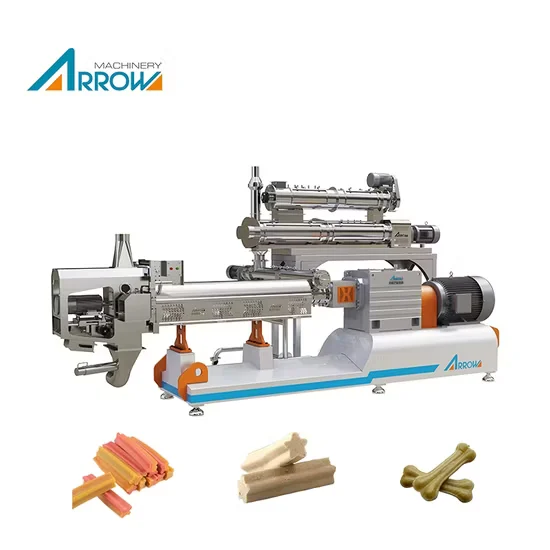
The heart of any flexible pet food manufacturing setup is the twin-screw pet food extruder. Unlike single-screw machines, twin-screw systems provide superior mixing and conveyance control, making them ideal for handling diverse formulations. To switch between dog and cat food, you do not need two different extruders; instead, you adjust the internal configuration.
Screw profile design is the primary lever for adaptation. For high-starch dog food, you might use a screw configuration that emphasizes compression and shear to promote expansion. For high-meat cat food, the screw elements are rearranged to focus on conveying and mixing while reducing excessive shear that could degrade proteins or cause overheating. Changing the screw blocks is a manual process but is essential for maintaining product quality across different recipes.
Additionally, the die plate determines the final shape and density of the kibble. Cat food often requires smaller diameters and specific shapes to suit feline preferences, while dog food may vary widely from small bites to large chunks. Quick-change die assemblies allow operators to swap templates efficiently during changeovers. The feeding system also plays a crucial role; a twin-shaft paddle mixer ensures uniform distribution of dry and liquid ingredients before they enter the extruder, preventing surges that could destabilize the process.
Downstream Processing: Drying and Coating Flexibility
Once the kibble is extruded, the downstream equipment must match the flexibility of the extrusion system. Moisture content after extrusion differs significantly between high-starch and high-meat products. Cat food, with its higher fat content, often retains moisture differently and requires careful drying to prevent rancidity or mold growth without becoming too brittle.
A cross-flow circulation dryer offers the necessary control for this stage. By adjusting air temperature, humidity, and residence time, you can optimize the drying curve for each recipe. Dog food may require longer drying times to remove water from the dense starch matrix, while cat food needs gentler drying to preserve the integrity of the high-protein structure.
Coating is another critical differentiator. Cat food relies heavily on palatability enhancers, often applied as fats or oils. A vacuum coating machine is essential here, as it forces the coating into the porous structure of the kibble under negative pressure. This method ensures higher uptake and better retention compared to surface-only spraying. For dog food, which may use less fat and more dry seasonings, a double-drum flavoring machine might suffice. However, having a vacuum coater in the line provides the versatility to handle high-end cat food recipes without needing separate equipment.
Designing a Switchable Production Line Layout
For contract processors or factories producing multiple brands, layout efficiency is key. A switchable pet extrusion system should minimize cross-contamination risks and reduce changeover time. Modular design principles help here. Instead of rigidly connecting every machine, consider using flexible conveying systems that allow for easy cleaning and rerouting if necessary.
When planning the facility, allocate space for raw material segregation. High-meat ingredients for cat food should be stored and handled separately from grain-based dog food inputs to maintain hygiene and prevent allergen cross-contact. The production line should flow logically from grinding and mixing to extrusion, drying, and coating, with clear access points for maintenance and cleaning.
Shandong Arrow Machinery supports this modular approach by offering integrated process coverage from ingredient preparation to finished product handling. Their engineering team can assess your specific utility constraints and footprint to propose a layout that balances capacity for both product types. This ensures that whether you are running a long batch of dog food or switching frequently to cat food, the line operates at peak efficiency.
Frequently Asked Questions
Q: Can a single twin-screw extruder produce both dog and cat kibble?
A: Yes, a twin-screw pet food extruder can produce both, provided the screw configuration and die plates are adjusted for each recipe. The machine’s flexibility allows it to handle high-starch dog food and high-meat cat food by changing internal screw elements and operational parameters like temperature and feed rate.
Q: How long does it take to switch the extruder from dog food to cat food recipes?
A: Changeover time depends on the extent of the recipe difference and cleaning requirements. Swapping screw blocks and die plates can take several hours, including cleaning to prevent cross-contamination. Efficient planning and standardized operating procedures can minimize downtime, but it is not an instantaneous switch.
Q: Do I need separate dryers and coating machines for cat and dog food?
A: Not necessarily. A properly sized cross-flow circulation dryer and a vacuum coating machine can handle both product types by adjusting settings. However, if production volumes are very high for both categories simultaneously, separate lines might be considered to avoid bottlenecks during changeovers.
Q: What are the main challenges when switching between high-meat cat food and high-starch dog food?
A: The main challenges include managing different moisture and fat levels, ensuring consistent pellet shape, and preventing cross-contamination. High-meat recipes require careful temperature control to avoid protein denaturation, while high-starch recipes need sufficient shear for expansion. Proper cleaning and parameter adjustment are essential.
To explore how a flexible production line can fit your specific needs, send your dog and cat food formulas along with your target capacity. Our engineering team will review your raw material characteristics and provide a customized layout proposal, technical specifications, and options for raw material trials to ensure the system meets your quality standards.