
Process & Design
How Automatic Wet Pet Food Production Line for Cat and Dog works in your plant
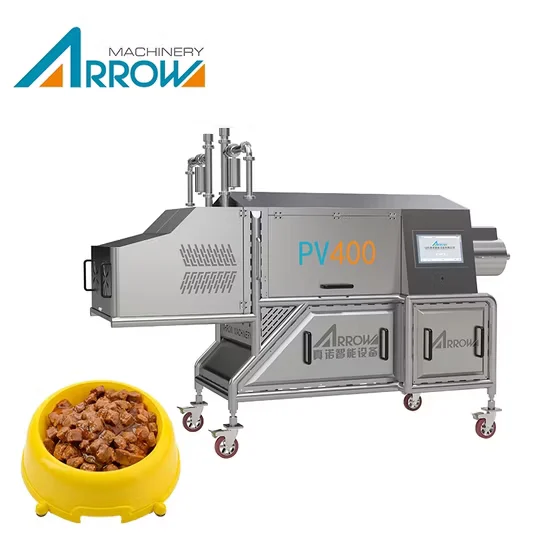
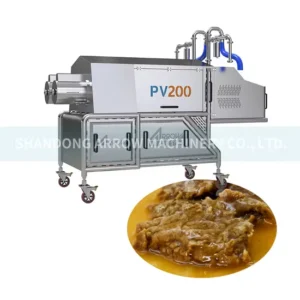
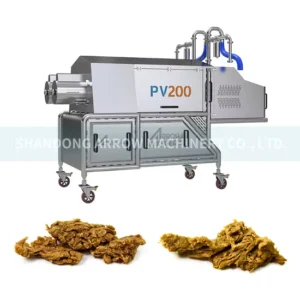
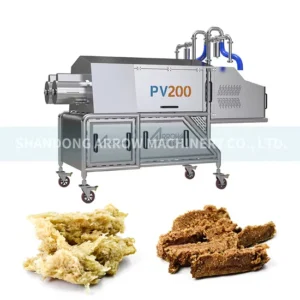
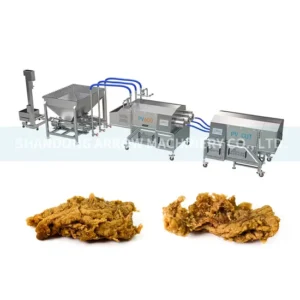
Recipe-Driven Process Design — Matching thermal processing parameters to fresh meat ratios prevents blockages and ensures consistent chunk texture.
Technical Specifications
| Parameter | Value |
|---|---|
| Product | PV Pet Wet Food Production Line (0.5-10 t/h) |
| Brand | Arrow |
| Model | PV |
| Capacity | 0.5-10 t/h |
| Voltage | 380V |
| Contact Material | 304 Stainless Steel |
| Certification | CE, ISO |
| Raw Materials | Meat Powder, Flour, Vegetables, Fresh Meat, Fat, etc. |
| Process | Thermal Processing |
| Automatic Grade | Automatic |
| Application | Dog, Cat |
| Final Product | Pet Food, Pet Treats |
Application Suitability
| Product / Industry | Typical Use |
|---|---|
| Wet Food Meat Chunks | Processing high-moisture dog and cat food with visible meat pieces |
| Texturized Wet Food | Creating structured protein matrices for premium private-label brands |
| Contract Manufacturing | High-volume production for retailers requiring consistent batch quality |
| Specialty Pet Food | Formulating specific textures for sensitive digestion or senior pets |
Why Wet Food Consistency Fails in Mass Production
Integrated thermal control prevents texture degradation during scale-up. Laboratory recipes often fail when transferred to industrial lines because small-scale mixers do not replicate the shear and heat distribution of large extruders. When fresh meat content is high, conveying systems can block if the upstream grinding and mixing stages are not synchronized with the forming unit. Mismatched downstream capacity leads to product deformation as wet chunks pile up before packaging. Coordinating these variables requires a line designed from raw material behavior rather than isolated machine specs.
Positioning in the Wet Food Workflow
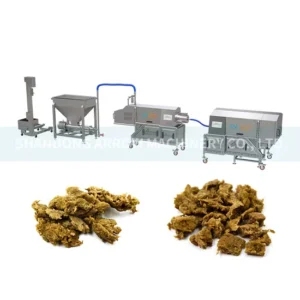
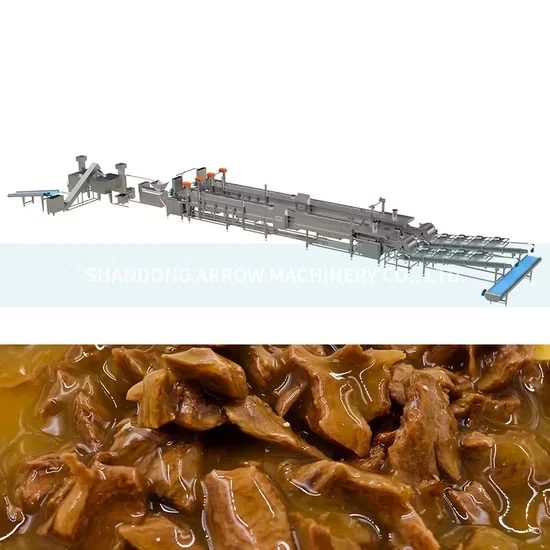
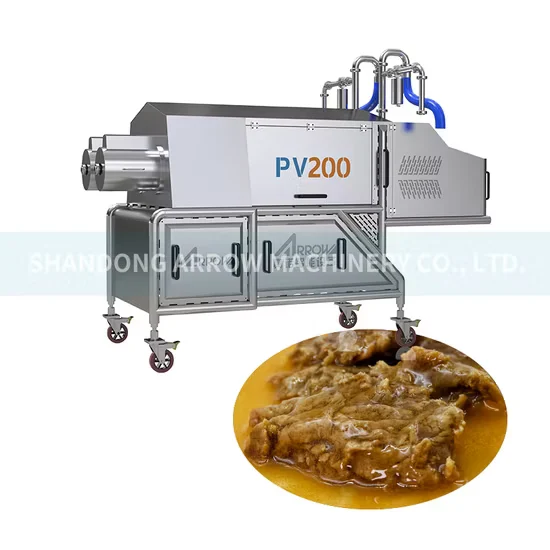
This automatic wet pet food production line 0.5-10 t/h sits at the core of the manufacturing process. It receives homogenized slurries from the mixing system, where meat powders, flours, and fresh ingredients are blended. The line then forms and thermally processes these mixtures into stable chunks or texturized shapes. Downstream, the product moves directly to packaging modules, ensuring minimal exposure to ambient conditions that could alter moisture content or invite contamination.
Navigating Production Challenges
Raw material variability poses the greatest risk to output consistency. Fresh meat ratios fluctuate in water and fat content, affecting how the mixture flows through the forming dies. High-fat formulations can cause slippage in standard conveyors, while excessive moisture leads to structural collapse during thermal setting. Maintaining uniform particle dimensions requires precise control over the screw configuration and cutting speed. Additionally, frequent changeovers between different chunk sizes demand quick-clean designs to prevent cross-contamination and downtime.
Interpreting Core Specifications
The 304 stainless steel construction is critical for hygiene, resisting corrosion from salty or acidic meat formulations. With a capacity range of 0.5 to 10 t/h, the PV model accommodates both pilot-scale runs and full industrial shifts. The automatic grade reduces manual intervention, ensuring that thermal processing parameters remain stable across long batches. This automation helps maintain consistent density and buoyancy characteristics, which are vital for product quality. The system handles diverse inputs like vegetables and fats without compromising the structural integrity of the final pet treats.
Hidden Costs of Poor Line Configuration
Selecting equipment based solely on nominal capacity often leads to bottlenecks. If the grinder cannot keep pace with the extruder, the entire line starves, reducing effective throughput. Conversely, an oversized dryer or cooler creates energy waste and occupies valuable floor space. Inconsistent thermal processing may require reworking entire batches, increasing labor and material costs. Upgrading individual machines later often involves costly layout changes and utility rerouting, making initial holistic design essential.
Why Source This Line from Arrow
Arrow provides manufacturer-oriented supply, ensuring that every component from grinding to coating is engineered to work together. The integrated process coverage allows for precise adjustment of thermal profiles based on your specific recipe. Application-based selection means the screw and die configurations are matched to your target product shape and texture. Raw material trials support validation of your formulation before full-scale production begins. Custom line layouts optimize footprint usage, while export coordination simplifies the logistics of acquiring a complete factory solution.
Documentation & Delivery
- Detailed technical specifications outlining voltage and capacity limits.
- Factory layout diagrams for efficient spatial integration and utility access.
- Comprehensive operation manuals for safe startup and daily use.
- Factory acceptance test records verifying performance against agreed standards.
- Export-compliant packing lists and commercial invoices for customs clearance.
- Standard export plywood cases protecting machinery during ocean freight transit.
Installation, Operation & Maintenance
- Ensure foundation meets load requirements for heavy thermal processing units.
- Connect 380V power supply and verify grounding for safe automatic operation.
- Conduct initial trial runs with water to check for leaks and mechanical alignment.
- Clean 304 stainless steel surfaces daily to prevent bacterial growth and residue buildup.
- Replace wear parts like seals and cutters according to the maintenance schedule.
- Adjust forming dies carefully during product changeovers to maintain shape consistency.
Requesting a Configuration Quote
To receive an accurate proposal, specify your target product type, such as meat chunks or texturized wet food. Provide raw material formulations, especially fresh meat percentages, and desired output capacity in tons per hour. Share factory dimensions, power availability, and destination country for logistics planning. Our engineering team will then provide a balanced equipment configuration, preliminary layout, and formal quotation tailored to your production goals.
Frequently Asked Questions
Q: What raw materials can be processed in the PV wet food line?
A: The system handles meat powder, flour, vegetables, fresh meat, and fats. It is designed for wet pet food manufacturing, supporting diverse formulations for dog and cat products. The 304 stainless steel contact parts ensure hygiene when processing high-moisture ingredients.
Q: How is the 0.5-10 t/h capacity selected based on production schedule?
A: Capacity choice depends on your daily output targets and operating hours. Lower ranges suit pilot runs or specialty batches, while higher capacities meet mass production demands. We balance upstream and downstream equipment to ensure smooth flow at your chosen throughput level.
Q: Does the system include drying or only thermal processing for wet food?
A: This line focuses on thermal processing suitable for wet food meat chunks and texturized products. It forms and cooks the mixture to achieve the desired texture. Downstream drying is not typically required for high-moisture wet foods, unlike dry kibble lines.
Q: What are the voltage and utility requirements for installation?
A: The standard voltage is 380V. You must verify your factory’s power frequency and phase compatibility. Adequate space for maintenance access and utility connections like water and steam is necessary. Specific requirements are detailed in the technical layout provided with the quote.
Q: Is overseas installation and training included in the service scope?
A: Overseas engineering and commissioning options are available. The precise team composition, schedule, and travel costs are defined contractually. We provide operator training and technical support to ensure your team can run the line efficiently after handover.
Shipping
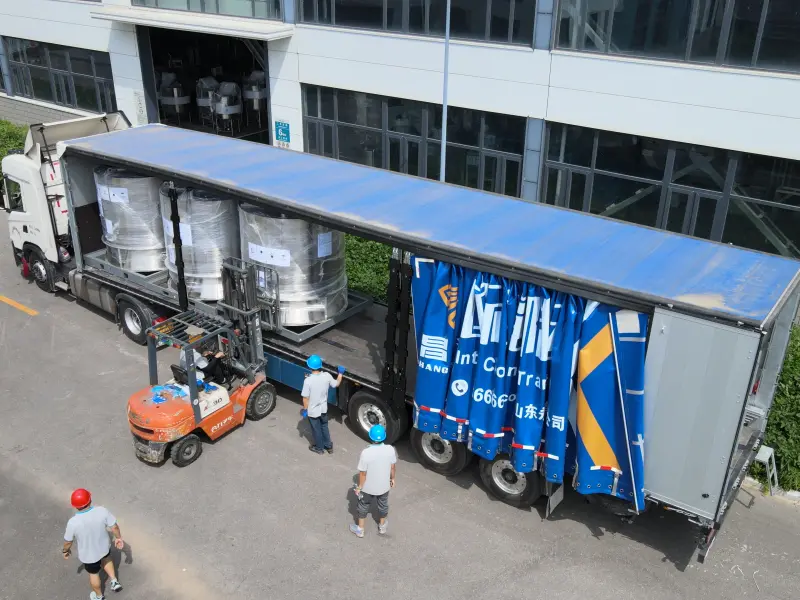
Container sea freight or rail · spare parts by air
Delivery & Support
From factory acceptance to stable production
Every Shandong Arrow Machinery machine ships with full documentation, on-site commissioning support and a spare-parts channel tied to its serial number, so your line keeps running after start-up.
-
Shipping documents
Equipment specification, configuration list, drawings where applicable, operation manual, packing list, commercial invoice and export documents.
-
Testing & inspection
Factory test records, videos, inspection reports and material declarations, by product type and contract.
-
Installation & training
Installation, commissioning, operator training and maintenance guidance, with the scope set in your contract.
-
Spare parts
Screws, extrusion dies, gearboxes and wear parts, supplied against your machine's serial number or model.
Same Category
Related pet food machines
These machines and lines sit in the same process family, so you can build a complete line or add a single stage with them.

Cold Extrusion Dog Food Extruder Equipment Plant
View details
Cold Press Dog Treat Equipment for Pet Food Factory
View details
Cold Press Wet Baked Dog Cat Food Line
View details
Automatic Wet Pet Food Plant for Dog and Cat with PLC Control
View details
Not sure this configuration fits your formula?
Tell us your target product, raw materials and output in kg/h. Our engineers confirm the process first, then recommend the extrusion and drying setup.
Applications
Pet products this machine is built for
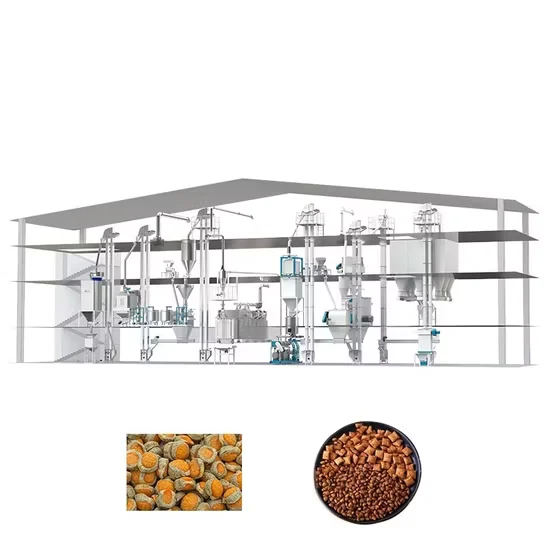
This equipment is configured for the pet product types below. Open an application to see the full process route and matching machines.

Engineering Notes
Selection guides & technical articles
Read how process engineers choose extrusion, drying and coating setups for pet food before they commit to a configuration.
Pet Food Production Lines: How Feed Mills Should Start
Read article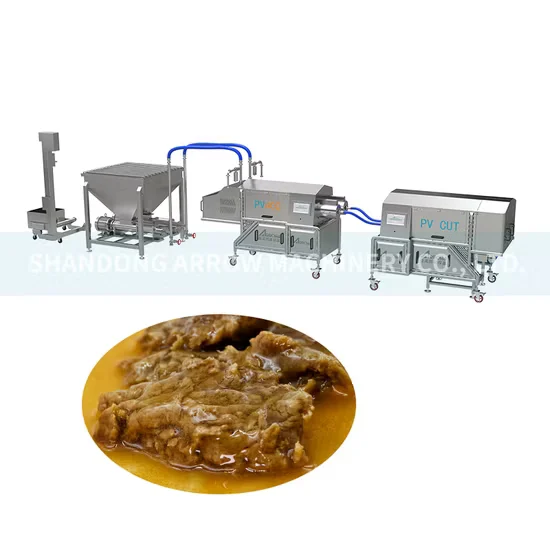
Solving Palatant Production via Enzymatic Hydrolysis for Pet Food Plants
Read article
Soft Chew Production Line Guide for Pet Supplement Brands
Read articleFAQ
Questions buyers ask about this machine
Short answers on trials, lead time, documents and spare parts from Shandong Arrow Machinery, a pet food machinery manufacturer in Jinan, China.
Can I test my formula before I order?
Yes. Where conditions allow, we arrange formula and process trials on our process test platform, and you can send your own raw material for testing. Agreed raw-material tests are completed before production or shipment.
What is the lead time?
The lead time is stated in your formal quotation, based on the confirmed model, configuration and scope of supply. Machines ship by container sea freight or rail, and spare parts can go by air.
Which documents come with the machine?
You receive the final equipment specification, configuration list, equipment drawings where applicable, operation manual, packing list, commercial invoice and export or shipping documents. Factory test records, videos, inspection reports and material declarations are provided according to product type and contract.
How do I get spare parts after commissioning?
Send us your machine's serial number or model and we match the right parts. We supply screws, extrusion dies, gearboxes and wear parts, along with process consultation and service.
More answers on our pet food machinery FAQ page.
Request a quote for Automatic Wet Pet Food Production Line for Cat and Dog
Share your target product and output. You receive a technical proposal with model, scope of supply and options.
- WhatsApp +86 137 9316 7756
- Email info@arrowextrusion.com
- No. 47 Chengbohu Road, Jibei Subdistrict, Jiyang District, Jinan, Shandong, China