Relying on external suppliers for palatants not only compresses profit margins but also leaves the critical attribute of pet food palatability vulnerable to supply chain inconsistencies. Enzymatic hydrolysis technology is enabling large-scale pet food manufacturers to reclaim control over this core process, turning a purchased commodity into an internal competitive advantage.
By configuring a dedicated enzymatic hydrolysis production line, factories can precisely manage the degree of hydrolysis and flavor release. This approach converts low-cost protein by-products into high-value flavor enhancers, ensuring consistent quality while reducing dependency on third-party additives. The shift from outsourcing to in-house production allows for tighter integration with main processing lines, offering greater flexibility in formulation and cost management.
From Purchased Additive to Core Process: The Economics of In-House Hydrolysis
The traditional model of purchasing commercial palatants often results in a black box scenario where manufacturers lack visibility into the exact composition and freshness of the flavoring agents. For plants aiming to differentiate their products, especially in the premium dry kibble and wet food segments, controlling the source of palatability is essential. Enzymatic hydrolysis breaks down proteins into smaller peptides and amino acids, which are key drivers of taste and aroma in pet food. By managing this reaction internally, producers can adjust the flavor profile to match specific target markets or animal preferences without waiting for supplier reformulations.
Beyond flavor customization, the economic argument centers on value addition. Raw materials such as poultry by-products, fish viscera, or liver, which might otherwise have limited market value, can be transformed into high-margin ingredients through controlled hydrolysis. This process requires precise thermal management and shear control to prevent viscosity spikes that can disrupt downstream operations. As noted in practical plant experiences, scaling up from lab trials to full production demands careful attention to enzyme dosing and reaction time to maintain batch consistency.
Essential Equipment Configuration for a Stable Palatant Line
A functional enzymatic hydrolysis line is not merely a series of tanks; it is an integrated system requiring specific modules for preparation, reaction, and stabilization. The process begins with raw material handling, where grinding and mixing systems ensure uniform particle size and substrate consistency. A hammer mill or pulverizer reduces solid protein sources to a slurry suitable for enzymatic action, while mixers maintain homogeneity before the mixture enters the reaction phase.
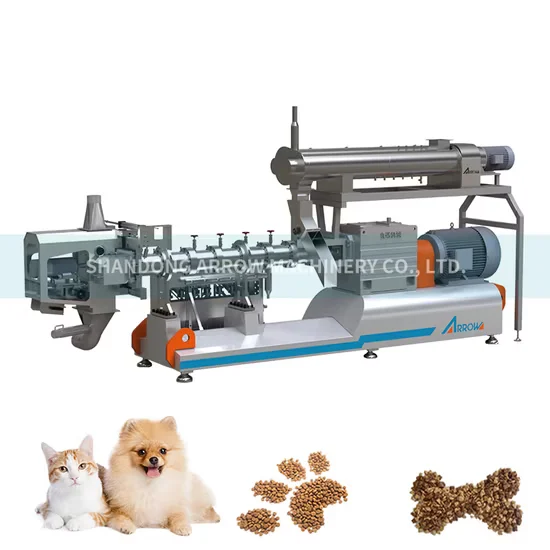
The core of the system involves reactors equipped with precise temperature and pH control mechanisms. Enzymes are highly sensitive to environmental conditions, and deviations can lead to incomplete hydrolysis or off-flavors. Following the reaction, the enzyme must be deactivated to stop the process at the desired degree of hydrolysis. This is typically achieved through heat treatment. The resulting liquid or paste then requires drying to create a stable powder or concentrated liquid for storage and application. Equipment such as cross-flow circulation dryers or specialized drying rooms are critical here, as they must handle the sticky nature of hydrolysates without causing blockages or product degradation.
For facilities looking to integrate this capability, the selection of equipment must account for the specific physical properties of the hydrolysate. Unlike standard feed ingredients, hydrolyzed proteins can exhibit varying viscosities and moisture contents. Therefore, the drying system must be matched to the output of the reaction tanks to avoid bottlenecks.
Integrating Hydrolysate Application with Main Production Lines
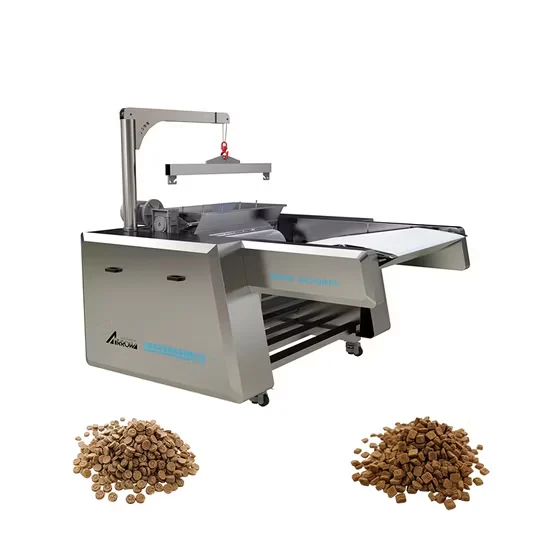
Producing the palatant is only half the equation; applying it effectively to the final product is equally critical. In dry pet food manufacturing, the hydrolyzed powder or liquid is typically applied after the extrusion and drying stages. This is where the interface between the palatant line and the main kibble line becomes crucial. Vacuum coating machines are particularly effective for this purpose, as they allow for deep penetration of liquid flavors into the porous structure of the kibble, ensuring long-lasting aroma and taste.
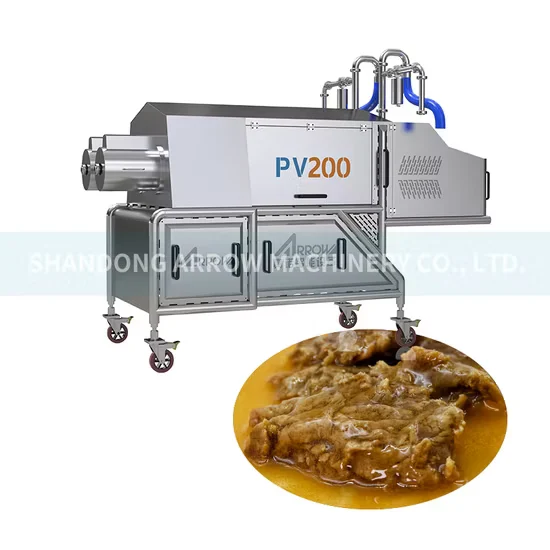
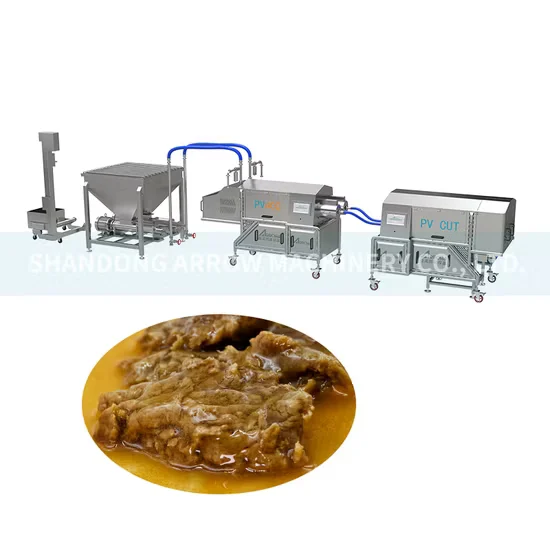
For wet food applications, such as meat chunks or sauces, the hydrolysate can be incorporated directly into the formulation or used as a surface glaze. The key is to maintain the integrity of the flavor compounds during any subsequent thermal processing. If the main line uses a twin-screw extruder for texturization, the timing of palatant addition must be carefully coordinated to prevent thermal degradation of the sensitive peptides. In some cases, post-extrusion coating via drum flavoring machines may be preferred for surface-level impact, especially for treats or specialty snacks.
The integration also involves logistical considerations within the factory layout. The palatant production area should be positioned to minimize transport distance to the coating or mixing stations, reducing the risk of contamination and energy loss. Automated conveying systems can link the drying output of the hydrolysis line directly to the storage silos feeding the coating section, creating a continuous flow that supports high-volume production.
Critical Process Parameters for Flavor Consistency
Achieving a consistent flavor profile requires strict control over several variables throughout the hydrolysis process. Temperature is perhaps the most critical factor, as it influences both enzyme activity and the rate of reaction. Too high a temperature can denature the enzyme prematurely, while too low a temperature may result in incomplete hydrolysis. Similarly, pH levels must be maintained within the optimal range for the specific enzyme used, often requiring automated acid or base dosing systems.
The ratio of enzyme to substrate, along with the reaction time, determines the molecular weight distribution of the resulting peptides. Smaller peptides generally contribute to umami and savory notes, while larger fragments may provide body and mouthfeel. Monitoring these parameters in real-time allows operators to adjust the process dynamically, ensuring that each batch meets the specified sensory targets. Automation plays a vital role here, providing the repeatability needed for large-scale commercial production.
Furthermore, the quality of the raw material input significantly affects the outcome. Variations in fat content, moisture, or protein source can alter the reaction dynamics. Therefore, standardized incoming material specifications and pre-processing steps are essential to minimize variability.
Frequently Asked Questions
Q: What raw materials are suitable for enzymatic hydrolysis in pet food plants?
A: Common substrates include poultry by-products, fish viscera, liver, and other protein-rich leftovers from meat processing. These materials are cost-effective and rich in proteins that yield desirable flavor compounds when hydrolyzed. The choice depends on the desired flavor profile, such as chicken, beef, or fish, and the availability of local supplies. Consistency in raw material quality is key to maintaining product uniformity.
Q: How does in-house palatant production affect the overall layout of a pet food factory?
A: It requires dedicated space for reaction tanks, heating systems, and drying equipment, separate from the main extrusion line to prevent cross-contamination. The layout must facilitate efficient transfer of the finished hydrolysate to the coating or mixing areas. Proper ventilation and waste management systems are also necessary to handle odors and by-products generated during the hydrolysis and drying processes.
Q: Can the enzymatic hydrolysis line be customized for different target capacities and flavor profiles?
A: Yes, the system can be scaled from pilot sizes to large industrial capacities based on production needs. Different enzymes and process conditions, such as temperature and pH, can be adjusted to create specific flavor profiles, ranging from mild to intense. Customization allows manufacturers to develop unique signatures for their brands, differentiating their products in a competitive market.
Q: What downstream equipment is needed to apply the hydrolyzed palatant onto kibble or wet food?
A: For dry kibble, vacuum coating machines are ideal for deep flavor infusion, while drum flavoring machines work well for surface coating. In wet food production, the hydrolysate can be mixed directly into the recipe or applied as a glaze. The choice depends on the product type and the desired intensity of the flavor, ensuring even distribution and adherence to the final product.
To explore how an enzymatic hydrolysis line can integrate with your existing facility, share your raw material specifications and target capacity. Our engineering team can provide a preliminary technical proposal and factory layout diagram, helping you evaluate the feasibility of bringing palatant production in-house.