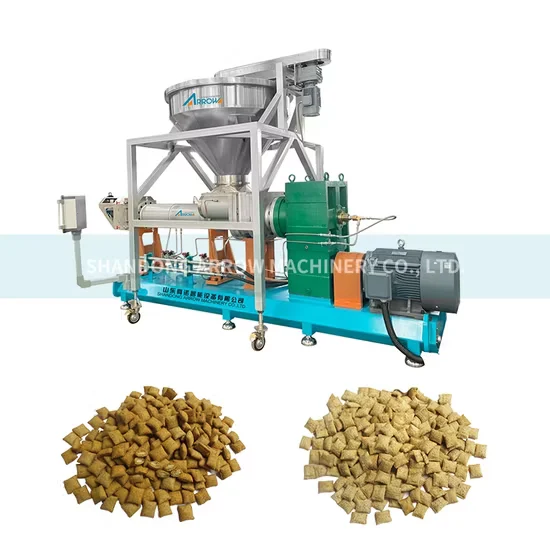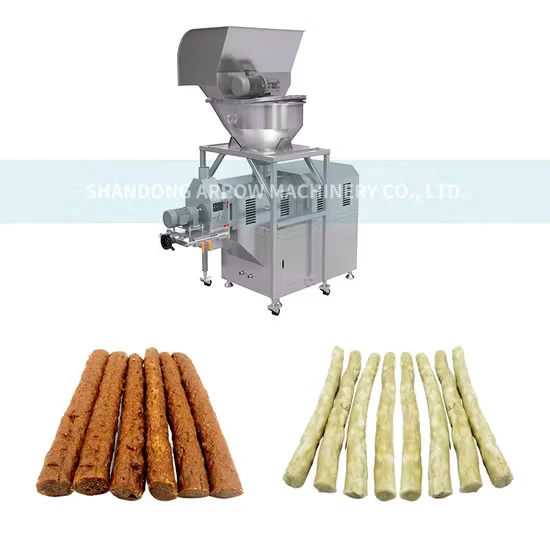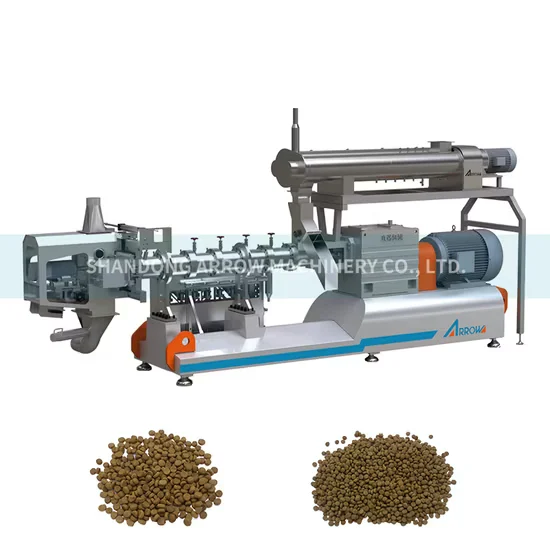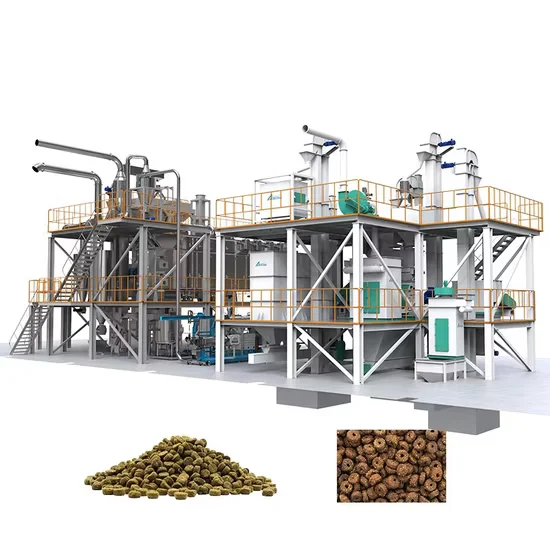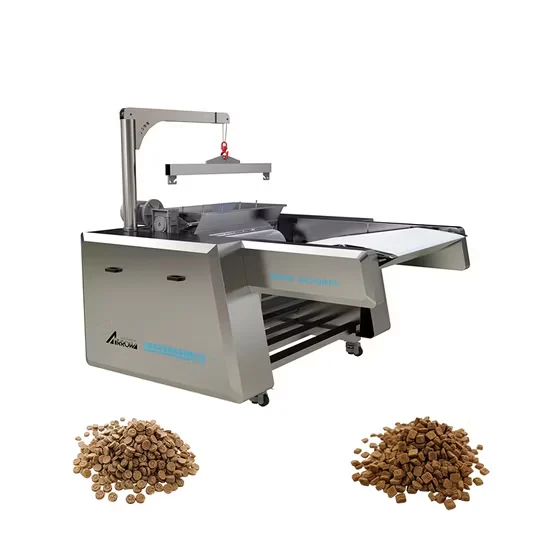
Discarding high-moisture meat trimmings or selling them at bulk commodity prices represents a significant revenue leak for any slaughterhouse or meat processing facility. A dedicated pet treat lines for meat by-products setup converts these low-value scraps into high-margin jerky, chews, and strips without requiring a greenfield factory build.
You do not need to construct a separate plant to capture this value. By integrating modular crushing, low-temperature forming, and precise drying modules into your existing footprint, you can transform meat processing by-product pet snacks into a profitable secondary revenue stream. The key lies in matching the equipment configuration to the specific fat and moisture content of your raw materials, ensuring hygiene compliance while maximizing throughput.
Step 1: Raw Material Preparation and Particle Size Control
The success of any extrusion or forming process begins long before the material enters the barrel. In my early days tuning twin-screw barrels, I saw too many lines fail because operators ignored the upstream preparation. If you are working with fresh meat trimmings, bones, or connective tissue, the particle size must be uniform. Large chunks cause uneven feeding, leading to torque spikes that trip the main motor or, worse, damage the screw elements.
For meat-based applications, a hammer mill or pulverizer is essential to reduce raw materials to a consistent paste or fine powder. This step ensures that the fat and protein are evenly distributed, which is critical for product consistency. When dealing with high-fat content, the grinding temperature must be monitored to prevent premature fat rendering, which can clog screens and reduce efficiency.
Once ground, the material often requires mixing with binders such as starch or glycerin to achieve the right viscosity for forming. A single-shaft or twin-shaft paddle mixer ensures homogeneous blending without overheating the mixture. This homogeneity is vital because any variation in the raw mix will result in inconsistent texture and shape in the final snack, leading to higher rejection rates during quality control.
Step 2: Forming and Shaping via Low-Temperature Extrusion
Unlike traditional kibble production that relies on high heat and pressure to puff starch, meat treats require gentle handling to preserve protein structure and natural color. This is where a low-temperature cold extruder becomes the core of your pet treat lines for meat by-products. Cold extrusion focuses on shaping the material through mechanical pressure rather than thermal expansion, allowing you to produce dense, chewy textures ideal for jerky and dental chews.
I recall a commissioning job in Egypt where a client tried to push fresh meat inclusion too high on a standard hot extruder. The paste plugged the die, and the upstream grinder starved the feeder while the dryer sat idle. That messy shutdown taught me why balancing upstream prep with extrusion torque matters just as much as the recipe itself. Now, I always check the actual meat temperature and fat content before we even bolt down the barrel.
For meat strips or complex shapes, a baked pet food forming machine may also be suitable if the recipe includes significant starch binders. However, for high-meat formulas, the cold extruder allows for greater flexibility in shape design without compromising nutritional integrity. The screw configuration must be selected based on the specific rheology of your meat paste, ensuring smooth flow through the die without excessive shear heat that could cook the protein prematurely.
Step 3: Precision Drying and Flavor Coating
Drying is often the bottleneck in any snack production line. Removing moisture from dense meat products requires time and precise temperature control to avoid case hardening, where the exterior dries too fast and traps moisture inside. This internal moisture can lead to microbial growth and spoilage, defeating the purpose of preservation. A cross-flow circulation dryer provides uniform air distribution across the product bed, ensuring consistent moisture removal throughout the batch.
The drying profile must be adjusted based on the thickness of the treats and the initial moisture content. Rushing this stage compromises texture, making the product brittle instead of chewy. Once the target moisture level is reached, the treats move to the coating stage. For meat snacks, palatability is enhanced through surface application of fats, enzymes, or flavor powders.
A vacuum coating machine is ideal for applying liquid fats or oils evenly without breaking fragile treats, while a single-drum or double-drum flavoring machine works well for dry powder coatings. This step not only improves taste but also helps seal the surface, extending shelf life. The integration of these downstream systems must match the output capacity of the extruder to prevent bottlenecks.
Integrating the Line into an Existing Meat Plant
Adding a pet treat lines for meat by-products system to an operating meat plant requires careful spatial planning. You do not need a massive footprint, but you do need logical flow. The layout should minimize cross-contamination risks between raw meat handling and finished product packaging. Stainless steel construction and easy-access panels are non-negotiable for meeting food safety standards and facilitating daily cleaning routines.
Utility requirements must be assessed early. Electric power, steam, or hot water sources need to be available near the dryer and extruder. If your plant already has boiler capacity, leveraging it for the drying system can reduce capital expenditure. Modular equipment design allows for staged installation, meaning you can start with a basic extrusion and drying setup and add automated packaging or advanced coating later as demand grows.
Shandong Arrow Machinery supports this integration by offering layout-based equipment configuration. We assess your existing building dimensions and utility constraints to propose a line that fits without disrupting your primary operations. This approach ensures that the new line complements rather than complicates your current workflow.
Frequently Asked Questions
Q: Can high-fat meat by-products cause issues during extrusion?
A: Yes, high fat content can reduce friction inside the barrel, leading to slippage and unstable pressure. It may also cause die clogging if the fat renders prematurely. Using a cold extruder with appropriate screw configurations and pre-chilling the raw mix can mitigate these issues. Proper grinding and mixing are essential to emulsify the fat within the protein matrix before forming.
Q: What is the best drying method to preserve the nutritional value of meat snacks?
A: Low-temperature, long-time drying is preferred for meat treats to preserve proteins and prevent case hardening. Cross-flow circulation dryers offer precise control over air temperature and humidity, ensuring even drying without overheating the product surface. This method maintains the chewy texture desired in jerky and strips while ensuring food safety through adequate moisture reduction.
Q: How much factory space is needed to add a pet treat line to an existing meat plant?
A: The footprint depends on the desired capacity and level of automation. A compact line for small-batch production can fit in a relatively small area, especially if vertical space is utilized for conveyors. We recommend providing your factory dimensions and utility locations so engineers can design a modular layout that minimizes interference with existing operations while maximizing workflow efficiency.
Q: Is it possible to test our specific meat by-product formula before purchasing?
A: Yes, raw-material trials are available to assess how your specific formulation behaves in the equipment. These tests help determine the optimal screw configuration, drying parameters, and cutting settings. Trial availability and costs are confirmed during the technical review phase, ensuring that the proposed solution is validated against your actual ingredients before you commit to the investment.
Send your raw material characteristics, target capacity, and factory dimensions to receive a customized configuration plan. Our engineering team will review your utility constraints and propose a layout that integrates smoothly with your existing operations. Request a technical specification sheet or discuss a trial run to validate your recipe before finalizing the equipment scope.