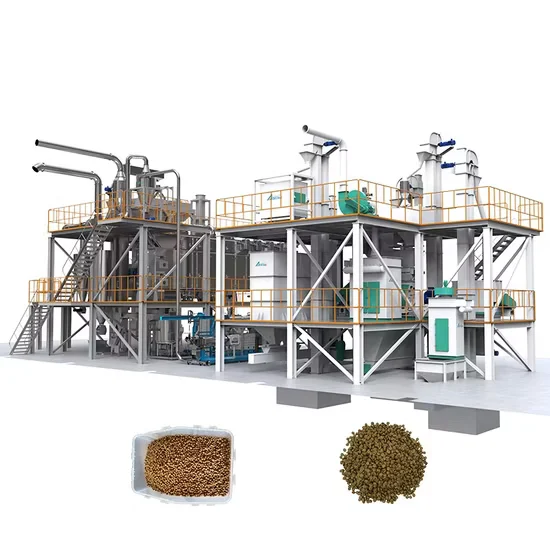
Many investors discover a harsh reality only after machinery arrives at the dock: on-site installation is not simply following an assembly manual. It is a rigorous test of how well the factory layout, utility infrastructure, and process logic align with the equipment design. Missteps here do not just delay startup; they can compromise product consistency for months.
Successful production line installation challenges are rarely solved by brute force or extra labor. They require early engineering alignment, precise utility matching, and systematic commissioning that treats the entire plant as one integrated system rather than a collection of standalone machines. Professional on-site guidance bridges the gap between theoretical design and physical reality, ensuring that every component from grinding to coating operates within its intended parameters.
Pre-Installation Preparation: Aligning Site Conditions with Equipment Requirements
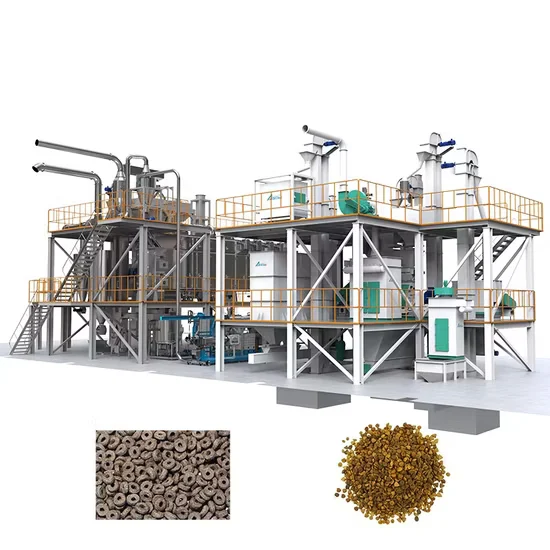
The foundation of a smooth startup is laid long before the first crate is opened. A common oversight in new pet food facilities is assuming that general industrial power and space are sufficient for specialized extrusion processes. In reality, the electrical load profile of a twin-screw extruder differs significantly from that of a standard conveyor or mixer. Before machinery ships, the engineering team must review the factory layout to confirm that floor loading capacities can support heavy processing units and that access routes allow for the movement of large components like dryer chambers and extruder barrels.
Utility compatibility is another critical checkpoint. Power frequency, voltage stability, and steam pressure must match the specifications defined during the quotation phase. If a facility relies on local grid power with frequent fluctuations, additional stabilization equipment may be necessary to protect sensitive control panels. Similarly, water quality for steam generation and cooling systems must be assessed to prevent scaling or corrosion in heat exchangers. Clarifying these constraints early prevents costly retrofits during the installation phase.
Space constraints often dictate the final configuration of the line. In existing buildings being repurposed for pet treat or kibble production, ceiling height and column placement can limit the arrangement of vertical dryers or multi-stage coolers. The installation plan must account for maintenance access around each machine, ensuring that operators can reach drive motors, gearboxes, and control interfaces without dismantling adjacent equipment. This level of detail in the pre-installation review minimizes spatial conflicts when the hardware arrives.
Mechanical Assembly and Utility Integration
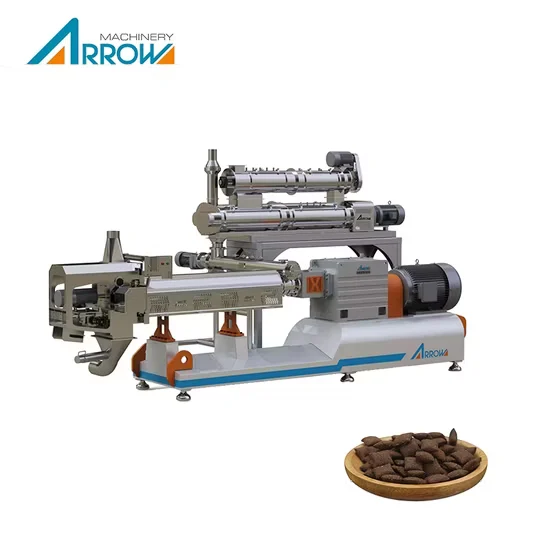
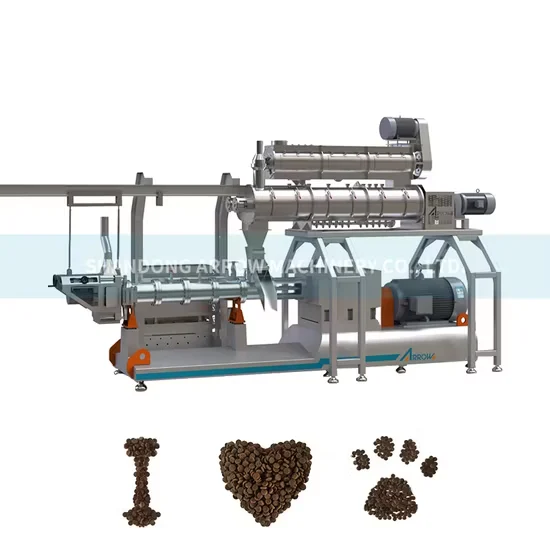
Once the site is prepared, the physical assembly begins with positioning and leveling the core processing machines. The twin-screw extruder serves as the heart of the line, requiring precise alignment with upstream feeders and downstream cutters. Even minor misalignments can cause excessive vibration, premature wear on screws and barrels, and inconsistent pellet shapes. Heavy lifting equipment is used to place units, but fine-tuning is done manually to ensure that conveyor transfers are smooth and that product flow does not encounter bottlenecks or spillage points.
Integrating utilities involves connecting electrical control panels, steam lines, compressed air, and water supplies according to local safety standards and the machine’s design requirements. Electrical connections must be verified for phase sequence and grounding integrity to prevent motor damage. Steam piping requires proper insulation and trap installation to maintain consistent temperature and pressure at the preconditioner and extruder barrel. Compressed air lines, used for pneumatic controls and cleaning systems, must be free of moisture and oil to avoid contaminating the product or failing actuators.
The integration of downstream equipment such as the cross-flow circulation dryer and vacuum coating machine demands careful attention to airflow and material handling. Dryers must be sealed properly to maintain thermal efficiency, and exhaust ducts must be routed to meet environmental regulations. Coating systems require precise synchronization with the dryer discharge to ensure even application of fats and flavors. Each connection point is tested for leaks and mechanical stability before moving to the next stage of assembly.
Overcoming Common On-Site Setup Challenges
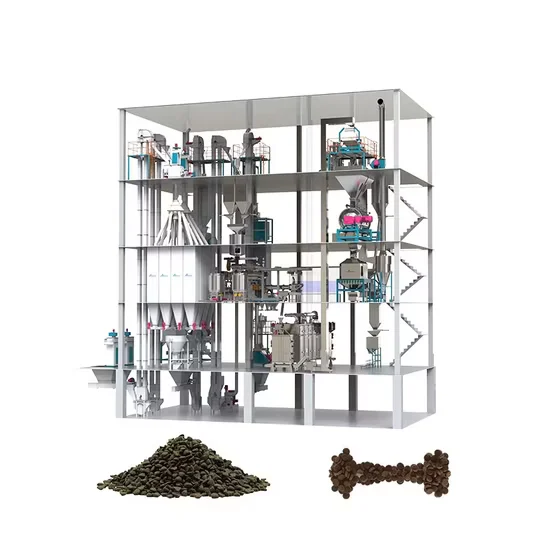
Even with thorough planning, unexpected issues often arise during on-site assembly. Structural limitations in older buildings may require reinforcement to support the weight of wet food processing lines or large storage silos. In such cases, the engineering team adapts the layout by redistributing loads or modifying support structures. Another frequent challenge is mismatched utility interfaces, where local pipe sizes or electrical plug types differ from the equipment specifications. Flexible adapters and custom wiring harnesses are employed to resolve these discrepancies without compromising safety or performance.
Process interface adjustments are also common when integrating new machines into an existing line. For example, if a new extruder is added to an older drying system, the throughput capacity and moisture content of the incoming product must be balanced. This may involve recalibrating feeder speeds, adjusting cutter frequencies, or modifying dryer fan settings. The goal is to create a harmonious flow where each unit operates at its optimal duty point, preventing upstream blockages or downstream starvation.
Addressing these challenges requires a problem-solving mindset grounded in process engineering principles. Rather than forcing equipment to fit a rigid plan, the installation team evaluates the actual conditions and adjusts the configuration accordingly. This flexibility ensures that the final setup is not only mechanically sound but also process-ready, capable of delivering consistent product quality from the first trial run.
Commissioning, Wet Trials, and Operator Training
Commissioning transforms a static assembly of machines into a dynamic production system. It begins with dry runs to verify motor direction, sensor functionality, and control logic. Once mechanical and electrical checks are complete, wet trials commence using actual raw materials. This phase is critical for establishing baseline parameters for extrusion temperature, screw speed, and dryer residence time. Observing how the formulation behaves under real processing conditions allows engineers to fine-tune the system for optimal texture, density, and moisture content.
Operator training is an integral part of the commissioning process. Local factory managers and maintenance teams receive hands-on instruction on daily operation, routine cleaning, and basic troubleshooting. Understanding the relationship between ingredient variability and machine response empowers operators to make minor adjustments without waiting for external support. Training covers safety protocols, lockout-tagout procedures, and preventive maintenance schedules to extend equipment life and minimize unplanned downtime.
The commissioning phase also validates the integration of all subsystems. For instance, the coordination between the extruder output and the vacuum coating machine must be precise to ensure uniform flavor distribution. Engineers monitor key performance indicators such as energy consumption, product yield, and quality consistency to confirm that the line meets the design specifications. Any deviations are addressed through iterative adjustments until the system operates stably.
Frequently Asked Questions
Q: How long does the installation and commissioning of a complete pet food production line typically take?
A: The timeline varies based on line complexity, site readiness, and local regulations. Simple standalone machine setups may take a few days, while full turnkey plants with multiple processing stages can require several weeks. Factors such as utility connection availability, structural modifications, and the extent of operator training influence the total duration. A detailed project schedule is established during the planning phase to manage expectations and coordinate resources effectively.
Q: What site preparations are required before the Arrow engineering team arrives for installation?
A: The facility must have completed civil works, including leveled floors with adequate load-bearing capacity and clear access routes for heavy equipment. Utilities such as power, water, steam, and compressed air should be installed up to the designated connection points near each machine. Safety systems like fire suppression and emergency stops must be operational. Providing a clean, unobstructed workspace allows the installation team to focus on assembly and integration without delays caused by incomplete infrastructure.
Q: How do you handle unexpected spatial or utility constraints discovered during on-site assembly?
A: When unforeseen constraints arise, the engineering team assesses the impact on process flow and safety. Solutions may include rerouting pipelines, modifying support structures, or adjusting equipment placement within the available footprint. Custom adapters or flexible connections are used to bridge utility mismatches. The priority is to maintain process integrity and operational safety while adapting to the physical realities of the site. Communication with the client ensures that any changes are agreed upon and documented.
Q: Is operator training included in the on-site installation service package?
A: Yes, comprehensive training is a standard part of the commissioning service. It covers machine operation, routine maintenance, safety procedures, and basic troubleshooting. Training is conducted in the local language if possible, using both theoretical explanations and practical demonstrations. The goal is to empower the local team to operate the line confidently and efficiently, ensuring long-term reliability and product consistency. Training materials and manuals are provided for future reference.
Send your raw material formulation and target capacity to receive a comprehensive proposal that includes site layout planning, equipment configuration, and installation support details. Request technical specifications and discuss trial options to validate the process before finalizing your investment.