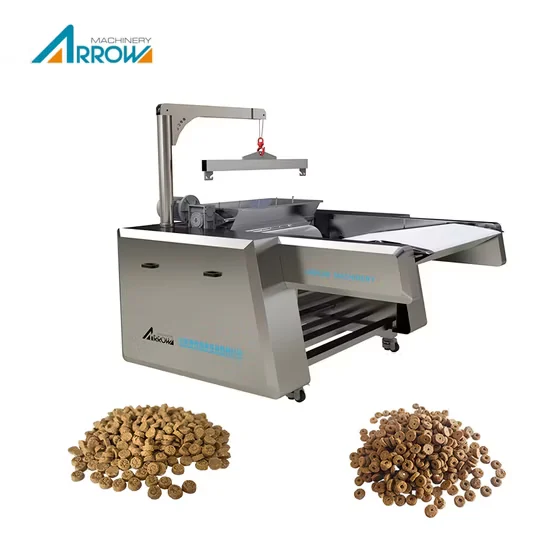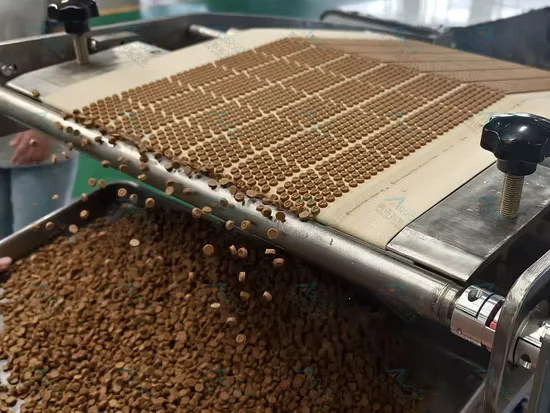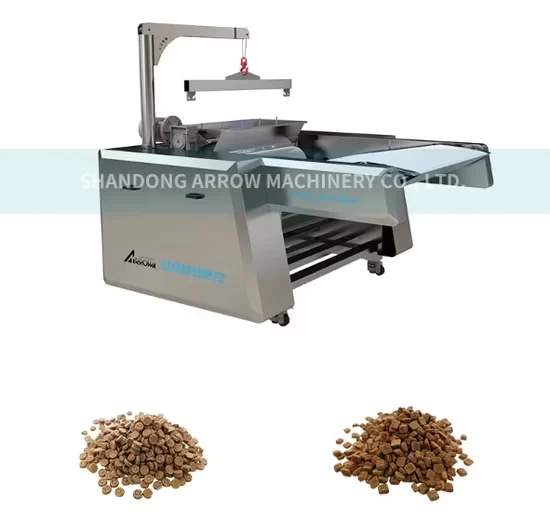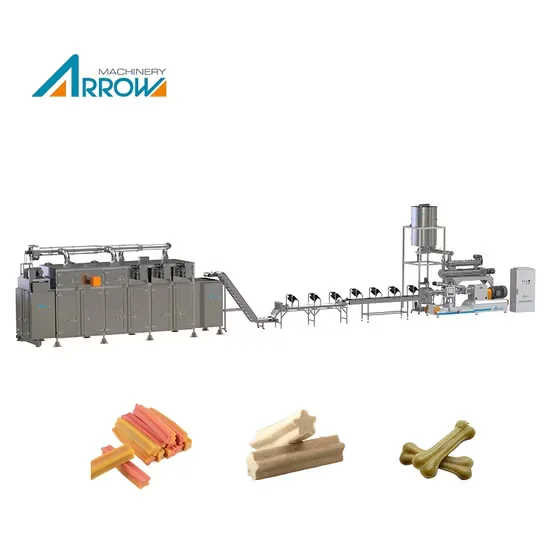
Many pet food plants encounter collapsed shapes or out-of-tolerance dimensions in baked kibble production, often misattributing the fault to recipe moisture control. In reality, the root cause frequently lies in the mismatch between the forming machine’s extrusion pressure, cutting rhythm, and the specific rheology of the dough.
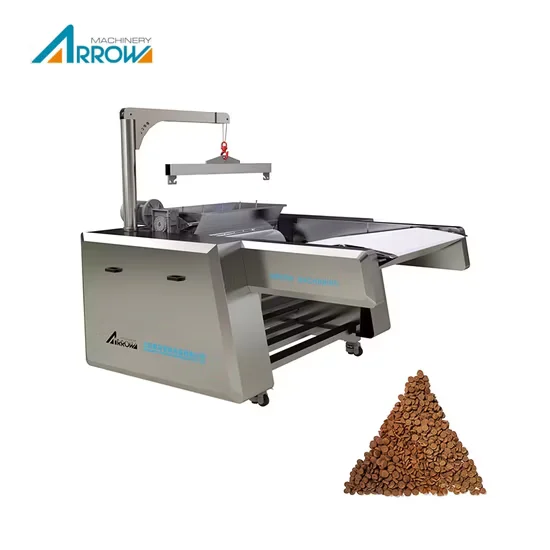
Achieving precise shape fidelity requires more than a standard mold; it demands a forming system that dynamically adjusts to ingredient viscosity while maintaining synchronization with upstream mixing and downstream drying capacities. A well-engineered Baked Pet Food Forming Machine ensures clean release and consistent geometry by balancing mechanical force with material behavior, preventing the sticking and deformation that plague high-moisture formulations.
From Dough Rheology to Precise Biscuit Geometry
The transition from a mixed batch to a defined biscuit shape is a critical phase where physical properties dictate mechanical settings. When dough enters the forming chamber, its behavior is governed by water activity, fat content, and protein structure. If the extrusion pressure is too low, the dough may not fully fill the mold cavities, resulting in incomplete shapes. Conversely, excessive pressure can cause flash—excess material squeezing out around the mold edges—or lead to sticking if the dough is particularly adhesive.
Understanding this flow is essential for operators. The forming process is not merely about pushing material through a hole; it involves managing shear and compression to align the dough structure without damaging its integrity. For high-meat or sticky formulations, the internal surface finish of the forming chamber and the speed of the feed screw become paramount. A Twin-Screw Extruder often precedes this stage, providing a homogeneous mix that stabilizes the dough’s consistency before it reaches the former. This pre-conditioning ensures that the material entering the forming head has predictable viscosity, reducing the risk of blockages or irregular output.
The cutting mechanism further defines the final product. Whether using a rotating knife or a wire cutter, the timing must be perfectly synchronized with the extrusion rate. If the cutter moves too slowly, biscuits may elongate or drag; if too fast, they may be compressed or distorted. Adjusting these parameters requires real-time observation and minor tweaks to motor speeds, ensuring each piece maintains its intended length and edge definition.
Mold Engineering and Shape Customization Strategies
Mold design is the interface between mechanical force and product identity. The choice of material, typically food-grade stainless steel, impacts both hygiene and performance. Polished surfaces reduce friction, facilitating easier release of sticky doughs, while durable construction ensures longevity under continuous operation. For complex shapes like bones, letters, or intricate patterns, the depth and angle of the mold cavities must be carefully calculated to prevent air pockets and ensure complete filling.
Changing product lines often requires swapping molds, a process that should be straightforward to minimize downtime. Modern forming machines are designed with quick-release mechanisms, allowing operators to switch between different biscuit profiles efficiently. However, the transition is not just mechanical; it requires recalibrating the extrusion pressure and cutting speed to match the new shape’s requirements. A deeper cavity may need higher pressure to fill completely, while a delicate shape might require gentler handling to avoid deformation during ejection.
Customization extends beyond shape to include size and thickness. By adjusting the gap between the molding rollers or the die plate, manufacturers can produce a range of biscuit densities. This flexibility is crucial for plants producing multiple SKUs on the same line. It allows for rapid adaptation to market trends without investing in entirely new equipment. The key is to maintain consistency across batches, ensuring that every biscuit meets the specified weight and dimensional tolerances.
Synchronizing Forming with Baking and Drying Systems
A forming machine does not operate in isolation; it is a pivotal link in a continuous processing chain. The wet biscuits exiting the former must be transferred smoothly to the baking or drying stage without stacking or deforming. This transfer often involves a conveyor system that matches the speed of the former, preventing bottlenecks or stretching of the soft product. Any disruption here can lead to misshapen items before they even enter the oven.
The integration with downstream equipment is equally critical. A Cross-Flow Circulation Dryer or baking oven must have the capacity to handle the output of the former. If the dryer is undersized, it becomes a bottleneck, forcing the forming machine to slow down or stop, which can cause dough to settle and harden in the feed system. Conversely, if the former runs too fast for the dryer, biscuits may overlap, leading to uneven drying and potential spoilage.
Automation plays a vital role in maintaining this balance. PLC-controlled systems can link the forming machine with upstream mixers and downstream dryers, adjusting speeds automatically based on real-time feedback. This synchronization ensures that the entire line operates at optimal efficiency, minimizing waste and maximizing throughput. It also reduces the burden on operators, who no longer need to manually adjust each machine independently.
For plants upgrading existing lines, assessing the compatibility of new forming equipment with current drying systems is essential. Factors such as conveyor width, height, and speed must align to ensure a smooth transition. In some cases, minor modifications to the conveying system may be necessary to accommodate the new former’s output characteristics.
Critical Selection Criteria for Production Managers
When evaluating a Baked Pet Food Forming Machine, production managers must look beyond basic specifications. Capacity matching is the first consideration; the machine’s rated output in kg/h must align with the plant’s actual production schedule and downstream capabilities. Overestimating capacity can lead to underutilization, while underestimating it creates bottlenecks. It is advisable to request a detailed configuration that accounts for peak loads and maintenance downtime.
Hygiene design is another non-negotiable factor. Pet food regulations demand strict cleanliness standards, so the machine should feature easy-to-disassemble components with no hidden corners where residue can accumulate. Stainless steel construction and smooth welds facilitate thorough cleaning, reducing the risk of contamination and simplifying sanitation protocols. Look for designs that allow quick access to internal parts for routine maintenance.
Supplier support is equally important. Choose a partner who offers mold customization services and can provide technical guidance on integrating the former into your existing line. The ability to conduct raw material trials on a test platform before purchase is a significant advantage, as it validates the machine’s performance with your specific formulation. This proactive approach minimizes the risk of post-installation issues and ensures that the equipment meets your production goals from day one.
Frequently Asked Questions
Q: Can the forming machine handle high-meat or sticky dough formulations?
A: Yes, but it requires specific adjustments. High-meat doughs have different rheological properties, often being stickier and less stable. The forming machine must be equipped with polished surfaces and potentially adjusted screw speeds to prevent sticking. Pre-conditioning the dough properly in the mixer or extruder is also crucial to ensure consistent flow into the forming head.
Q: How do I change the biscuit shape or size on the same machine?
A: Changing shapes typically involves swapping the mold plates or rollers. Most modern forming machines feature quick-release mechanisms for easy mold changes. After installing the new mold, you must recalibrate the extrusion pressure and cutting speed to match the new shape’s requirements. This ensures complete cavity filling and clean cutting without deformation.
Q: What is the typical moisture content of biscuits right after forming?
A: The moisture content varies depending on the recipe but generally ranges between 20% to 30% for baked biscuits. This high moisture level makes the product soft and pliable, which is why gentle handling and immediate transfer to the drying or baking stage are critical to maintain shape integrity before the structure sets.
Q: How does the forming machine integrate with an existing cross-flow dryer?
A: Integration requires matching the conveyor speed and width between the former and the dryer. The forming machine’s output rate must not exceed the dryer’s capacity to prevent overlapping and uneven drying. PLC synchronization can help automate this balance, adjusting speeds dynamically to ensure a smooth, continuous flow of product through both stages.
Send your dog biscuit shape drawings, formulation details, and target capacity to receive a technical specification sheet and a customized production line layout. Our engineering team can also arrange raw material trials on our test platform to validate the forming process with your specific dough before you commit to a purchase.