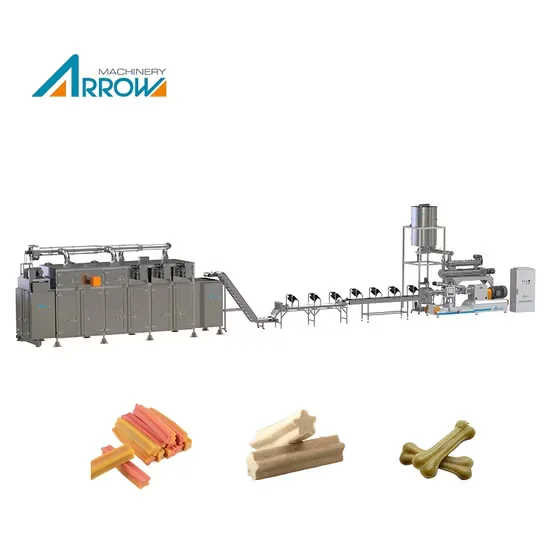
Many investors planning a starch-based cat litter production line focus heavily on the extruder model, assuming it is the sole determinant of product quality. They often overlook how raw material preparation precision and drying curves decisively impact final clumping rates and dust levels. This narrow view leads to lines that produce pellets with uneven moisture or excessive fines, causing batch spoilage and operational headaches.
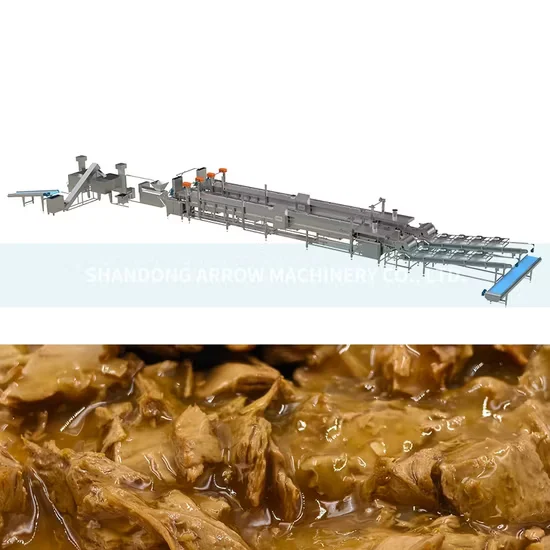
The core solution lies in treating the facility as an integrated system rather than a collection of standalone machines. Starch absorbency and dust control depend on the precise matching of mixing uniformity, extrusion parameters, and thermal drying profiles. A successful plant requires engineering that balances capacity across all modules, ensuring that upstream formulation consistency supports downstream structural integrity.
Raw Material Preparation and Mixing for Starch Formulations
The foundation of low-dust, high-absorbency litter begins long before the material enters the barrel. Starch sources, such as corn, wheat, or pea fiber, must be ground to a specific particle size distribution. If the powder is too coarse, the resulting pellet will have poor structural integrity and higher dust generation during use. If it is too fine, it may cause feeding issues or excessive density. Consistent grinding ensures that the surface area available for water absorption is uniform across every granule.
Mixing is equally critical. The formulation typically includes binders, deodorizers, and sometimes small amounts of oil or functional additives. Achieving a homogeneous blend is non-negotiable. Uneven distribution of binders leads to weak spots in the pellet, which break down into dust during packaging or when poured by the end user. Single-shaft or twin-shaft paddle mixers are commonly employed to ensure thorough dispersion of dry and liquid components. The choice between these depends on the viscosity of added liquids and the required mixing time.
For formulations with complex ingredient ratios, the mixing system must handle varying bulk densities without segregation. A well-designed mixer prevents the separation of light fibers from heavier starches during the transfer to the feeder. This stage sets the baseline for the entire process. If the input is inconsistent, no amount of downstream adjustment can fully correct the final product quality. Engineers must verify that the mixer’s discharge rate aligns with the extruder’s feed requirement to maintain steady pressure and temperature inside the barrel.
Extrusion and Forming Parameters for Pellet Quality
Extrusion transforms the mixed powder into a structured pellet. For starch-based litters, the goal is partial gelatinization. Unlike pet food, where full cooking and expansion are desired, cat litter requires a dense, porous structure that can rapidly wick moisture. The twin-screw extruder allows precise control over shear force and temperature profiles. By adjusting screw configuration and barrel heating zones, operators can manage the degree of starch modification.
The die design determines the physical shape, diameter, and internal porosity of the granules. A multi-hole die produces standard cylindrical pellets, while specialized configurations can create irregular shapes that interlock better in the litter box. The cutting mechanism must be synchronized with the extrusion speed to ensure uniform length. Inconsistent cut lengths lead to uneven drying and varied aesthetic appeal, which affects consumer perception.
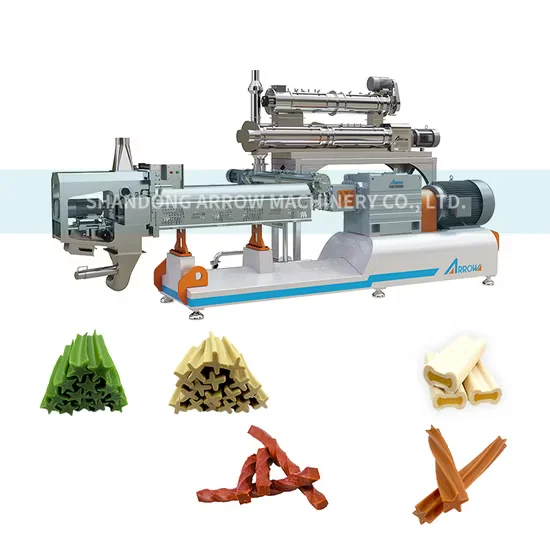
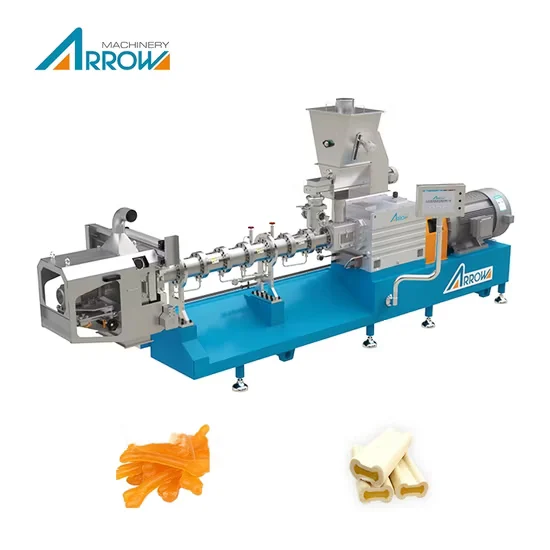
A Twin-Screw Extruder is particularly suitable for this application because it offers flexibility in handling different plant-based formulas. Whether using pure corn starch or a blend with tofu residue or cassava, the machine can adapt its compression ratio. This adaptability is crucial for manufacturers who may want to switch between raw material sources based on local availability and cost. The extruder’s ability to maintain stable output under varying load conditions ensures that the downstream drying section receives a consistent product stream.
Drying Strategies to Preserve Structure and Absorbency
Drying is frequently the bottleneck in any extrusion line, and it is especially critical for starch-based products. The objective is to reduce moisture content to a level that prevents mold growth while preserving the porous structure created during extrusion. If the surface dries too quickly, a hard shell forms, trapping internal moisture. This leads to cracking during cooling or storage, generating significant dust. Conversely, insufficient drying results in clumping within the bag and potential microbial spoilage.
A Cross-Flow Circulation Dryer or a dedicated drying room allows for controlled airflow and temperature gradients. The key is to match the dryer’s capacity to the extruder’s output. If the extruder runs at full speed but the dryer cannot remove moisture fast enough, the line must be throttled back, reducing overall efficiency. Engineers must calculate the thermal balance carefully, considering the initial moisture content after extrusion and the target final moisture level.
Airflow uniformity is just as important as temperature. Hot spots in the dryer can cause discoloration or brittleness, while cool spots leave pockets of high moisture. Multi-layer belt dryers or fluidized bed systems can offer more consistent results than simple tray drying. The residence time in the dryer must be optimized through testing. Rushing this stage compromises the pellet’s internal architecture, reducing its ability to absorb liquid rapidly. Proper drying ensures that the pellet remains intact until it contacts urine, at which point it should swell and lock in odor.
Cooling, Screening and Packaging Integration
After drying, the pellets are still hot and fragile. Immediate cooling is necessary to stabilize the structure and prevent condensation inside the packaging. Ambient air cooling or forced air coolers bring the product temperature down to near room temperature. This step also helps to harden the outer surface slightly, improving resistance to abrasion during subsequent handling. Without adequate cooling, the residual heat can cause the pellets to stick together, forming large aggregates that are unsellable.
Screening follows cooling to remove fines and oversized particles. Vibrating screens separate the product into acceptable size ranges. The removed fines can be recycled back to the mixer or extruder feed, minimizing waste. However, excessive recycling can affect the texture of the final product, so the proportion of rework must be monitored. Effective screening directly correlates with the low-dust claim on the product label. If the screening efficiency is poor, the final package will contain powder that settles at the bottom, leading to customer complaints.
Packaging integration completes the line. The system must handle the finished product gently to avoid breaking the pellets during filling. Automated weighing and bagging systems ensure consistent net weight and professional presentation. For a complete starch-based cat litter production line, the coordination between these final stages and the earlier processing steps is vital. Any mismatch in speed or capacity creates bottlenecks or forces manual intervention, increasing labor costs and risk of contamination.
Frequently Asked Questions
Q: What is the key to controlling dust in starch-based cat litter production?
A: Dust control starts with uniform raw material grinding and thorough mixing to ensure consistent binder distribution. During extrusion, precise temperature management prevents over-expansion, which creates weak structures. Finally, efficient screening after cooling removes fines, and gentle handling during packaging prevents breakage. Each stage contributes to the final dust level, so isolating one machine will not solve the problem.
Q: Can the extruder handle different plant-based raw material formulas?
A: Yes, a twin-screw extruder offers the flexibility to process various starch sources like corn, wheat, pea, or cassava. By adjusting screw elements and barrel temperatures, operators can accommodate differences in gelatinization temperatures and viscosity. This adaptability allows manufacturers to switch formulations based on raw material availability without requiring entirely new machinery, supporting diverse product lines.
Q: How do you determine the required dryer capacity for the extrusion line?
A: Dryer capacity is determined by the extruder’s output rate, the initial moisture content of the extrudate, and the target final moisture level. Engineers calculate the total water removal required per hour and select a dryer with sufficient thermal energy and airflow volume. It is essential to include a safety margin to account for variations in ambient humidity and raw material moisture, ensuring consistent drying performance.
Q: Do you provide factory layout design for a new cat litter plant?
A: Yes, comprehensive layout designs are provided based on your specific site dimensions, utility access, and production goals. The design considers material flow, maintenance access, and future expansion possibilities. By integrating all equipment into a cohesive plan, we help minimize footprint inefficiencies and ensure that each module operates in harmony with the others, preventing hidden bottlenecks.
Send your raw material formula and target capacity to receive a customized technical specification sheet and factory layout proposal. We can also discuss raw material trials to validate the process parameters before finalizing your equipment configuration.