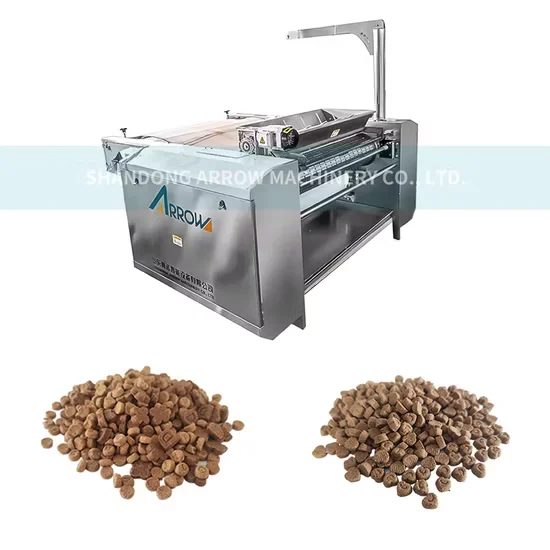
Many emerging pet food brands in Indonesia face a common hurdle during expansion: equipment selection that ignores local raw material characteristics and tropical climate conditions. This oversight often leads to finished products with inconsistent expansion or moisture levels that fail to meet quality standards. The root cause is rarely the machine itself, but a mismatch between the formulation and the thermal or shear profiles of the production line.
To build a reliable manufacturing base, Indonesian cat food producers must match their specific product forms—whether dry kibble, baked treats, wet chunks, or soft chews—to dedicated process lines. Modular equipment configuration ensures product consistency while optimizing investment efficiency. By focusing on how extrusion systems handle ingredient behavior and how downstream drying manages moisture in high-humidity environments, manufacturers can secure a smooth startup and stable long-term operation.
Five Core Production Lines for Local Cat Food Brands
Selecting the right cat food production equipment begins with defining the final product texture and nutritional profile. Different market segments require distinct processing methods, and a single machine cannot efficiently produce all variations without significant compromise.
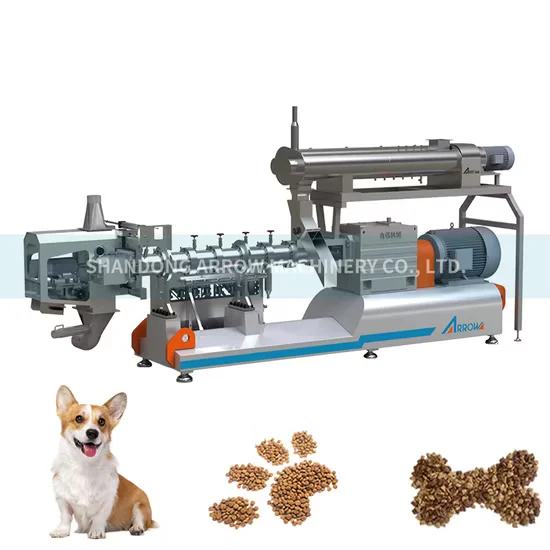
Dry kibble remains the volume driver for most factories. This line relies on twin-screw extrusion to gelatinize starches and denature proteins under high temperature and pressure. For premium segments, baked pet food lines offer an alternative. These systems use lower temperatures and longer residence times to create dense, crunchy textures without the high expansion seen in traditional extrusion. Understanding this distinction helps investors avoid over-specifying equipment for products that do not require intense puffing.
Wet food processing demands a completely different approach. Instead of dry expansion, these lines focus on sterilization and texture preservation. Processing meat chunks or sauces requires precise cooking and filling systems that maintain moisture content and palatability. Similarly, the growing demand for functional treats has popularized soft chewable foods and enzymatic hydrolysis products. These bio-extension engineering lines operate at lower temperatures to preserve heat-sensitive nutrients like enzymes or probiotics, requiring specialized forming and drying modules that differ significantly from standard kibble plants.
Pet treats, such as jerky or dental chews, often utilize cold extrusion or low-temperature forming. Unlike standard kibble, these products rely on mechanical shaping rather than thermal expansion. A versatile factory might integrate multiple lines, but starting with a clear focus on one primary category allows for better optimization of utility usage and staff training.
Matching Equipment to Indonesia’s Raw Materials and Climate
Indonesia’s abundant local ingredients, such as specific tubers or high-moisture fresh meat, present unique challenges for extrusion. When formulations include high ratios of fresh meat or fats, the mixture behaves differently inside the barrel. A standard configuration may struggle with slippage or uneven cooking. In such cases, a twin-screw extruder provides superior mixing and conveying control compared to single-screw alternatives. It allows operators to adjust shear and temperature profiles dynamically, ensuring that the starch gelatinizes properly even when fat content is high.
The tropical climate adds another layer of complexity. High ambient humidity affects both the drying and coating stages. If the drying system cannot remove moisture efficiently, the final product may suffer from mold growth or reduced shelf life. A cross-flow circulation dryer is often selected for its ability to provide uniform air distribution across large batches. However, in humid conditions, the intake air may need dehumidification or higher temperature settings to achieve the target moisture level, which impacts energy consumption.
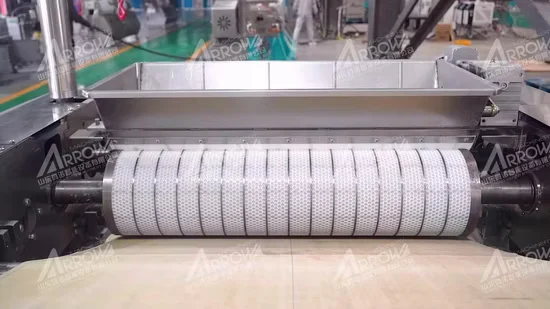
Coating is equally critical for palatability. Adding fats and flavors after drying prevents them from being lost during the high-heat extrusion phase. For high-fat diets, a vacuum coating machine ensures deep penetration of oils into the kibble pores, improving taste and reducing surface greasiness. This step is vital for maintaining product quality in hot and humid storage environments where surface oil might otherwise oxidize or become rancid quickly.
Modular Layouts for Space and Budget Constraints
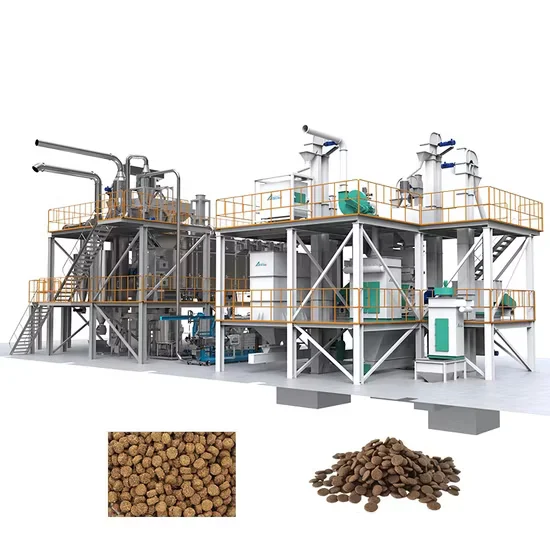
New factories in Indonesia often operate within limited footprints or existing industrial buildings. A rigid, monolithic line design can waste valuable space and complicate future upgrades. A modular approach allows manufacturers to start with essential units—such as grinding, mixing, and extrusion—and add downstream modules like advanced drying or packaging later. This phased investment reduces initial capital outlay while keeping the path open for capacity expansion.
Layout planning must account for material flow and maintenance access. Placing the grinder and mixer close to the extruder feed hopper minimizes conveying distance and reduces the risk of segregation. Similarly, positioning the dryer and cooler in a straight line with the extruder outlet ensures smooth product transfer. Engineers should evaluate vertical space as well, using silos for raw materials to free up floor area for processing machinery.
For investors concerned about budget visibility, requesting a complete line proposal from a single supplier simplifies coordination. Instead of managing multiple vendors for crushers, extruders, and dryers, a unified scope ensures that all components are compatible in terms of capacity and control systems. This integration reduces the risk of bottlenecks, such as an extruder producing more kibble than the dryer can handle, which is a common issue in poorly planned setups.
When upgrading an existing plant, modular additions can replace outdated sections without shutting down the entire facility. For example, adding a new vacuum coater to an existing dry line can enhance product appeal without replacing the core extrusion system. This flexibility is crucial for businesses adapting to changing market demands or regulatory requirements.
Quality Control from Extrusion to Coating
Consistency is the hallmark of a professional cat food production equipment setup. Variations in pellet size, density, or moisture can lead to customer complaints and returns. Achieving uniformity requires tight control at every stage, starting with the raw material preparation. Consistent particle size from the grinder ensures even mixing and stable extrusion. If the powder is too coarse, it may cause blockages; if too fine, it can affect the texture of the final kibble.
During extrusion, monitoring the motor load and barrel temperature helps detect changes in raw material quality. Sudden spikes in current may indicate a change in ingredient viscosity, prompting an adjustment in steam or water addition. Downstream, the cutting mechanism must be synchronized with the extrusion speed to maintain consistent pellet length. Irregular cuts not only look unprofessional but can also lead to uneven drying.
Drying and cooling are the final gates for quality assurance. The goal is to reduce moisture to a safe level without making the kibble too brittle. Over-drying can cause cracking during coating, while under-drying risks microbial growth. A well-calibrated drying system, combined with proper cooling, ensures that the kibble reaches ambient temperature before packaging. This prevents condensation inside bags, which is a major cause of spoilage in tropical climates. Finally, the coating process must apply flavors evenly. Uneven coating leads to inconsistent taste, causing pets to reject certain pieces. Regular calibration of spray nozzles and drum rotation speeds maintains this balance.
Frequently Asked Questions
Q: What is the minimum capacity required to start a cat kibble production line in Indonesia?
A: Capacity depends on your market strategy and budget. Small-scale lines can start at a few hundred kilograms per hour, suitable for niche premium brands. Larger industrial lines handle several tons per hour for mass-market distribution. The key is to match the extruder output with downstream drying and cooling capacity to avoid bottlenecks. Consulting with engineers helps determine the right scale based on your sales projections and factory space.
Q: How do you handle high humidity during the drying and coating process in tropical climates?
A: High ambient humidity reduces the efficiency of standard air-based drying. To counter this, manufacturers may use dryers with enhanced air circulation or dehumidification capabilities. Ensuring the drying room is well-sealed and insulated helps maintain internal conditions. For coating, using vacuum technology helps embed oils deeper into the kibble, reducing surface exposure to humid air. Proper packaging immediately after cooling is also essential to prevent moisture reabsorption.
Q: Can the extrusion line be adjusted to produce both floating and sinking pellets if we expand into aquafeed later?
A: Yes, but it requires careful configuration. Floating and sinking behaviors depend on the formulation, extrusion conditions, and drying process, not just the die shape. Adjusting the screw configuration, temperature profile, and cut-off mechanism can influence pellet density. However, switching between pet food and aquafeed may require significant cleaning and parameter changes. It is best to discuss multi-purpose capabilities with the supplier during the initial design phase.
Q: Do you provide factory layout design and overseas installation support for new plants in Indonesia?
A: Comprehensive support includes creating custom layout drawings based on your factory dimensions and utility constraints. Engineering teams can assist with equipment placement to optimize workflow. Overseas installation and commissioning services are available to ensure the line runs correctly. Training for local operators and maintenance staff is typically part of the contract, helping your team manage daily operations and troubleshoot common issues effectively.
Send your product formula and target capacity to receive a custom layout and configuration proposal. Discuss your raw material specifics to arrange a trial run, or request technical specifications and detailed plant diagrams to finalize your investment plan.