Many pet treat manufacturers assume that a single set of extrusion and drying parameters can handle both high-moisture jerky and low-moisture dry snacks. This misconception often leads to inconsistent texture, product spoilage, or excessive energy consumption during production runs.
The key to successful production lies in recognizing that jerky and dry treats require fundamentally different processing approaches. Selecting equipment that supports modular configuration and precise process control allows you to adapt to these distinct raw material behaviors without compromising product quality or operational efficiency.
Raw Material Behavior and Process Requirements
The primary difference between jerky and dry treats starts with the formulation. Jerky products typically contain high levels of fresh meat or meat slurries, which introduce significant moisture and fat content into the mix. In contrast, dry pet treats often rely on starch-based flours, meals, and lower moisture inputs to achieve a crunchy or semi-moist texture. These differences dictate how the material behaves under shear and heat.
High fresh meat content requires careful handling to prevent sticking and ensure uniform flow through the feeder. The protein structure in meat is sensitive to temperature spikes, which can cause denaturation and affect the final chewiness. Dry treats, however, often benefit from higher thermal input to gelatinize starches and achieve desired expansion or density. Understanding these raw material characteristics is essential before selecting any machinery.
When formulating for jerky, the goal is often to retain moisture while ensuring food safety and shelf stability. This means the process must remove water gently without overcooking the proteins. For dry treats, the objective might be to create a porous structure or a dense, hard chew. The equipment must therefore offer flexibility in screw configuration and barrel temperature zones to accommodate these divergent goals.
Extrusion System Configuration for Different Treat Types
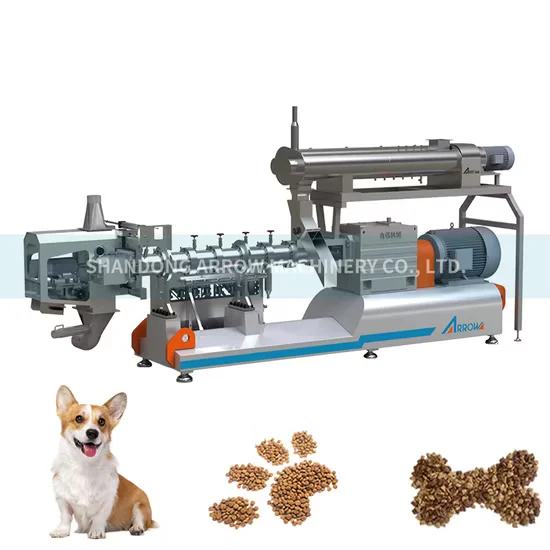
Choosing the right extrusion system depends heavily on the target product structure. For dry treats, a twin-screw extruder provides the versatility needed to handle various ingredient combinations and achieve consistent shaping. The intermeshing screws allow for precise control over residence time and shear rate, which is critical when working with complex formulations that include fibers or high-fat ingredients.
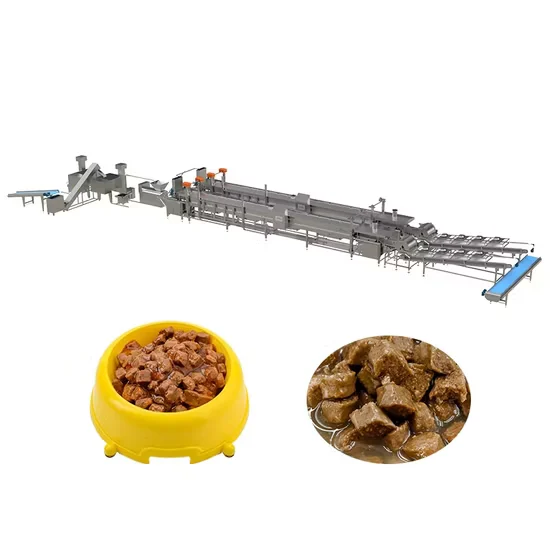
Jerky production often involves a different approach. While some jerky is made via traditional slicing and drying, extruded jerky or meat strips require a system that can form a continuous strip or specific shape without excessive expansion. Low-temperature cold extruders or specialized forming machines are often used here to maintain the integrity of the meat structure. The screw elements must be configured to convey the sticky mass gently rather than compressing it aggressively.
The die and cutter assembly also play a vital role. For dry kibble-style treats, the die determines the pellet size and shape, while the cutter ensures uniform length. For meat strips, the die may produce a wide sheet or multiple thin strands that are later cut or separated. Adjusting the screw speed and feed rate allows operators to fine-tune the density and surface texture of the emerging product.
If you are planning a line that needs to switch between these product types, modularity is key. A Twin-Screw Extruder can be adapted with different screw profiles and barrels, but the downstream equipment must also align with the output characteristics. Trying to force a high-expansion dry treat setup to produce dense meat strips will likely result in poor product quality and increased wear on the machine components.
Drying and Coating: Achieving Texture and Stability
Drying is often the bottleneck in pet treat production, especially for jerky. Removing moisture from high-meat products requires a balance between temperature and airflow to prevent case hardening, where the exterior dries too quickly and traps moisture inside. A Cross-Flow Circulation Dryer allows for better control over air distribution, ensuring that each layer of product receives consistent exposure to heated air. This uniformity is crucial for preventing microbial growth and achieving the desired chewy texture.
For dry treats, the drying process focuses more on reducing moisture to a level that ensures crispness and long shelf life. The temperature profile can be higher, and the residence time may be shorter compared to jerky. However, uneven drying can still lead to breakage or inconsistent crunch. Matching the dryer capacity to the extruder output is essential to avoid bottlenecks that stall the entire line.
Coating adds another layer of complexity. Dry treats often require surface flavoring to enhance palatability. A vacuum coating machine is ideal for applying high-fat or liquid flavors evenly without making the product soggy. For simpler applications, a drum flavoring machine can tumble the treats with powder or spray coatings. Jerky products may require less coating, but if marinades are used, they must be applied before or during the drying process to ensure penetration.
The choice between vacuum and atmospheric coating depends on the viscosity of the flavoring agent and the desired uptake level. Vacuum systems pull the flavor into the pores of the treat, which is beneficial for dense products. Atmospheric systems rely on surface adhesion, which works well for rough-textured dry treats. Integrating these systems requires careful planning of conveyor transfers and cooling zones to prevent clumping.
Line Integration and Facility Planning for Canadian Operations
Designing a production line for a Canadian facility involves considering local utility constraints and space limitations. Cold climates can affect incoming raw material temperatures and heating requirements for drying. Ensuring that the boiler or heat source can maintain consistent temperatures during winter months is critical for process stability. Additionally, insulation and heat recovery systems can help manage energy costs, which are a significant factor in drying-intensive operations.
Footprint optimization is another key consideration. Many existing facilities have limited floor space, requiring compact equipment layouts. Modular designs allow for vertical integration or tight horizontal arrangements without sacrificing accessibility for maintenance. Mapping out the flow from raw material receiving to finished product packaging helps identify potential congestion points and ensures smooth material handling.
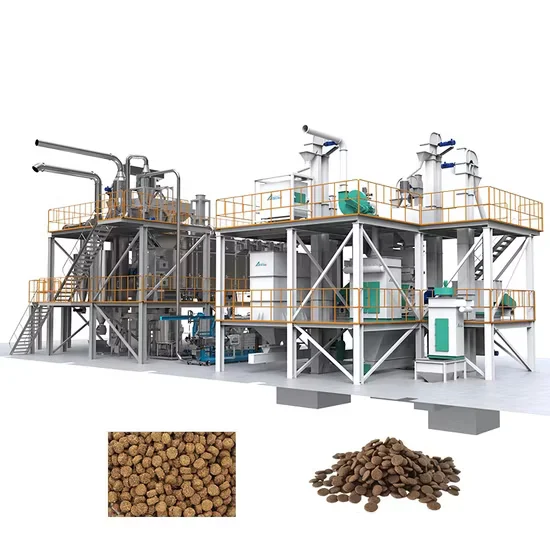
A Dry Pet Treats Production Line or a Meat Strips / Jerky Processing Line should be viewed as an integrated system rather than a collection of standalone machines. The capacity of the mixer must match the extruder, which must match the dryer and coater. Imbalances in any section lead to inefficiencies, such as idle extruders waiting for dried product or overloaded dryers causing backups. Working with a supplier who provides comprehensive layout services ensures that all components fit together logically.
Furthermore, future expansion plans should influence current equipment choices. Selecting machines with spare capacity or easy upgrade paths allows for gradual growth without complete line replacement. Whether adding a new flavor coating station or increasing extruder throughput, the initial design should accommodate these changes with minimal disruption to ongoing production.
Frequently Asked Questions
Q: Can a single twin-screw extruder process both high-meat jerky and starch-based dry treats?
A: While a twin-screw extruder offers flexibility, switching between high-meat jerky and starch-based dry treats usually requires changing screw configurations and die plates. The feeding systems also differ, as meat slurries need positive displacement pumps while dry mixes use volumetric feeders. It is possible to use one main extruder body, but expect downtime for reconfiguration and cleaning to prevent cross-contamination and ensure product quality.
Q: What type of dryer is best for maintaining the chewy texture of meat strips?
A: A cross-flow circulation dryer is often preferred for meat strips because it provides uniform airflow across the product bed. This prevents case hardening, which can trap moisture and lead to spoilage or tough textures. Controlled temperature zones allow for gradual moisture removal, preserving the chewy consistency desired in jerky products. Avoid high-velocity direct impingement dryers that may crust the surface too quickly.
Q: How do you ensure moisture consistency across different pet treat shapes?
A: Moisture consistency depends on uniform extrusion, consistent cutting, and even drying. Using a precision cutter ensures similar surface-area-to-volume ratios for each piece. In the dryer, proper tray loading or conveyor belt spacing prevents overlapping, which creates wet spots. Regular monitoring of inlet and outlet moisture levels allows for real-time adjustments to temperature and airflow, ensuring batch-to-batch repeatability.
Q: Can the production line be upgraded later if we expand our treat varieties?
A: Yes, modular line designs support future upgrades. You can add additional coating drums, extend drying tunnels, or integrate new packaging interfaces as your product range grows. When planning the initial layout, leave space for these expansions and ensure utility connections have spare capacity. Consulting with engineering teams during the design phase helps create a scalable infrastructure that adapts to new market demands.
Send your specific jerky or dry treat formula along with your target hourly capacity to receive a customized equipment configuration and factory layout proposal. Our team can also discuss raw material trial options to validate process parameters before you commit to full-scale production.