Many new entrants assume that purchasing a high-specification extruder is sufficient to launch a successful cat food manufacturing operation. They often overlook the decisive impact of drying and coating systems on final product consistency, leading to costly operational mismatches. In reality, equipment selection for a UK cat food factory equipment project cannot rely on isolated machine parameters. It requires a holistic process match based on local raw material characteristics, target product morphology, and specific facility constraints.
Defining the Product Matrix Before Sourcing Machinery
The first step in planning a production facility is not selecting a brand, but defining the exact product portfolio. The UK market shows strong demand for high-meat inclusion dry kibble, baked alternatives, and wet food meat chunks. Each category demands a fundamentally different mechanical approach. For instance, a standard dry pet food production line focuses on starch gelatinization and expansion, while a baked pet food forming machine relies on lower temperature processing to maintain dense nutritional profiles.
If your strategy includes wet food, such as texturized meat chunks or sauces, the equipment list expands significantly beyond extrusion. You need specialized processing lines that handle high moisture content without the expansion phase typical of kibble. Clarifying whether you are targeting premium dry food, functional treats, or wet meals determines the core technology stack. This clarity prevents the common error of buying versatile but inefficient machinery that fails to excel in any single category.
The Extrusion Core: Matching Screws to UK Ingredients
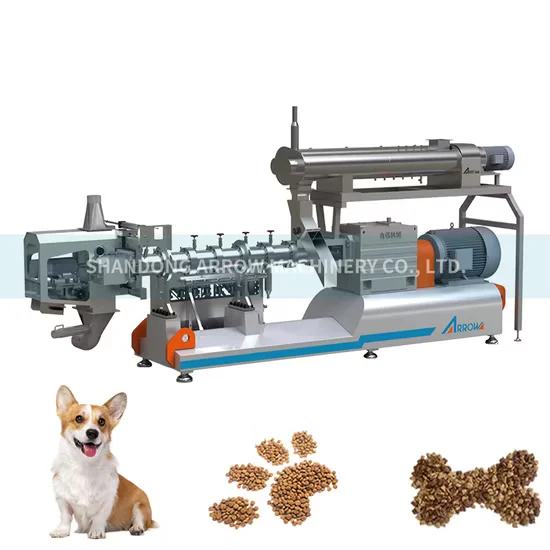
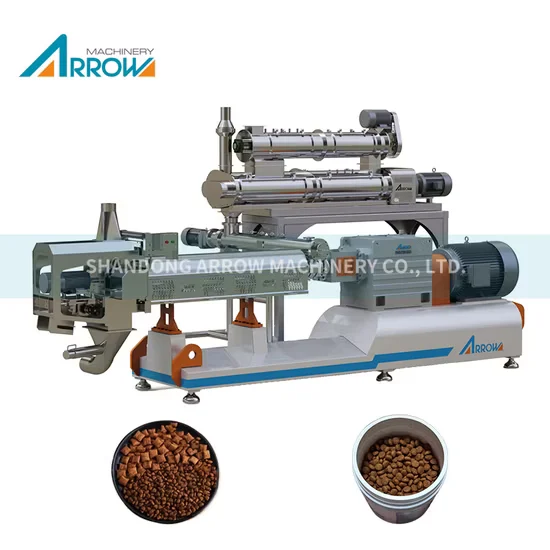
At the heart of most dry and semi-moist pet food lines is the twin-screw pet food extruder. Unlike single-screw units, twin-screw systems offer superior control over shear and temperature, which is critical when handling variable raw materials. UK manufacturers often source ingredients with fluctuating moisture and protein levels. A twin-screw configuration allows for precise adjustment of screw elements to manage these variations, ensuring consistent pellet density and shape.
When formulating high-fresh-meat recipes, the feeding system and barrel design become crucial. High lipid and moisture content can reduce friction, making self-feeding difficult. Engineered screw combinations can compensate for this by enhancing conveying efficiency and mixing intensity. This adaptability ensures that the extruder maintains throughput even when ingredient ratios shift, a common scenario in premium cat food production where recipe optimization is ongoing.
Downstream Consistency: Drying and Coating Systems
Extrusion is only half the battle. The subsequent drying and coating stages determine shelf stability and palatability. A frequent bottleneck in poorly designed lines is the mismatch between extruder output and dryer capacity. If the dryer cannot handle the moisture load from the extruder, product piles up, leading to uneven drying and potential microbial growth. Selecting a cross-flow circulation dryer that aligns with your nominal capacity is essential for maintaining consistent moisture targets.
For flavor and nutrient enhancement, the coating method matters. High-fat diets require vacuum coating machines to ensure deep penetration of oils without surface greasiness. In contrast, dry powder seasonings are effectively applied using single or double-drum flavoring machines. Integrating these systems into a cohesive line ensures that the final kibble meets both nutritional labels and consumer appeal standards. Neglecting this integration often results in product rejection due to inconsistent coating or spoilage.
Upstream Prep and Space Constraints in UK Facilities
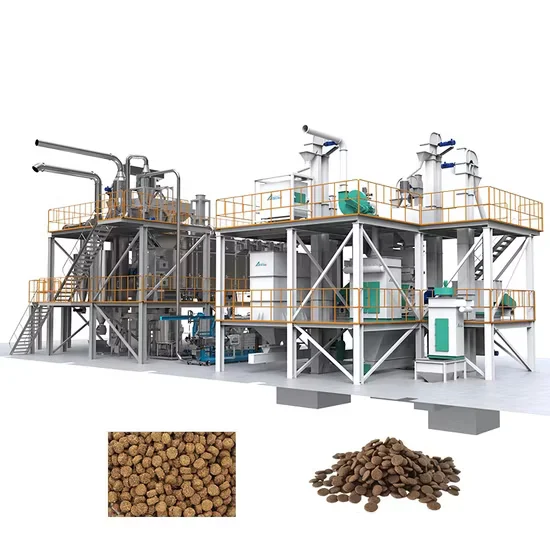
Many industrial sites in the UK have limited footprints or existing structural constraints. Efficient upstream preparation, including grinding and mixing, must fit within these boundaries without compromising throughput. Pulverizers and hammer mills reduce particle size to ensure uniform cooking during extrusion. Meanwhile, twin-shaft paddle mixers provide the homogeneity needed for consistent bulk density.
When space is tight, modular equipment configuration becomes a strategic advantage. Instead of sprawling layouts, compact designs that integrate grinding, mixing, and feeding into a streamlined flow can maximize utility. This approach also simplifies maintenance access, a key concern for production directors. By evaluating the entire process flow from raw material intake to finished product handling, you can avoid the pitfalls of disjointed equipment purchases that leave gaps in automation or material transfer.
Navigating Utilities, Compliance and Turnkey Coordination
Launching a factory involves more than machinery; it requires alignment with local utilities and regulations. Power frequency, voltage stability, and available heat sources (such as steam or gas) dictate equipment specifications. A supplier who offers process consultation can help assess these constraints early, preventing costly retrofits.
Choosing a partner who provides turnkey solutions reduces the risk of coordination failures. When one entity handles the engineering, manufacturing, and commissioning, accountability is clear. This integrated approach ensures that every component, from the feeder to the packaging interface, works in harmony. It also simplifies compliance documentation, as the supplier can provide coordinated technical files and support for factory acceptance testing. For investors, this means greater visibility into costs and timelines, reducing the uncertainty inherent in multi-vendor projects.
Frequently Asked Questions
Q: What is the first step to start a cat food production line in the UK?
A: Begin by defining your product matrix and raw material profile. Determine if you are producing dry kibble, baked food, or wet meals, as each requires different core technologies. Assess your available factory space and utilities, such as power and steam, to guide equipment selection. This foundational clarity ensures that the UK cat food factory equipment you source matches your specific operational goals and regulatory environment.
Q: Can a twin-screw extruder handle high fresh meat inclusion for premium cat food?
A: Yes, twin-screw extruders are well-suited for high-meat formulations due to their superior mixing and conveying capabilities. They can manage the low-friction conditions caused by high fat and moisture content. However, success depends on proper screw configuration and preconditioning. It is essential to conduct trials with your specific recipe to optimize shear and temperature profiles, ensuring proper cooking and pellet stability without excessive energy use.
Q: How do you ensure moisture consistency in the final dried cat kibble?
A: Moisture consistency relies on balancing the extruder output with the dryer’s capacity. Using a cross-flow circulation dryer with precise temperature and airflow control helps achieve uniform drying. Monitoring the incoming moisture from the extruder and adjusting dryer parameters accordingly is critical. Regular calibration of sensors and maintenance of airflow systems prevent hot spots or under-dried pockets, ensuring product safety and shelf life.
Q: Do you provide factory layout and overseas installation support for UK projects?
A: Yes, comprehensive support includes custom line layouts, equipment configuration, and engineering guidance. We assist with assessing utility constraints and optimizing space usage. Overseas installation, commissioning, and operator training can be included in the contract scope. This end-to-end support ensures that your team is prepared to operate the line efficiently from day one, minimizing downtime and maximizing production quality.
Send your target product formula, expected capacity, and factory dimensions to receive a dedicated cat food line configuration plan and layout diagram. Discuss your raw material characteristics to arrange appropriate testing and secure detailed technical specifications for your project.