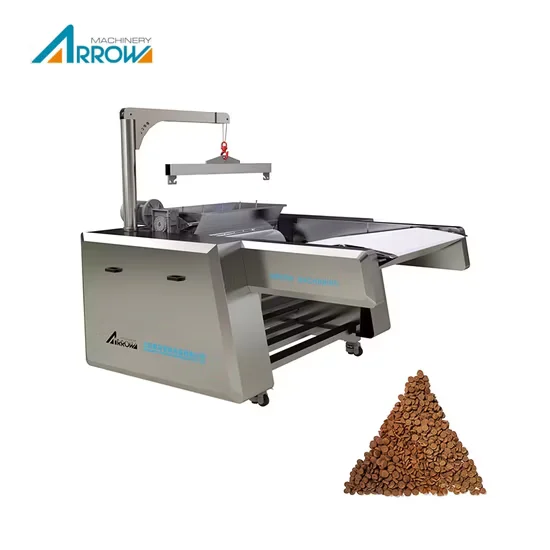
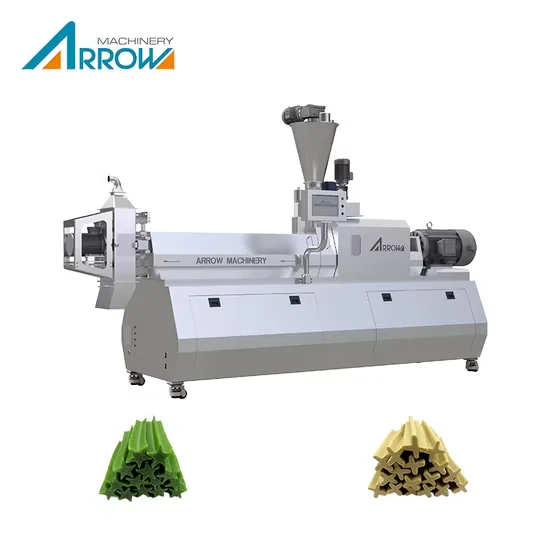
When kibble sizes start drifting on the production floor, the instinct is often to tweak the extruder screw speed or swap out a cutter blade. In my experience running a plant in the Ural region, this reactive approach rarely solves the root cause. We once lost an entire weekend of output because the maintenance team kept adjusting motor parameters while ignoring a slightly misaligned die face and worn cutter clearance. The truth is that fixing uneven kibble size extrusion issues requires looking beyond the main motor to the systematic alignment of process settings and mechanical integrity.
Uneven particle dimensions are seldom caused by a single broken part. Instead, they result from a mismatch between the extrusion process parameters—such as screw configuration and cutting frequency—and the physical condition of the forming and cutting components. Consistent output demands that the mechanical setup supports the thermal and shear profile defined by the recipe.
Diagnosing the Mechanical and Process Roots of Size Variation
Before adjusting any knobs, you must distinguish between mechanical wear and process instability. If the kibble variation appears as occasional long tails or double cuts, the issue is likely mechanical. A dull cutter blade or a die plate with clogged holes will disrupt the clean shearing action required for uniform pellets. Conversely, if the size fluctuates in waves over time, the problem often lies in the feed consistency or moisture content entering the barrel.
Raw material variability plays a significant role here. Fluctuations in bulk density or moisture levels in the mixer discharge can cause surging in the extruder feed throat. This surge leads to pressure spikes inside the barrel, which in turn affects the expansion rate and final diameter of the kibble. To isolate the cause, monitor the amperage load on the main drive. Stable amperage with inconsistent size points to cutting or die issues, while swinging amperage suggests upstream feeding or formulation problems.
It is also critical to check the cutter assembly itself. Even minor gaps between the cutter blades and the die face can allow material to smear rather than cut cleanly. This smearing creates irregular shapes that may look like size variation but are actually form defects. Regular inspection of the cutter shaft bearings and blade sharpness is essential. In high-volume operations, these components degrade faster than operators expect, leading to gradual declines in product consistency that are hard to spot until quality control flags them.
Calibrating the Twin-Screw Extruder for Stable Output
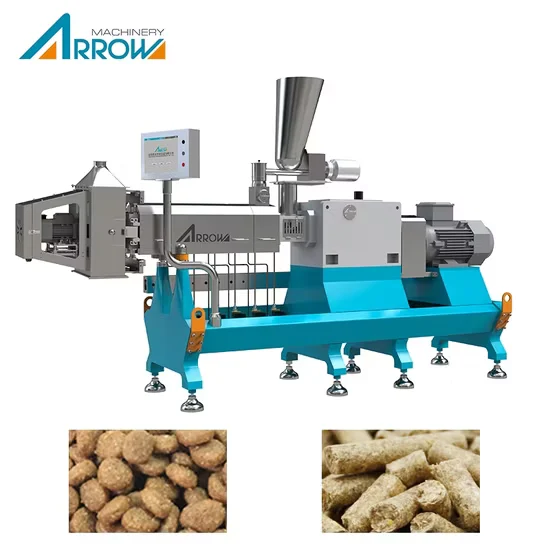
Once mechanical integrity is confirmed, the focus shifts to process optimization. The Twin-Screw Extruder is particularly effective for complex formulations because it offers precise control over shear and temperature profiles. However, this flexibility means that small changes in screw configuration or barrel temperature can have outsized effects on kibble geometry. For recipes with high fresh meat content or significant fat inclusion, the screw elements must be arranged to convey material efficiently without generating excessive heat that could degrade the structure before cutting.
Calibration begins with the feeder. The volumetric or gravimetric feeder must deliver a steady stream of preconditioned mash into the extruder throat. Any pulsation here translates directly into size variation downstream. Adjust the feeder speed to match the desired throughput, ensuring that the extruder barrels are fully filled but not overloaded. A fully filled barrel ensures consistent pressure at the die, which is the primary driver of uniform expansion and diameter.
Temperature control across the barrel zones is equally vital. The goal is to achieve sufficient starch gelatinization for binding while maintaining enough structural integrity for the kibble to hold its shape after cutting. If the temperature is too low, the material may not expand properly, leading to dense, irregular pellets. If it is too high, the material becomes too fluid, causing it to stick to the die or deform under the cutter. Use the extruder’s control system to map the temperature profile against the specific ingredient mix, adjusting zone by zone until the discharge is smooth and consistent.
Essential Maintenance Protocols for Cutting and Forming Systems
Maintenance is not just about fixing what is broken; it is about preventing variation before it starts. The cutting mechanism is the most vulnerable point in the extrusion line regarding size consistency. Cutter blades should be inspected daily for sharpness and nicks. Dull blades do not cut; they tear, resulting in ragged edges and inconsistent lengths. Establish a replacement schedule based on operating hours and material abrasiveness rather than waiting for visible defects.
The die plate requires equal attention. Over time, wear patterns can develop on the die face, creating uneven gaps that affect cut quality. Clean the die plate thoroughly during every shutdown to prevent carbon buildup or hardened material from blocking holes. Blocked holes force material to exit through adjacent openings at higher velocities, distorting the shape and size of those specific pellets. Use a soft brush and approved cleaning agents to avoid scratching the precision-machined surface.
Alignment is another critical factor. The cutter assembly must be perfectly parallel to the die face. Even a fraction of a millimeter of tilt can cause one side of the kibble to be cut cleanly while the other side drags. Use feeler gauges to check the clearance around the entire circumference of the die. Adjust the cutter head position as needed to ensure uniform gap spacing. This simple check can resolve many persistent issues with uneven kibble size extrusion that operators mistakenly attribute to recipe errors.
Managing Upstream and Downstream Influences on Uniformity
Kibble consistency is not determined solely within the extruder barrel. Upstream equipment, such as the Single-Shaft Paddle Mixer or Twin-Shaft Paddle Mixer, plays a foundational role. If the raw materials are not blended uniformly, the extruder receives pockets of varying composition. These pockets behave differently under heat and shear, leading to inconsistent expansion and size. Ensure that mixing times and sequences are optimized for your specific formula to achieve a homogenous mash before it reaches the preconditioner.
Downstream processes also impact the final perceived quality of the kibble. The drying stage is often where latent defects become visible. If the dryer airflow is uneven or the temperature is too aggressive, kibble can crack or shrink irregularly, altering its dimensions. A Cross-Flow Circulation Dryer can help mitigate this by providing more uniform air distribution across the product bed. However, the key is balancing the dryer capacity with the extruder output. If the extruder runs faster than the dryer can handle, moisture remains trapped, leading to post-extrusion swelling and size drift.
Finally, consider the coating stage. While coating does not change the core size, uneven application can add variable weight and thickness, affecting packaging metrics and consumer perception. Using a Vacuum Coating Machine allows for higher fat inclusion without surface greasiness, but it requires precise control to ensure even coverage. Any imbalance here can mask or exaggerate underlying size inconsistencies, so it is crucial to maintain uniformity throughout the entire line, from mixing to packaging.
Frequently Asked Questions
Q: How often should extruder cutter blades be replaced to maintain kibble size consistency?
A: Replacement frequency depends on the abrasiveness of the raw materials and operating hours. Generally, inspect blades daily and replace them when visual inspection shows nicks or dullness. For high-abrasion formulas, this may be weekly; for standard kibble, it could be monthly. Consistent sharpness ensures clean cuts and prevents drag marks that mimic size variation.
Q: Can inconsistent raw material moisture cause uneven kibble size during extrusion?
A: Yes, moisture fluctuations significantly affect extrusion stability. Variable moisture changes the rheology of the mash, leading to inconsistent pressure and expansion at the die. This results in kibble with varying diameters and densities. Using a preconditioner with precise steam and water addition controls helps stabilize moisture input before the material enters the extruder barrel.
Q: What are the signs that a twin-screw extruder barrel or die plate needs maintenance?
A: Key signs include increased motor amperage for the same throughput, unusual noise from the gearbox, or visible wear on the die face. If kibble shows streaks, discoloration, or irregular shapes despite correct settings, the barrel screws or die plate may be worn. Regular inspection of these components prevents sudden failures and maintains product quality.
Q: How does the cutting speed affect the shape and size of the final pet food kibble?
A: Cutting speed determines the length of the kibble. Too slow, and the pellets become long and irregular; too fast, and they may be too short or crushed. The speed must be synchronized with the extruder output rate to ensure each pellet is cut cleanly at the desired length. Adjusting the cutter speed allows fine-tuning of kibble dimensions without changing the die hole diameter.
If your facility is struggling with inconsistent kibble dimensions, send your current formula, target capacity, and specific details about the size variation to our engineering team. We can review your setup and recommend whether adjustments to your Twin-Screw Extruder configuration, cutter maintenance schedule, or upstream mixing process will resolve the issue. Request a technical diagnosis or discuss a trial run to validate the solution before making capital changes.