Scaling a pet food brand in India’s fast-growing market often stalls when processing equipment is chosen without considering local ingredient variability and factory utility limits. Many investors focus on nominal throughput while overlooking how regional grain structures or high fresh-meat ratios interact with shear heat during extrusion. This mismatch leads to frequent barrel jams, inconsistent kibble density, and unstable production runs that erode profit margins before the factory even reaches full capacity.
The solution lies in matching extrusion, drying, and coating systems to local raw material characteristics and factory utility constraints, rather than simply purchasing standalone machines. Successful pet food plant equipment India projects require an integrated approach where process engineering validates the recipe against the machine’s capabilities. By prioritizing system compatibility over isolated machine specs, manufacturers can ensure consistent product quality and reliable long-term operation.
Adapting Extrusion Systems to Local Ingredient Variability
India’s pet food market features diverse raw material sources, from regional rice and maize varieties to increasing inclusions of fresh meat and by-products. These ingredients behave differently under thermal and mechanical stress. A formulation that works in a small pilot lab may fail in a commercial twin-screw extruder if the screw profile and preconditioning settings are not adjusted for the specific starch gelatinization and protein denaturation rates of local inputs.
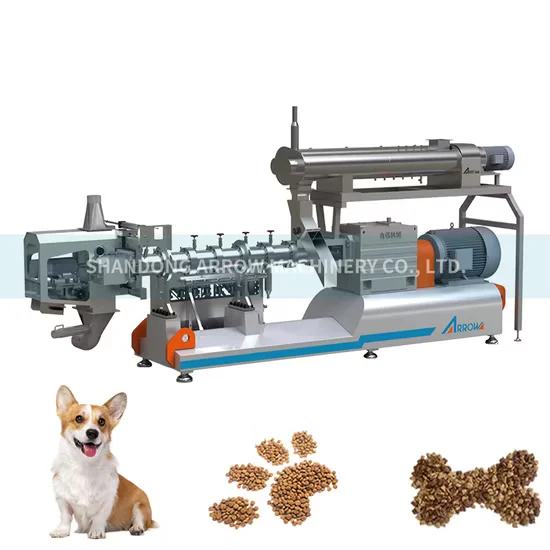
When dealing with high fresh-meat content or high-fat formulations, standard single-screw systems often struggle with feeding consistency and shear control. A Twin-Screw Extruder offers superior mixing and conveying stability, allowing for higher moisture and fat inclusion without compromising pellet structure. The ability to adjust screw elements and barrel temperature zones enables processors to manage the delicate balance between expansion and density, which is critical for both dry kibble and semi-moist treats.
Process engineers must assess the raw material behavior before finalizing the equipment configuration. This involves evaluating the friction coefficients of different grain blends and the thermal sensitivity of animal proteins. Without this step, manufacturers risk uneven particle dimensions or poor finished-product consistency. The goal is to create a stable extrusion environment where the machine adapts to the recipe, not the other way around.
Optimizing Layouts for Utility Constraints and Footprint
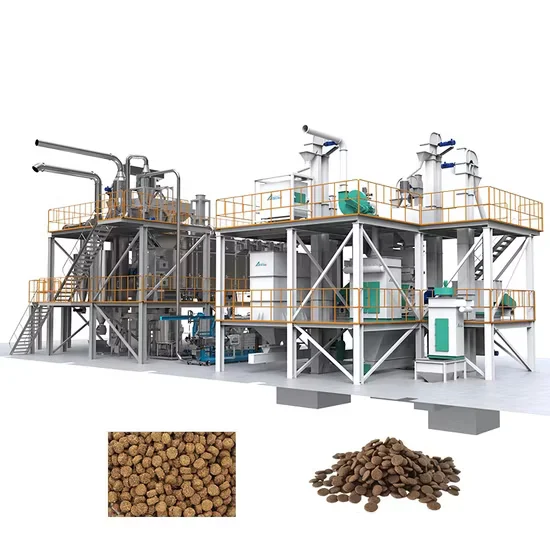
New facilities in India often face specific challenges regarding factory footprint, power frequency, and available heat sources. Designing a complete production line requires more than just lining up machines; it demands a logical flow that minimizes material handling and energy loss. Integrating grinding, mixing, extrusion, drying, and coating modules into a cohesive unit ensures optimal material flow and reduces the risk of bottlenecks.
Drying is frequently the limiting factor in pet food production lines. If the dryer capacity does not match the extruder output, the entire line must slow down, reducing overall efficiency. Cross-Flow Circulation Dryers are often selected for their ability to handle large volumes while maintaining uniform moisture removal. However, their installation must account for local ventilation requirements and fuel availability. In some cases, external air circulation dryers or specialized drying rooms may be more suitable depending on the ambient climate and factory layout.
Space constraints also influence the choice of downstream equipment. For facilities with limited floor area, vertical integration or compact module designs can help maximize throughput without expanding the building footprint. Additionally, power stability varies across regions, so equipment motors and control systems must be specified to handle local voltage fluctuations. Adapting the layout to these utility limitations early in the planning phase prevents costly retrofits later.
From Standalone Units to Integrated Turnkey Solutions
Many emerging brands start with a single machine, such as a mixer or a small extruder, to test the market. However, scaling up requires a shift in mindset from buying individual components to investing in a coordinated system. Upgrading from standalone units to fully automated Dry Pet Food Production Lines or Wet Food Processing Lines allows for better quality control and higher labor efficiency.
A turnkey approach consolidates engineering and commercial scope into one proposal, reducing the complexity of coordinating multiple suppliers. This is particularly valuable for contract processors and private-label manufacturers who need to switch between different recipes and product shapes frequently. With an integrated line, changes in one section, such as switching from kibble to treats, can be managed through centralized controls and modular adjustments.
Phased expansion plans offer a practical path for growth. Manufacturers can install core processing modules first and add upstream or downstream equipment as demand increases. For example, starting with a basic extrusion and drying setup and later adding a Vacuum Coating Machine for high-fat palatability enhancement. This strategy allows businesses to manage capital expenditure while maintaining the ability to scale production capacity efficiently.
Ensuring Consistency Through Process Engineering
Consistency is the hallmark of a professional pet food manufacturer. Achieving uniform product dimensions, texture, and moisture targets requires precise control over every stage of the process. Process engineering support plays a crucial role in validating recipes before locking in machine specifications. Raw-material trials help identify potential issues with ingredient behavior, allowing for adjustments in screw configuration, cutting speed, and thermal profiles.
Downstream handling is equally important. Uneven cooling or improper packaging can lead to moisture reabsorption and product spoilage. Selecting the right coating system, such as a Double-Drum Flavoring Machine for surface seasoning or a vacuum system for internal fat infusion, ensures that the final product meets both nutritional and sensory standards. These choices must align with the target product characteristics and the capabilities of the extrusion system.
By focusing on integrated line control, manufacturers can reduce waste and improve repeatability. This involves monitoring key parameters such as motor load, barrel pressure, and outlet temperature in real time. When these variables are stabilized, the production process becomes predictable, enabling consistent quality across batches. This level of control is essential for building brand trust and meeting regulatory requirements.
Frequently Asked Questions
Q: Can you customize the pet food extrusion line for India’s specific raw materials and limited factory space?
A: Yes, equipment selection starts with your specific formula and desired product characteristics. We assess local ingredient variability and factory utility constraints to configure screw profiles and dryer capacities accordingly. Layout-based equipment configuration allows us to optimize footprint usage, ensuring the line fits your existing or planned facility without compromising throughput or maintenance access.
Q: Do you supply complete turnkey pet food plants or just individual machines like extruders and dryers?
A: We provide both options. You can purchase standalone machines such as a Twin-Screw Extruder or a Cross-Flow Dryer to upgrade an existing line. Alternatively, we offer complete turnkey solutions that include engineering, installation, and commissioning for new factories. The scope is defined contractually based on your investment goals and production requirements.
Q: How do you handle installation, commissioning, and operator training for pet food production lines in India?
A: Overseas engineering and commissioning options are available and defined in the contract. Our team supports installation, startup, and operator training to ensure your staff can manage the equipment effectively. We also provide ongoing process consultation and spare-parts support. The precise schedule, travel costs, and service scope are agreed upon during the quotation phase to match your project timeline.
Q: What information should we prepare before requesting a quotation for a new pet food factory?
A: Please provide details on product type, raw-material formulation, required capacity, and desired shape or size. Include information about your factory dimensions, power supply, and local utility limitations. Specifying whether you need recipe trials, layout design, or installation services helps us prepare a accurate preliminary configuration. This data allows our engineering team to propose a solution that matches your specific operational needs.
Send Your Formula & Capacity to get a custom turnkey plant layout and equipment configuration. Our engineering team will review your raw material profile and production goals to recommend the most suitable extrusion, drying, and coating systems for your facility.