
Extrusion Process Notes Brands & Alternatives
How to Choose Lines for Wet Meat Chunks vs Texturized Wet Food
Many plants wrongly assume wet meat chunks and texturized wet food lines share identical extrusion parameters, leading to poor texture and inconsistent moisture. Learn to match screw profiles and die designs to specific structural goals for optimal production efficiency and product quality.

Many pet food plants assume a wet meat chunks line and a texturized wet food line can share the same extrusion and drying parameters. This shortcut often leads to poor texture, inconsistent moisture, or excessive energy use when real production begins. The choice between these two processing paths is not just about the recipe; it depends on how the equipment handles shear, temperature, and moisture transfer during forming and stabilization.
The core difference lies in the structural goal. A wet meat chunks processing line focuses on maintaining distinct, bite-sized pieces with high fresh meat inclusion, requiring gentle handling to preserve integrity. In contrast, a texturized wet food processing line aims to restructure plant or animal proteins into fibrous, muscle-like textures through high-shear thermomechanical cooking. Selecting the right configuration means matching the screw profile, die design, and downstream thermal control to these specific physical outcomes rather than applying a generic template.
Process Divergence: From Raw Material to Final Structure
The journey begins with ingredient preparation, where the physical state of the raw material dictates the upstream equipment. For wet meat chunks, the primary challenge is managing high fresh meat content without causing slippage in the feeder or uneven mixing. The process requires precise grinding and mixing to ensure homogeneity before the material enters the extruder. If the particle size is too large, it can block the die; if too small, it may fail to hold the chunk shape.
Texturized wet food, however, relies heavily on protein denaturation and alignment. Here, the raw material often includes significant portions of plant proteins or mechanically separated meats that need to be reorganized. The mixing stage must ensure uniform hydration and temperature preconditioning to prepare the protein matrix for shear-induced layering. This distinction means that while both lines start with grinding and mixing, the operational targets for viscosity and flow behavior are fundamentally different.
Once inside the barrel, the extrusion mechanics diverge sharply. Producing meat chunks involves low-shear forming where the goal is to cook and shape the mass without destroying its cohesive structure. The screw configuration is designed to convey and gently compress the mixture, allowing it to pass through a multi-hole die where it is cut into individual pieces. The focus is on minimizing mechanical damage to the meat fibers.
For texturized products, the extruder acts as a bioreactor. High-shear twin-screw extruders generate the intense heat and pressure needed to unwind protein molecules and align them into layered structures. As the material exits the die, it expands slightly, creating a porous, fibrous network that mimics muscle tissue. This process demands precise control over barrel temperature zones and screw speed to achieve the desired degree of texturization without burning the product or creating excessive fines.
Configuring the Wet Meat Chunks Processing Line
When designing a wet meat chunks processing line, the extruder must handle high-viscosity doughs with minimal friction heat generation beyond what is required for cooking. A twin-screw extruder is preferred here because it offers better conveying efficiency for sticky, high-fat mixtures compared to single-screw systems. The screw elements are typically configured with wide flight depths and gentle compression ratios to maintain the integrity of the meat particles.
The cutting system is critical for this application. Unlike dry kibble, which is cut after expansion and drying, wet chunks are often cut immediately upon exiting the die or after a brief cooling phase to set the shape. The cutter speed and blade sharpness must be synchronized with the extruder output to ensure uniform piece size. Irregular cuts can lead to uneven drying and inconsistent appearance in the final pouch or tray.
Downstream, the drying and cooling stages must be gentle to prevent surface hardening or case hardening, which traps moisture inside the chunk. A cross-flow circulation dryer or a specialized low-temperature drying room allows for controlled moisture removal without shrinking the product excessively. The goal is to reach a water activity level that ensures shelf stability while retaining the soft, juicy texture consumers expect from premium wet food.
Engineering the Texturized Wet Food Processing Line
A texturized wet food processing line requires a different approach to extrusion and post-processing. The twin-screw extruder here operates at higher shear rates to facilitate protein alignment. The screw configuration includes mixing elements and reverse flights that build pressure and temperature, promoting the formation of a laminar structure. This mechanical energy input is essential for creating the fibrous texture that distinguishes texturized products from simple minced meat analogs.
The die design plays a pivotal role in defining the final product geometry. Slit dies or multi-layer dies are often used to create sheet-like structures that can be further processed into shreds or flakes. The exit pressure must be carefully managed to allow for slight expansion, which contributes to the light, fibrous mouthfeel. If the pressure is too low, the product remains dense and rubbery; if too high, it may become brittle and break apart during handling.
After extrusion, the product typically undergoes a continuous drying and sterilization process. Because texturized products have a high surface area due to their fibrous nature, they can dry quickly but are also prone to absorbing moisture from the environment. A well-designed drying system ensures uniform moisture distribution and achieves the necessary microbial kill step without compromising the delicate fiber structure. Vacuum coating machines may be integrated downstream to add fats and flavors without damaging the textured surface, ensuring even coverage and enhanced palatability.
Critical Selection Factors for Your Production Line
Choosing between these two lines requires a honest assessment of your raw materials and target product specifications. If your formula contains more than 30-40% fresh meat, a wet meat chunks processing line with a specialized feeding system and gentle extrusion profile is essential. Attempting to run such a formulation on a standard high-shear texturizing line will likely result in machine jamming and poor product quality. Conversely, if your goal is to create plant-based or restructured meat analogs with specific fibrous textures, a high-shear texturized wet food processing line is the only viable option.
Factory footprint and utility constraints also influence the decision. Wet meat chunks lines often require larger cooling and conditioning sections to stabilize the product before packaging, while texturized lines may need more complex drying and coating setups. It is crucial to balance the capacity of each unit operation. A common bottleneck occurs when the dryer cannot keep up with the extruder output, leading to backups and inconsistent product quality.
Integration with upstream and downstream equipment is another key consideration. The mixer must deliver a consistent blend to the extruder, and the coating system must handle the specific surface characteristics of the final product. For wet chunks, a double-drum flavoring machine might be suitable for surface seasoning, while texturized products often benefit from vacuum coating to penetrate the fibrous structure. Ensuring these interfaces are compatible prevents material buildup and reduces cleaning time between batches.
Frequently Asked Questions
Q: Can the same twin-screw extruder produce both meat chunks and texturized wet food?
A: While a twin-screw extruder is versatile, producing both products efficiently usually requires changing the screw configuration and die. Meat chunks need gentle conveying screws, while texturized food requires high-shear mixing elements. Swapping these components is possible but time-consuming. For dedicated high-volume production, separate lines or modular designs with quick-change parts are recommended to maintain optimal performance and reduce downtime.
Q: What is the main difference in drying requirements for meat chunks versus texturized wet food?
A: Meat chunks require gentle, low-temperature drying to prevent surface hardening and retain internal moisture, often using cross-flow or room drying. Texturized wet food, with its high surface area and fibrous structure, needs uniform drying to stabilize the protein matrix without making it brittle. The drying profile must be adjusted to avoid case hardening in chunks and excessive shrinkage in texturized products, ensuring the final texture matches consumer expectations.
Q: How do I determine the right screw configuration for my specific wet food formula?
A: The right screw configuration depends on your ingredient ratio, especially fresh meat content, and the desired texture. High-meat formulas need conveying-focused screws with low shear, while plant-based texturizing requires high-shear mixing elements. Conducting raw material trials on a test platform helps identify the optimal compression ratio and element arrangement. This data ensures the extruder delivers the correct mechanical energy input for your specific formulation.
Q: Can I upgrade my existing dry pet food line to produce wet meat chunks?
A: Upgrading a dry line for wet chunks is challenging due to differences in moisture handling and drying. Dry lines typically use high-temperature expansion and rapid drying, which can ruin the texture of wet chunks. You would likely need to replace the extruder screw and die, add a preconditioner for high-moisture mixing, and install a gentle drying or cooling system. A full process evaluation is necessary to determine if retrofitting is cost-effective compared to a dedicated wet line.
Send your product formula, target capacity, and factory dimensions to receive a customized technical proposal. We can discuss raw material trials to validate the equipment configuration before you commit. Request a detailed layout and technical specifications to ensure your new line integrates smoothly with your existing operations.
Target Industries Covered in This Article
Equipment in This Process
Machines mentioned in this article
Each machine is built at the Shandong Arrow Machinery factory and supplied as a standalone unit or as part of a complete extrusion line.
01 Pet Wet Food Production Line
Wet Food PV Meat Chunks Equipment for Pet Food Plant
View machine details 02
Pet Wet Food Production Line
Wet Food Meat Chunks Equipment for High Protein Pet Snacks
View machine details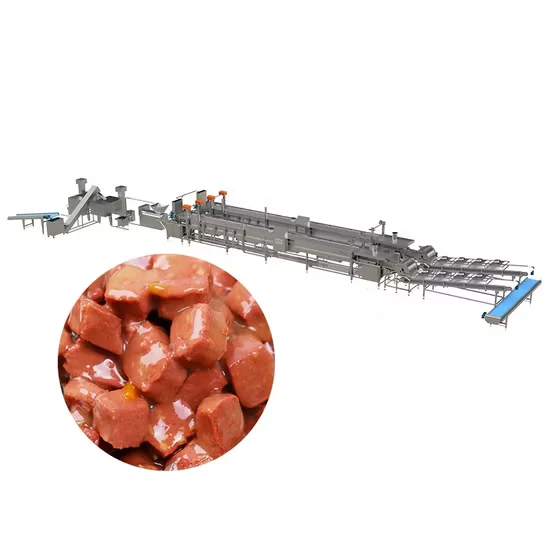 03
Pet Wet Food Production Line
Arrow Wet Pet Food Meat Chunks Steam Line Equipment for Pet Food
View machine details 04
Pet Wet Food Production Line
Wet Pet Food Meat Chunks Plant for Pet Food Manufacturer
View machine detailsFurther Reading
Related extrusion process notes
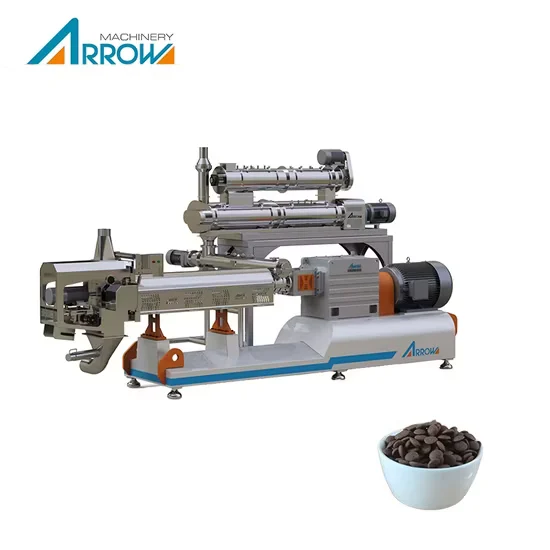
· Brands & Alternatives· 7
Pet Food Extruder Choices: Arrow vs Alternative Brands
Read the article · Brands & Alternatives· 7
Enzymatic Hydrolysis Palatants Make or Buy Guide for Pet Food
Read the article
· Brands & Alternatives· 7
How to Switch from Bentonite to Starch-Based Cat Litter Production
Read the article
Configured Quotation
Send your formula and capacity for a configured line proposal
Shandong Arrow Machinery engineers review your raw materials, product shape and kg/h or t/h target, then propose a single machine or complete pet food, aquafeed or specialty feed line.
- Emailinfo@arrowextrusion.com
- WhatsApp+86 137 9316 7756
- FactoryNo. 47 Chengbohu Road, Jibei Subdistrict, Jiyang District, Jinan, Shandong, China
Request a Quote
Payment by T/T, L/C or Alibaba Trade Assurance. Scope, delivery time and commissioning support are stated in the formal quotation.