Pet food batches developing mold or showing inconsistent moisture levels are rarely caused by the recipe alone. More often, the issue stems from airflow dead zones and uncontrolled condensation within the drying chamber. I learned this the hard way on an early commissioning job where backward-installed baffles left center trays soggy while edges turned to brittle leather. Within days, white mold bloomed across the middle of the batch, forcing a complete teardown of the internal ducting.
Achieving uniform dryness and preventing spoilage requires precise airflow geometry and strict management of condensate and cleaning cycles. It is not enough to simply heat the air; the system must move it evenly across every tray while removing humid exhaust efficiently. This guide details the installation and maintenance practices necessary to keep your jerky production consistent and safe.
Root Causes of Uneven Drying and Mold in Jerky Rooms
Inconsistent drying usually begins with how product loads interact with the air distribution system. When trays are overloaded or stacked without adequate spacing, the airflow cannot penetrate the center of the load. The outer layers dry quickly, forming a crust that traps moisture inside. This trapped humidity creates a microenvironment ideal for microbial growth, even if the external sensors read acceptable levels.
Temperature gradients also play a critical role. If the heating elements are not balanced or if the insulation is compromised, certain zones within the room will run cooler. These cool spots become condensation points where water vapor from the drying meat reverts to liquid. This dripping water does not just slow down drying; it introduces cross-contamination risks and localized spoilage. A proper Jerky Drying Room Installation and Maintenance protocol must address these thermal inconsistencies before they ruin a batch.
Another frequent culprit is poor exhaust management. As meat dries, it releases significant amounts of water vapor. If the exhaust fans are undersized or the dampers are not adjusted to match the drying phase, humidity builds up inside the chamber. High ambient humidity reduces the driving force for evaporation, extending drying times and increasing energy costs. Operators often compensate by raising the temperature, which can cook the product rather than dry it, altering texture and flavor profiles undesirably.
Critical Installation Practices for Optimal Airflow
The foundation of a reliable drying system is its airflow design. During installation, the orientation of supply and return ducts must ensure that air sweeps across the entire face of each tray. Dead zones, where air stagnates, are the primary breeding ground for mold. I always verify that the velocity profile is consistent from the front to the back of the rack. This may require adjusting baffle plates or installing flow straighteners to eliminate turbulence that causes uneven drying patterns.
Sealing and insulation are equally vital. Any gap in the chamber’s envelope allows cold outside air to infiltrate, creating cold bridges on the interior walls. These cold surfaces attract condensation, which can drip onto the product below. Proper installation involves using high-quality gaskets on doors and ensuring that wall panels are tightly joined. Thermal imaging during commissioning can reveal these weak spots before production begins, allowing for immediate correction.
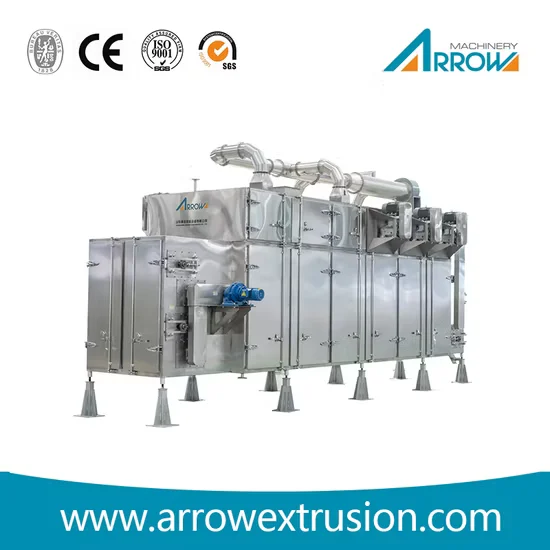
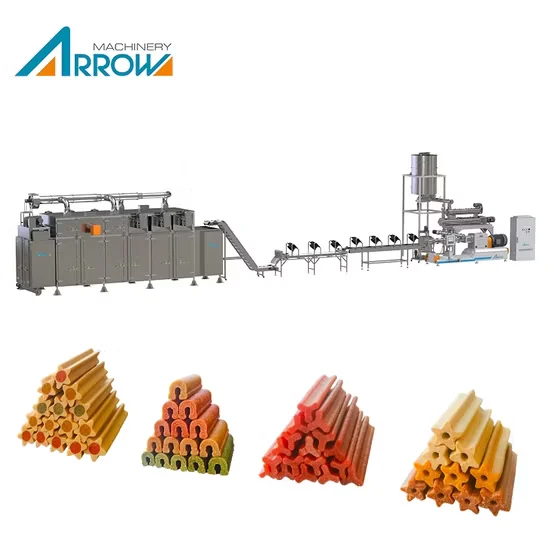
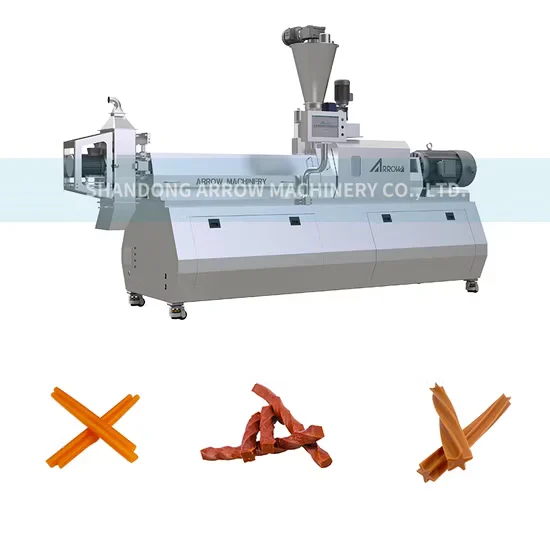
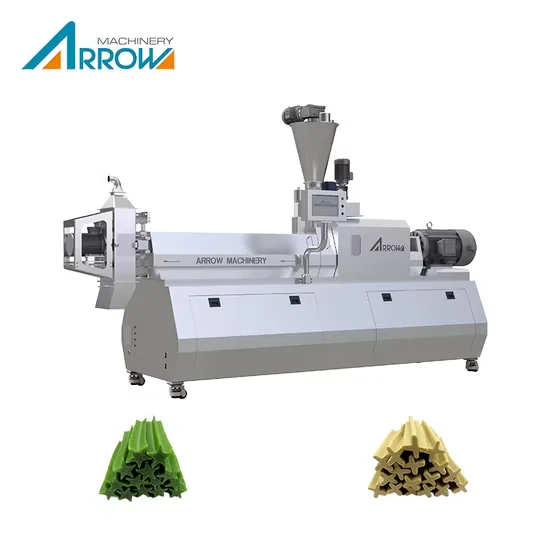
For facilities scaling up their output, transitioning from a static batch room to a continuous system can resolve many of these variability issues. A Cross-Flow Circulation Dryer moves product through controlled zones of temperature and humidity, ensuring that every piece receives the same treatment. This eliminates the human error associated with loading and unloading batch rooms and provides a more stable environment for moisture control. Such systems are particularly effective when integrated into a larger line that includes mixing and extrusion, ensuring that the drying stage matches the upstream capacity.
Routine Maintenance to Prevent Mold and Contamination
Even the best-designed system will fail without disciplined maintenance. The most critical task is the regular cleaning of air filters and ducts. Accumulated dust and grease restrict airflow, reducing efficiency and creating fire hazards. Filters should be inspected weekly and replaced or cleaned according to the manufacturer’s schedule. Neglecting this step forces fans to work harder, leading to motor wear and inconsistent air pressure across the drying chamber.
Condensate drains require daily attention. These outlets remove the water extracted from the product. If they become clogged with debris or biofilm, water backs up into the chamber. I recommend implementing a sanitation routine that includes flushing drains with approved cleaners and checking for proper slope in the piping. Standing water in the drain pan is a direct invitation for mold spores to colonize the system.
Sensors and controllers also need periodic calibration. Humidity and temperature probes can drift over time, giving false readings that mislead the control system. A sensor reading 5% lower than actual humidity can result in under-dried product leaving the facility. Regular calibration against a reference standard ensures that the automation logic responds to real conditions. This practice is essential for maintaining compliance with food safety standards and ensuring product consistency.
Scaling Up: When to Transition to Continuous Dryers
Batch drying rooms are suitable for small-scale production or diverse product runs where flexibility is key. However, as volume increases, the limitations of batch processing become apparent. Loading and unloading times create downtime, and manual handling increases the risk of contamination. Inconsistencies between batches can lead to quality control issues, especially when supplying large retail chains that demand uniform specifications.
Continuous dryers offer a solution for high-volume manufacturers. They provide a steady state of operation where temperature, humidity, and airflow are stabilized. This stability results in more uniform product quality and higher throughput. When planning a new facility or expanding an existing one, evaluating the transition to continuous drying is crucial. It aligns the drying capacity with extruders and mixers, preventing bottlenecks that stall the entire line.
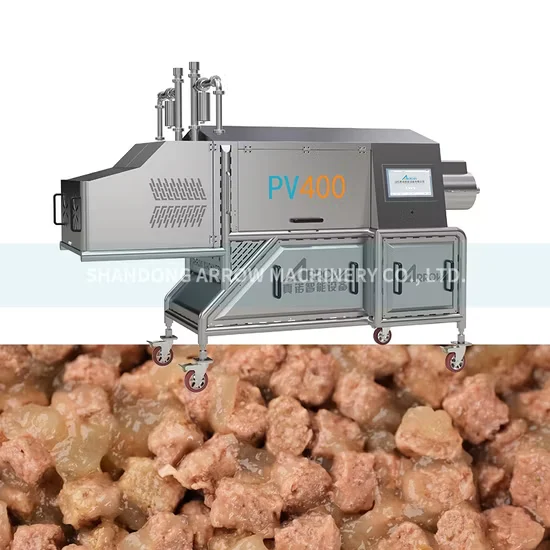
Shandong Arrow Machinery supports this transition by offering engineered solutions that match your specific raw materials and target capacity. Whether you need a standalone Drying Room for specialty treats or a fully integrated line with vacuum coating and extrusion, the equipment configuration is based on your process requirements. Trial runs can help determine the optimal settings for your specific formulation, ensuring that the selected machinery delivers the desired texture and shelf life.
Frequently Asked Questions
Q: How often should a jerky drying room be cleaned to prevent mold growth?
A: Cleaning frequency depends on usage intensity, but a deep clean should occur at least once a week. Daily tasks include wiping down surfaces, clearing condensate drains, and inspecting filters. If you notice any visible residue or odor, immediate cleaning is required. Regular sanitation prevents biofilm buildup, which is difficult to remove once established and can harbor harmful pathogens.
Q: What causes the edges of the jerky to dry significantly faster than the center?
A: This is typically due to uneven airflow distribution or excessive tray loading. Air tends to find the path of least resistance, often bypassing the dense center of a loaded rack. Ensuring proper spacing between trays and using baffles to direct air through the product mass can mitigate this. Additionally, checking for hot spots near heating elements helps balance the drying rate across the entire load.
Q: Can modifying the tray loading pattern improve airflow in an existing drying room?
A: Yes, adjusting how trays are loaded can significantly impact airflow efficiency. Avoid overloading trays and ensure uniform distribution of product. Leaving gaps between trays allows air to circulate more freely. Experimenting with staggered loading patterns can also help disrupt laminar flow and promote better penetration into the product stack, reducing drying time and improving uniformity.
Q: When should a pet treat factory upgrade from a batch drying room to a continuous cross-flow dryer?
A: Consider upgrading when batch processing becomes a bottleneck or when product consistency varies between batches. If you are running multiple shifts and struggling to meet demand, a continuous dryer offers higher throughput and reduced labor costs. It is also ideal for standardized products where uniform moisture content is critical for shelf life and regulatory compliance.
Send your jerky recipe and target capacity to get a customized drying layout and equipment quotation. Our engineering team can review your current setup or design a new line that integrates seamlessly with your existing processes, ensuring optimal performance and product quality.