
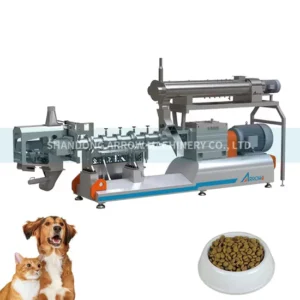
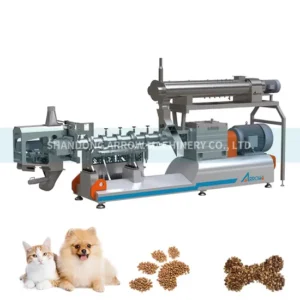
How the Automatic Machinery for Pet Dog Food Production Works in Your Line
Recipe trials define success — Match screw configuration to your soybean meal formulation before finalizing the AYT78 setup.
Technical Specifications
| Parameter | Value |
|---|---|
| Product | AYT78 Twin-Screw Extruder for Dog and Cat Food |
| Model | AYT78 |
| Production Capacity | 0.5-10 t/h |
| Power Source | Electric |
| Voltage | 380V |
| Material | 304 Stainless Steel |
| Automatic Grade | Automatic |
| Application | Dog, Cat |
| Feed Type | Soybean Meal |
| Condition | New |
Application Suitability
| Product / Industry | Typical Use |
|---|---|
| Dry Pet Food Manufacturers | Extrusion of standard dog and cat kibble using automated thermal processing. |
| Private-Label Contract Processors | High-volume production of consistent dry pet food for third-party brands. |
Why Kibble Size Drifts After Two Hours of Running
Stable extrusion requires matching thermal input to raw material behavior.
Many factories face a frustrating scenario where initial test runs look perfect, but consistency drops after hours of continuous operation. This often stems from mismatched shear profiles or inadequate temperature control within the barrel. When processing ingredients like soybean meal, slight variations in moisture or particle size can lead to uneven expansion. Without a system designed for automatic stability, operators constantly adjust settings, leading to wasted product and downtime.
Positioning in Your Production Flow
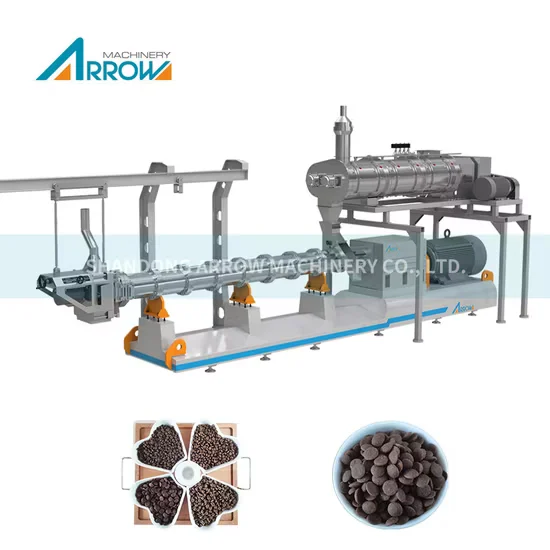
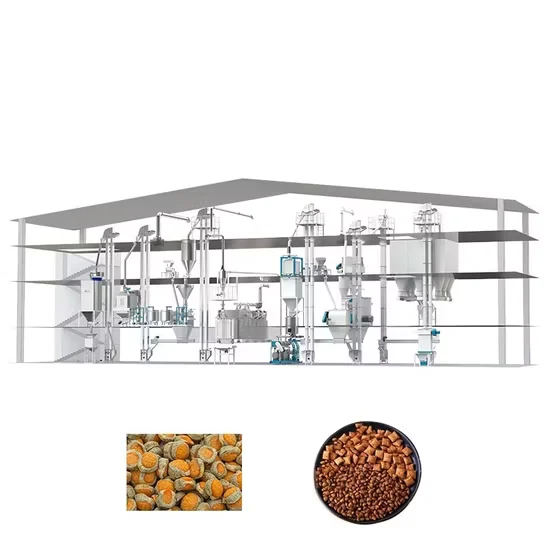
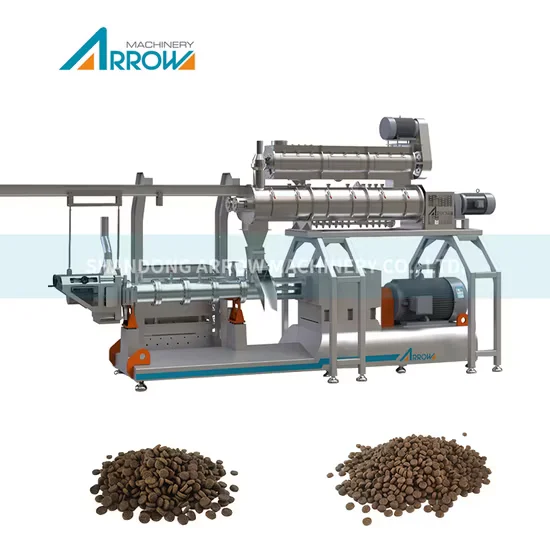
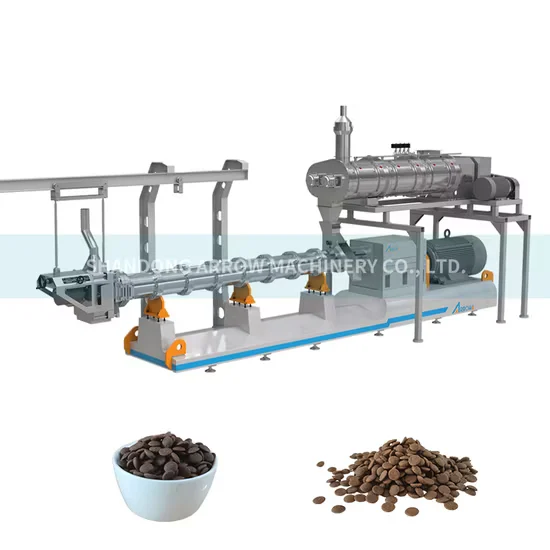
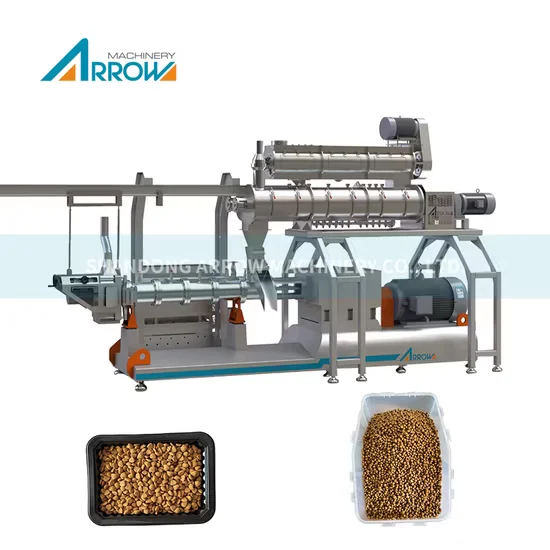
The AYT78 twin-screw extruder serves as the central forming unit in a dry pet food line. It receives pre-conditioned and mixed raw materials from upstream grinding and mixing systems. Inside the barrel, the material undergoes high-temperature short-time cooking, transforming starches and proteins into a digestible matrix. The formed product then exits through the die head, ready for cutting and subsequent drying. Proper integration ensures that the extruder’s output matches the capacity of downstream dryers to prevent bottlenecks.
Navigating Production Challenges
Raw material variability is the most common disruptor in pet food manufacturing. Ingredients such as soybean meal can vary in protein content and absorption rates between batches. High-fat formulations may cause slippage inside the barrel, reducing pressure and affecting pellet shape. Maintaining consistent density requires precise control over feed rate and screw speed. Additionally, frequent changeovers between different kibble shapes demand a design that allows for efficient cleaning and minimal residue buildup.
Understanding Core Specifications
The AYT78 is constructed from 304 stainless steel, ensuring hygiene and resistance to corrosion in humid processing environments. Its electric power source operates at 380V, providing stable energy delivery for consistent thermal processing. The automatic grade reduces manual intervention, allowing for repeatable results across shifts. With a capacity range of 0.5 to 10 tons per hour, this model offers flexibility for both pilot-scale trials and full-scale commercial production. The twin-screw design provides superior mixing and shearing action compared to single-screw alternatives, crucial for uniform cookery.
Hidden Costs of Poor Selection
Choosing an extruder without verifying its compatibility with your specific formula can lead to significant operational losses. Inadequate capacity matching may force you to run equipment beyond its optimal range, accelerating wear on screws and barrels. If the machine cannot handle your target throughput, you may need to invest in additional units later, disrupting factory layout. Inconsistent product quality often results in rework or rejection by retailers, damaging brand reputation. These issues highlight the importance of validating technical specifications against actual production needs.
Why Source from Arrow
Arrow provides manufacturer-oriented supply of complete extrusion lines and individual processing machines, ensuring seamless integration. Our application-based machine selection uses your specific ingredients and product specifications to configure the AYT78 correctly. We support raw-material trials and testing to verify performance before finalizing the order, reducing investment risk. Custom line layouts and engineering support help optimize your factory footprint for efficient workflow. Export project coordination includes factory acceptance testing and options for overseas commissioning, ensuring smooth startup.
Documentation & Delivery
- Detailed technical specifications sheet for the AYT78 model.
- Factory layout recommendations based on your site dimensions.
- Comprehensive operation and maintenance manuals in English.
- Factory acceptance test records verifying electrical and mechanical function.
- Standard export plywood case packing for safe international shipping.
- Commercial invoice and packing list prepared per contract terms.
Installation, Operation & Maintenance
- Ensure foundation meets load requirements for the 304 stainless steel frame.
- Connect to 380V power supply with appropriate safety grounding protocols.
- Conduct initial trial runs with water to check screw rotation and sealing.
- Clean barrel and die plates thoroughly after each production batch.
- Replace worn screw elements and bearings according to maintenance schedule.
- Adjust feed rate and cutter speed to maintain target kibble dimensions.
Requesting a Configuration Quote
To receive an accurate proposal, specify your target product type, such as dry dog kibble, and provide the raw material formulation including soybean meal ratios. Indicate your required output capacity in tons per hour and desired kibble shape and size. Share your factory dimensions, available voltage frequency, and destination country. Our engineering team will review these details to propose a suitable configuration, layout, and quotation, including options for trial testing.
Frequently Asked Questions
Q: What raw materials can be processed with the AYT78 twin-screw extruder?
A: The AYT78 is designed for dry pet food production using ingredients like soybean meal. It handles various starch and protein sources typical in dog and cat food formulations. Specific suitability depends on the recipe's moisture and fat content, which should be reviewed during technical consultation.
Q: How is the production capacity of 0.5-10 t/h determined for my specific formula?
A: Capacity varies based on ingredient density, moisture content, and desired pellet size. The stated range represents potential throughput under optimal conditions. Actual output is confirmed through trial runs or calculation based on your specific formulation and operating parameters.
Q: Is the AYT78 sold as a standalone machine or part of a complete production line?
A: Both options are available. You can purchase the AYT78 as a standalone unit to integrate with existing equipment or as part of a complete turnkey production line including mixing, drying, and coating systems.
Q: What are the voltage and power requirements for installing this extruder?
A: The AYT78 operates on a 380V electric power source. Ensure your facility has adequate power capacity and proper grounding. Specific amperage requirements should be verified in the detailed technical specifications provided with the quotation.
Q: Does Arrow provide testing trials for new pet food formulations before purchase?
A: Yes, raw-material trials and testing support are available. This allows you to evaluate how your specific formula behaves in the extruder. Trial availability and associated costs are confirmed during the technical review and quotation process.