How the Cold Press Pet Treats Making Equipment for Dog Works in Your Line
Recipe-based selection — Matching screw profile to moisture and fat content prevents jamming during cold extrusion.
Technical Specifications
| Parameter | Value |
|---|---|
| Product | AHT Twin-Screw Extruder for Pet Food and Aquafeed |
| Model | AHT |
| Capacity | 500-6000 kg/h |
| Production Capacity | 4500-6000 kg/h |
| Main Equipment | Double-Screw Extruder |
| Power Source | Steam |
| Driven by | Electric |
| Voltage | 220/380/Customized |
| Material | 304 Stainless Steel |
| Automatic Grade | Automatic |
| Operation | Fully Automatic |
| Heating Temperature | Adjustable |
| Feeding Speed | Adjustable |
| Feeder | Loss Weight Type/ Volumetric Feeder |
| Raw Material | Fish Powder, Born Meal, Corn, Soyabeen |
| Feed Type | Meat and Bone Meal |
| Application | Dog, Cat |
| Final Product | Animal Feed Food |
| Process | Thermal Processing |
| Transport Package | General Packing |
| Origin | China |
Application Suitability
| Product / Industry | Typical Use |
|---|---|
| Dry Pet Food | Producing puffed kibble for dogs and cats using corn, soybean, and meat meal. |
| Aquafeed | Processing fish powder and bone meal into durable aquatic feed pellets. |
| Private-Label Processing | High-capacity automated extrusion for diverse feed types and contract manufacturing. |
Why Kibble Size Drifts After Two Hours of Running
Consistent pellet quality requires matching the screw design to the exact moisture and fat content of your local ingredients.
Many factories face a common issue: a recipe that performs perfectly in the laboratory fails during mass production. Slight increases in fresh meat ratio or variations in raw material moisture can cause extruders to jam or produce uneven treats with tails. This inconsistency often stems from using a generic screw configuration that does not account for the specific rheology of the input mix. Without precise control over feeding speed and thermal processing, the final product suffers from density variations and poor shape retention.
Integration in Your Production Flow
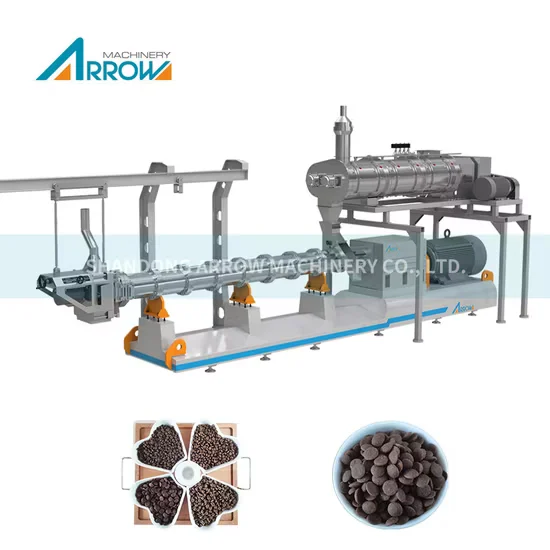
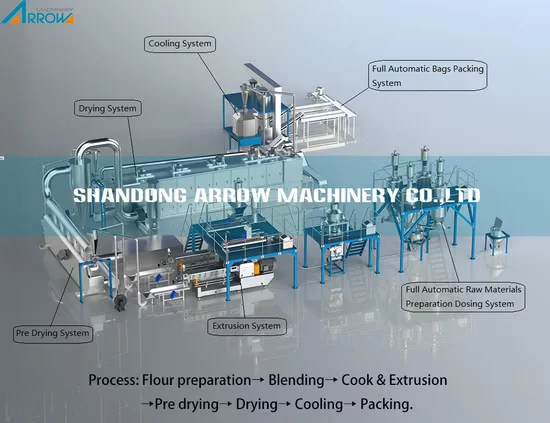
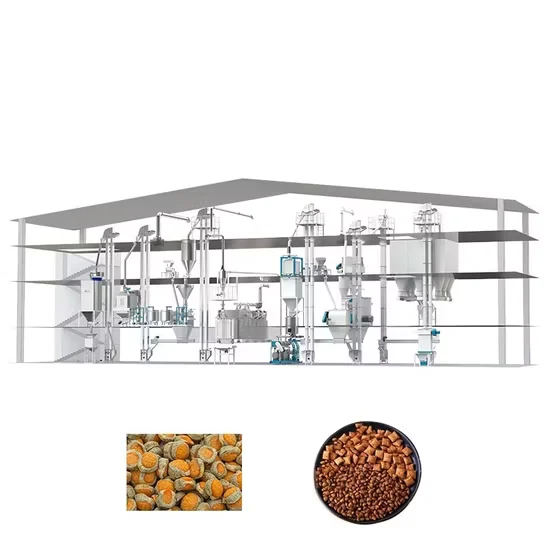
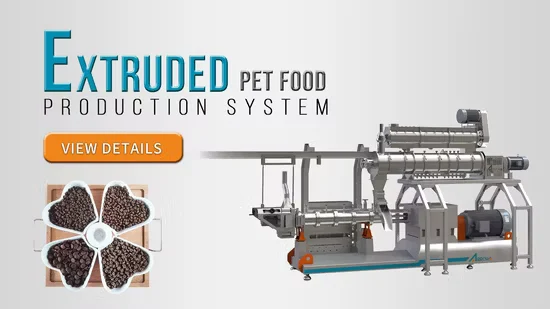
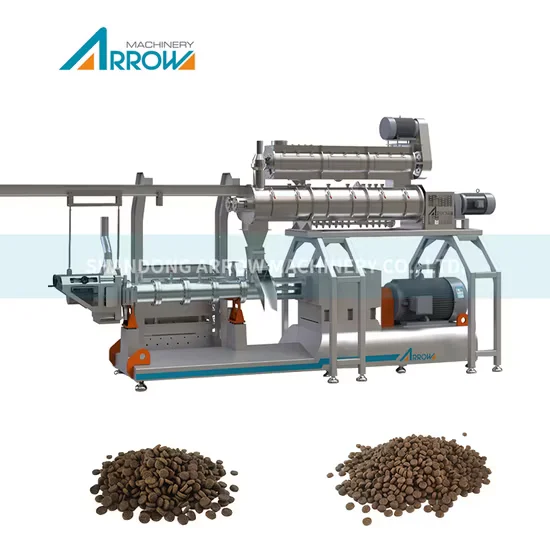
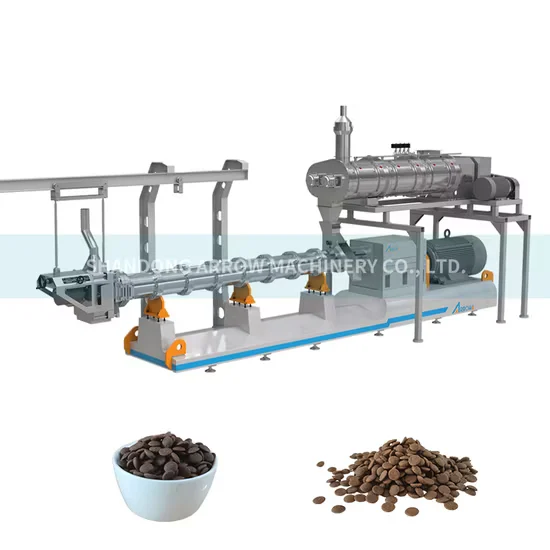
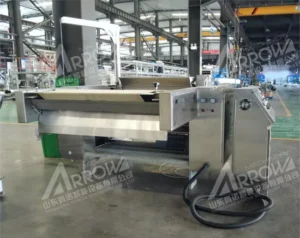
This automatic double-screw extrusion system serves as the core forming unit in your dry pet food or aquafeed line. It receives pre-mixed raw materials from upstream grinding and mixing systems, where ingredients like corn, soybean, and meat meal are homogenized. The extruder then applies thermal processing to cook and shape the mixture before discharging it to downstream drying and coating units. Proper integration ensures that the throughput of the Twin-Screw Extruder for Pet Food and Aquafeed 500-6000 kg/h aligns with the capacity of your dryer and cooler.
Navigating Production Challenges
Raw material fluctuations pose significant risks to continuous operation. High fat content from meat and bone meal can lubricate the barrel excessively, reducing shear and leading to under-cooked products. Conversely, low moisture levels may increase torque, causing mechanical stress or blockages. Maintaining consistent particle density requires precise coordination between the feeder and the screw speed. Additionally, switching between different product shapes demands careful adjustment of the die and cutting mechanism to avoid downtime.
Understanding Core Specifications
The AHT model utilizes a double-screw mechanism to ensure thorough mixing and cooking of diverse ingredients. Steam heating allows for precise temperature control within the barrel, which is critical for starch gelatinization and protein denaturation. The system supports a flexible capacity range from 500 to 6000 kg/h, enabling producers to scale output based on demand. Constructed with 304 stainless steel, the contact parts meet hygiene standards for animal feed production. The integrated loss-weight or volumetric feeder ensures accurate raw material input, directly influencing the consistency of the final pellet density.
Hidden Costs of Poor Selection
Choosing an extruder without considering your specific formulation can lead to significant operational losses. Inadequate capacity matching results in bottlenecks, forcing upstream machines to idle or downstream units to starve. Frequent jams due to incompatible screw profiles cause unplanned downtime and increased wear on components. If the machine cannot handle the desired moisture content, you may face high rejection rates due to poor pellet integrity. Retrofitting an ill-suited line later often costs more than investing in a correctly specified system initially.
Why Source from Arrow
We provide manufacturer-oriented supply of complete extrusion lines and individual processing machines, ensuring compatibility across all stages. Our application-based selection process uses your specific ingredients and product specifications to configure the optimal screw and die setup. We support raw-material trials to validate performance before finalizing equipment specifications, reducing the risk of production failures. Custom line layouts and engineering support help integrate the extruder seamlessly into new factories or existing retrofits. Export project coordination includes factory acceptance testing and options for overseas commissioning to ensure smooth startup.
Documentation & Delivery
- Detailed technical specifications and layout drawings for site planning.
- Operation and maintenance manuals for daily use and troubleshooting.
- Factory acceptance test records verifying performance against agreed standards.
- Export documentation including commercial invoices and packing lists.
- General packing suitable for ocean freight and long-distance transport.
- Certificate files provided as per contract requirements and local regulations.
Installation, Operation & Maintenance
- Ensure foundation meets load requirements for the 304 stainless steel structure.
- Connect steam supply and electrical power (220/380V) as per utility specs.
- Conduct initial trial runs with actual raw materials to calibrate feeding speed.
- Perform daily cleaning of the barrel and screw to prevent residue buildup.
- Replace worn cutter blades and die plates to maintain product shape consistency.
- Adjust heating temperature and screw speed when changing product formulations.
Requesting a Configuration
To receive an accurate proposal, specify the product type, such as dry dog kibble or floating fish feed. Provide raw material ratios, especially fresh meat content, and your required output capacity in kg/h. Share details on product shape, size, and moisture targets, along with your factory dimensions and utility availability. Include your destination country and any specific certification needs. You will receive a preliminary configuration, layout options, and a formal quotation outlining the scope and technical parameters.
Frequently Asked Questions
Q: What is the difference between the listed capacity ranges?
A: The 500-6000 kg/h range indicates the operational flexibility of the AHT model across different configurations. The 4500-6000 kg/h figure likely refers to the maximum output under specific high-efficiency conditions or particular screw setups. Exact capacity depends on raw material density, moisture content, and final product shape. We recommend discussing your specific throughput goals to determine the optimal setup for your production line.
Q: Can this extruder handle high fresh-meat inclusion rates?
A: The system is designed for thermal processing of ingredients like meat and bone meal, fish powder, corn, and soybean. High fresh-meat content affects moisture and fat levels, which may require specific screw profile adjustments. We advise conducting raw-material trials to test your specific formulation. This ensures the screw design matches the rheology of your mix, preventing jamming and ensuring consistent pellet quality during operation.
Q: Is the steam heating system integrated into the extruder?
A: The specifications list steam as the power source for heating, indicating an integrated or closely coupled system. This allows for precise temperature control during the thermal processing of pet food and aquafeed. However, the connection to an external boiler or steam generator depends on your plant’s existing utilities. Verify the steam pressure and flow requirements with our engineering team to ensure compatibility with your facility’s infrastructure.
Q: What installation support is available for overseas projects?
A: We offer overseas engineering and commissioning options to assist with setup and startup. The precise scope, including team size, schedule, and travel costs, is defined contractually. This support helps ensure that the equipment is installed correctly and operators are trained on safe and efficient use. We coordinate with you to align the installation plan with your production timeline and local regulatory requirements.