
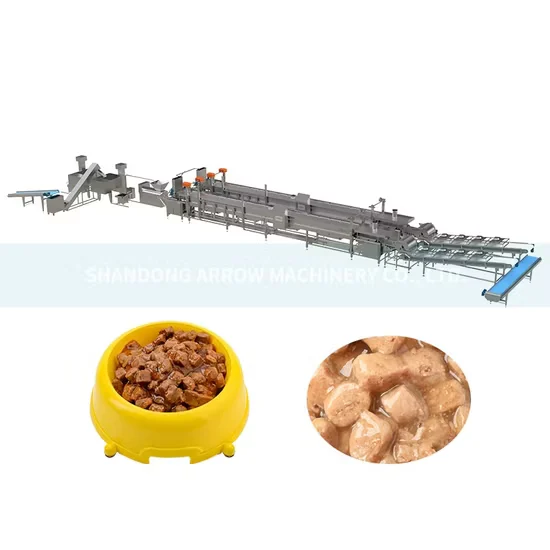
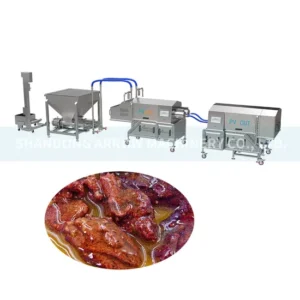
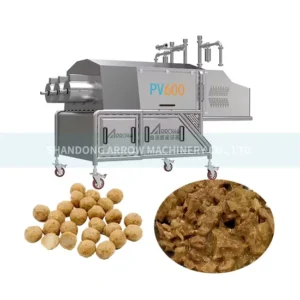
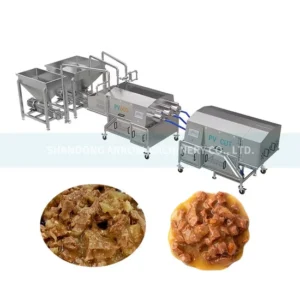
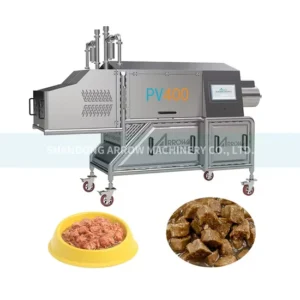
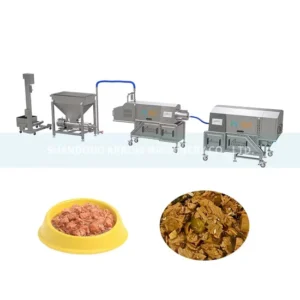
Process & Design
How Dry and Wet Pet Food Processing Equipment for Cat Food Production works in your plant
Recipe-based selection and trials — Confirming formulation behavior before finalizing screw configuration prevents production jams.
Technical Specifications
| Parameter | Value |
|---|---|
| Product | PV Automatic Pet Food Processing Machine (Dry and Wet) |
| Model | PV |
| Capacity | 150kg-10t/H |
| Power Source | Electric |
| Process | Thermal Processing |
| Automatic Grade | Fully Automatic |
| Application | Dog, Fish, Cat |
| Feed Type | Soybean Meal |
| Inverter | Rexroth |
| Touch Screen | Siemens |
| Motor | Siemens |
| Contact Material | Food Grade Use |
| Heating Temperature | Adjustable |
| Feeding Speed | Adjustable |
| Feeder | Loss Weight Type/ Volumetric Feeder |
| Screw | Modular Design, Easy Replacement |
| Barrel | Modular Design, Easy Replacement |
| Technology | Extrusion-Drying-Cooling |
| Dimensions | 1200015002600MM |
| Weight | 3600kg |
Application Suitability
| Product / Industry | Typical Use |
|---|---|
| Dry Pet Food Manufacturers | Production of kibble for dogs and cats using thermal extrusion. |
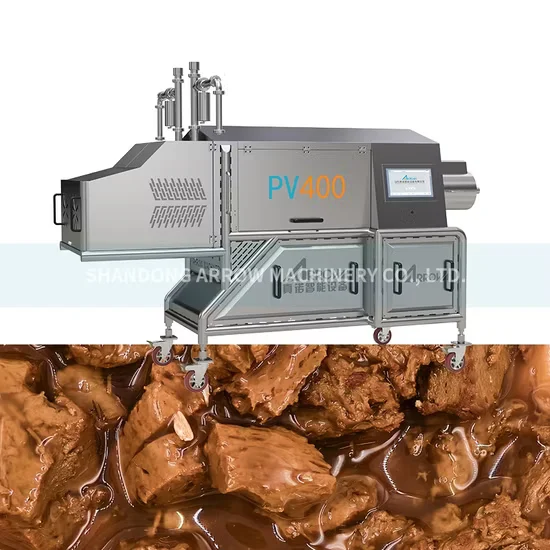
| Wet Food Processors | Processing meat chunks and textured products requiring precise moisture control. |
| Aquafeed Producers | Manufacturing floating or sinking feed for fish with adjustable density. |
| Private-Label Contract Plants | Flexible runs for diverse client formulations needing quick changeover. |
Why Kibble Size Drifts After Two Hours of Running
Stable output requires balancing thermal dynamics with mechanical shear, not just setting a speed.
Many factories face a common issue: the first hour of production looks perfect, but consistency drops as the run continues. This often happens when the extruder cannot adapt to minor fluctuations in raw material density or moisture content. Without precise control over feeding speed and heating temperature, the product shape varies, leading to uneven drying and potential spoilage later in the line. Integrating upstream mixing and downstream drying into a single coordinated process is essential to maintain quality.
Where This Extruder Fits in Your Process
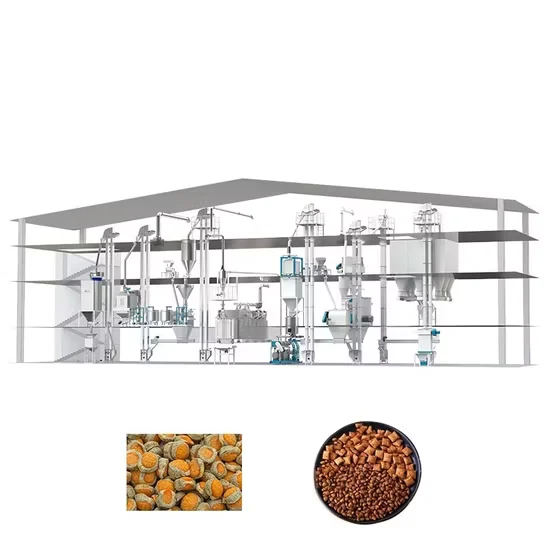
This unit serves as the core forming stage in a complete thermal processing line. It receives pre-mixed ingredients from upstream grinding and mixing systems, where particle size and homogeneity are critical. The PV model then applies controlled heat and pressure to cook and shape the dough. Downstream, the formed product moves directly to drying and cooling sections. Proper alignment between this extruder and the subsequent dryer ensures that moisture removal matches the initial water content added during extrusion.
Common Production Challenges
Raw material variability is the primary enemy of consistent extrusion. Soybean meal batches can differ in protein content and absorption rates, affecting how the dough flows through the barrel. High fresh meat inclusion increases moisture load, which can cause slippage or jamming if the screw design is not optimized. Additionally, maintaining specific pellet density for floating fish feed requires exact pressure management. Switching between dry kibble and wet food textures demands rapid adjustment of thermal profiles to avoid product burn or under-cooking.
Understanding Core Specifications
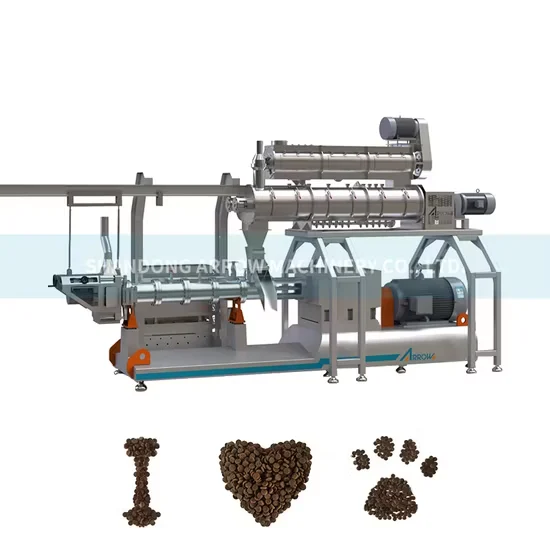
The PV model uses a modular screw and barrel design, allowing engineers to swap elements based on the specific recipe. This flexibility is vital when switching between high-starch dry foods and high-protein wet formulations. Siemens motors and touch screens provide precise control over motor torque and heating zones, ensuring stable operation even at high capacities up to 10t/h. The Rexroth inverter adjusts feeding speed accurately, preventing surges that can disrupt the cooking process. This level of automation reduces manual intervention and helps maintain consistent product quality across long production runs.
The Hidden Costs of Poor Selection
Choosing an extruder without considering the full process line often leads to bottlenecks. If the extruder output exceeds the dryer’s capacity, product piles up, causing moisture re-absorption and quality loss. Conversely, an undersized machine forces continuous operation at maximum load, accelerating wear on screws and barrels. Frequent breakdowns due to incompatible spare parts or poor design result in unplanned downtime. Retrofitting a mismatched line later costs significantly more than getting the configuration right initially.
Why Source This Equipment From Arrow
We evaluate your entire process, not just the extruder, to ensure upstream and downstream machines work together. Our engineering team reviews your raw material list and target product specs to recommend the optimal screw configuration. The modular design of the PV series simplifies maintenance, reducing the time needed for part replacement. We support both new factory layouts and upgrades to existing lines, ensuring space and utility constraints are met. Our global installation experience means we understand the practical challenges of commissioning equipment in diverse environments.
Documentation & Delivery
- Detailed technical specifications outlining model PV performance limits.
- Customized layout drawings integrating extruder with dryer and cooler.
- Comprehensive operation manuals for Siemens control system usage.
- Factory acceptance test records verifying electrical and mechanical function.
- Export packaging designed for ocean freight protection of sensitive components.
- Compliance documents provided as per contract requirements for destination customs.
Installation, Operation & Maintenance
- Ensure factory floor meets dimensions of 1200015002600MM for proper placement.
- Connect electric power source matching local voltage frequency for Siemens motors.
- Conduct initial trial runs with actual soybean meal formula to calibrate feeders.
- Clean barrel and screw modules regularly to prevent residue buildup between batches.
- Replace modular screw elements easily when wear affects product shape consistency.
- Adjust heating temperature zones via touch screen to optimize cooking for new recipes.
Start Your Project Configuration
To receive an accurate proposal, share your target product type, such as dry kibble or wet chunks. Provide details on raw material ratios, especially fresh meat or soybean meal content. Specify your required hourly capacity and desired final product shape and size. Include your factory dimensions, available power supply, and destination country. We will return a preliminary equipment configuration, layout options, and a formal quotation for your review.
Frequently Asked Questions
Q: What is the production capacity range of the PV model?
A: The PV model supports a wide capacity range from 150kg/h to 10t/h. This flexibility allows it to serve small-scale specialty producers as well as large industrial pet food manufacturing facilities requiring high throughput.
Q: Can this machine handle both dry and wet pet food production?
A: Yes, the PV series is designed for thermal processing of both dry and wet pet food. Its adjustable heating and feeding systems allow operators to modify parameters for different moisture targets and texture requirements.
Q: What brands are used for the control system and motor?
A: The system utilizes Siemens components for the touch screen and motor, ensuring reliable automation. A Rexroth inverter is included for precise control of feeding speed and other variable frequency drives.
Q: How does the modular design benefit maintenance and operation?
A: The screw and barrel feature a modular design, making them easy to replace. This allows quick adaptation to different formulations and simplifies routine maintenance, reducing downtime during part changes.
Q: Is technical support available for installation and training?
A: Yes, we offer installation and commissioning services as defined in the contract. Operator training is also available to ensure your team can effectively manage the Siemens control system and daily operations.
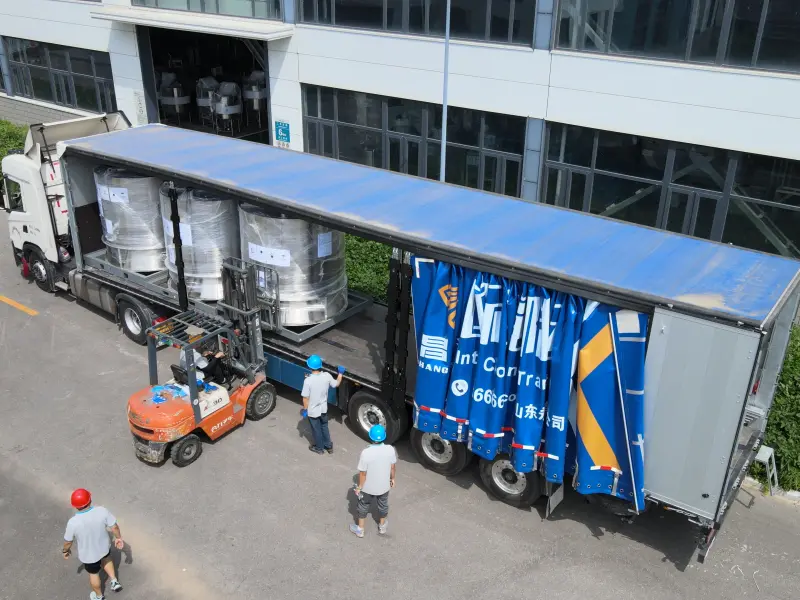
Shipping
Container sea freight or rail · spare parts by air
Delivery & Support
From factory acceptance to stable production
Every Shandong Arrow Machinery machine ships with full documentation, on-site commissioning support and a spare-parts channel tied to its serial number, so your line keeps running after start-up.
-
Shipping documents
Equipment specification, configuration list, drawings where applicable, operation manual, packing list, commercial invoice and export documents.
-
Testing & inspection
Factory test records, videos, inspection reports and material declarations, by product type and contract.
-
Installation & training
Installation, commissioning, operator training and maintenance guidance, with the scope set in your contract.
-
Spare parts
Screws, extrusion dies, gearboxes and wear parts, supplied against your machine's serial number or model.
Same Category
Related pet food machines
These machines and lines sit in the same process family, so you can build a complete line or add a single stage with them.

CE Certified Cold Press Pet Food Plant 200kg/H
View details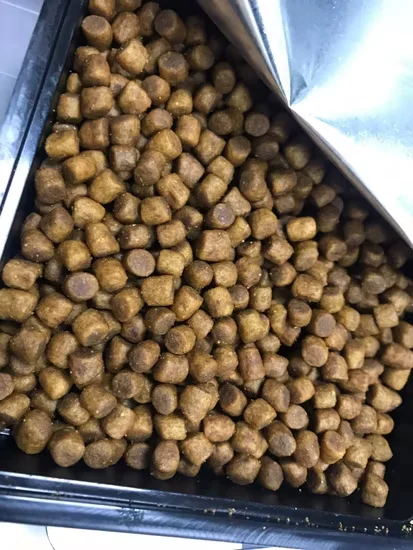
Dog Food Meat Strip Extruder for Dog Snacks Equipment
View details
Automatic Cold Press Dog Food Making Equipment for Pet Food Plant
View details
Dry Pet Food Extruder Large Capacity Cat Dog Feed Equipment
View details
Not sure this configuration fits your formula?
Tell us your target product, raw materials and output in kg/h. Our engineers confirm the process first, then recommend the extrusion and drying setup.
Applications
Pet products this machine is built for
This equipment is configured for the pet product types below. Open an application to see the full process route and matching machines.
Engineering Notes
Selection guides & technical articles
Read how process engineers choose extrusion, drying and coating setups for pet food before they commit to a configuration.
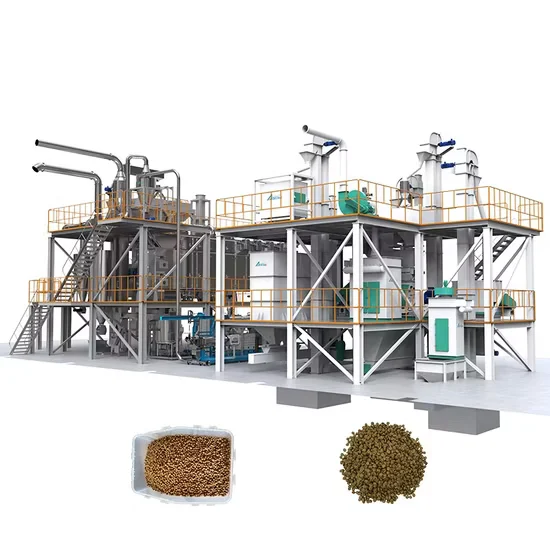
Production Line Installation: Solving On-Site Setup Challenges
Read article Kibble Line Maintenance: How to Plan Preventive Checks for Arrow Plants
Read article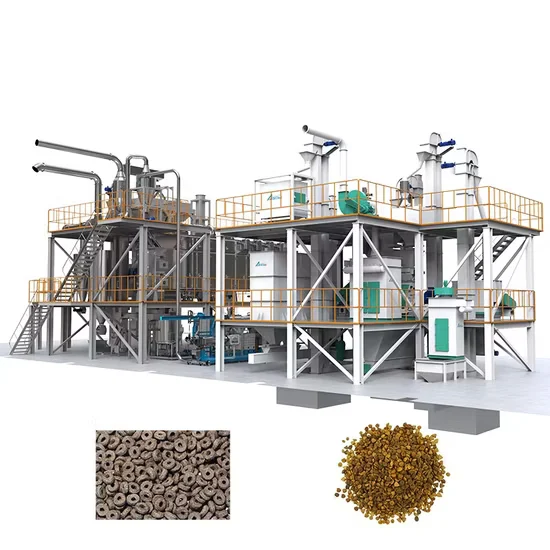
Pet Food Production Line: Installation vs Maintenance for Hygiene
Read articleFAQ
Questions buyers ask about this machine
Short answers on trials, lead time, documents and spare parts from Shandong Arrow Machinery, a pet food machinery manufacturer in Jinan, China.
Can I test my formula before I order?
Yes. Where conditions allow, we arrange formula and process trials on our process test platform, and you can send your own raw material for testing. Agreed raw-material tests are completed before production or shipment.
What is the lead time?
The lead time is stated in your formal quotation, based on the confirmed model, configuration and scope of supply. Machines ship by container sea freight or rail, and spare parts can go by air.
Which documents come with the machine?
You receive the final equipment specification, configuration list, equipment drawings where applicable, operation manual, packing list, commercial invoice and export or shipping documents. Factory test records, videos, inspection reports and material declarations are provided according to product type and contract.
How do I get spare parts after commissioning?
Send us your machine's serial number or model and we match the right parts. We supply screws, extrusion dies, gearboxes and wear parts, along with process consultation and service.
More answers on our pet food machinery FAQ page.
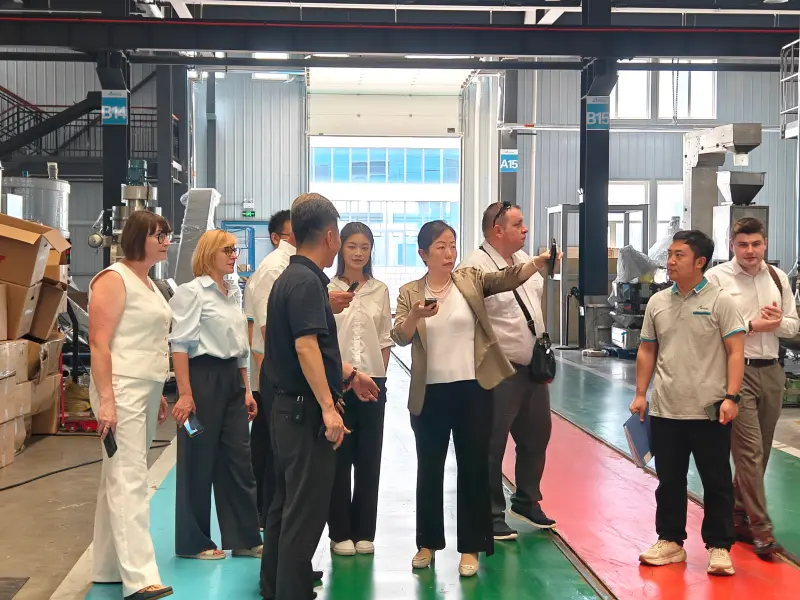
Request a quote for Dry and Wet Pet Food Processing Equipment for Cat Food Production
Share your target product and output. You receive a technical proposal with model, scope of supply and options.
- WhatsApp +86 137 9316 7756
- Email info@arrowextrusion.com
- No. 47 Chengbohu Road, Jibei Subdistrict, Jiyang District, Jinan, Shandong, China